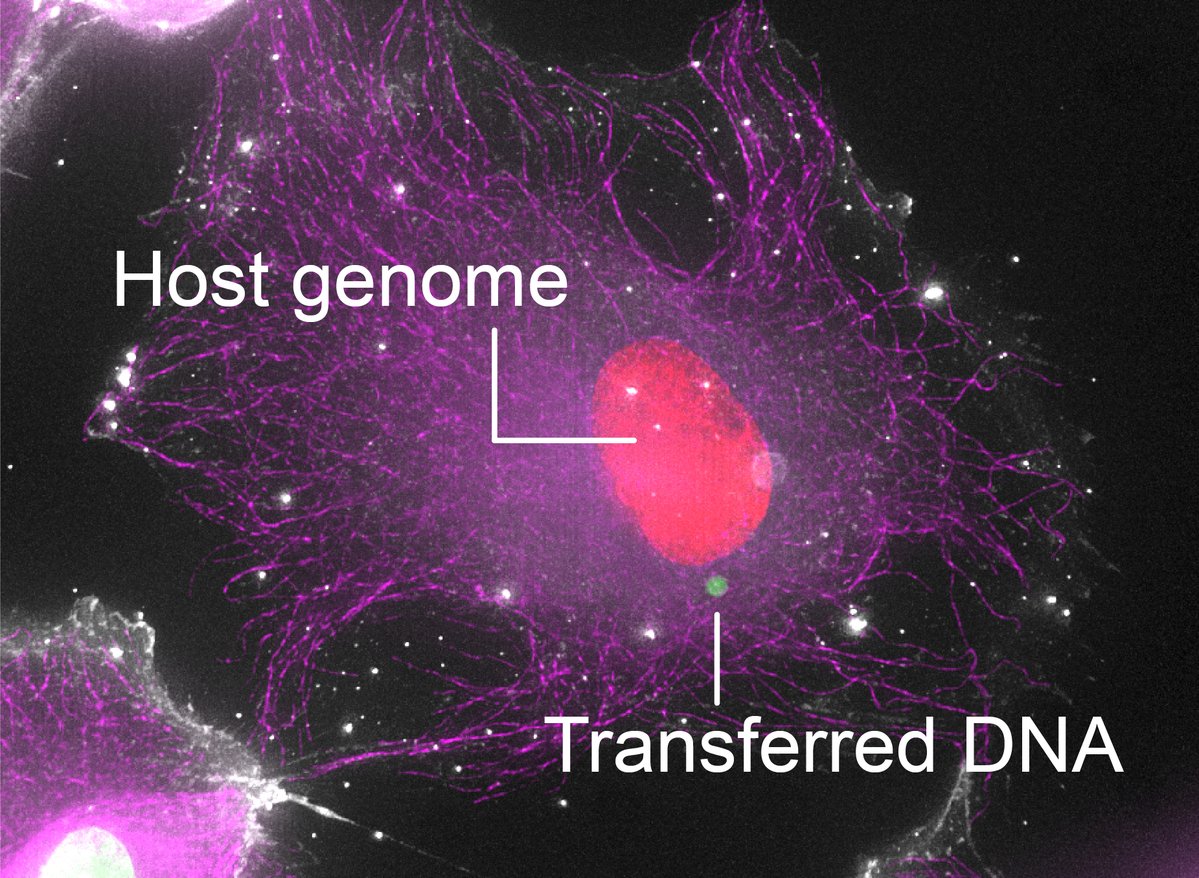
Excited to share our latest paper, out today @CellCellPress. We found that large pieces of the human genome can transfer between cells upon direct contact, endowing recipient cells with heritable phenotypic changes. (1/7)
https://t.co/SbshGhofN0
Sharing this with your colleagues means you want them to win more grants - they'll appreciate it! 🥰 (you can do it from inside the platform or just send them the tweet)
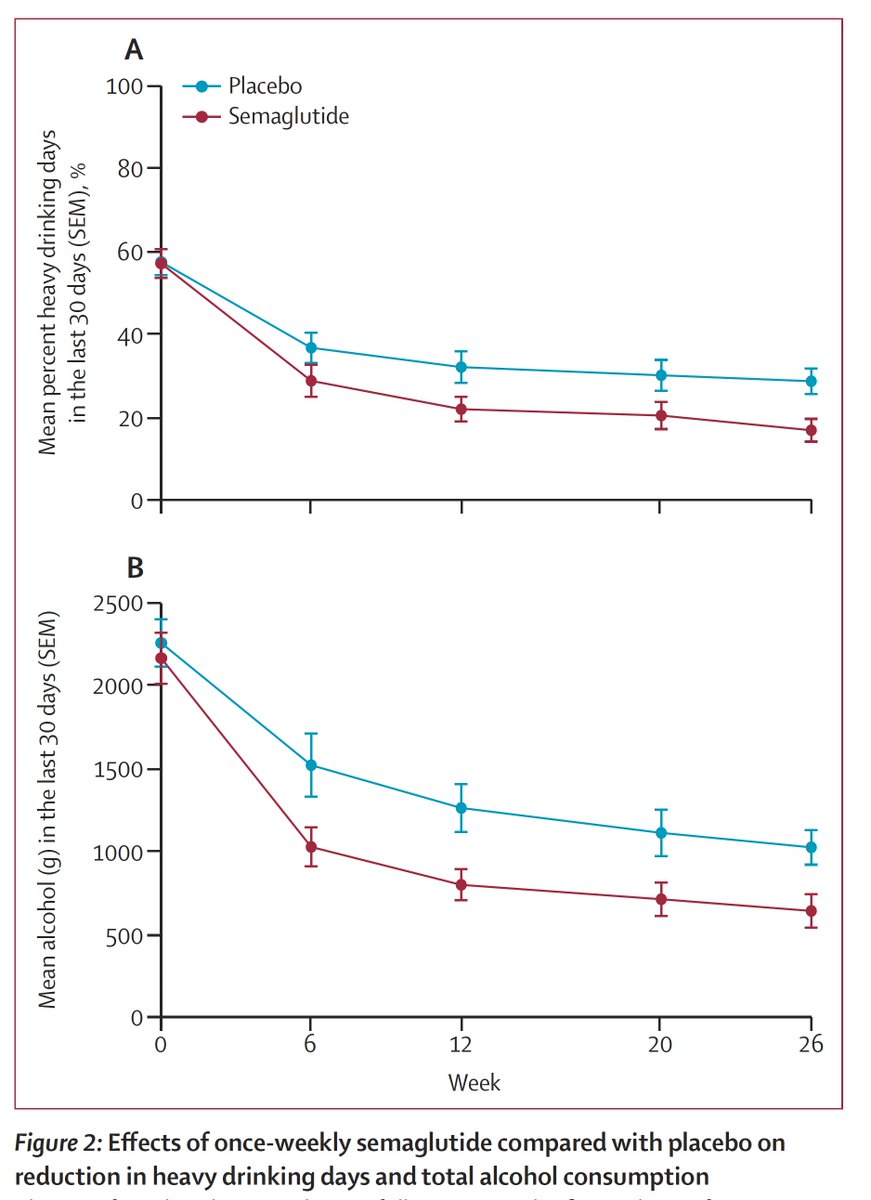
First randomized trial to show Ozempic reduces alcohol consumption in people seeking treatment for alcohol use disorder. Placebo-controlled, double-blind. Participants with BMI >30 kg/m2.
https://t.co/M9Pk2gzKHD @TheLancet
New @Nature
A quintuple [GLP-1 + 4 other] receptor agonist drug that exceeds effects of the dual receptor (GLP-1 and GIP, tirzepatide) in the experimental model vs diabetes and obesity
(in case you thought a dual receptor was max effect, as also seen with retatrutide, a triple receptor agonist)
https://t.co/kqkNJ7My4B
Today in @Nature, the @genophoria & Vijay Ramani labs reveal that our picture of how nucleosomes regulate DNA accessibility has been too simple. They find that over 85% of nucleosomes in mammalian cells are structurally distorted, with DNA partially accessible even while wrapped.
Robert Sapolsky is a Stanford neuroscientist who proved chronic stress is the silent killer doctors ignore.
On Chris Williamson's podcast, he revealed 10 "normal" habits you do every day that wreck your sleep, mood, and nervous system:
1) Replay conversations in your head
You live in luxury. Without scientists, 6 billion of us would not be alive & the rest would live in hell. Remember that
Great choices @brkthroughprize 🏆 Congrats to my colleague @Harvard, Stu Orkin, who won the prize for helping cure sickle cell disease with CRISPR 👏
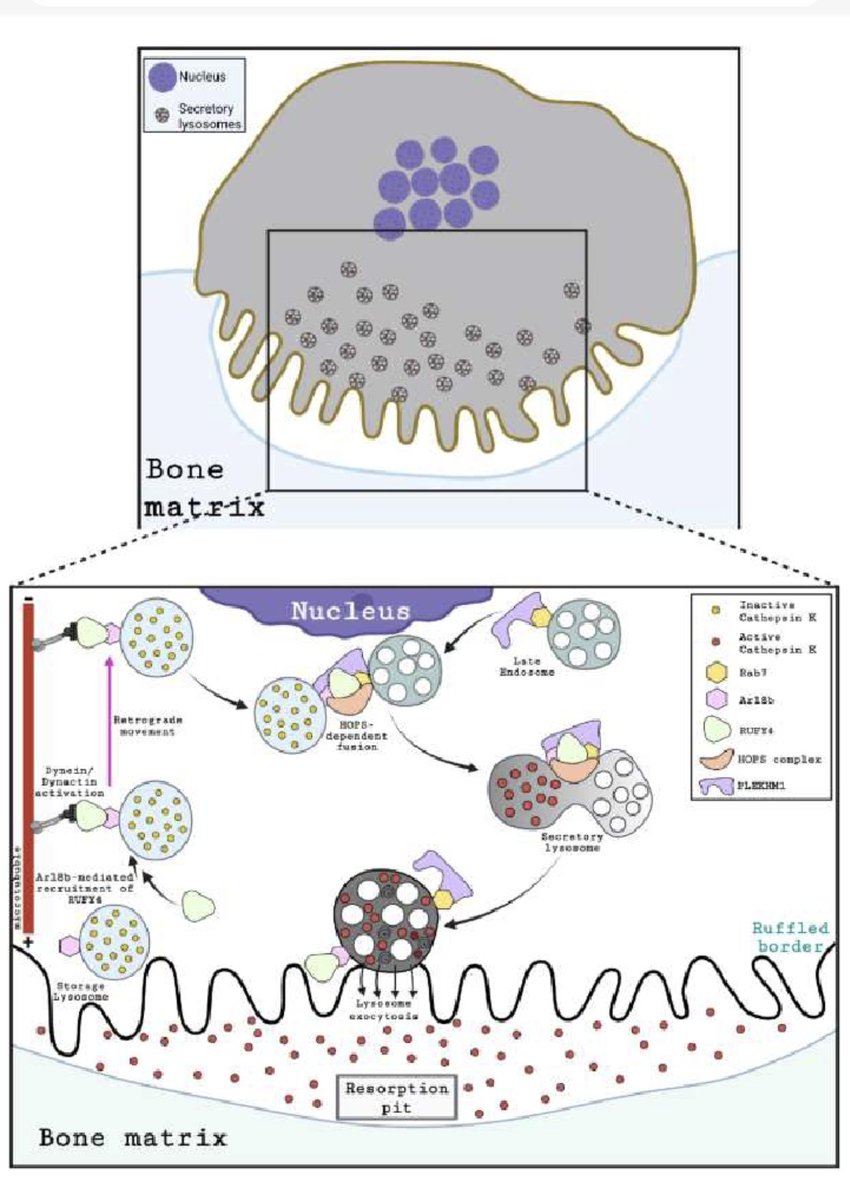
Happy to share a new story from the lab in MBoC! #Arl8b acts as a key regulator of #osteoclast-mediated bone resorption by recruiting its partners, #RUFY4 and #HOPS complex for biogenesis and positioning of active secretory #lysosomes. Link: https://t.co/Erf4oVoQ3l @ASCBiology
What if a small molecule could activate a transcription factor program in one cell type and destroy the same pathway in another? In our new preprint, we describe one such story on bifunctional molecules that toggle between transactivation and repression.
I think I’ll start posting about the lessons I’m learning as part of this new thing I’ve been doing (my attempt to change the landscape of scientific publishing and consequently how science is done)
One lesson I’ve learned (and also unlearned…) is that it’s very convenient to put all the blame on journals. I’ve done it myself for years. And yes, many of the criticisms are valid. They make way too much money at our expense and are often not very good at distinguishing good science from bad science. Some of them (not all of them! There are good journals too!) bring very little value and can even slow scientific progress. They can be inefficient and biased, and journal names are a very poor substitute for quality.
But the more I work on this, the harder it is for me to believe that journals are the only problem (even specifically when it comes just to publishing science). Universities are equally at fault. And I don’t just mean that we, the scientists doing the reviewing, are part of the problem (which we are, obviously). I mean the institutions we belong to, and the way they make decisions. Hiring, promotions, funding allocation - these processes are often opaque, subjective, and not particularly scientific. They are slow, inefficient, and they rely on journal brands as a shortcut.
I used to think journals were driving this, but it’s obviously more like a loop. Journals could not stay the way they are if universities changed how they evaluate quality, because they would lose much of their justification to exist. But universities do not evaluate science directly, because there is too much of it and not enough experts available and time (or money to pay reviewers). So they rely on journal prestige, while journals rely on institutional reputation. Where you do your science ends up mattering more than what you discover, and this affects publication, which affects funding, which determines whether you can even pursue your ideas.
This can be exploited, of course, but I don’t think institutions (or the responsible faculty/management) behave this way because they are evil or greedy. They do it because evaluating science properly is ridiculously hard and time-consuming, and the system does not reward doing it well.
But the important question is can we change the way our universities work, or is it an impossible task? What I've learned working on this problem is that we can. In addition to engaging with management we can influence the system in other ways. In many cases we don’t need their approval. We are the ones who form the committees. I believe we can break the loop, if we target the mechanism of science evaluation. Journals will keep their power, shortcuts will keep dominating, and the same biases will keep reproducing themselves unless we change how we evaluate science (how we do review). If we can find ways to critically evaluate science at scale, rigorously and transparently, we can change how decisions are made.
You’re bored because you’re not doing side quests, man.
Life is more than just working and then throwing yourself into bed doing nothing.
Here are 50 side quests to complete:
Best in the World 🌍
1.🇫🇮 Happiness → Finland
2.🇸🇬 Public Transport → Singapore
3.🇨🇭 Innovation → Switzerland
4.🇮🇹 Cuisine → Italy
5.🇩🇰 Governance → Denmark
6.🇺🇸 Universities → United States
7.🇮🇸 Safety → Iceland
8.🇹🇼 Healthcare → Taiwan
9.🇨🇳 Manufacturing Power → China
10.🇳🇱 Work-Life Balance → Netherlands
11.🇫🇷 Tourism → France
12.🇪🇪 Digital Government → Estonia
13.🇸🇬 Smart City Infrastructure → Singapore
14.🇨🇭 Financial Stability → Switzerland
15.🇩🇰 Low Corruption → Denmark
16.🇺🇸 Startup Ecosystem → United States
17.🇳🇴 Share of Renewable Energy → Norway
18.🇳🇿 Air Quality → New Zealand
19.🇮🇸 Clean Energy Use → Iceland
20.🇩🇰 Rule of Law → Denmark
21.🇸🇬 Internet Speed → Singapore
22.🇨🇭 Quality of Life → Switzerland
23.🇳🇱 Urban Planning → Netherlands
24.🇯🇵 Public Safety in Cities → Japan
25.🇩🇰 Social Welfare System → Denmark
26.🇰🇷 Broadband Infrastructure → South Korea
27.🇨🇦 Immigration Quality of Life → Canada
28.🇺🇸 Space Technology → United States
29.🇵🇦 Expat-Friendly Living → Panama
30.🇨🇭 Overall Living Standard → Switzerland
Join us to shape the future of modern biology @BRIC_CDFD Hyderabad
Eager to build an independent, impactful competitive research program? Apply now
We offer the best facilities, exciting research environment & competitive funding
Where Discovery meets Service
Assume that it's always possible to be a loyal spouse, a loving parent, a devoted child, a thoughtful friend, a productive citizen, an avid learner, a disciplined athlete, an unconstrained artist, an independent thinker, a wise human being that doesn't take themselves too seriously; then learn how to be constantly more efficient with your time, leave your judgments and ego aside, leverage your capital fearlessly, get rid of your pride and use all the tools available, and go live your greatest life.











![EricTopol's tweet photo. New @Nature
A quintuple [GLP-1 + 4 other] receptor agonist drug that exceeds effects of the dual receptor (GLP-1 and GIP, tirzepatide) in the experimental model vs diabetes and obesity
(in case you thought a dual receptor was max effect, as also seen with retatrutide, a triple receptor agonist)
https://t.co/kqkNJ7My4B](https://pbs.twimg.com/media/HHFQZHUbgAAcwgn.jpg)