Excited to share our latest work is published @GenomeResearch! We explored allele-specific transcription factor binding across nine brain regions, offering new insights into gene regulation and the role of genetic variation in the brain https://t.co/eTcWqI1pN0 1/
Inarguably the most important human genetics paper of the year, and a landmark moment in the history of neurodevelopmental disorder (NDD) genetics.
Mutations in RNU4-2, encoding a small nuclear RNA (snRNA) are among the most frequent genetic causes of NDD, explaining up to 0.4% of all cases. Yet, these variants have not been found all these years, despite the big advancements in genome sequencing in the past years.
The mind-blowing part: just a region of 18 base pairs that encode a critical part of the snRNA holds all the NDD mutations, a majority of them are insertion mutations. A 18bp noncoding region explaining 0.4% of all NDDs is really huge. This knowledge will solve (already solving) genetic diagnoses of thousands of NDD patients around the world.
The 18-bp region is highly constrained. Natural selection is actively removing the mutations from the population, yet the region keeps mutating again and again and again. The next important follow up will be to find what drives such a high mutation rate in this region, particularly insertion mutations.
The authors add a new twist to the story: the majority of the maternally inherited. This is surprising, as the origins of NDDs are typically paternally biased. The mechanism is going to be absolutely mind-blowing.
Congrats Nicky and team on this remarkable work.
This is one of the biggest success stories of 100k genomes project by Genomics England. Whole genome sequencing is already making a big impact in the rare disease space!
I'm excited to share our new publication in @CellGenomics! We examine the structure-function relationship between chromatin looping and RNA polymerase II-mediated gene expression during neural lineage commitment.
Check it out!
https://t.co/2Ea8CEu913
Single-cell profiling of H3K27ac, H3K27me3 and H3K4me3 histone modifications from progenitor to differentiated neural fates in human brain and retina #organoid models
@TreutleinLab@GrayCampLab@joschf@EpiGN_lab@ETHZ
https://t.co/VdSy3u7T52
Very excited to share this new preprint led by the super talented @klbrida. We started by asking what marks drug-activated ensembles and stumbled onto a surprising answer that identified a key regulator of neuronal excitability and reward. A brief 🧵...
https://t.co/VaCv2l7DhH
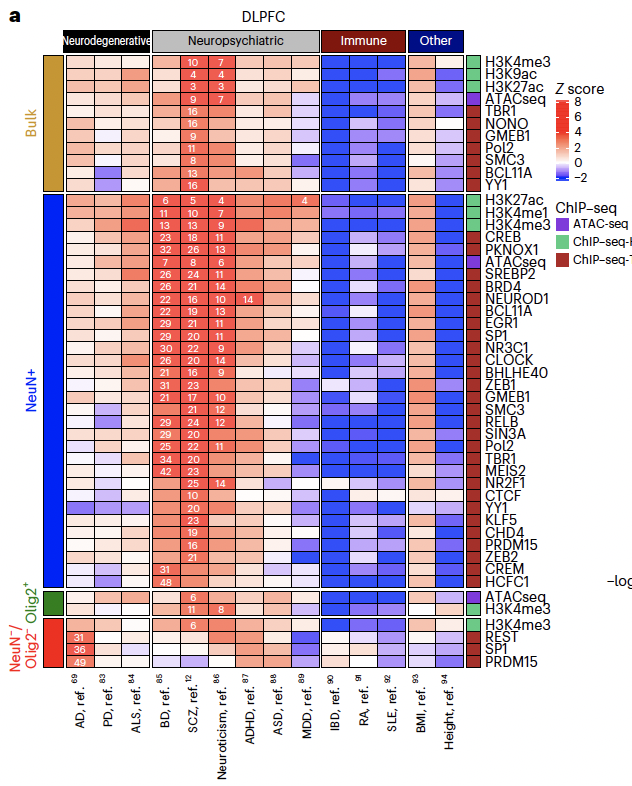
We discovered that TFs such as TBR1 and PKNOX1 are enriched at risk variants linked to psychiatric disorders, suggesting their potential role in disease mechanisms and highlighting the importance of these TFs in understanding neurological disease. 4/
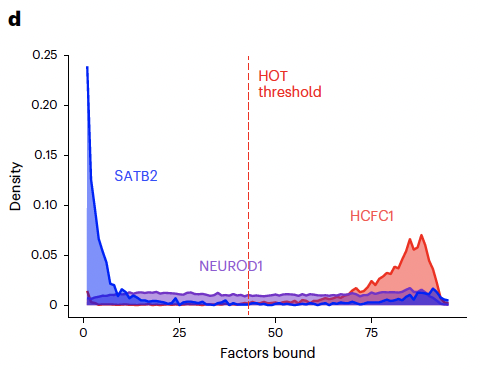
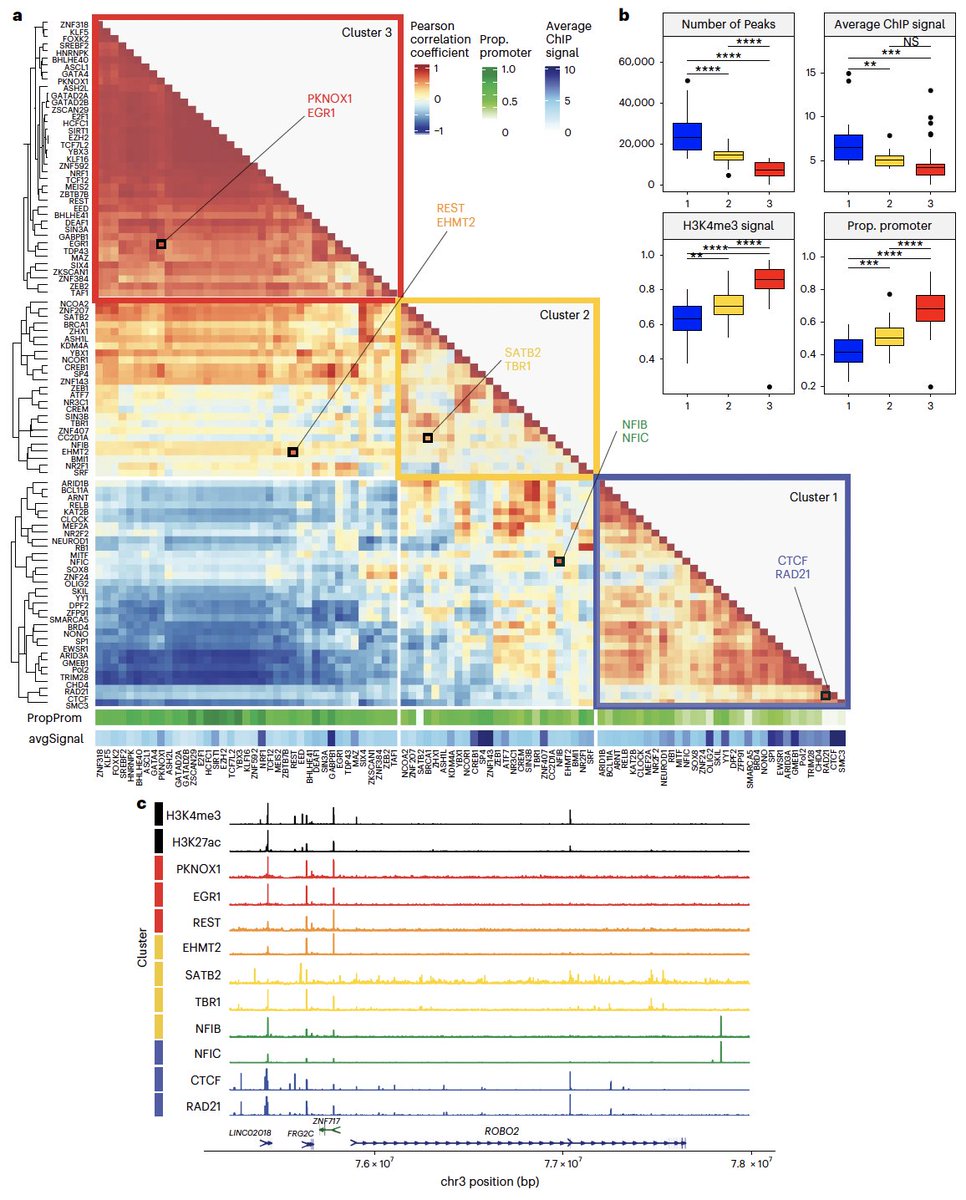
Key findings include unique binding patterns of neuronal TFs SATB2 and TBR1 in regions depleted of HOT sites. These regions are essential for promoting neuronal gene expression and highlight the importance of studying TF behavior in relevant cell types. 3/
Excited to share our paper #BrainTF is published in @NatureNeuro. We profiled #TF binding using ChIP-seq for over 100 TFs across 9 brain regions, along with ATAC-seq, RNA-seq, and DNA methylation on postmortem human brain tissue. https://t.co/H6wDKXw3WU 1/
We include binding maps from bulk tissues and sorted #neurons (NeuN+), oligo (Olig2+), and #microglia/#astrocytes (NeuN-/Olig2-). We identified high occupancy target (HOT) sites, which are crucial for understanding TF selectivity and prioritizing targets for future research. 2/
A multiomic resource (ChIP–seq, ATAC-seq, RNA-seq, DNA methylation) on bulk tissues and sorted nuclei from several human postmortem brain regions, including binding maps for more than 100 transcription factors
@JLoupe2@hudsonalpha#BrainTF
https://t.co/WdAW5eyWmd
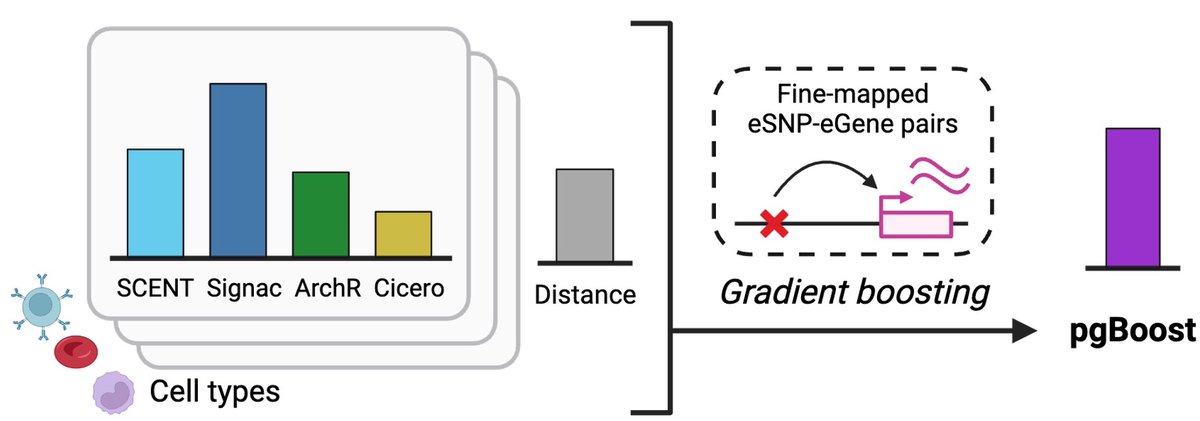
Excited to share our preprint proposing pgBoost, an eQTL-informed gradient boosting model that integrates scores from single-cell enhancer-gene linking methods and genomic distance to predict regulatory SNP-gene links (a key step in interpreting GWAS discoveries)!🧬
1/4
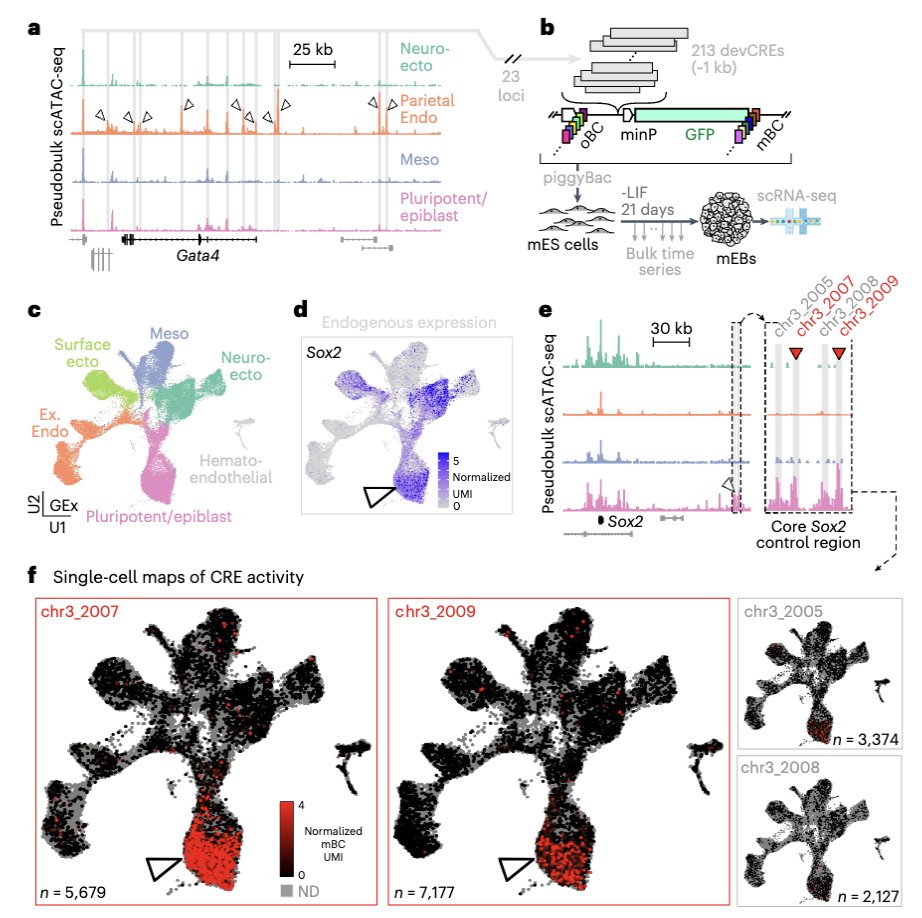
Finally out in @naturemethods from the brilliant @jb_lalanne & @SRegalad0, our highly quantitive single cell MPRA (scQer), applied to mammalian embryoids to find autonomous enhancers. Bonus = Tornado circular barcodes that are all kinds of useful. OA link: https://t.co/KtYXuwNOKQ
Could not be more delighted to present our work investigating how over 220,000 complex and molecular trait-associated genetic variants affect transcriptional regulation using massively parallel reporter assays!
https://t.co/1eoN4OxAvd
See below for a 🧵. 1/n
"caQTLs and haQTLs capture regulatory variations not associated with eQTLs and explain ∼49% of the functionally annotated GWAS loci"
Been clear for a while that accessibility & histone marks provide more info for explaining & fine mapping GWAS loci than expression. 1/
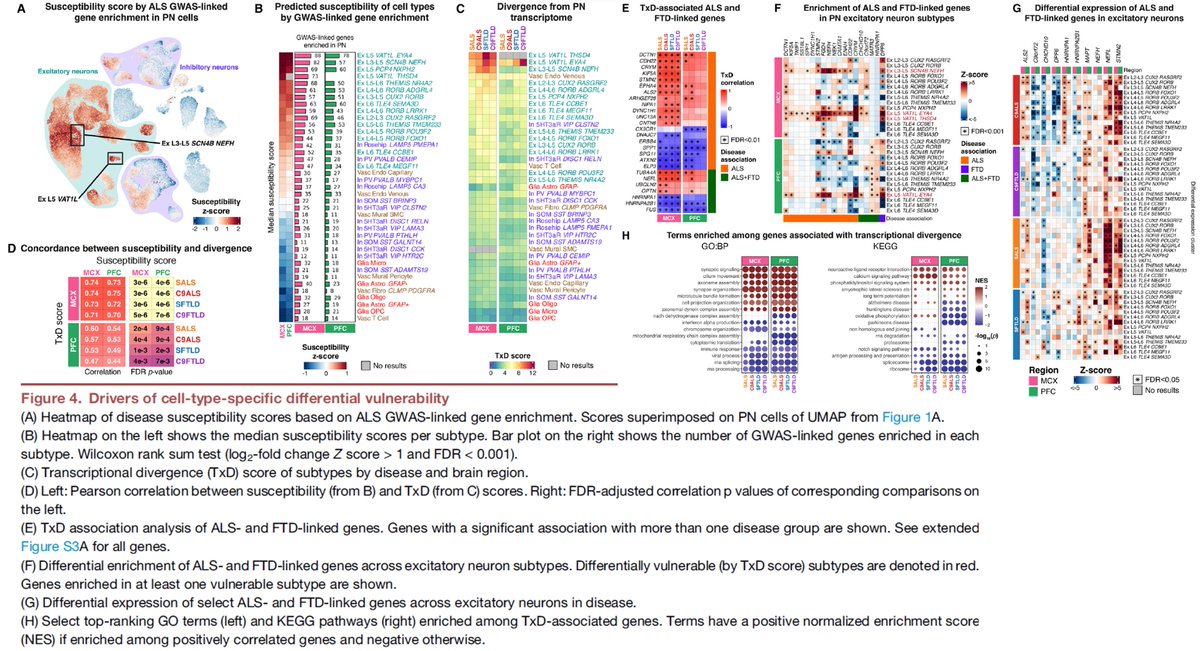
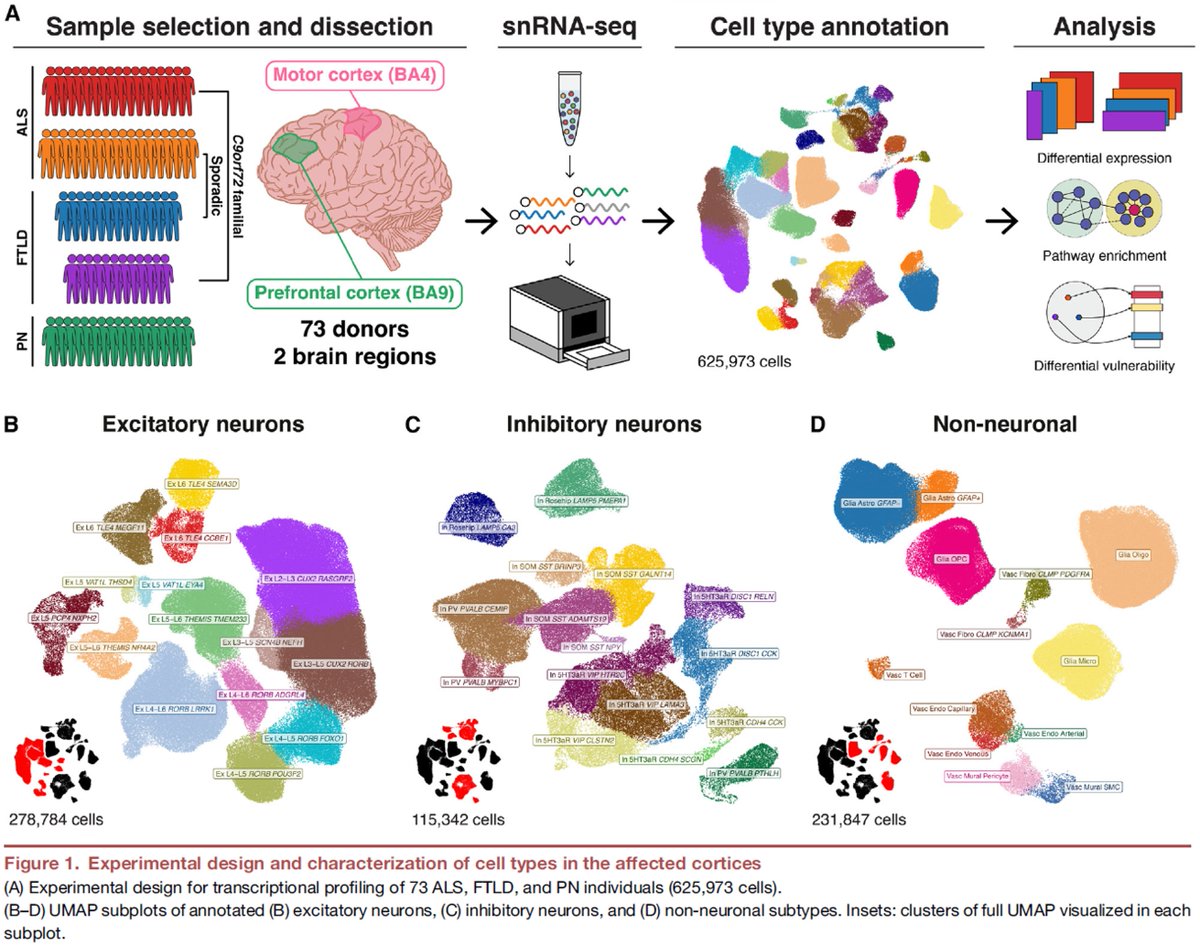
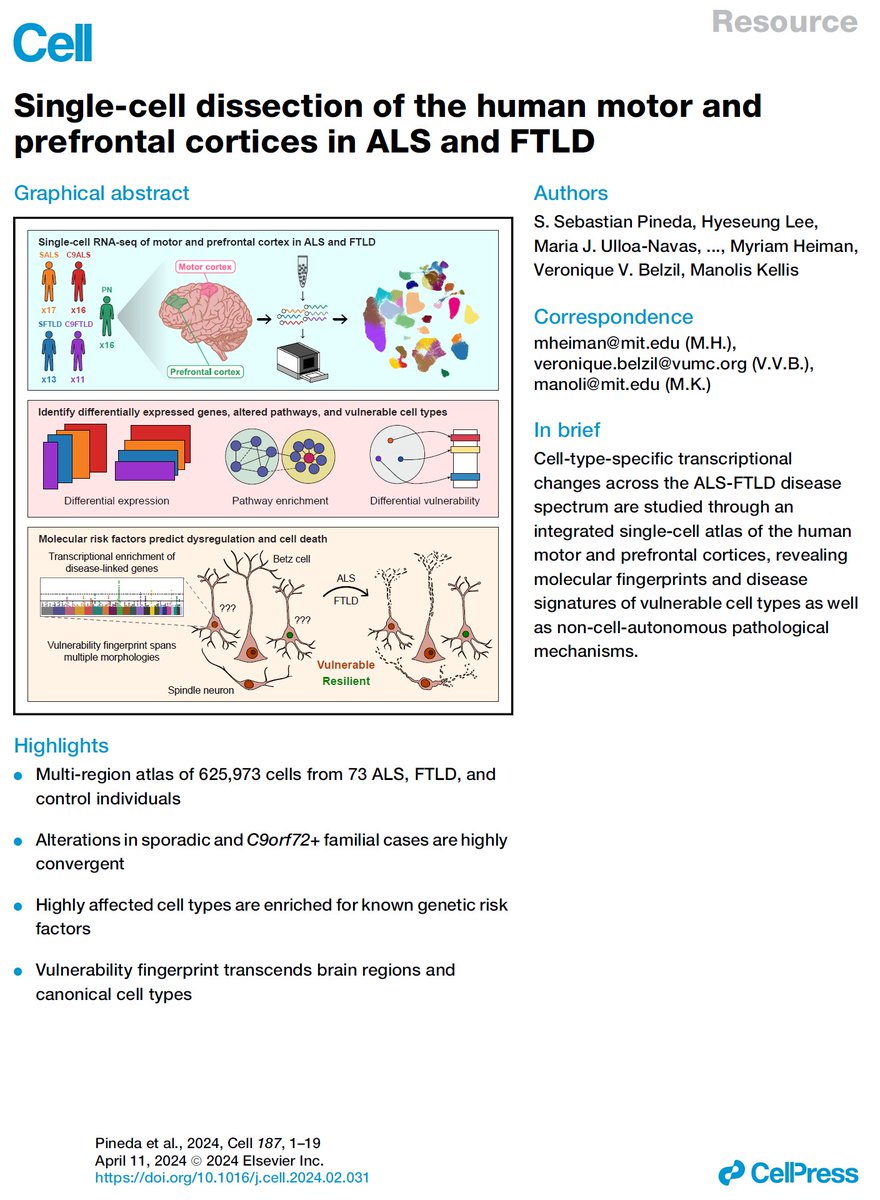
Excited and proud to share our #SingleCell dissection of #ALS and #FTLD out in #Cell this week, across 620,000 cells, 44 cell types, 73 donors, and two brain regions.
Although ALS affects #movement vs. FTLD #cognition, the two are nearly identical in the cell types, genes, and pathways they affect, both in #familial (monogenic) and in #sporadic (polygenic) cases, providing hope and candidate targets for common #therapeutic programs, implicating #LongRange-projecting neurons, and #cilia genes and pathways, necessary for their growth, but also #vascular changes and blood-brain-barrier function and integrity.
News: https://t.co/P8h8xM8qdM
Paper: https://t.co/c44unfZfkW
Preprint: https://t.co/phVZ9umRyx
Data: https://t.co/lBLG1wJ46Y
#NeuroDegeneration #ADRD #Alzheimers #FTD #FrontoTemporalDementia #LouGehrigsDisease #MyriamHeiman #SebastianPineda #VeroniqueBelzil #LiveLikeLou @iamalsorg@bsw5020@alsadvocacy@ProjectALSorg #MotorCortex #BetzCells #VENs #C9orf72 #TDP43 #NeuroDegen #MCx @MTPA_US @NIH @NIHAging @GerstnerFdn@PackardFdn
Recent changes to #scRNAseq quantification tools can leave one dizzy. In https://t.co/nY8aXuCKKc w/ @DelaneyKSull, @kreldjarn, @NikhilaSwarna, @GuillaumOleSan & @pmelsted we clarify what kallisto, Cell Ranger, salmon/alevin and STARsolo are doing and how they're performing. 1/🧵
Interesting study by Driscoll et al. shows that knocking down the DNA mismatch repair gene MSH3 dose-dependently reduced the HTT CAG repeat somatic expansion, but did not affect the already expanded HTT protein aggregates.
https://t.co/CXxgqeJb6p
The role of DNA mismatch repair (MMR) genes in Huntington's repeat stability and expansions has been long known. It's long evolving fascinating genetic story that I'd like to dive deep someday. Refer to this fantastic STAT article published last year to catch up on the story (https://t.co/yoqJLnWguK)
In brief, the role of MMR genes in modifying HTT repeat expansions has been long known for more than 20 years now, through both mice and human studies. But the interest in targeting DNA repair genes to treat Huntington's took off after GWAS studies in Huntington patients implicated MSH3 specifically (https://t.co/nkXpWT15N8). There is also interesting debates about the causal variant at the MSH3 locus, which was initially thought to be a missense variant then found to be a repeat variant (https://t.co/Wns6g496bj) that decreases MSH3 expression. More interesting fact is that the mechanism of MSH3's action on repeat expansion is likely disease agnostic; reducing its expression likely protects expansion of other repeats as well, for example CTG repeats in myotonic dystrophy type 1 (https://t.co/Wns6g496bj).
The mechanism how MMR genes expand the HTT repeats in the striatal neurons is still not clear. Scientists believe that the MMR genes when trying to fix the DNA loops (that form due to polymerase slippage), make it worse by adding more adding more repeats. However, there is overwhelming evidence that blocking MSH3 will prevent somatic expansions, which has been shown experimentally in mice before (https://t.co/JTBzxhswxy).
In the current paper, the authors show again that knocking down MSH3 in HTT mice model prevents expansion. But they also add some more insights. They show that the MSH3 knockdown doesn't have any effect on the repeats that are already expanded. It only prevents further expansion highlighting the importance of timing of intervention. The authors also show that there is an one to one relationship between MSH3 knockdown and prevention of repeat expansion. Meaning, to prevent repeat expansion by 100%, one needs to knockdown the MSH3 by 100% which is impossible and may not be safe. Though desired therapeutic efficacy is still not clear, even 50% knockdown might have a meaningful impact on disease progression. Good news is many academic and industry researchers are actively working on this problem, and more exciting studies will likely emerge in the near future.
https://t.co/XmxGVzrPAj