𝐎𝐆𝐑𝐎𝐌𝐍𝐀 𝐍𝐈𝐄𝐒𝐏𝐎𝐃𝐙𝐈𝐀𝐍𝐊𝐀‼️🚨
𝐎𝐅𝐈𝐂𝐉𝐀𝐋𝐍𝐈𝐄: 🇵🇱 Maja Chwalińska 🆚 Diana Sznajder w PÓŁFINALE ROLAND GARROS❗
❌ Aryna Sabalenka totalnie NIE DOWIOZŁA tego spotkania.
#RolandGarros#RG2026
In 2016, Geoffrey Hinton argued that AI would soon replace radiologists, yet demand for radiologists has since surged. The reason: AI reduced the cost of image analysis while increasing the value of complementary human capabilities: judgment, accountability, and apprenticeship.
That same dynamic now applies to software engineering. Although AI can generate code cheaply and quickly, companies risk confusing code production with the broader work of engineering reliable, scalable systems. Unlike radiology, software lacks strong liability structures or professional oversight, making AI-related errors harder to detect and correct.
As firms cut senior engineers and shrink apprenticeship pathways, they accumulate “capability debt” and “judgment debt” that may only become visible years later. Here’s what leaders can do to avoid dismantling the human expertise that gives AI-generated output value.
https://t.co/W5OtAiLYJl
Natural, human-like communication will be critical to unlock the benefits of AI. At the ElevenLabs Summit in Warsaw, @mati shared a preview of our most expressive AI model yet and demoed the future of customer experience with voice agents.
Singapore’s Foreign Minister, Dr Balakrishnan casually explaining how he built his own AI agent (a 2nd brain for diplomacy) using Claude & WhatsApp integration etc. on a Raspberry Pi
“You cannot govern a technology you have only been briefed on.” 🇸🇬
Meet the 'next Einstein' who turned down a $1.1 million university offer to lead a groundbreaking quest to decode the mysteries of the universe.
Sabrina Gonzalez Pasterski is redefining the image of a modern genius, possessing a brilliant mind that has earned her frequent comparisons to Albert Einstein. Her extraordinary journey began at just 12 years old when she built her own airplane, a feat that foreshadowed a stellar academic career. After graduating at the top of her physics class at MIT with a perfect GPA, she moved on to Harvard for her doctoral studies. Her groundbreaking research on the 'spin memory effect' even caught the attention of the late Stephen Hawking, who cited her work in his own papers. This meteoric rise made her one of the most sought-after scientists in the world, leading her to famously decline a $1.1 million offer from Brown University to pursue her specific intellectual passions.
Today, Pasterski leads the Celestial Holography Initiative at the Perimeter Institute for Theoretical Physics. Her work sits at the absolute frontier of science, focusing on an ambitious project to encode the universe as a hologram in an effort to reconcile the long-standing divide between spacetime and quantum theory. Unlike her historical predecessors, she leverages modern digital platforms to share her research and journey with a global audience, proving that the next generation of genius is as much about communication as it is about calculation. By standing on the shoulders of giants while solving mysteries that have stumped generations, Pasterski is proving that the future of physics is being written by those bold enough to forge their own path.
source: Harker, J. (2026). Next Albert Einstein is 32-year-old woman who turned down $1.1m offer from university. UNILAD.
The universe may not be perfectly uniform after all, a new series of papers hints. If confirmed, this could upend a nearly 100-year-old model of cosmology. https://t.co/MXbLhp60Jz
📍 AI agents are not scaling slowly because the technology is immature. They are scaling slowly because organizations have not redesigned enough control structures to absorb them.
As BCG highlights, 77% of employees believe AI agents will become important within the next three to five years, yet only 13% see them integrated into broader workflows today. Most organizations are still stuck in experimentation mode.
1️⃣ Governance Gap: AI agents introduce autonomous execution into workflows that were originally designed around human escalation and managerial oversight.
2️⃣ Structural Blind Spot: Most employees still do not fully understand what AI agents are, which means organizations are attempting workflow redesign without shared operational understanding.
3️⃣ Authority Shift: Once agents move beyond pilots, organizations must redefine accountability, approval rights, workflow ownership, and intervention thresholds across teams.
This is why agentic AI adoption is progressing far slower than model capability itself.
The real challenge is not building capable agents. It is redesigning organizational authority so humans know when to supervise, intervene, or hand off decisions entirely.
via BCG
https://t.co/sdJToSw8hh
@faryus88@ILoveBooks786@MarcoAnibal@bygregorr@dinisguarda@timo_vi@MHcommunicate@BFleurot@michaeldacosta@Zeepoffine@drsharwood@Alovesublime@harbi_nh@ramonvidall@9SManagement@jameslhbartlett@ozsilverfox@beglen@YalaCoder@bociek191905@FrRonconi@ankitku_jaiswal@EduardoValenteI@TalentedLearn@sonu_monika@NathaliaLeHen@felice_ragone78
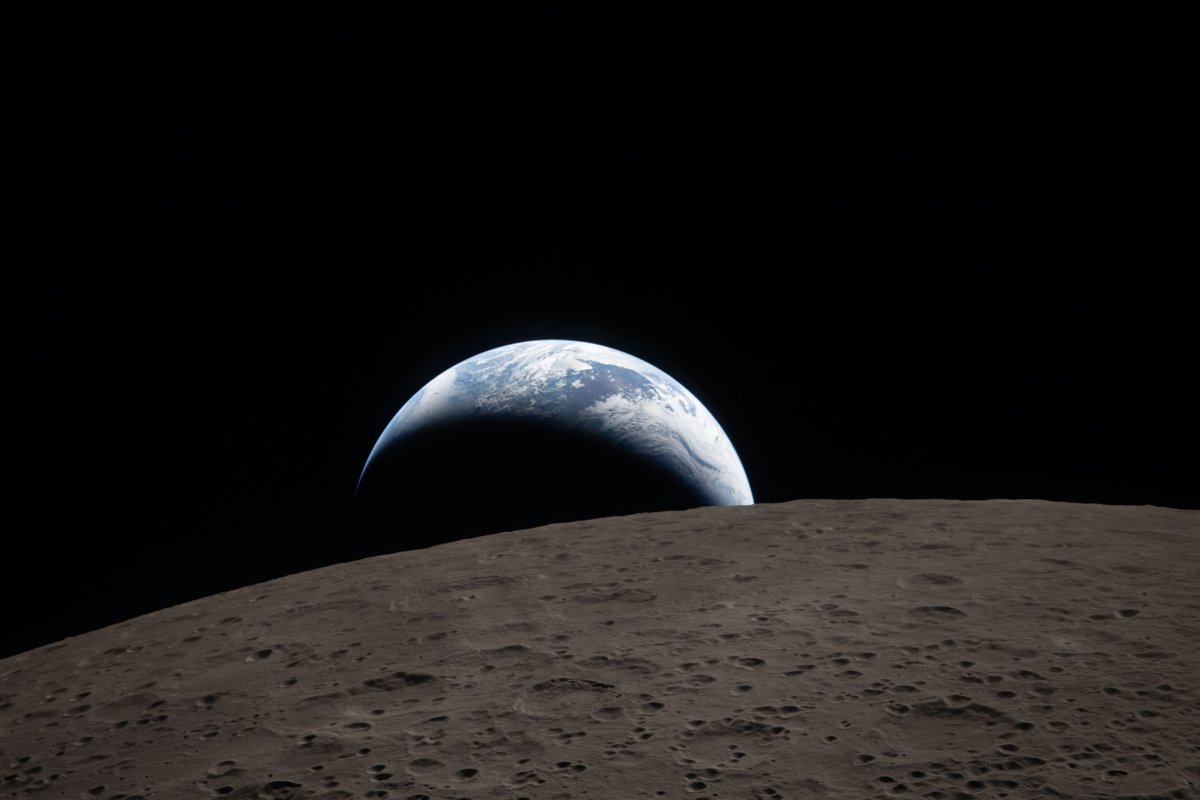
Earthset.
The Artemis II crew captured this view of an Earthset on April 6, 2026, as they flew around the Moon. The image is reminiscent of the iconic Earthrise image taken by astronaut Bill Anders 58 years earlier as the Apollo 8 crew flew around the Moon.
New record🥇
The Artemis II astronauts are now farther from Earth than humans have ever been! At 1:57 p.m. EDT, they broke the record set by Apollo 13 in 1970.
Their journey around the far side of the Moon today will take them a maximum distance of 252,752 miles from Earth.
"Thanks to you and to the whole team on the ground for building on our Apollo legacy with Artemis."
In addition to a wake-up song this morning, the Artemis II astronauts were treated to an audio message from Apollo 16 astronaut Charlie Duke.
Artemis II successfully deployed 4 CubeSats in high Earth orbit.
These satellites, developed with our Artemis Accords partners @DLR_en,
@CONAE_Oficial, @with_KASA, and
@saudispace, will demonstrate radiation research, space weather monitoring, and new technologies that will be critical to advancing future deep-space exploration.
Lock in, we’re Moonbound.
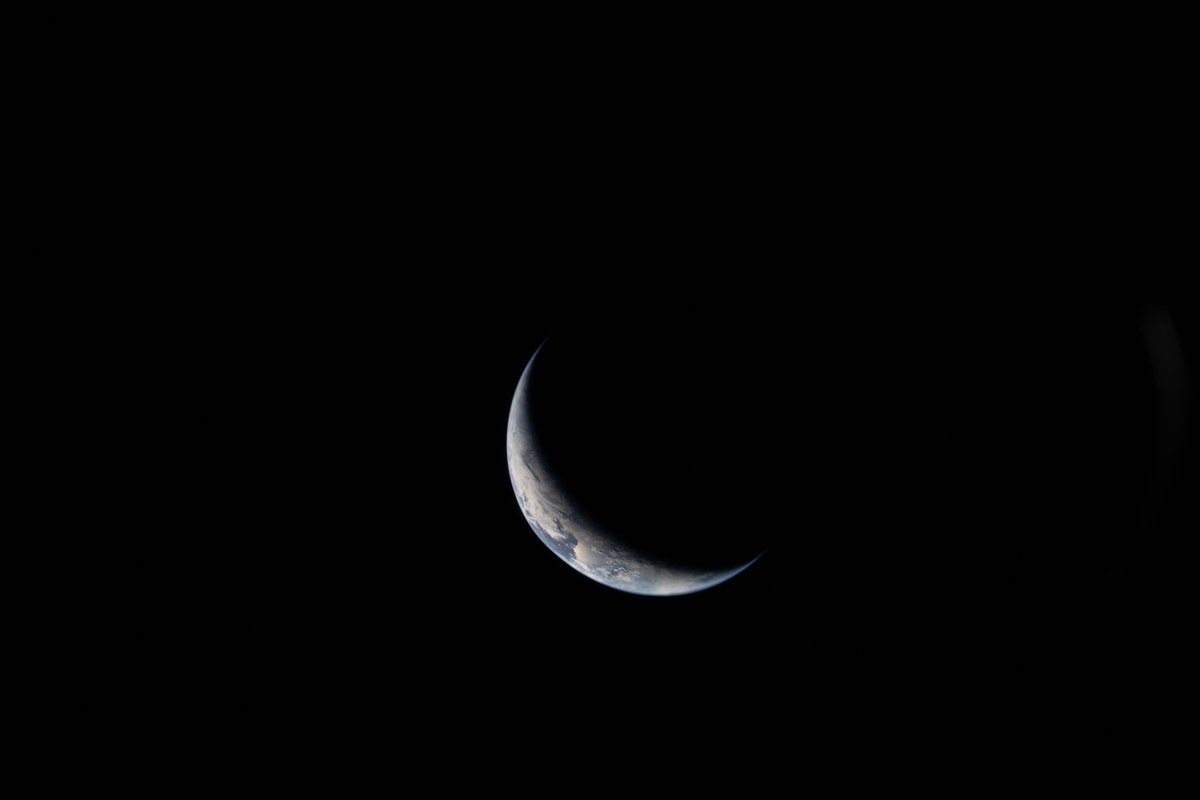
Artemis II astronauts are more than halfway to their destination, and preparations for lunar flyby are underway. During their trip around the far side of the Moon, they will capture imagery to share with scientists (and you, too!).