The Littleton Police Department (LPD) is continuing to investigate the murder of 18-year-old David Moore. Moore was shot and killed near the 300 block of Powers Place a year ago today, on April 4, 2024. LPD is asking anyone with any information to contact LPD at (303) 794-1551 or Crime Stoppers at (720) 913-7867. Individuals may remain anonymous and can earn up to a $2,000 reward. https://t.co/IT50Lh5cYb
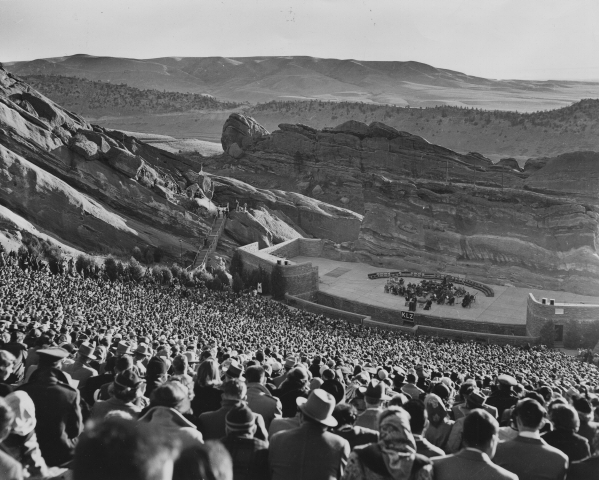
The iconic music venue known as Red Rocks Amphitheater began hosting its first performances more than 80 years ago.
On June 15, 1941, Red Rocks Amphitheater officially opened to the public with a performance by Helen Jepson of New York’s Metropolitan Opera singing “Ave Maria.”
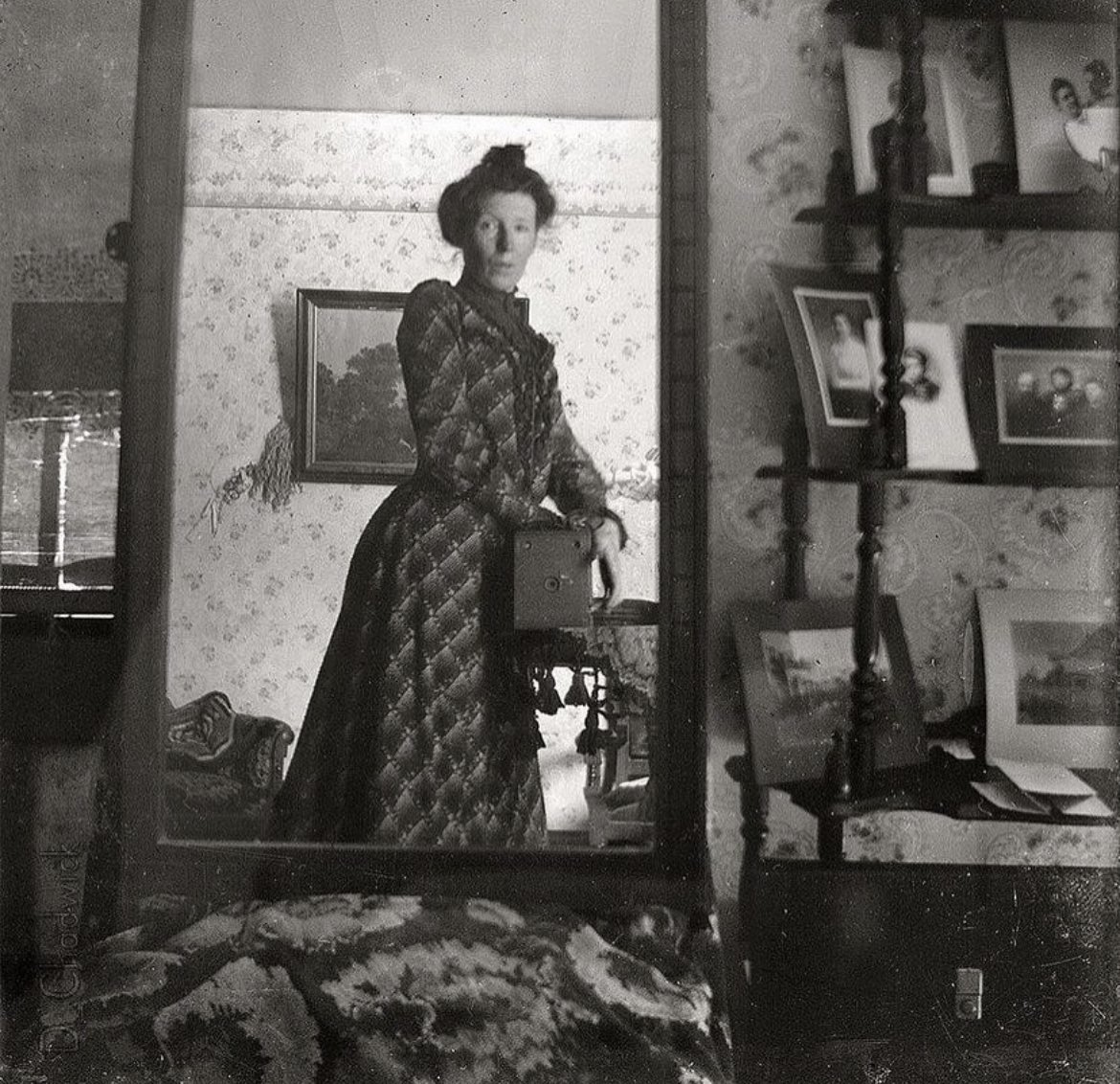
In 1900, a woman captured a selfie using a Kodak Box Brown camera, which was available for $1. The camera itself marked the beginning of modern photography and was introduced around the turn of the century. However, the roots of the camera can be traced back to 1790 when the UK's Thomas Wedgwood created a basic model. By 1826, French inventor Joseph Nicéphore Niépce had developed a camera resembling modern ones.
The first appearance of humans on film occurred in 1838, followed shortly by the first selfie taken in 1839 by American photographer Robert Cornelius. However, it wasn't until 1900 that the era of the selfie truly began with the introduction of Kodak's revolutionary Box Brownie Camera.
The Box Brownie Camera was a game-changer, retailing at just $1. It was constructed from cardboard and utilized 117mm roll film to capture two-inch photos. The camera gained immense popularity and sold in the millions. Its affordability, user-friendly nature, and introduction of the snapshot concept made it a significant milestone in photography history.
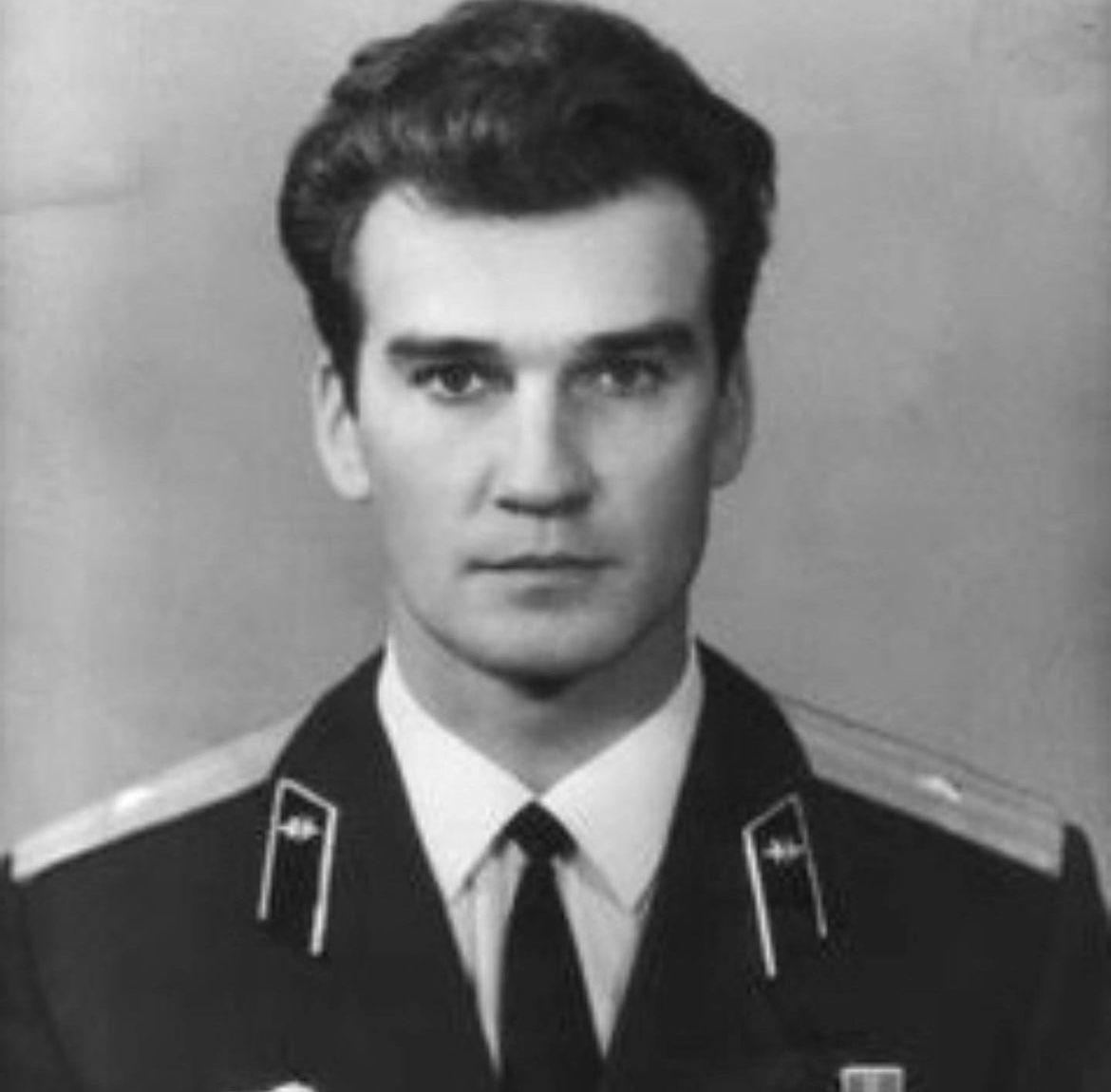
Stanislav Petrov, the man who saved the world from nuclear disaster, on this day in 1983, 39 years ago today, saw the word "LAUNCH" flash across the Soviet Union's attack early warning system. His screen stated with high reliability that a total of five American intercontinental ballistic missiles (ICBMs) had been launched and were headed toward the Soviet Union. Petrov had to make a decision: should he report an incoming American strike, or should he hold off, confident that what they were seeing was a false alarm?
If he reported it, Soviet nuclear doctrine called for a full nuclear retaliation. There would be no time to double-check the warning system or seek negotiations with the U.S. This occurred during the Reagan administration, which had taken a firmer stance against the Soviets compared to previous administrations. The Reagan administration was deploying Pershing I nuclear-armed missiles to West Germany and Great Britain, capable of striking the Soviet Union. Given these circumstances, Petrov had reasons to believe that Reagan's brinkmanship had escalated to an actual nuclear exchange.
However, Petrov chose not to report the incoming strike. In the end, his decision proved to be correct. The system had mistaken the sun's reflection off of clouds for a missile. A 1979 report by Congress had estimated that a full-scale Soviet assault on the U.S., and an eventual counter-strike, would have resulted in over 100 million deaths. Petrov, almost single-handedly, prevented those deaths.
Despite being right, Petrov was relentlessly interrogated afterward and never rewarded for his decision, according to David Hoffman of The Washington Post.
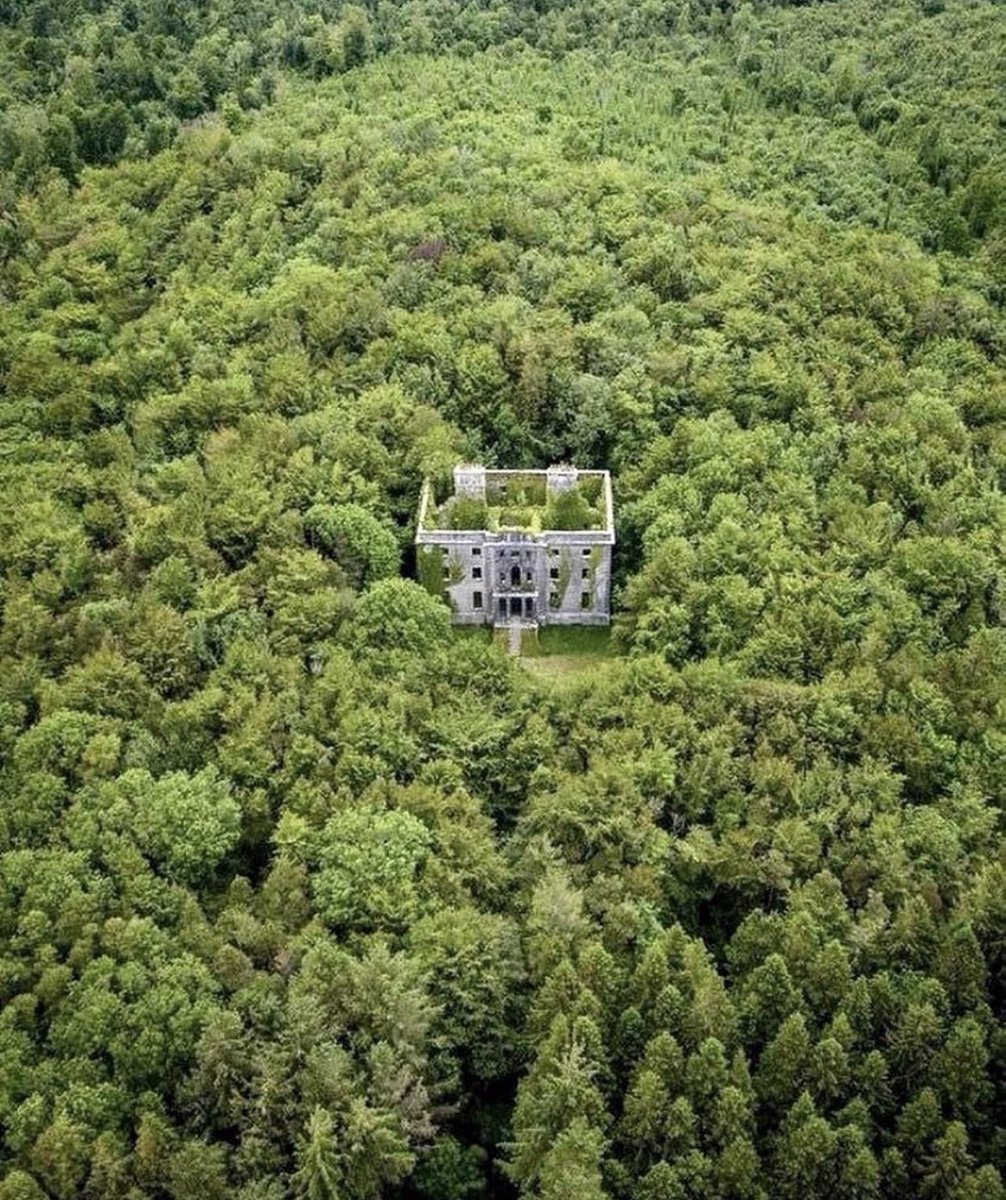
Moorehall, a house and estate built in 1795 in Mayo, Ireland, was tragically burnt down in 1923 during the Irish Civil War and has remained abandoned since. The history of Moore Hall is rich, with tales dating back as far as 400 AD. The Moores, an aristocratic Irish family, were the builders of this grand estate between 1792 and 1795. George Moore, a wine merchant who amassed a vast fortune in Spain through his fleet of ships, was a prominent figure in the family.
Over the generations, the Moore estate witnessed the active involvement of several family members in the social, cultural, and political history of Ireland, spanning from the late eighteenth century to the early twentieth century. Notably, George Moore, the renowned Irish writer, was the last owner of the house, and it attracted frequent visits from W.B. Yeats, another prominent literary figure.
According to sources, George Moore had been warned about the ill fortune surrounding the area near Muckloon Hill. Local legends recount the death of Drithliu, the King of Connaught's druid, in the vicinity around 400 AD.
The burning of Moore Hall in 1923 during the Irish Civil War was a significant loss for Irish history on various levels. Sadly, the house was never restored and stands today as a haunting reminder of the past. Although the estate currently serves as a visitor attraction, the house remains closed to the public due to its dilapidated state. Descriptions depict the house as a desolate shell, with broken walls, toppled bricks, and fallen masonry, illustrating its poor condition.
This man was a teacher for 40 years. At year 2 or 3, on Picture Day, he realized he'd worn the same outfit as the previous year, so he got the idea to continue to do so for his whole teaching career (1973-2012)
This @NASAWebb image of the Pillars of Creation helps astronomers determine how stars form. Plus, it makes pretty sweet digital wallpaper.
Download high-resolution images from https://t.co/riN377T4Ir.
Last night, PBS in Denver featured a documentary about my patient Ellie White, her mother Beth White, and our work toward finding a cure for Wolfram syndrome. It was an incredible showcase, and I hope you can help us spread the word. https://t.co/xd3Mus9UuW
“The conundrum we face: The individual’s decision to be armed feels rational, maybe is rational, but the societal sum of all those individual decisions is madness,” writes @danlevitin: https://t.co/wt2BZlnABv
Tiny bits of Saturn’s rings are falling into the massive planet, causing its upper atmosphere to heat up. The discovery was made using 40 years of data from several @NASASolarSystem missions, including @NASAHubble: https://t.co/GXIGnIFMoL
When you watched him as a child and thought, he was painting the same thing over and over again when he was actually painting a whole journey over time.
What Happens When a Teen is Addicted to Marijuana and Tries to Stop?
If you’re officially addicted to marijuana, you’re going to have trouble quitting — no matter who you are. Despite what some marijuana advocates claim, withdrawal can cause intense physical and psychological effects that make stopping the use of marijuana very difficult.
Symptoms may include, in alphabetical order:
Abdominal pain
Aggression
Anger
Anorexia
Anxiety
Depression
Headaches
Insomnia
Irritability
Restlessness
Vomiting
Collectively, these symptoms comprise what mental health professionals call “cannabis withdrawal syndrome,” or CWS. They consider CWS “a diagnostic indicator of cannabis use disorder,” which includes both people addicted to cannabis and those dependent on it. One Harvard Medical School meta-analysis put its prevalence at 47% for quitters.
Sometimes these withdrawal symptoms can prove so uncomfortable or painful that the only way to feel better is to go back to using. This is why some teens think marijuana “helps” them, when they are just using their drug of addiction, which relieves their symptoms. Just like if you’re addicted to nicotine and try to go “cold turkey,” you’ll feel bad, but if you use again, you’ll magically be “better.” This is an obvious sign of addiction.
However, you can manage CWS symptoms, though not very well, according to Harvard. You can try psychiatric treatment, specifically cognitive behavioral therapy, or your doctor can treat your CWS with medications, including gabapentin (for anxiety), zolpidem (to help you sleep), and dronabinol (synthetic THC to cut back). At this point, researchers haven’t yet determined whether natural CBD helps soothe CWS. But all these medications have side effects, so none of them seem to be a good solution.
Good options seem to be exercise, therapy, support groups such as marijuana anonymous, hobbies, and generally staying busy and distracted. If you are unable to quit on your own, consider a residential treatment center to help you detox and develop new habits. If you’re suffering from CWS, don’t give up! It’s tough no matter what. You may have to grin and bear it for a month while the THC clears your system, but you can defeat CWS if you stay sober after that.
https://t.co/csUAUWnh3a
PEAK BLOOM! PEAK BLOOM! PEAK BLOOM! PEAK BLOOM! PEAK BLOOM! PEAK BLOOM!
The blossoms are open & putting on a gorgeous show. We hope to see you soon.
🌸🌸🌸🌸🌸🌸!
Plan your visit: https://t.co/h04Gu0ksc1
#CherryBlossom#BloomWatch#WashingtonDC