Scientist - @MSKCancerCenter | We study dead cell clearance / phagocytosis | #Immunology#CellBiology#Metabolism | views my own. @FreeConTalk Signatory.
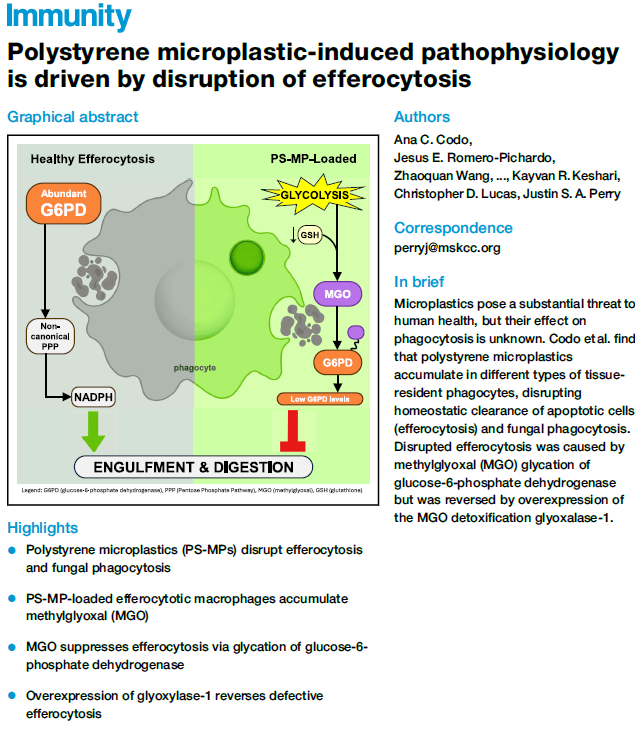
Those who know me, know I’m not someone who changes his preferences & behaviors lightly. As Ron Swanson said, “I regret nothing. The end.” Well, let me tell you about our new study, out from @ThePerryLab@MSKCancerCenter in @ImmunityCP@CellPressNews, which is the exception. /1
Epistemic philosophy taught us what computational biology, big data proponents, & AI are going to learn the hard way. Axioms don't exist. You can't just collect more & more data to 'know' something. Empiricism is a futile epistemology. Read Quine's Two Dogmas of Empiricism.
This is an important paper to read for tamping down some of the "AI will solve biology" enthusiasm.
The researchers pretrained 400 models on a corpus of 22.2 million cells and performed 6,400 evaluations. They found that current single-cell foundation-model approaches frequently plateaued at substantially smaller training sizes and did not exhibit clear data scaling laws analogous to language models. Importantly, this suggests that simply collecting more of the same kind of single-cell data is not necessarily the solution. Better coverage of biological states, conditions, perturbations and relevant endpoints may matter more.
One of the key things to realize about biology is how emergent and heterogeneous it is, which means that simply gathering more data at one level is insufficient for developing foundation models, designing better drugs etc. We need *relevant* data at scale for many different levels and interactions, including single gene, multi-gene, gene-protein, protein-protein, cell-cell etc. A lot of this data - for instance spatial cell-cell data -is not easy to acquire at large scale, and we have just started to do it. And even when we have that, the reasoning models will have to figure out which one of these data types is most suitable for a particular problem.
I see a lot of progress using AI for data analysis and gathering in biology in the future, but it's critical to recognize how the data problem for AI in biology is fundamentally different from the data problem in areas like image and text analysis (which is hard to begin with).
https://t.co/tiqbnYvn77
@HankBank007 I disagree, not because I "love and worship AI", but because there can absolutely be benefit to some people or specific areas without there being a net benefit. I'm sure the same analysis could be applied to the internet. I think my analysis is reasonable 🤷♂️.
The harder they spin, the less I believe about the impact of AI on human health and biology. Oh, it will be a benefit. But the costs will outweigh the benefits. This is feeling a bit dot-com bubbly to me.
Dario Amodei says cancer, Alzheimer’s, heart disease, and mental illness will be relics of the past in less than a decade, and that "we can create an age of miracles"
“You know, if today we look at things like cancer, Alzheimer’s, heart disease, mental illness, these will be relics of the past in, I think, less than a decade."
"And I believe that the company which gets the risks right will also be the company that has the license to operate that society trusts and society believes can build the benefits in the right way."
"I think if we do this right, we can create an age of miracles where humanity is able to solve problems that have eluded us for millennia."
"We have to make sure that all the risks, all the ways that things can go wrong with this technology, we very carefully address those risks as we bring the benefits, and as we have a viable business at the same time.”
@MTomasson For sure. Expectation setting is vitaly important with emerging, especially potentially seminal, technology. It helps evaluate the successes, failures, and gaps for new innovation. This is especially important in biology & biomedical science, given the noisy nature of our work.
@KAyasoufi It's definitely doable, we got one while I was in my early days! It is true you have to mitigate the criticism with a co-mentor and/or mentoring committee, but that isn't a bad thing to have for both the PI and trainee.
We often try to get at this. At least for minimally proliferative macrophages, the culture conditions (media, oxygen levels, etc) are a large contributor, and have helped us discover some cool, unexpected findings, but still tease out mechanism you can't do in vivo.
@katrosenfield He absolutely has the free speech right to say this, but what both sides often get wrong is that just because we have this right doesn't mean a private company has to accept that speech as part of their business model. You have the right to speak freely, & suffer the consequences
@katrosenfield It also ignores the extensive evidence suggesting that boys and men are far less inclined to enjoy reading of any sort. But, I've come to expect this sort of reasoning from people who favor heavy-handed top-down interventions.
For Breast Cancer Awareness Month, @MSKCancerCenter released this wonderful piece on @anaccodo, PhD student in @ThePerryLab. Ana's story, her battle with cancer & how she has succeeded despite such dire circumstances, is truly inspiring. Please read.
https://t.co/Vy23qntxNX
Sometimes observations from different fields using different approaches & methods converge on a concept of potentially huge clinical importance.
This work, led by @Nancy_T_S in @KeshariLab w/ the macrophage work led by Ya-Ting Wang & others in @theperrylab, is such a case.
Congrats to @Nancy_T_S for pulling together and leading this great collaborative effort between our lab and @JustinPerryPhD! Here we build more on the concept of metabolic symbiosis… https://t.co/4EF07agQ0H
@Nancy_T_S@KeshariLab@ThePerryLab Congrats to Nancy and all the members of the labs who labored to get this over the finish line. I will just say, this is clearly not the end of the story, and there are a lot of potential threads left to explore and explain.
@wc_ratcliff@arjunrajlab Too much garbage in biorxiv, and no real buy-in to review or read.
We should just go back to publishing books and letting people in the field write their own books to criticize us or build off of it.