This is f*cking gold, Andrej Karpathy, a co-founder of OpenAI, put the AI tools he built for his own life on GitHub for free, and most people still use AI exactly the way it came out of the box
6 free repos from Karpathy:
-> llm council (by karpathy)
https://t.co/2Okv3eHZ8x
your question goes to several AIs at once, they rank each other's answers without knowing who wrote what, then a chairman model writes the final one
-> reader3 (by karpathy)
https://t.co/GAnxWqw018
the book reader he made to read with an LLM one chapter at a time. in his words, 90% vibe coded
-> autoresearch (by karpathy)
https://t.co/BC0UetEGjW
an agent that runs its own experiments on one GPU while you sleep, in about 630 lines
-> nanochat (by karpathy)
https://t.co/yNLcMl5ZYH
"the best ChatGPT that $100 can buy". train your own from scratch
-> micrograd (by karpathy)
https://t.co/yPAOLb0tgy
how a neural network actually learns, small enough to read in one sitting
-> nn zero to hero (by karpathy)
https://t.co/jteqIzQZLr
his full free course, from one neuron to building GPT yourself
"code is ephemeral now" he says. so ask your AI to change any of them however you like
bookmark it before it gets buried
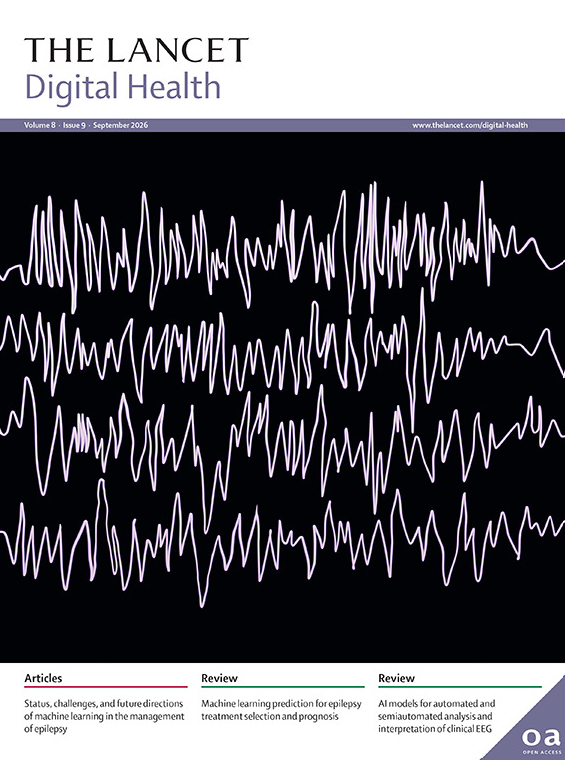
📢 New issue out NOW!
Featuring a collection of papers on #AI and epilepsy research, a modified Delphi consensus study for AI in diabetic eye screening, and a trial evaluating a computer-aided feedback system on colonoscopists’ adenoma detection rate.
https://t.co/lYVw6UEIFu
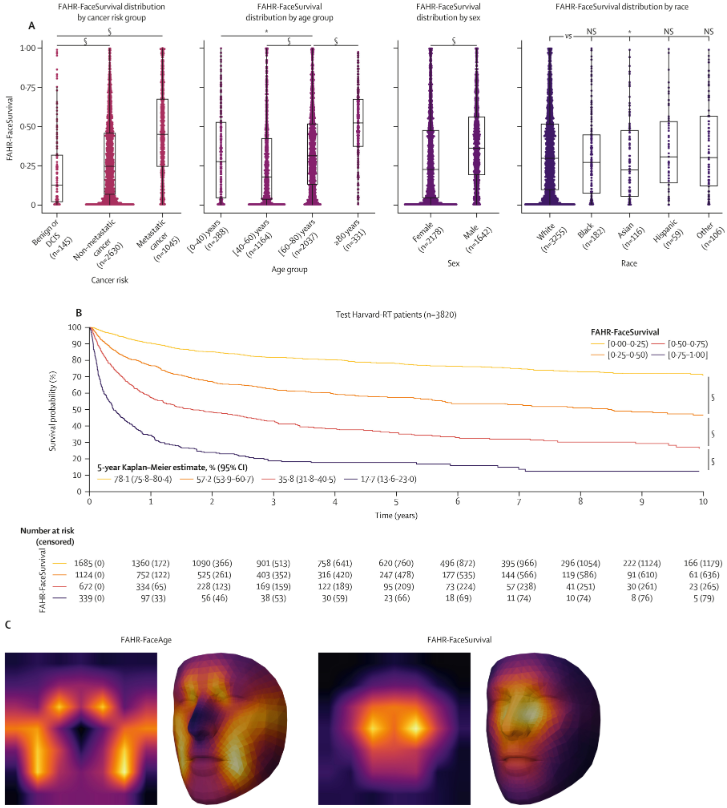
NEW Research: Foundation #ArtificialIntelligence models for health recognition by use of face photographs (FAHR-Face): a model development and validation study. @Dr_RayMak@HugoAerts
Read it here: https://t.co/c9Wo01ohN6
ClinicalAge, an AI-derived metric from longitudinal electronic health records, varies widely from an individual's chronological age. And it's correlated with risk of many diseases and cancers, as shown below, from 2 huge cohorts @uk_biobank@LancetDigitalH
https://t.co/BzXgLzHdA9
Biological aging clocks as biomarkers of human aging: Biological basis, methodological design, and epidemiological implications
https://t.co/rkbS65boim
Super proud to announce AlphaGenome 2 - our new DNA sequence model! 🧬 It predicts the impact of DNA variants in different specific cell types - unlocking crucial information for understanding complex diseases. Available for academic research via our API: https://t.co/dEyrvpTxIl
First real skin longevity product discovered by @CambrianBio already on the market: a novel mTORC1 inhibitor - @rapalogix
https://t.co/gUE7P1Y8lS
Bigger writeup coming soon ;)
High-dose NMN tripled blood NAD+ levels in older adults over 24 weeks. Physical performance, body composition, and metabolic markers showed no significant improvement. This disconnect reveals something important about NAD+ biology.
Researchers at the University of Tokyo conducted a 24-week randomized, double-blind, placebo-controlled trial with 62 healthy older adults (average age 68). Participants received either 1250 mg of NMN daily or placebo. This represents one of the longest and most comprehensive human studies on NMN supplementation.
The trial measured everything: muscle strength, walking speed, body composition, hearing, blood lipids, glucose metabolism, and dietary behaviors. The metabolomic analysis tracked NAD+ and eight related metabolites in whole blood at baseline and 24 weeks.
Key findings:
• NAD+ levels increased 3.6-fold in the NMN group
• Related metabolites (NMN, nicotinamide, nicotinic acid metabolites) all increased significantly
• No improvement in grip strength, gait speed, or 6-minute walk test
• No significant changes in glucose control or HbA1c
• Soft lean mass showed a nominal increase but didn't survive correction for multiple comparisons
• No improvement in hearing (the pre-specified primary endpoint)
• Treatment was generally well tolerated with no serious adverse events directly attributed to NMN
The metabolomic profile suggests NMN metabolism involves multiple pathways. The significant increases in nicotinic acid mononucleotide (NAMN) and nicotinic acid adenine dinucleotide (NAAD) indicate activation of the Preiss-Handler pathway, possibly through conversion of NMN to nicotinic acid by gut bacteria. This differs from the salvage pathway most commonly discussed.
The researchers also observed increased nicotinamide (NAM) levels following high-dose NMN. NAM is a product of NAD+ consumption and a known noncompetitive inhibitor of SIRT1 deacetylase activity. This raises a possibility: if lower-dose NMN (250 mg) benefits observed in earlier studies operate partly through SIRT1 activation, the higher NAM levels from high-dose supplementation might attenuate that effect.
This creates a dose-dependent paradox. Higher doses generate more NAD+ but also more NAM, potentially inhibiting the very enzymes (sirtuins) that NAD+ is meant to activate. The relationship isn't linear. More precursor doesn't necessarily mean more biological benefit.
An important caveat: recent evidence challenges the assumption that NAD+ levels universally decline with age. @rhhoutkooper lab put out a very important study that points to NAD levels not declining as we age (link in comments).
This study demonstrates that supplementation can substantially elevate NAD+ levels, but that elevation occurs regardless of whether baseline levels were actually deficient. The intervention augmented NAD+ above normal, rather than necessarily restoring depleted levels.
The study compared 1250 mg daily against earlier work using 250 mg. That lower dose showed improvements in gait speed and grip strength in older men over 12 weeks. The higher dose didn't replicate those benefits despite producing much larger increases in blood NAD+. This suggests an optimal therapeutic window exists rather than a simple more-is-better relationship.
Soft lean mass (muscle plus water and protein, excluding fat and bone) showed a nominal increase in the NMN group. However, this finding didn't remain significant after false discovery rate correction for multiple comparisons. The researchers note this should be interpreted as exploratory. No corresponding improvements appeared in actual physical performance measures.
The dissociation between body composition changes and functional performance matters. Two people can have identical muscle mass but vastly different strength and mobility depending on neuromuscular efficiency, muscle quality, and metabolic flexibility. Mass without function indicates the intervention affected quantity without improving underlying muscle physiology.
Exploratory subgroup analyses identified nominal differences in HDL cholesterol (increased in participants over 71) and total cholesterol (decreased in those under 71). Dietary behavior questionnaires showed changes in eating style scores. None of these findings survived correction for multiple comparisons and require confirmation in larger studies.
One participant developed elevated liver enzymes at week 6 and discontinued the intervention. Mild elevations were already present at baseline, and enzyme levels stabilized after discontinuation without further increase. The temporal pattern suggests this was unlikely directly caused by NMN, though the possibility can't be completely excluded. Overall safety monitoring showed the 1250 mg dose was generally well tolerated.
The hearing endpoint deserves context. Age-related hearing loss typically progresses over years, and the 24-week intervention may have been too short to detect changes. Structural damage like hair cell loss and neurodegeneration may be difficult to reverse even with metabolic interventions. The study wasn't powered to detect subtle changes in auditory function.
The trial had limitations.
The sample size was relatively small. Participants were relatively healthy older adults, which may have created a ceiling effect limiting the ability to detect functional improvements. The study didn't measure reduced pyridine nucleotides like NADH due to stability concerns under the sampling conditions, constraining interpretation of redox balance.
What this study demonstrates clearly: oral NMN supplementation can substantially and sustainably augment systemic NAD+ metabolism in humans.
What remains uncertain: whether that biochemical change translates into clinically meaningful improvements in the physiological functions people care about, muscle strength, metabolic health, or physical performance.
NAD+ biology appears more tightly regulated than simple precursor availability would suggest. Increasing substrate doesn't proportionally increase pathway output. Cells maintain homeostatic thresholds that may differ across tissues and functional domains. The body compensates.
The field needs dose-ranging studies to identify optimal biological doses, isotope tracer studies to map metabolic flux through different NAD+ synthesis pathways, and tissue-specific measurements to understand where augmented NAD+ actually accumulates and whether it reaches the compartments that matter for function.
The disconnect between mechanism and function is where the interesting biology lives. NAD+ levels respond to supplementation. Physical function doesn't. Understanding why that gap exists will reveal more about aging biology than either finding alone.
Longevity Grok, a.k.a. your personal longevity superintelligence (PLSI), is an open-source multi-agent workhorse designed to keep you alive & healthy for as long as possible. A collaborative effort from @InSilicoMeds & the Sinclair Lab @harvardmed. Visit https://t.co/Hn42ZnyK2z
A study found no age-related decline in whole-blood NAD. Some trollfessors took that to mean NAD has no role in aging. Now Gardell and Baur explain why the report of the theory's death was an exaggeration 🧵 @NatMetabolism
AI now generates molecules far faster than the wet lab can test them.
The bottleneck in #AIxBio has shifted. That’s why we've built one of the world’s largest self-driving lab fleets: 300+ workstations running 24/7, generating data 40x more efficiently.
We've been calling it mitochondrial dysfunction for decades. Turns out that term is scientifically meaningless, and it's been holding back progress in understanding how mitochondria actually work.
@MitoPsychoBio and colleagues published a perspective in Nature Metabolism arguing that the language mitochondrial scientists use fails to capture what mitochondria actually are: multifunctional organelles that dynamically recalibrate across dozens of independent activities depending on what cells need.
The problem starts with oversimplification. Mitochondria get reduced to the powerhouse of the cell in introductory biology. That framing suggests a single primary job: make ATP. Reality is more complex.
Mitochondria synthesize steroid hormones. They produce iron-sulfur clusters required for hundreds of proteins throughout the cell. They regulate innate immunity and antiviral responses. They control programmed cell death. They generate signaling molecules that reprogram nuclear gene expression. They can transfer between cells to rescue damaged tissue.
Key insight: These aren't backup functions that kick in when energy production fails. They're simultaneous, independent, cell-type-specific roles that mitochondria perform constantly.
Here's why the terminology matters:
When researchers measure decreased ATP production and call it mitochondrial dysfunction, they're collapsing dozens of distinct mitochondrial activities into a binary working/broken framework. That creates problems:
• A mitochondrion producing less ATP might be signaling rather than failing
• Different mitochondrial activities can change independently
• What looks dysfunctional in one context may be adaptive in another
• Cell-type differences get lost when using generic terms
The paper proposes a hierarchical terminology system with five levels:
1. Cell-dependent properties: Mitochondrial characteristics that vary by cell type. Neurons, muscle cells, and immune cells contain functionally distinct mitochondrial populations adapted to tissue-specific demands.
2. Molecular features: The structural and compositional elements. Membrane potential, protein composition, lipid content, mtDNA copy number, cristae architecture.
3. Activities: Specific biochemical processes. Oxygen consumption, ATP synthesis, reactive oxygen species production, calcium buffering, metabolite synthesis.
4. Functions: The biological purposes these activities serve. Energy provision, biosynthesis, signaling, quality control, cell death regulation.
5. Behaviors: Dynamic responses over time. Fusion, fission, movement, mitophagy, biogenesis, transfer between cells.
The framework distinguishes what mitochondria are made of, what they do biochemically, why they do it biologically, and how they change over time.
Example of how this improves precision:
Old framing: This drug causes mitochondrial dysfunction.
New framing: This drug decreases complex I activity, reducing ATP synthesis capacity while increasing superoxide production at complex III, without affecting calcium handling or steroid synthesis.
The second version identifies which specific mitochondrial activities change and which remain intact. That matters for predicting side effects, understanding mechanisms, and designing interventions.
The malleable nature of mitochondria creates additional complexity. Mitochondrial characteristics can shift within minutes to hours in response to nutrient availability, stress, or signaling molecules. These recalibrations are often reversible and physiologically appropriate.
Calling a physiological recalibration dysfunction conflates adaptation with pathology. A muscle cell's mitochondria after endurance training look different from before training. Neither state is dysfunctional. They're optimized for different demands.
The perspective argues this terminology shift will improve three outcomes:
Teaching: Students learn mitochondria are multifaceted organelles rather than single-purpose powerhouses, building a more accurate mental model from the start.
Research progress: Specific terminology forces specific measurements. Asking which mitochondrial activities change rather than whether mitochondria are dysfunctional leads to more mechanistic studies.
Interdisciplinary collaboration: Clearer language helps researchers from different fields understand exactly what aspects of mitochondrial biology are relevant to their questions.
The implications extend beyond semantics. How scientists conceptualize mitochondria shapes which questions get asked, which measurements get prioritized, and how findings get interpreted.
Moving from function/dysfunction binary to multidimensional assessment requires more complex experimental designs. But that complexity better matches the biological reality.
Mitochondria aren't failing when they recalibrate. They're responding. Understanding which specific activities change, in which cells, under which conditions, and with what biological purpose represents the path forward for mitochondrial science.
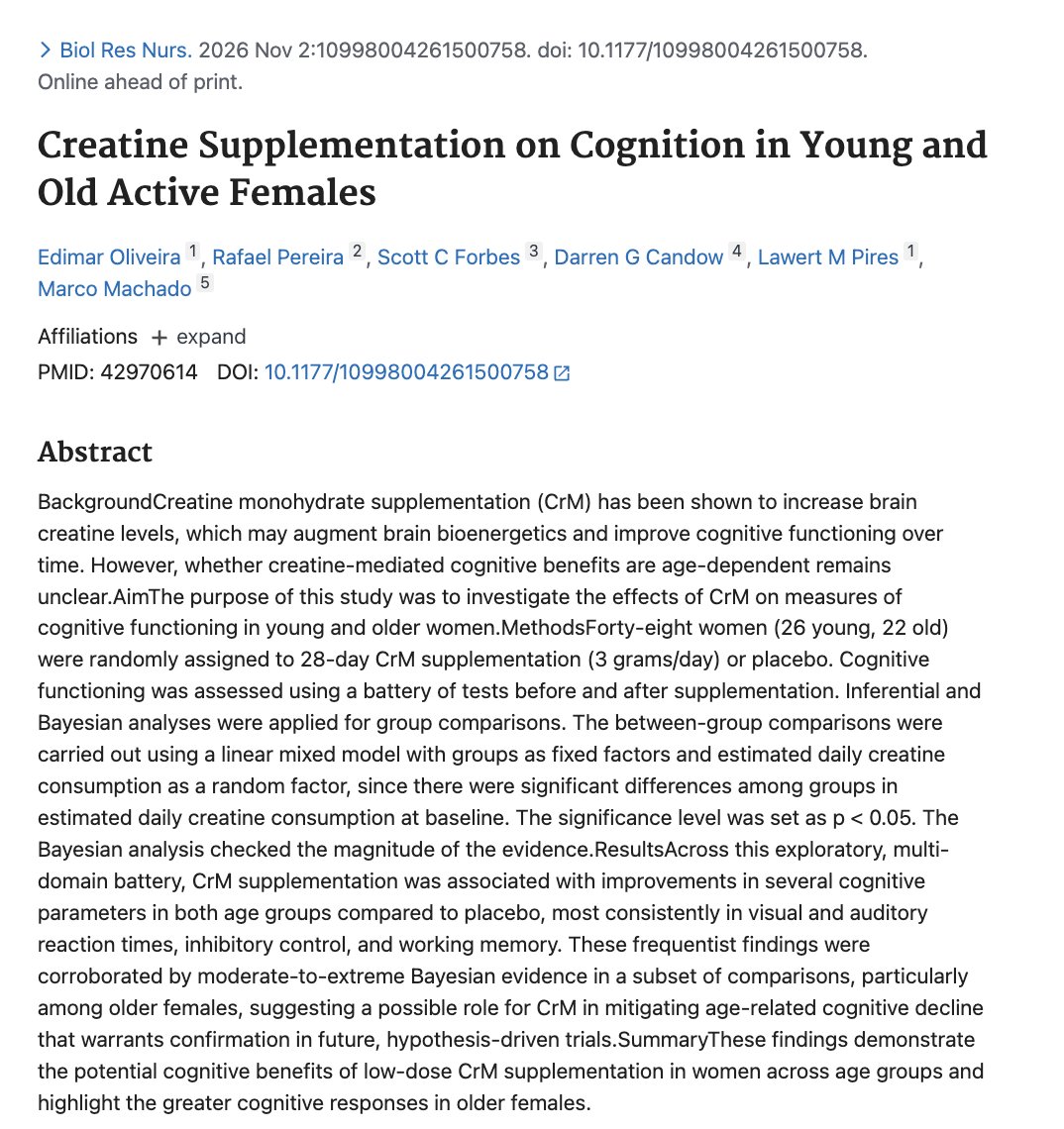
Just 3 grams of creatine a day improved several measures of cognitive function after four weeks.
The most consistent improvements were in reaction time, working memory, and inhibitory control, the ability to suppress an automatic response. Older women generally showed greater cognitive responses than younger women.
I’m (pleasantly) surprised to see benefits at this dose.
I take 10 grams daily, partly because of the research on creatine’s potential brain benefits (which I discussed with @darrencandow). So a study finding improvements at 3 grams gets my attention.
Creatine has value alongside resistance training for women, particularly after menopause, when maintaining muscle and strength becomes increasingly important.
The possibility of supporting cognitive function adds another reason to study it in this population, and this study suggests cognitive benefits may be achievable at the lower doses commonly used for muscle.
The “proteasome appears to regulate NAD+, the cellular machinery that breaks down damaged proteins. When inhibited, NAD+ levels rose in muscle and liver cells to a degree comparable to NAD+ precursor supplements.”
A new route to understanding NAD+ decline?
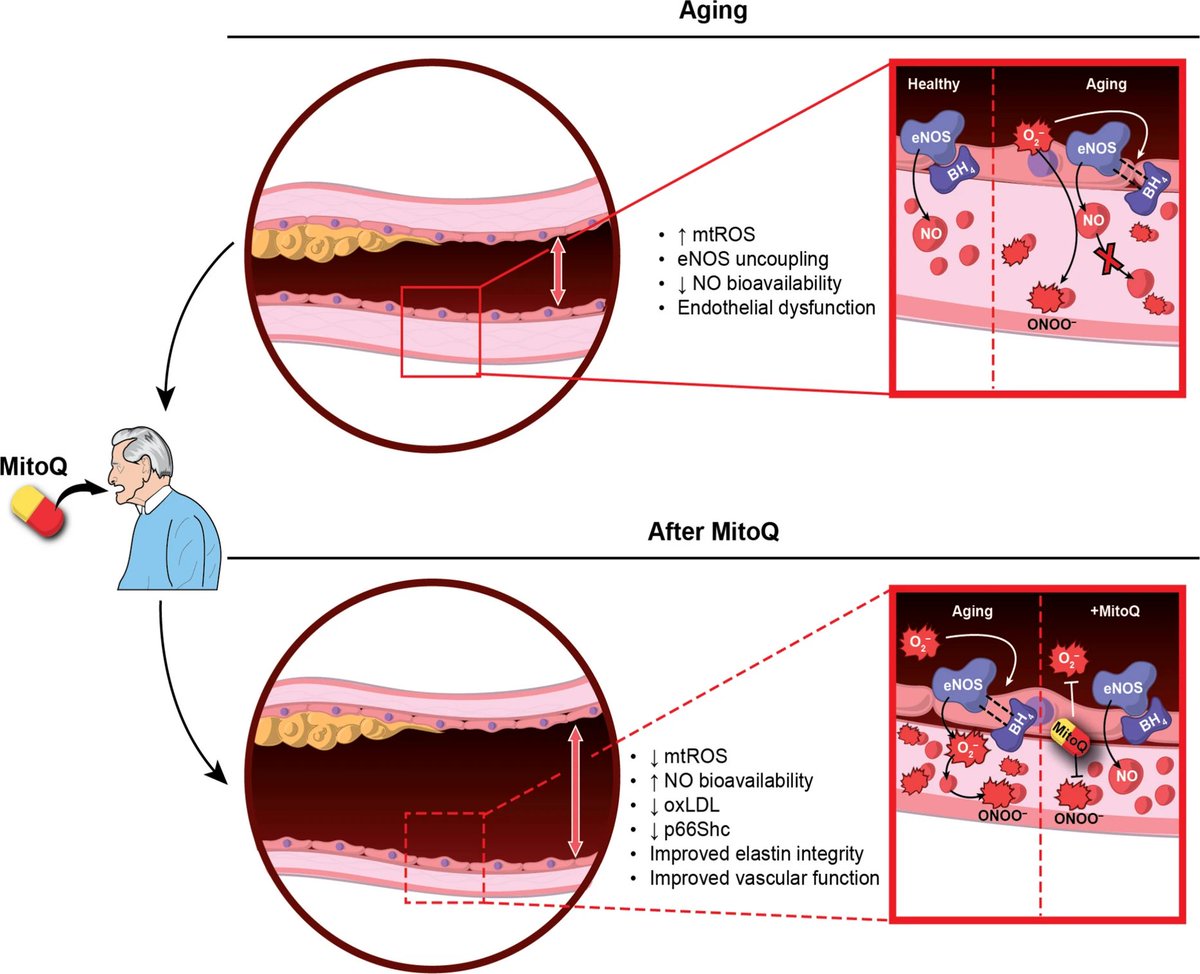
Therapeutic potential of MitoQ, a mitochondria-targeted antioxidant, in age-related physiological dysfunction
🔎"By addressing the central role of mitochondrial oxidative stress, we propose that MitoQ represents a promising strategy to counteract aging-associated physiological dysfunction."
https://t.co/lKx9dDicPs