Dedicated physicians & scientists determined to improve outcomes in patients with gastrointestinal cancers through basic and translational research @DanaFarber
It is so exciting to build the understanding of the function differences between EP300 and CBP, which can be applied to target specific therapy development.
Interested in studying the origins of lung cancer and regulation of development, cell fate, metabolism in human lung progenitors? All in a rigorous, science-loving, supportive environment?
I'm looking for postdoctoral fellows, students, technicians! DM me.
Please retweet!
Beautiful study by the @Oser_Lab! Crispr screen applied to custom reporter revealed HUWE1 is a stability regulator or ASCL1, lineage TF driving a major subtype of SCLC. Then base editor screens identify functional domains, including an uncharacterized IDR. Elegant and rigorous!
Excited to share another new study from our lab, co-led by Keita Masuzawa and Kevin Dong: “A HUWE1 Regulatory Helix Gates ASCL1 Degradation Through Its C-Terminal Phospho-Degron in Small Cell Lung Cancer.”
https://t.co/SLhbNOAek3
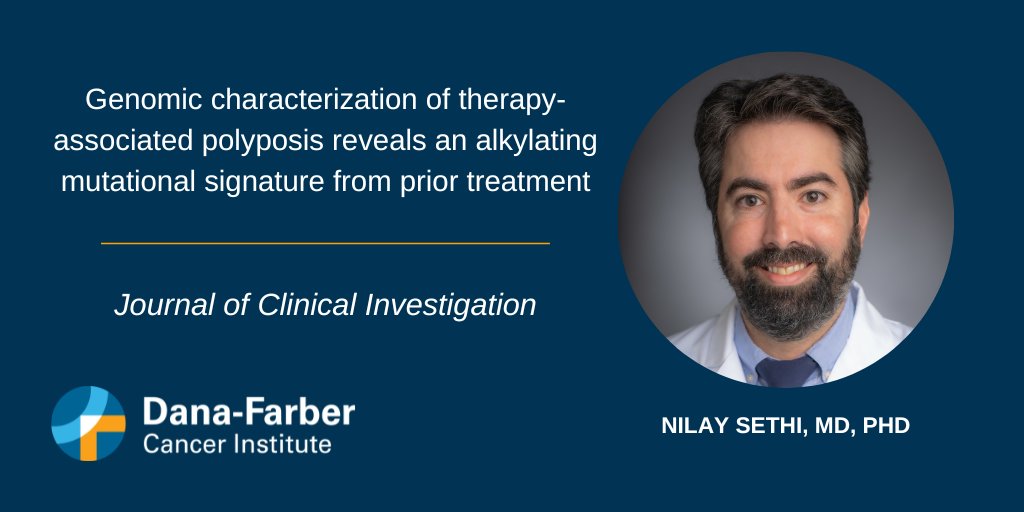
A new study in @jclinicalinvest led by @danafarber’s @labsethi sheds light on therapy-associated polyposis, a rare condition that can develop decades after cancer treatment in childhood or young adulthood. For the first time, researchers identified lasting molecular evidence of genetic damage linked to chemotherapy in precancerous colorectal growths.
Read more here: https://t.co/2xt7jYQKSt
Our work on therapy-associated polyposis highlighted below by @jclinicalinvest . In childhood cancer survivors, we find that prior alkylating chemotherapy can leave durable mutational scars in the colon that remain detectable decades later in precancerous polyps.
Therapy-associated polyposis (TAP) is a rare condition that arises decades after treatment for childhood and young adult cancers. https://t.co/EWicYaiu8q
In this Research Letter, Nilay S. Sethi @Nilay_Sethi & team reveal a mutational signature strongly linked to alkylating chemotherapy exposure in childhood cancer survivors, reporting chemotherapy leaves lasting DNA scars in precancerous colon polyps. Paired patient organoids establish an experimental model for further studies.
@labsethi@DanaFarber
#ChildhoodCancer
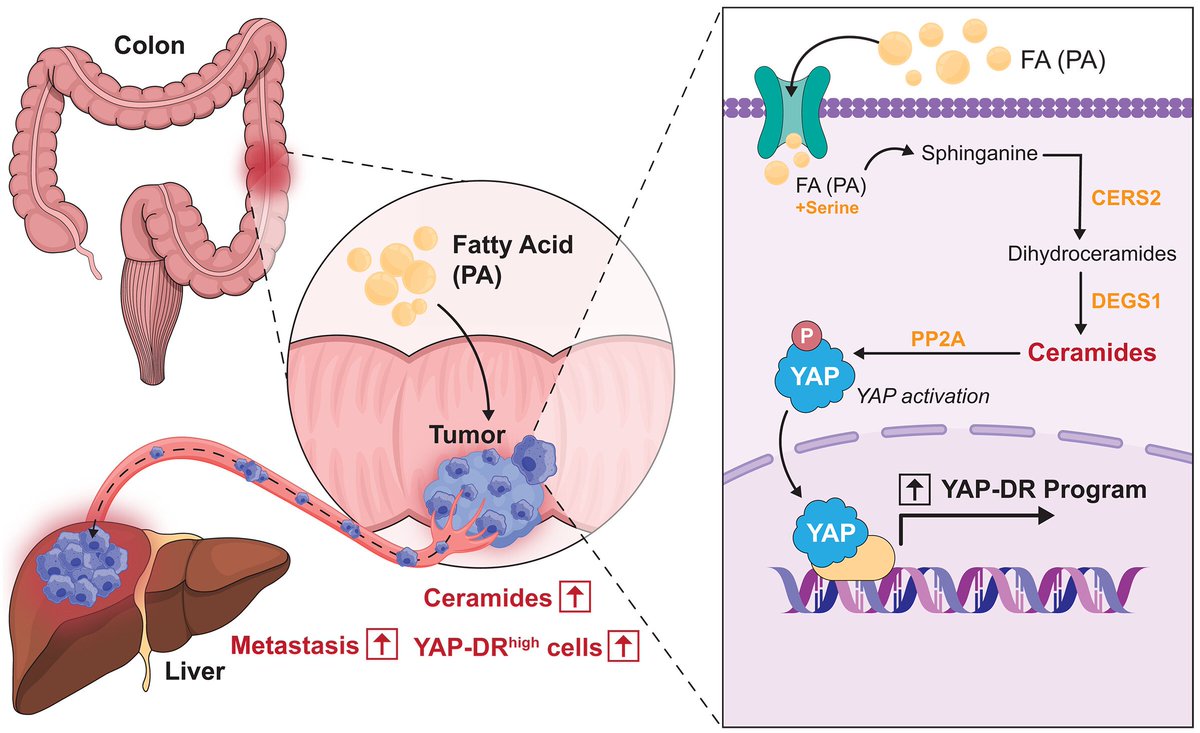
Increased dietary fats leads to more aggressive colorectal cancer via ceramide synthesis and YAP regenerative signaling. A metabolic memory of the exposure persists. https://t.co/Ns1qJBRUQc
Congratulations to @DanaFarber’s @nickpolizzi_ and @XinGu0317 who have received New Innovator Awards from the @NIH High-Risk, High-Reward Research program which supports early career investigators pursuing highly innovative research with potential for broad impact on biomedical and behavioral science. @DFCI_CancerBio
Read more: https://t.co/jZ0YLbv6CA
What gives some colorectal cancer cells the ability to metastasize? In our new paper, we find that tumor-intrinsic ceramide synthesis is a metabolic switch for metastatic initiation. 🧵 Free access: https://t.co/Yh5WLKzZoC