Lead Projects Mgr & Congressional Liaison @PETA, working for animal-free science. #UNAL#ESAP#Cinvestav#IPICYT#UTA. Opinions/Likes/RT are not endorsements.
While it has long been recognized that communication between the heart and kidneys is essential for maintaining their function, little is known about how these organs communicate with one another.
Researchers at @reNEW_Global created a co-culture system comprised of human iPSC-derived kidney organoids and cardiac microtissues to model cardiorenal syndrome, a condition in which acute kidney injury leads to secondary cardiac dysfunction.
From first author @beatricegabbin:
“Using two types of nephrotoxic drugs, we first damaged kidney organoids. We then removed the drugs and co-cultured damaged kidney tissues with healthy cardiac microtissues for several days. After that, we examined how this affected the function of the cardiac microtissues.”
They found that this co-culture system elicited characteristics of secondary cardiac dysfunction, such as reduced cell viability, impaired contractility, and endothelial cell loss. These findings demonstrate that kidney injury can directly trigger detrimental effects in human cardiac tissues in vitro.
These results are another example of how non-animal methods are successfully modeling complex, multi-organ diseases and uncovering the mechanisms underlying interdependent organ dysfunction.
🧑🔬 @beatricegabbin, James Gallant, @fangchenliu_, Hailiang Mei, Berend van Meer, @RabelinkT, @MummeryLab, @JMVanslambrouck, Cathelijne van den Berg, Viviana Meraviglia, and @MilenaBellin
🏥 @reNEW_Global, Melbourne Medical School of the Faculty of Medicine, Dentistry and Health Sciences, @DiBio_UniPD, @LUMC_Leiden, Einthoven Laboratory of Vascular and Regenerative Medicine, & Department of Internal Medicine-Nephrology
💰 @EUREKA_NETWORK, @ERC_Research, Netherlands Organ-on-Chip Initiative (NOCI), @MinOCW, @novonordiskfond, @ZonMw, & @LUMC_Leiden
A new paper in @Trends_Ecol_Evo argues that addressing welfare in wild animals requires a dedicated scientific discipline. The case rests on two converging realities: growing evidence of sentience across diverse species and increasing recognition that human activities influence the lives of animals on a global scale.
Over the past decade, evidence for sentience has expanded across mammals, birds, fish, cephalopods, decapod crustaceans, and other taxa. Animals are increasingly understood as individuals capable of experiencing pain, fear, distress, comfort, anticipation, and other affective states. Welfare concerns are expanding to any situation in which human actions affect sentient beings.
👥 Vittoria Elliott, Ngaio Beausoleil, @zoophilosophy, María Díez-León, Pete Goddard, @wildanigraham, Daniel Ramp, @jeffrsebo, @AsherSoryl, and Miriam A. Zemanova
🏛️ @smithsonian National Museum of Natural History, @MasseyUni's School of Veterinary Science, Philosophy University of Reading, @RoyalVetCollege, @wawcommittee, @forwildanimals, @UTSEngage's Centre for Compassionate Conservation, @nyuniversity's Wild Animal Welfare Program, @otago Department of Bioethics, @unifr, Animalfree Research, and Oxford Centre for Animal Ethics
Understanding sentience is not only changing how we think about experiments on animals. It is reshaping how we approach conservation, wildlife management, habitat restoration, and our responsibilities toward animals affected by human activity.
In 2025, the @IUCN classified long-tailed macaques as Endangered, reporting population declines of 50–70% over the past three generations and projecting further declines of a similar magnitude. Yet, for the second time, the @USFWS has declined to move forward with a review of protections under the Endangered Species Act. https://t.co/mBJSZdCj9r
At the same time, tens of thousands of long-tailed macaques continue to be supplied to laboratories each year, with investigations raising concerns about illegal capture from wild populations. For a species already experiencing severe declines, continued removal of individuals from the wild could decimate population stability, social structure, and long-term recovery.
The U.S. Fish and Wildlife Service's refusal to even initiate a further review under the Endangered Species Act disregards a substantial body of evidence and is a telling sign that the agency is bending to the global laboratory trade rather than protecting wildlife.
Conservation decisions should be guided by population data, documented threats, and evidence of exploitation. Ignoring those signals leaves a species facing documented decline on an increasingly precarious path.
Can we recognize pain and distress in animals used in experiments?
In a new review, @RRSSCentre, @fredbrain, Coenraad Hendriksen, and Vera Baumans take a deep dive into the recognition of pain and distress in animals used in experiments, which are assessed using behavioral and physiological indicators that require interpretation. It typically goes like this: experimental procedures alter physiology → animals display behavioral and physiological changes → observers translate those signals into “pain” or “distress.” That final step is inherently subjective.
The frameworks that guide these assessments are the analogy postulate and the precautionary principle. Both assume that what injures humans produces comparable states in other species, while acknowledging uncertainty across species, contexts, and individuals.
Precision is limited because:
📊 Similar behaviors can reflect different internal states across species and contexts
😷 Absence of visible behavior can mask severe conditions
🤕 Chronic states (apathy, withdrawal, “learned helplessness”) emerge when animals cannot avoid stressors
"Our moral obligation to animals in our custody is the most critical factor in guiding decisions about whether to perform specific experiments. However, avoidance or reduction of pain and distress in experimentation is also demanded for more practical reasons. Pain, fear and anxiety all have substantial motivational and physiological consequences. These may interfere substantially with the results of the investigations."
In the current model, subjective suffering cannot be directly accessed. Yet, it is assumed, scored, and regulated as if it were measurable. Animals are likely suffering in ways we can’t even fathom, and this suffering confounds experimental results.
🏛️@UniUtrecht, @SwanseaUni's School of Biological Sciences, and @RRSSCentre
📍 Read the Laboratory Animals Journal (LAJ) article here: https://t.co/Uj63cnZKNI
#AnimalWelfare #PainAssessment #HumaneEndpoints #AnimalResearch #Refinement #3Rs
How is the media shaping public perceptions of xenotransplantation?
A newly published study analyzed 208 print media articles covering the first contemporary experimental pig-to-human transplants in the U.S. and found that media coverage often presented incomplete and hyperbolic narratives to support and justify xenotransplantation.
Some findings stood out:
🐖 Only 12% of articles discussed animal welfare.
🔄 Just 10% considered other options besides xenotransplantation for addressing the organ shortage.
💲 Only 5% mentioned the cost of these procedures.
🗣️ Just 4% included negative portrayals or critical perspectives.
If media reporting on xenotransplantation is skewed positive, sensationalized, or misleading, and fails to accurately reflect the current state of the research and its limitations and harms, it risks eroding public trust in both science reporting and organ transplantation more broadly.
Thoughtful science communication requires transparency and completeness.
👥 Jordan Liebman, @AZinkSports, Tia Ketsan, @Sbklitenic, Luz Padilla, @sylviaerosas, @TheOrganOgress, @parent_brendan, & Laura Kimberly
🏛️ @nyugrossman, @UABMedicine, @harvardmed@BristolUni
Read the full article to get a complete picture of their analysis in @WileyGlobal's Xenotransplantation: https://t.co/D1slP9heRX
Integration is what turns separate human-based models into the powerful systems necessary to modernize research and drug development.
Excellent profile of @RevaliaBio@medcitynews, with appearances from @vivodyne and @emulateinc, by @aparmarbb.
Multiple human‑based platforms are coming together to generate data directly from human cells, tissues, and organs under well-defined conditions.
@JennaDiRito (Revalia Bio), Tony Bahinski (Vivodyne), and Jim Corbett (Emulate) each describe how their experimental systems are designed to capture distinct levels of biological organization and their interactions in the human body.
🧵
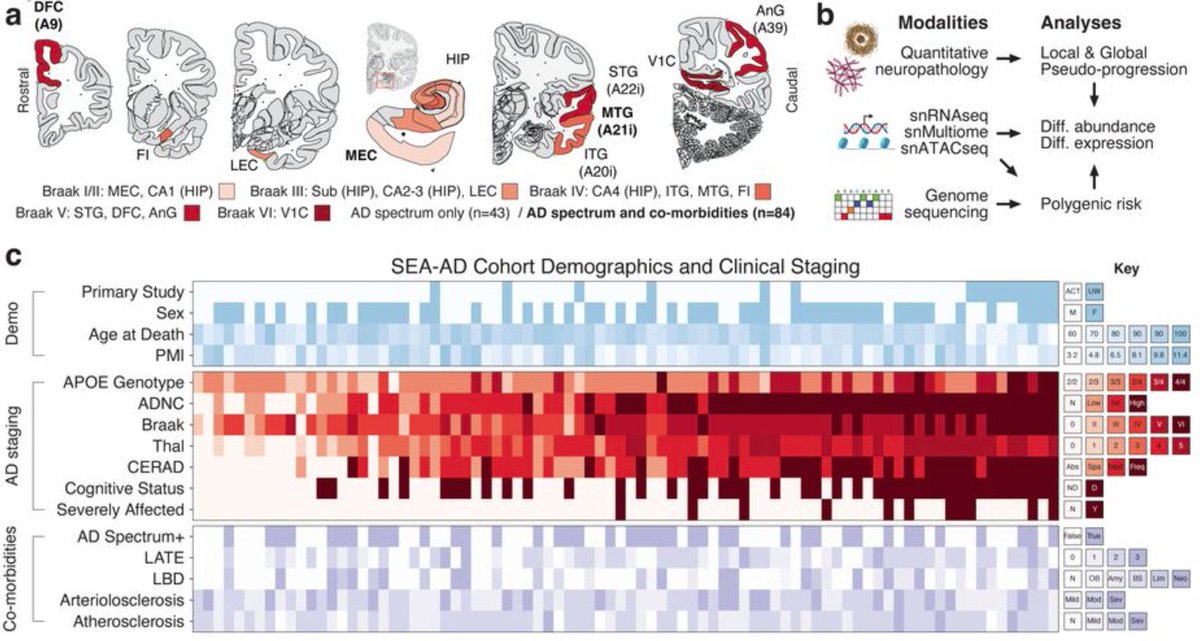
Check out this incredible resource created through a large‑scale, team science effort! ~90 scientists worked together to map Alzheimer’s disease across the human brain at single‑cell resolution. 🗺️🧠
@KyleTravaglini, @MGabitto, @anamikaagr, and collaborators mapped ~7 million nuclei across ten human brain regions using single‑nucleus RNA‑seq, ATAC‑seq, matched neuropathology, and whole‑genome sequencing from 84 donors.
The result is one of the most detailed maps yet of how Alzheimer’s affects different brain cell types across multiple brain regions. Rather than harming all neurons equally, Alzheimer’s appears to target specific cell populations in a predictable sequence.
These patterns were replicated across three independent cohorts comprising more than 700 additional donors. 👥
Understanding which cells are vulnerable—and why—could help researchers develop treatments that intervene earlier and protect the cells most at risk.
🌐 This work expands the Seattle Alzheimer’s Disease Brain Cell Atlas (SEA‑AD). “These data, available at https://t.co/6gHjyFrqsO, provide a multiregional framework for the community to explore the molecular and cellular changes of AD progression.”
Congratulations to all the authors!
🏛️ @AllenInstitute, @uwlabmedpath, @BRaINLabsm, @KPWaResearch, @UWNeurology, @deepsciventures, @UWRadiology, @UWDeptMedicine
💸 @NIHAging, @NIH_Innovates
🔎 @biorxivpreprint below!
At NIH, we're committed to advancing biomedical research through innovative, human-relevant approaches that can accelerate discovery and improve our understanding of disease.
📅 Join the NIH's National Institute on Aging for the virtual workshop, "Novel Alternative Methods (NAMs) in Basic Mechanisms of Brain Aging and AD/ADRD," on September 10–11, 2026.
This two-day workshop will bring together experts to explore how Novel Alternative Methods (NAMs) are advancing research on the basic mechanisms underlying brain aging and AD/ADRD.
🔗 Register today: https://t.co/8egtOZOCLN
In June, SAO attended #Shock2026, the @ShockSociety’s 49th Annual Conference on Shock.
👩🔬 Dr. Gabby Vidaurre presented her poster, "Modernizing Sepsis Research to Advance Human Health," which described strategies for shifting the field away from experiments on animals and toward human-centered science.
From updates on @NIH priorities for sepsis research to innovative approaches—including organ-on-chip systems, AI, and patient-derived studies—the meeting highlighted excellent human-based research from across the country. 💫🔬🏥🇺🇸💫
Featuring work by @EmilyMihalko, @AdiNgr7, @rkamaleswaran, @michaelripple, @GrunwellJocelyn, and researchers from @UVMLarnerMed, @dukesurgery, @PittTTMRC, @EmoryMedicine, @ChildrensNatl, @CincyResearch, @BrownMedicine, @UFMedicine, and more.
Link in the comments to our conference recap!⬇️
💰🔬 @NIDDKgov is seeking applications for the next phase of the @KPMProject to lead the project's Central Hub.
🚨⌛ The application deadline is July 10!
Through this U24 funding opportunity, the Central Hub will lead analyses of existing human kidney biopsies from individuals with acute kidney injury and chronic kidney disease to define disease pathways and subgroups that support precision trials.
The hub will provide strategic leadership for the project, coordinate computational analysis across datasets, enable access to biopsy-derived data, and direct communication across clinical, research, and patient communities.
🔗 https://t.co/uBxd0muUsT
🇺🇸 #NIHFunding @NIH_Innovates
Laboratory animal personnel as secondary victims of animal experimentation—victims who would also benefit from ending the practice.
In a new paper, Aoife Milford, Bernice Simone Elger, @RodriguezP_Chri, David Shaw, @DarrylGenevieve, and Eva De Clercq use the "psychosocial hierarchy of controls" to show how the same practices that produce pain, suffering, and death in animals also harm the people who carry them out.
“Repeated exposure to animal suffering, particularly when directly linked to one’s own actions, constitutes a chronic psychosocial hazard with the potential to cause psychological injury.”
Risk is the highest for early-career staff and technicians. Those responsible for direct animal care often carry the highest exposure and the least institutional control. As the authors note:
“it is usually animal husbandry staff who are called on to kill surplus animals, and not researchers who have ordered them.”
These conditions can produce empathy-based strain, perpetration-induced traumatic stress, and moral injury.
The mechanism is structural. The same role requires personnel to care for animals and then kill them. Decision-making, physical responsibility, and oversight are separated by institutional hierarchies. Breeding practices generate a steady flow of animals who are subsequently killed. Ethical review processes prioritize research protocols while largely excluding the cumulative impact of overbreeding and repeated killing.
Responsibility for eliminating this harm also sits at the structural level. Approaches centered on individual resilience or staff turnover do not remove the hazard—they redistribute it to new workers in the same conditions.
Moving away from animal experimentation directly reduces these harms for humans and other animals.
As the authors write, these discussions do not diminish animal suffering, but help “consider human and animal interests harmoniously and draw more attention to welfare issues within animal research.”
🏛️ @ibmbch, @UNIGEnews, Maastricht University, @universitelaval
The @NIH's Division of Program Coordination, Planning, and Strategic Initiatives (DPCPSI) is partnering with @ExperienceORISE to offer several postdoctoral and fellowship positions for early-career scientists interested in NAMs and other human-centered research, as well as training opportunities in science policy and programming.
Find them at https://t.co/vRfMKM5zzI by searching the keyword DPCPSI.
⌛ Don't delay! Applications for many of these opportunities will begin being reviewed on July 1!
#PhD #PhDChat #PostDoc #ORIVA
@NIH_ORWH@NIH_Innovates@NIH_OSP@orau@ORISEconnect
Good news 🐭 🎉After hearing from PETA scientists, @UAustraldeChile has BANNED the forced swim test, a cruel and useless experiment in which small animals are forced to swim in inescapable containers of water to keep from drowning.
Last week, SAO's Emily Trunnell, PhD and Gabby Vidaurre, PhD, attended the world premiere of The New Gold Standard: Cutting Edge Science That's Replacing Animal Testing. 🎬
This documentary by Steven Latham and team provides an inside look at the technologies, scientists, companies, and policymakers allowing us to model human biology, develop new medicines, and deliver them safely to patients without harming other animals.
It also showcases rescues like @kindnessranch that are providing a path for animals bred and used for experimentation to transition into loving homes or live out the rest of their lives peacefully, free from harm.
SAO director @ERoseEngland, is featured in the film, as are Aysha Akhtar, Nicole Kleinstreuer, Elizabeth Baker, @MelanieDGKaplan, John Ramer, @macaqtivist, @Joseph_C_Wu, @DonIngber, Thomas Hartung, @emulateinc, @HesperosInc, @GatcHealth, @vandapharma, @wyssinstitute, Institute for In Vitro Sciences, and many others!
👀 Stay tuned for details on the next screening!
https://t.co/XAdJHXQpAI
The study of animal movement is shifting from intermittent observations to continuous, high-resolution tracking in the wild. 🦋
🐘 In this @Nature article, Ryan Huling discusses how AI, high-frequency GPS, satellite imaging, and acoustic sensing are resolving animal behavior at the ecological scale. Work by @MegCrofoot at the @MPI_animalbehav demonstrates that kinkajous repeatedly return to specific trees and move along fixed canopy routes, indicating stable spatial mapping.
@animaltracking's ICARUS initiative extends this globally, using satellite-linked tags to track disruptions in movement that signal environmental stress, with billions of location points stored in the @MovebankTeam database. Jewlya Samaniego’s work on wildlife crossings shows how these data translate directly into conservation infrastructure.
🦇 AI is converting raw field data into population-level insight. In Zambia, an automated analysis quantified more than 850,000 fruit bats, linking population size directly to ecosystem function. @EmilyFairfax at @UMNGeography, working with @Google, scaled detection of beaver-built infrastructure across landscapes, showing measurable impacts on biodiversity, hydrology, and fire dynamics, building on earlier work by Jean Thie.
🐋 Large-scale, crowdsourced datasets are extending this further. Citizen science platforms and predictive systems, developed by researchers including Andrew M. Rogers, @MattHHolden, Ted Cheeseman of @happyhumpback, @bvdbirds at @CornellBirds, and others, track individual whales, map biodiversity, and predict migration patterns weeks in advance. At the level of social interaction, Hemal Naik and colleagues have shown that AI can reconstruct group dynamics in pigeons at extremely high temporal resolution and then apply those models to unmarked animals in open environments.
This work replaces occasional observation with continuous, real‑world measurement. Animals are tracked without capture, counted without disturbance, and studied in the environmental and social conditions that shape their behavior. As a result, movement and interaction appear as clear, repeatable patterns supported by high‑resolution data. At the same time, this highlights a core problem with experiments on animals in confined, sterile settings: they remove the conditions that actually drive behavior, leaving results that don’t reflect how animals function in the real world.
👉 Read the full article: https://t.co/JTcOIDHX7u
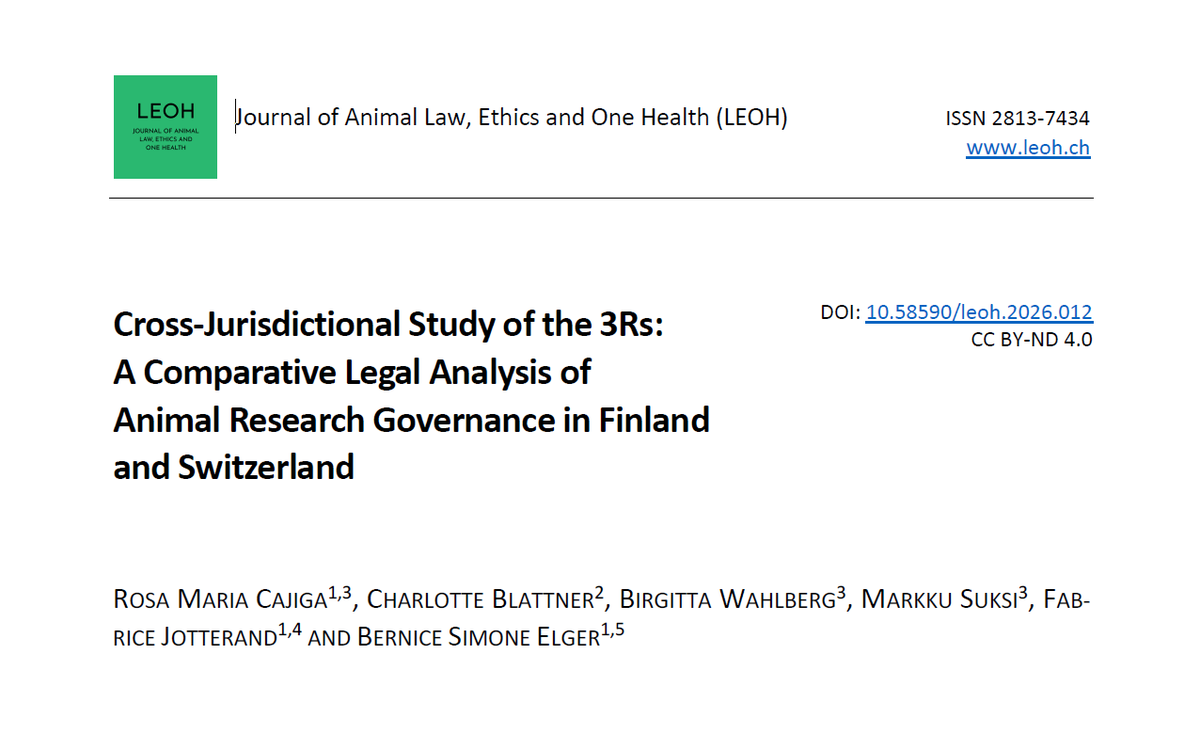
The 3Rs framework is not driving a transition away from experiments on animals, but instead perpetuates their continued use.
Through a comparative legal analysis, Cajiga et al. show that both Switzerland and Finland formally integrated the 3Rs—Replacement, Reduction, and Refinement into their regulatory frameworks, but did so primarily as procedural safeguards within ongoing animal use.
Even in Switzerland, where animal dignity is constitutionally recognized, and in Finland, which explicitly endorses full replacement as a long-term goal, implementation remains focused on how individual experiments are conducted—not whether they should continue.
"The analysis reveals that although both systems incorporate the 3Rs extensively, they remain largely confined to regulating experimental procedures and only partially address breeding, surplus animals, and post-study responsibilities. The paper argues that without clearer legal hierarchies, stronger institutional accountability, and an explicit transition strategy toward non-animal methods, the 3Rs risk functioning primarily as a refinement tool rather than as a genuine framework for structural change, that enables a transition beyond animal-based research."
Read here in @journal_leoh: https://t.co/UqfPK74Jl2
👥 Rosa Maria Cajiga, @ch_blattner, @BirgittaWahlber, Markku Suksi, @fjotterand, and Bernice Simone Elger.
🏛️ @UniBasel_en, @unil, @AboAkademi, Center for Ethics in Health Care at @OHSUNews, and @UNIGEnews.
Read more on this topic in our reflection, “Exposing the Gaps: How the 3Rs Fail to Protect Animals in Research.”
https://t.co/7W7gVlZdFm
"[D]ifferences between animals and humans can limit how well animal data translate to human biology. NAMs give researchers more tools to study human health and disease in ways that can be replicable, translatable and efficient..."
https://t.co/0F0NwchlrK
In this piece, Professor @MariskaKret from @LeidenPsy at @UniLeiden challenges the assumption that humans occupy a higher emotional category than other animals.
Biology does not support human exceptionalism. Fear, attachment, stress, and social responsiveness, for example, are traits shared by many species and are not uniquely human as previously believed.
When these shared emotions are acknowledged, so too is the fact that animals’ experiences carry equal moral weight, collapsing the hierarchy used to justify their harm.
👉 Read here in @_knaw: https://t.co/I7F1RSXbYi
In this review, @CynthiaSchuck and colleagues show that captivity, including in laboratories, amplifies animals’ pain before any procedure is performed. Broadly, their findings challenge the acceptability of barren housing systems ubiquitous in farms, laboratories, and other settings.
Key findings:
🔎 Barren housing disrupts animals’ endogenous pain relief processes and even activates brain pathways that intensify pain and slow healing.
🔎 The same intervention causes more intense and prolonged pain in confined environments.
🔎 Welfare assessments treat procedures as isolated events, ignoring that they are layered on top of the pain and suffering inherent in captivity.
The authors write that their findings "highlight the need for animal welfare assessment models ... to take environmental modulation of pain explicitly into account," and that, with this knowledge, “the transition to higher welfare housing systems becomes an ethical and scientific imperative.”
Current oversight frameworks only assess the harms of specific procedures, while ignoring a primary determinant of welfare: captivity itself. This creates a systematically underestimated burden of suffering, in which experiments are conducted at an already elevated baseline. As a result, these existing frameworks fail to capture the true intensity and duration of pain and suffering that animals experience.
This work also calls into question human pain research conducted on animals, as “pain models built on barren laboratory housing may not accurately reflect drug efficacy or clinical relevance.” Animals used in experiments are not studied under biologically neutral conditions. As shown here, they are confined in environments that intensify pain, alter physiological responses, and impair recovery. As a result, data generated under these conditions are inherently confounded by captivity itself, further undermining their reliability and relevance to human health.
This should serve as another clear signal to move away from attempting to study human biology in other species. At a minimum, the effects of confinement should be incorporated into animal welfare oversight and scientific peer review.
👥 @CynthiaSchuck, @WladimirJAlonso, @Kate_Hartcher, @ChiangChiawen, Patricia Alves Pereira, @wrwveit, Michael Mendi, Christine Nicol, and @b_lecorps
🏛️ @WelfareFootpr, @NYUEnvrStudies, @UOC_gr's Department of Biology, @Rdg_Philosophy, @BristolUni
Veterinary School, and @RoyalVetCollege's Department of Pathobiology and Population Sciences.
📑 Read the full article in @FrontAnimalSci:
https://t.co/UJOiFlhgLa





![SAOscience's tweet photo. "[D]ifferences between animals and humans can limit how well animal data translate to human biology. NAMs give researchers more tools to study human health and disease in ways that can be replicable, translatable and efficient..."
https://t.co/0F0NwchlrK https://t.co/Qgsw2EH1Oi](https://pbs.twimg.com/media/HK3cYiZWUAAQ1x3.jpg)


