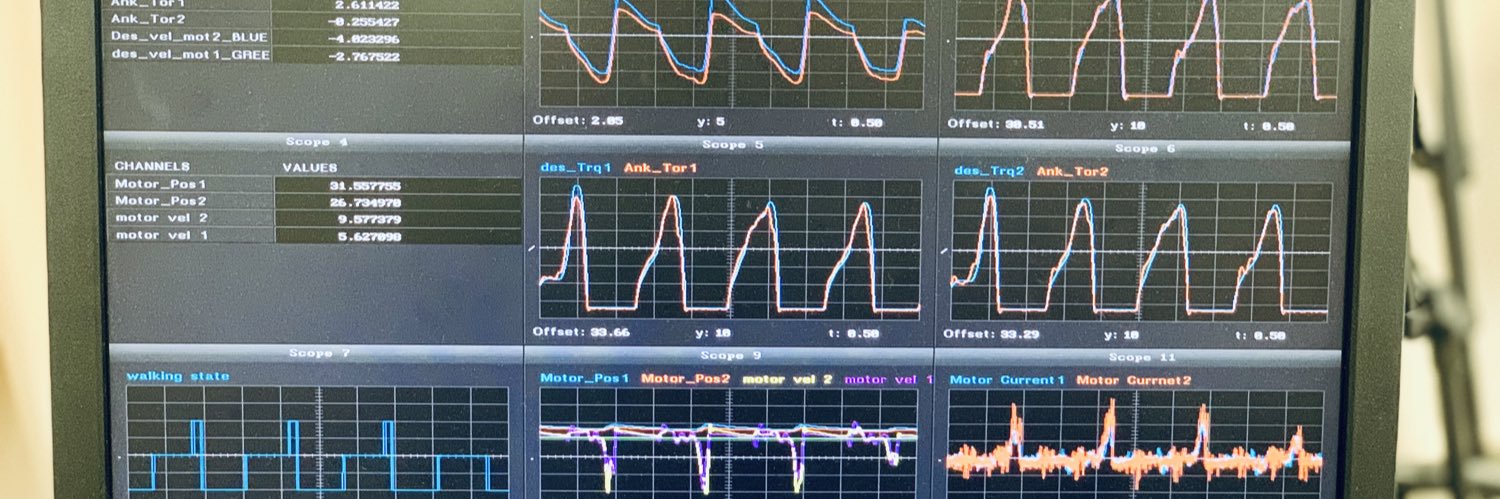
✅Have you ever thought of an alternative cost function for optimizing prosthesis assistance parameters? Well now you can read our most recent publication in @SciReports how we approached this challenge!
@prakyath_k@RehabRoboLab
🧵 For more details
https://t.co/US9cQnHUOy
@prakyath_k@KarlZelik I’m glad this is being brought to light. There’s a lot to be learned from the strength & conditioning domain. Another reason to diversify perspectives and reduce tunnel-vision within your respective field.
@KarlZelik Invest time and effort into projects outside of the standard course curriculum. My work while I was in the Society of Automotive Engineers helped set me apart from other applicants. I was able to convey my passion and drive to industry recruiters through these projects.
@DaveShermanPT@13machine13 Have you also discussed once you have all of the data bucketed into every stride, then how to classify the data within the representative “average stride” ? All of the data will have different lengths, so you’re either choosing to interpolate or truncate the data.
@ProfSilver @Lnolasco10 @DeannaHGates @JBiomech Interesting to see the impact leg length has on walking features. We tune the height of our robotic prosthetic during fitting and again during walking trials. I guess we should’ve taken a closer look at these changes.
@humotech@walshharvard@SpringerNature@Harvard Completely agreed! Off-board actuation helps us rapidly test control algorithms with ease. I can also see a place for them in clinical settings.
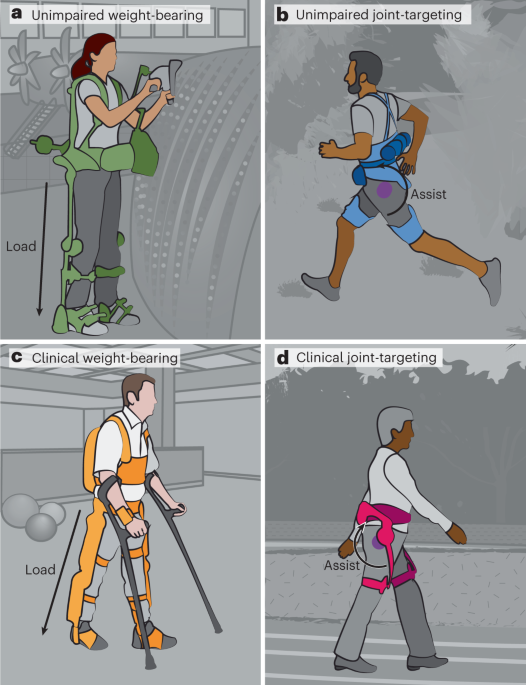
Thanks @walshharvard for "Opportunities and challenges in the development of exoskeletons for locomotor assistance" in @SpringerNature. We wholeheartedly agree on the value of offboard actuation and love supporting this growing field with #Caplex! @Harvard https://t.co/Z9oBRGPDiT
We've just released the first version of our Deep Learning Tuning Playbook! This is our attempt to distill our process for actually getting good results with deep learning. We emphasize hyperparameter tuning since it has been a large pain point. https://t.co/PjeJVWeOzS
Year in Review: @MIE_UIC PhD candidate Michael Jacobson spent 2 months this summer working in Ukraine with Breaking the Chains International as they removed animals from dangerous situations and took them to safety. Read more about this remarkable story: https://t.co/Mwqh9VBS3Q
@hubermanlab@lexfridman As a researcher/military veteran who recently spent time living in dangerous parts of Ukraine, it was resonating to hear Lex’s opinions. Within the midst of widespread death/destruction, you start to unravel the genuine hate and lack of empathy bred from war itself. @lexfridman
#MuJoCo python tutorials aimed at beginners. These include simple examples that can be combined to build more complex simulations. https://t.co/b6jg7R4OQo
@inseungkang@KarlZelik@doctorBobG@p_franks_@g_m_bryan Hmm, this is an interesting point. There are previous adaptation studies that have resulted in quicker 'learning'. Again, in the case that we do not have an unlimited experimental time budget, considering 'short-term learning' may be precedent for rehabilitation goals.