🚨: You’re closer in size to the entire observable universe than to the smallest possible scale of reality—the Planck length—by roughly 400 million times.
Let that sink in.
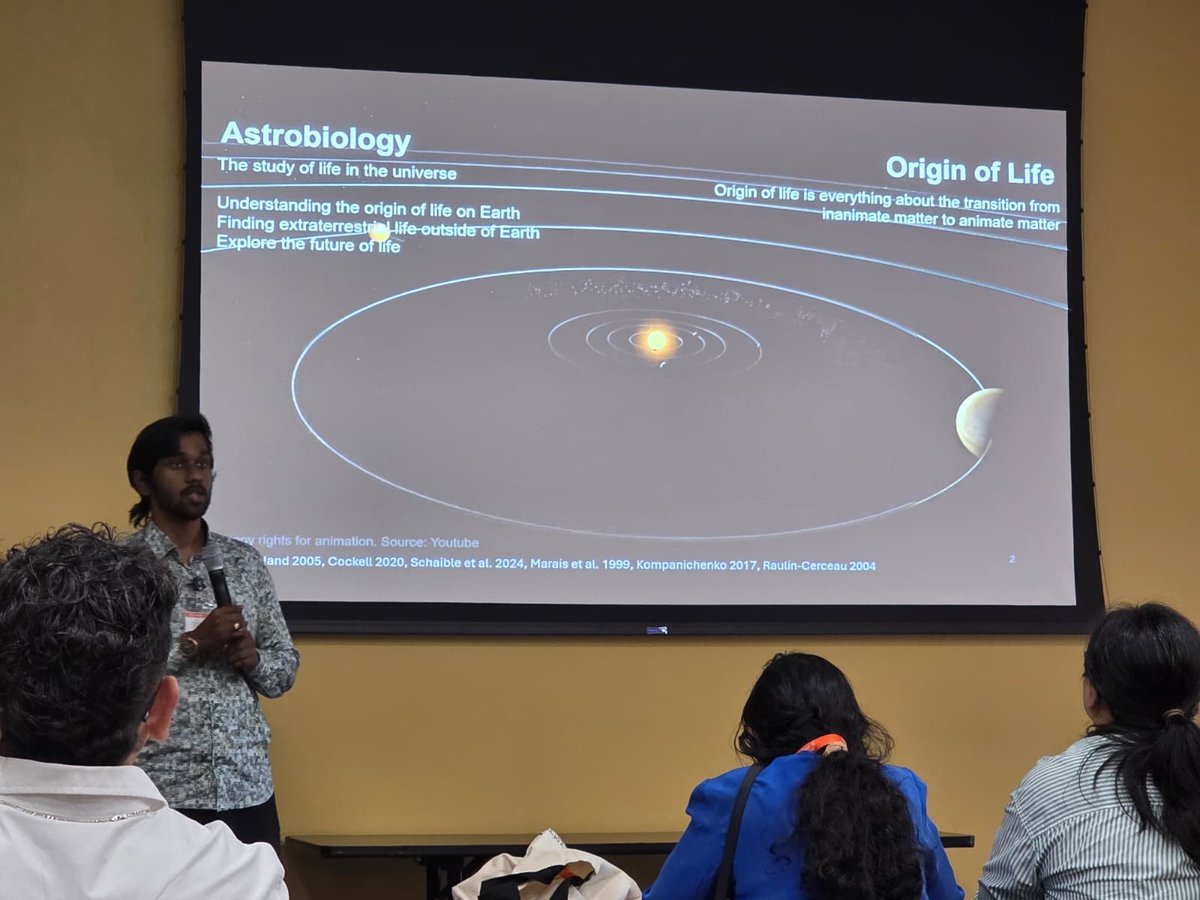
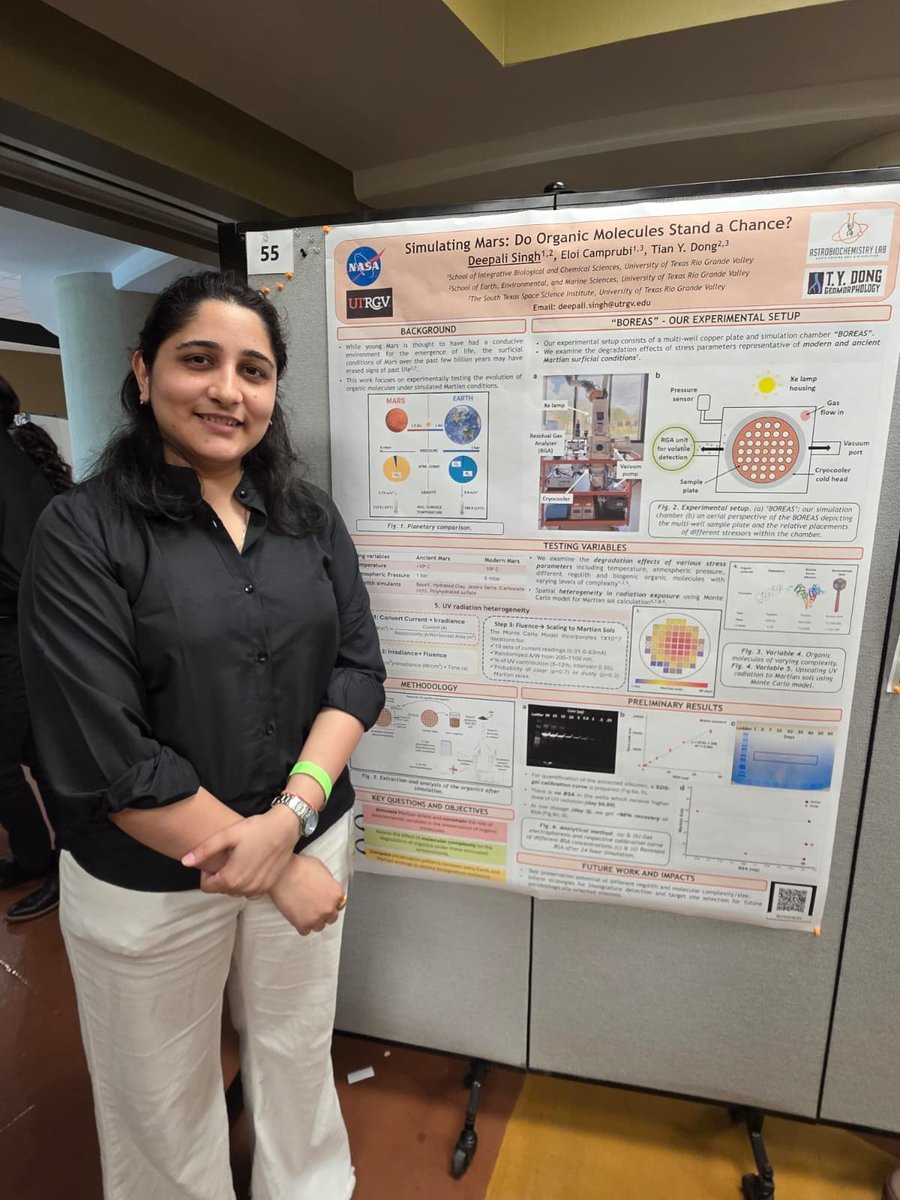
Next we had our postdocs Dr. Deepali Singh with her poster: "Simulating Mars: Do Organic Molecules Stand a Chance" and Dr. Mahendran Sithamparam with his oral talk: "Microfluidics in Prebiotic Fatty Acids Chemistry"
For decades, biology textbooks have enshrined a simple rule: DNA is made by copying a template. After one enzyme unzips a DNA double helix into separate strands, another called a polymerase builds a complementary sequence, base by base, for each strand. Presto: two copies of the original DNA.
But new research into how bacteria defend themselves from viruses now shows this synthesis rule isn’t absolute.
Now, a team describes a bacterial enzyme that synthesizes DNA without a nucleic acid template, using its own structure as a guide.
Learn more: https://t.co/TeUWvyO0OD @NewsfromScience
BREAKING: The largest 3D map of the Universe is now complete 🌌
Last night @desisurvey, mounted on the Nicholas U/ Mayall 4 meter telescope at @KittPeakNatObs, finished its 5-year survey of the cosmos, mapping 47M+ galaxies and quasars.
🔗https://t.co/ypVX7edRqW
Amaze, amaze, amaze!
As we wrap up final testing and prep for shipment to @NASAKennedy, see how we got the hardware of the Nancy Grace Roman Space Telescope from testing to completion!
While Roman's adventures at @NASAGoddard are coming to a close, this is just the beginning of its journey to study the cosmos! Make sure to follow to @NASARoman for updates.
THE ARTEMIS II ECLIPSE.
April 6, 2026.
Totality, beyond Earth. From lunar orbit, the Moon eclipses the Sun, revealing a view few in human history have ever witnessed. Photo: NASA
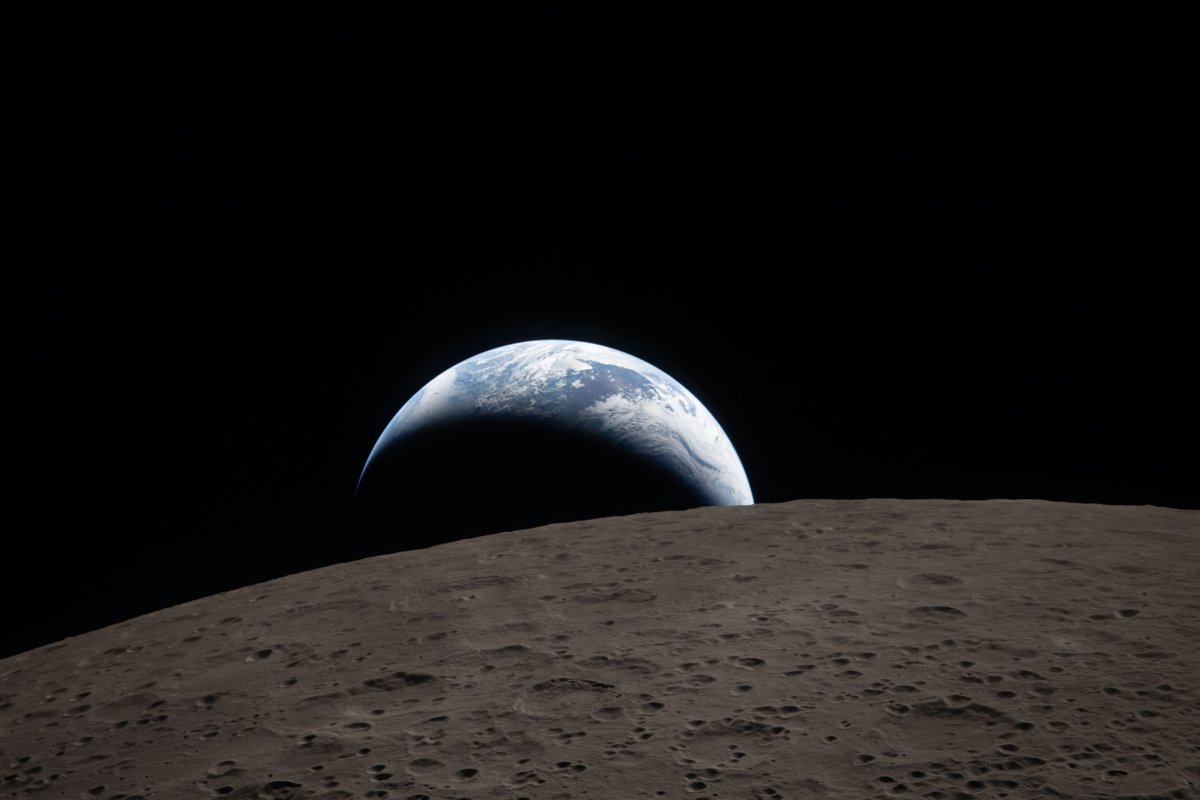
Earthset.
The Artemis II crew captured this view of an Earthset on April 6, 2026, as they flew around the Moon. The image is reminiscent of the iconic Earthrise image taken by astronaut Bill Anders 58 years earlier as the Apollo 8 crew flew around the Moon.
We're going around the Moon. Come watch with us. Artemis II's four-astronaut crew is lifting off from @NASAKennedy on an approximately 10-day mission that will bring us closer to living on the Moon and Mars. The launch window opens at 6:24pm ET (2224 UTC). https://t.co/X27QJejNDt
Titan, Saturn’s largest moon, was discovered on March 25, 1655, by Christiaan Huygens. Today, it remains a priority for exploration. Launching in 2028, @NASA’s Dragonfly mission will investigate the complex chemistry of this ocean world. https://t.co/vkeSiDByVW
@NASASolarSystem
At today's NASA "Ignition" event, the agency announced plans for Space Reactor‑1, the first deep-space test of nuclear-electric propulsion.
Scheduled for an ambitious 2028 launch, it will carry multiple Ingenuity-type helicopters to Mars.
https://t.co/u3w9QQiXmp
NASA is building SR-1 Freedom, a nuclear electric propulsion spacecraft, launching to Mars in 2028.
We are proud to announce this during the 250th year of the United States, the mission’s name reflects the spirit of American innovation and exploration.
This mission will bring America’s nuclear power capabilities to space and deliver the Skyfall payload of Ingenuity class helicopters to explore the Red Planet.
Nuclear power and propulsion will be the key to undertaking crewed missions to Mars and exploring the outer solar system.
Space Reactor-1 (SR-1) Freedom will make the next giant leap and accomplish a key component of President Trump’s National Space Policy, bringing nuclear to space alongside @Energy.
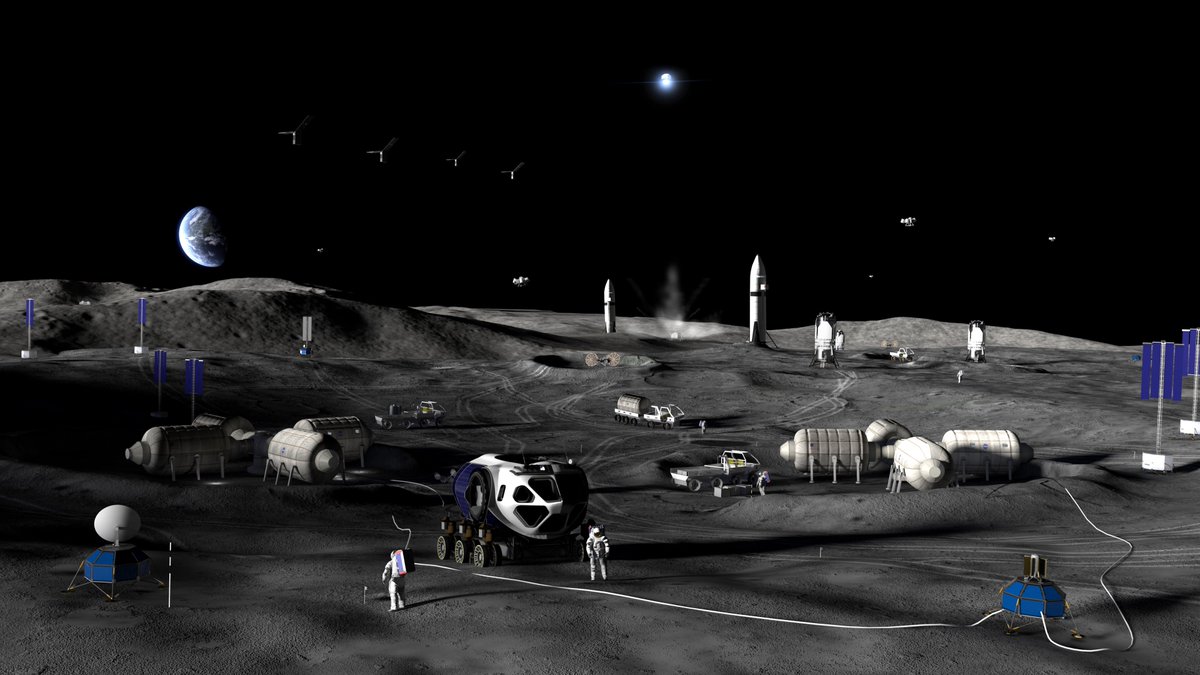
To build a sustained human presence on the Moon, we are building @NASAMoonBase, prioritizing surface operations and scalable infrastructure.
- Frequent robotic landings and mobility testing including MoonFall drones
- Starting in 2027 nearly monthly cadence of equipment and rovers with scientific payloads landing on the Moon.
- Investments in power, communications, and surface mobility
- Scalable infrastructure to support long-term human presence
The objective is clear: build the foundation for an enduring lunar base and take the next step toward Mars.
Astronomers have discovered 11 more moons around Saturn, bringing its total to 285--by far the most of any planet in the solar system.
The true number may be unknowable, if you count every ring particle as its own little moon.
https://t.co/EzkN9ztJ0D