Specialist in Emergency Medicine & in Anesthesia and Intensive Care Medicine. Ex-ED physician.
Università di Trieste, università di Padova, università di Udine.
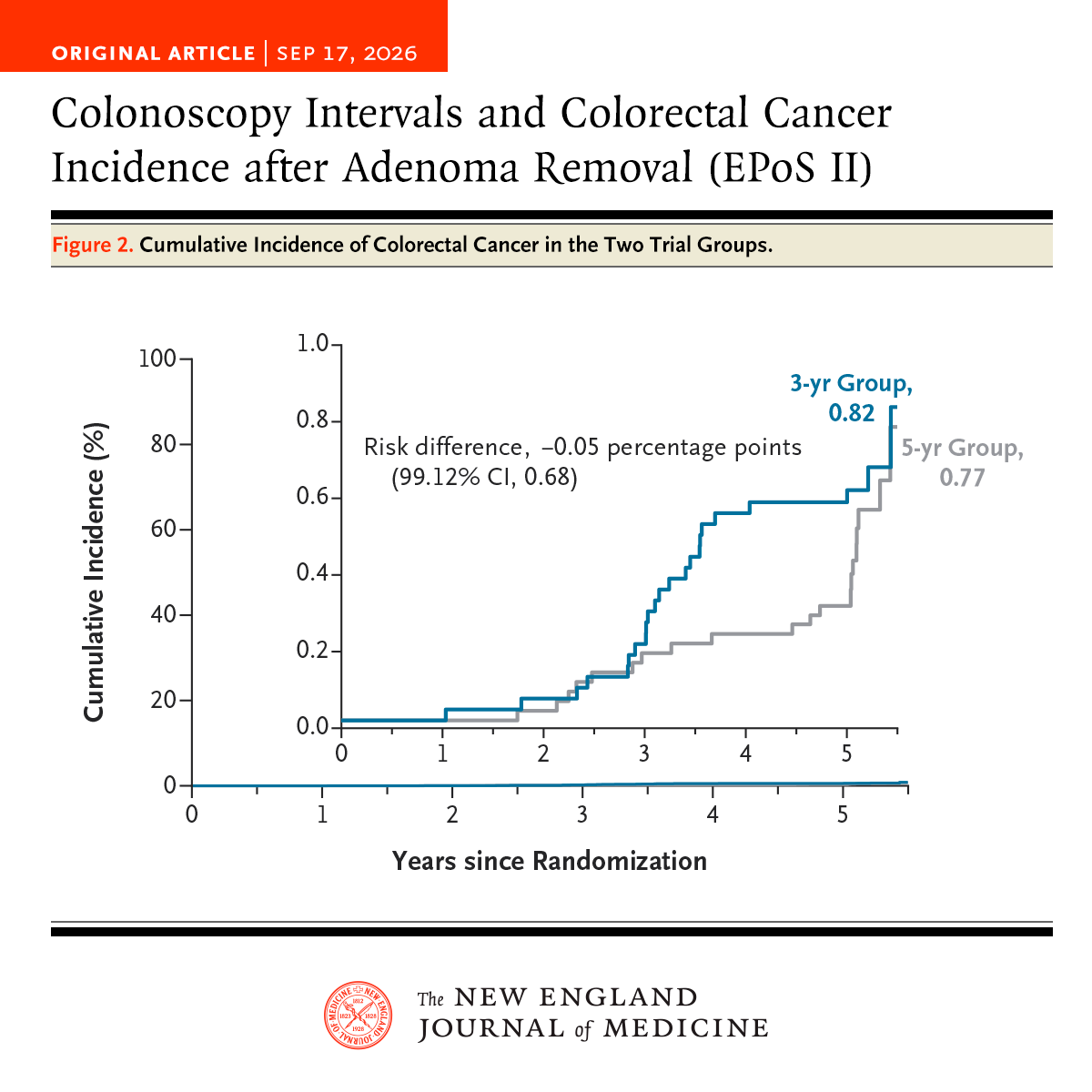
In this planned interim analysis of a randomized trial, first surveillance colonoscopy at 5 years after the removal of high-risk adenomas was noninferior to first colonoscopy at 3 years for the incidence of colorectal cancer. Full EPoS II trial results: https://t.co/ABnbAOKBZh
Editorial: When More Is Not Better — Colonoscopy Surveillance after High-Risk Adenomas https://t.co/B2jICCLBuv
Correspondence: Colorectal Cancer Risk among Patients with Serrated Polyps (EPoS III trial) https://t.co/hENNrFoHVI
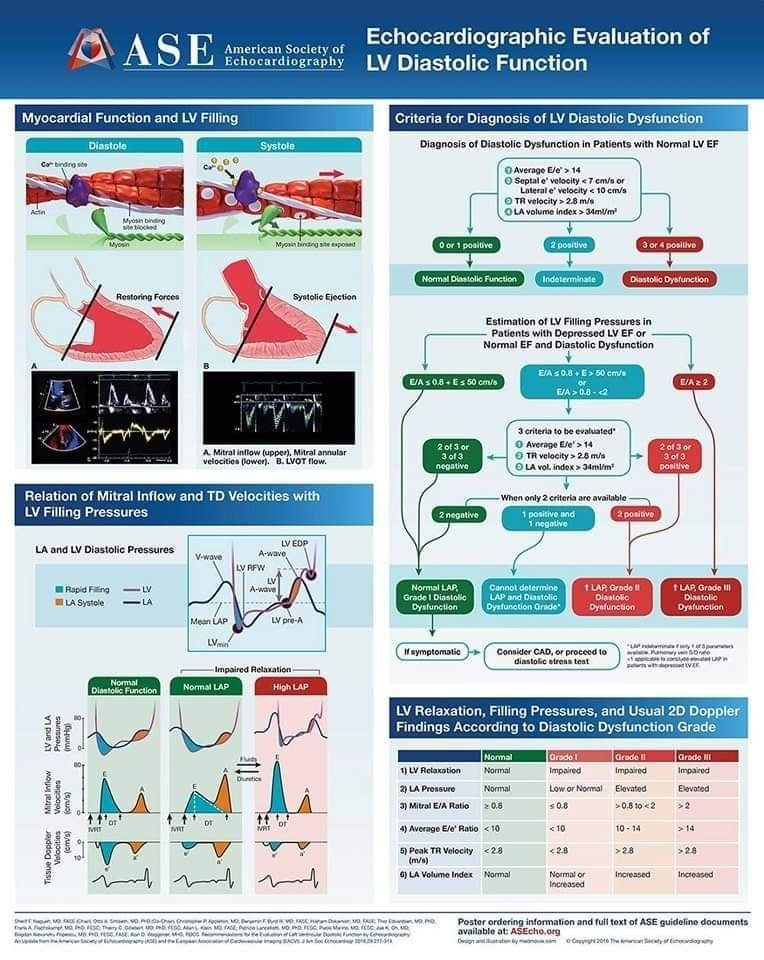
Aortic stenosis: don’t grade severity from AVA alone.
Echo assessment of AS should be integrative.
For severe AS, the classic concordant parameters are:
🔵 Vmax ≥4.0 m/s
⚪ Mean gradient ≥40 mmHg
🔴 AVA ≤1.0 cm²
⚫ Indexed AVA ≤0.6 cm²/m² can support severe AS, particularly in patients with small body size.
( But what if the numbers disagree)
That is where the real echocardiographic reasoning begins.
1️⃣ First, check for measurement error, especially LVOT diameter, LVOT VTI and Doppler alignment.
2️⃣ Then assess flow status:
Low flow: SVi ≤35 mL/m²
A patient with AVA ≤1.0 cm² and mean gradient <40 mmHg may have low-flow, low-gradient AS, with interpretation depending on LVEF and the clinical context.
In selected discordant cases, CT assessment of aortic valve calcification can provide important additional evidence of stenosis severity. The 2025 ESC/EACTS guidelines emphasize multimodality assessment when severity remains uncertain.
#Echocardiography #Cardiology #AorticStenosis #ASE
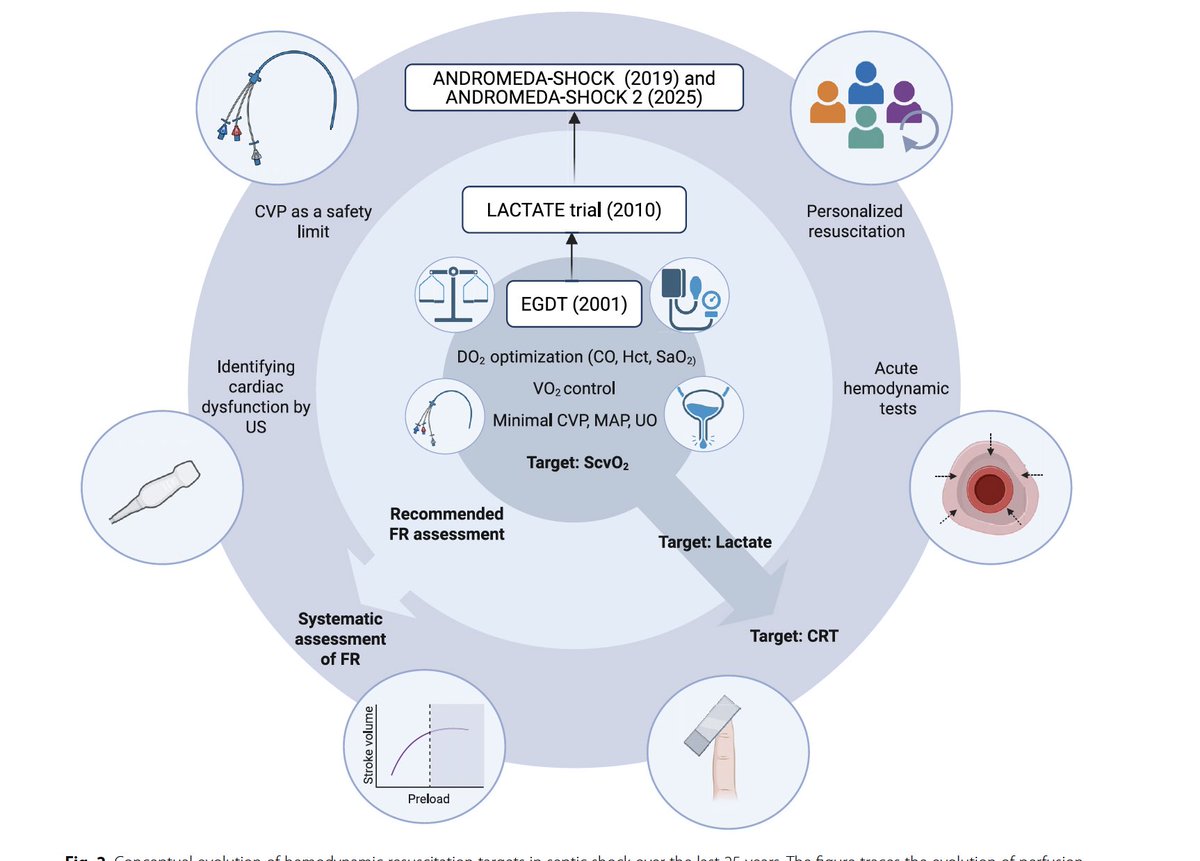
My two preferred papers of life are “the holistic view..(COCC 2012) and the recent “25 years of septic shock resuscitation…(CCF 2026). Science, soul, heart. The first was after 15 years of research in perfusion that started with gut tonometry. The last one “what have we learnt!”
To all the critical care folks out there! 🫁
Do you have new research or clinical insights on ARDS and mechanical ventilation? We would love to feature your work in our Special Issue of Medicina.
📅 Submit by January 29, 2027
#ARDS#MechanicalVentilation#CriticalCare
People keep trying to make metoprolol & COPD a thing. They're not. They don't love each other, they don't hate each other - they're just indifferent to one another.
A few years ago there was an overblown trial in NEJM which tried implying that metoprolol *increased* mortality in COPD. I debunked the concept of metoprolol killing people on the blog here: https://t.co/FX0zmWhtrE
This new trial will hopefully clarify this topic once and for all.
The bottom line on metoprolol & COPD:
🔑 COPD isn't an indication for metoprolol
🔑 COPD isn't a contraindication for metoprolol
🔑 COPD doesn't affect the risk/benefit ratio of metoprolol
🔑 Use metoprolol as indicated for cardiac indications based on the cardiology literature
This is actually really simple.
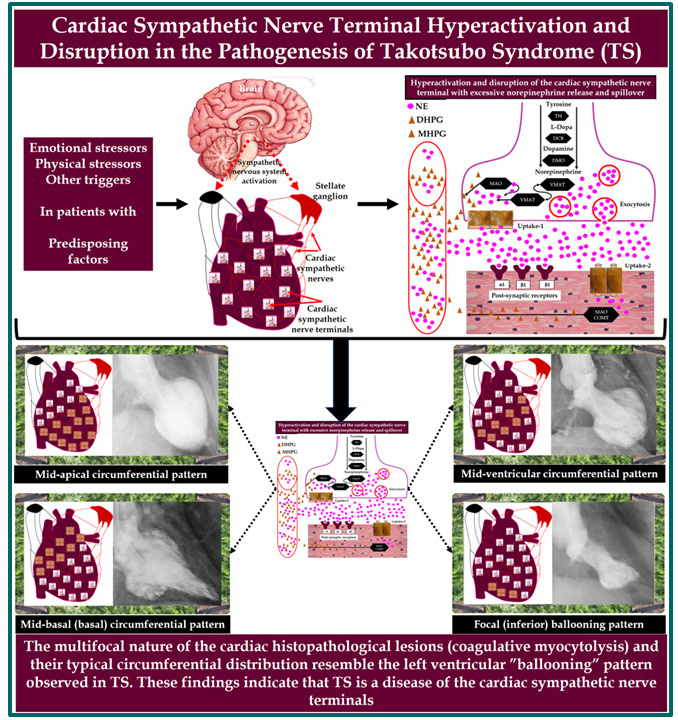
🫀 Takotsubo syndrome may be more than a “broken heart”.
Often associated with emotional or physical stress, Takotsubo syndrome is a complex condition with incompletely understood mechanisms.
This review explores the potential role of cardiac sympathetic nerve terminals in the pathogenesis of Takotsubo syndrome.
👇 A thread
#Cardiology #TakotsuboSyndrome
@ABsteward Candida pneumonia is the Sasquatch of pulmonary infectious diseases.
I can't exclude that it exists somewhere, but I have yet to actually see it.
Nearly always contamination.
I'm working on the RV failure chapter
is anyone using IV nitroglycerine infusions intentionally as a *pulmonary* vasodilator?
IV nitroglycerine is actually a reasonably good pulmonary vasodilator with a lot of parallels to IV milrinone or IV epoprostenol (physiology data review here: https://t.co/CHDFQUfPvi).
for a patient in RV failure who has a PA catheter en situ, trialing cautious up-titration of IV nitroglycerine gtt may sometimes be reasonable. It's a safe agent especially with invasive ICU-level monitoring. If it doesn't help, you can stop it and it will be gone in minutes. It may cause some mild systemic hypotension (like *any* IV pulmonary vasodilator).
Admittedly there isn't any high-level data for this, so it would be justifiable only if it had a positive impact on the patient's physiology (n=1 concept). (There also isn't any high-level data for *most* of what we do in RV failure).
It's kinda wild the way we usually ignore the effect of vasodilators on the pulmonary circulation. It is truly the forgotten side of the heart.
#ThePeoplesVentricle
How to decongest a DECOMPENSATED HEART FAILURE (ESC 2026)
🎯Loop➡️Acetazolamide➡️ Thiazide.
🎯L/F Urine Na & Urine O/P to asses response.
🎯VEXUS 🔁 to decide end points.
A systematic review takes one to two years. Very little of that time goes to thinking. It goes to moving citations between disconnected tools.
We built CoreSR to strip that out and return the reviewer's time to judgment.
https://t.co/iv5AnOM8WE
https://t.co/eszXttb0Jk
Does contrast-enhanced CT really cause early AKI in critically ill patients?
We found no convincing association with early AKI, although a delayed signal emerged at 7 days.
Now published in Emergency Radiology 👇
https://t.co/paUXopF0in
#AKI#CriticalCare#Radiology#MIMICIV
The 5th universal definition of MI invokes the concept of "regional ST-segment depression" due to supply-demand imbalance.🤦♂️
This concept is incorrect and misleading, because subendocardial ischemia DOESN'T localize to any region.
There are really just TWO possible patterns of acute myocardial ischemia on an ECG:
[#1] Subendocardial ischemia (diffuse STD).
[#2] Transmural ischemia (which often causes regional STE and regional ST depression due to reciprocal changes).
The concept of "regional ST-segment depression due to supply-demand mismatch" is misleadingly dangerous, because this is often *incorrectly* invoked to explain regional reciprocal STD. This causes clinicians to *miss* the true diagnosis of transmural infarction (e.g., posterior transmural ischemia causing anterior STD).
It would be safest to eliminate the myth of "regional ST-segment depression due to supply-demand mismatch" in order to force ECG readers to choose between the only two real ECG manifestations of ischemia: subendocardial ischemia or transmural ischemia.
Open letter to my surgical colleagues:
Dear friends,
We never send one of our ICU patients to the OR without making sure you know who the patient is, why they're going, and what needs to be done
Please don't send a postoperative patient from the OR to the ICU without telling us
What did you find?
What did you do?
What went right (or wrong!)?
What are you worried about?
What do you want us to do next?
What do you expect?
We don't need a 20-minute presentation. We need 2 minutes of your time. Or just a text/message!
A handoff isn't just courtesy. It's patient care
Please talk to us
#MedTwitter #ICU #FOAMcc











![PulmCrit's tweet photo. The 5th universal definition of MI invokes the concept of "regional ST-segment depression" due to supply-demand imbalance.🤦♂️
This concept is incorrect and misleading, because subendocardial ischemia DOESN'T localize to any region.
There are really just TWO possible patterns of acute myocardial ischemia on an ECG:
[#1] Subendocardial ischemia (diffuse STD).
[#2] Transmural ischemia (which often causes regional STE and regional ST depression due to reciprocal changes).
The concept of "regional ST-segment depression due to supply-demand mismatch" is misleadingly dangerous, because this is often *incorrectly* invoked to explain regional reciprocal STD. This causes clinicians to *miss* the true diagnosis of transmural infarction (e.g., posterior transmural ischemia causing anterior STD).
It would be safest to eliminate the myth of "regional ST-segment depression due to supply-demand mismatch" in order to force ECG readers to choose between the only two real ECG manifestations of ischemia: subendocardial ischemia or transmural ischemia.](https://pbs.twimg.com/media/HQ5TmWxX0AANqiE.jpg)


