🚨We are recruiting! Looking for a passionate post-doc who can take the lead on some new projects in the lab 🔬 see below for details! @UTMDAnderson
https://t.co/FW4rYUBRln
Excited to share our @natgenet.nature.com study showing that epigenetically rewired transposable elements control AML leukemia stem cell properties and patient outcome.
Grateful to the team & collaborators. https://t.co/3XO9vlbLUT
People often ask how breakthroughs occur in cancer biology-often the story is more complex - the survival plot for myeloma outcomes is extraordinary - improvements come about in incremental steps - in my lifetime treatment of Myeloma has almost transformed into a curable disease
VIDEO | Delhi: Prof. Sheffali Gulati, Faculty In-charge, Pediatric Neurology Division, AIIMS says, "In autism spectrum disorder, a lot of research has been done globally. It has been observed that children who had higher screen time at the age of one showed a higher prevalence of autism by the age of three, especially in boys, though it is also seen in girls."
(Full video available on https://t.co/bIyFWTfmBd)
Our Human Multiomic Development Atlas paper is out in Nature today! A heart-felt "thank you" to all co-authors for their tireless work on this complex yet exciting project! Congrats all! https://t.co/iUiZz00KOt
Aging clocks may be shaped by neurosyndemics, multiple interacting physical and social real-world environments jointly influencing brain health. Out in Nature Medicine (https://t.co/h6kbJntHRV), we assessed 18,701 participants from 34 countries, showing that the combined aggregate-level exposome (73 physical, social, and political factors measured at country-level) predicts multimodal brain aging far better than isolated exposures (up to 15-fold more variance). Moving beyond single risks, we provide evidence that synergistic, nonlinear exposome burden accelerates brain clocks across health and disease, with physical exposures linking more strongly to structural brain aging and social exposures to functional brain aging. Exposome burden increased the risk of accelerated brain aging by 3.3–9.1-fold, in some cases exceeding the effects associated with dementia, and these findings held in out-of-sample, longitudinal, individual-level variation, and sensitivity analyses. Thus, the pace at which the brain ages may be shaped by syndemic environmental and societal conditions, calling for much more intersectoral policies. Congrats @AgustinaLegaz Sebastian Moguilner @HernHdezL & all coauthors. 1/5👇 @GBHI_Fellows
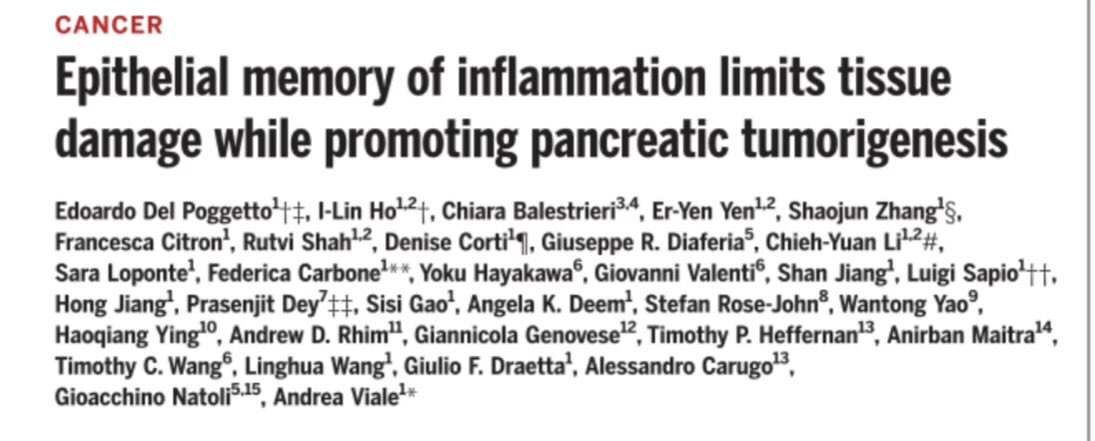
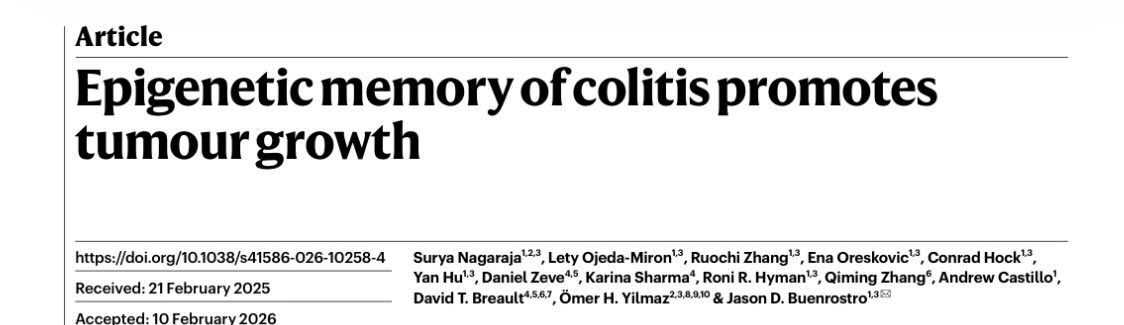
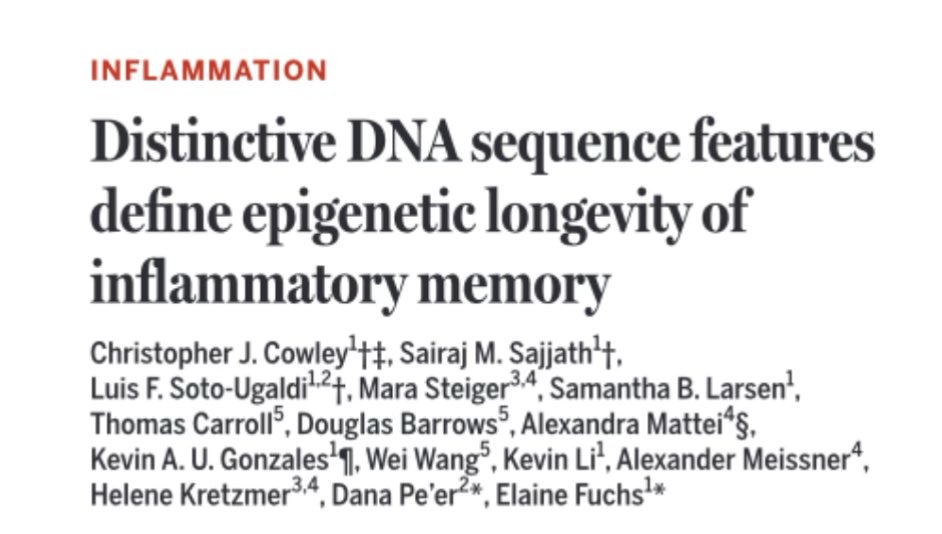
Multiple recent papers (two just this week) highlighting the role of inflammation in sculpting “epigenetic memory” and promoting tumorigenesis across various solid organs.
https://t.co/N3tAKyGluC
https://t.co/dbTqy9rTQr
https://t.co/M2TuFCKRea
https://t.co/iav4PoFH1d
New Lab Alert! 🧬 https://t.co/B060mwrZe4
Thrilled to start the Labade Lab at @AshokaUniv! @TSB_Ashoka@KCDH_A
Join us to explore expansion microscopy, nanoscale spatial genomics, and the epigenetics of aging.
PhD Program at Ashoka for 2026-27 intake. Apply by 20 April 2026: https://t.co/ycPUkIUDPj
We’re investigating how "inflammaging" alters the epigenome and how to decipher and ultimately reverse those changes.
We build new technologies to visualize genome & epigenome changes at the nanoscale and explore ways to make the genome more resilient to aging.
#PhD #SpatialGenomics #ExpansionMicroscopy #Inflammaging
Our paper is out in @ScienceMagazine
Here we describe how stem cell retain epigenetic inflammatory memory long-term. Full text in the link below!
Congratulations @chris_cowley14@SairajSajjath@LFSoto12 and everyone else involved!
https://t.co/G2MLNwTh6D
It’s well known that inflammation increases cancer risk, but how?
The answer: the epigenome "remembers" inflammation and primes stem cells for cancer.
Here is our paper: https://t.co/FcnkLdpiKZ
And a special shoutout to the lead author @snaga13
A 🧵
We're seeking to fill two roles: a PDRA and an RA. These positions will investigate resistance mechanisms in brain tumour models using in vivo models, spatial omics, CRISPR. Please apply if previous experience aligns!
Here is the RA job advertisement: https://t.co/QGlKsyhZTg
We developed a single-molecule, multi-modal spatial genomics approach to visualize the structure and function of >100,000 individual extrachromosomal DNA (ecDNA) molecules in their native contexts.
Preprint link at the end of the thread. (1/11)
Thrilled to share my lab’s new paper out in @genomeresearch where we use chromosome engineering to deconstruct 8p syndrome - a rare developmental condition caused by inversions, duplications, and deletions on chromosome 8p.
(1/5) How does glioblastoma maintain its immense heterogeneity? 🧠 Two new companion papers from the Bhaduri Lab @UCLA now on @bioRxiv offer a lineage-resolved view of GBM hierarchies. Let’s dive in! 🧵👇
https://t.co/ss3FWXWakN
https://t.co/DFRqbeEttO
Happy to share our Current Opinion review on the key challenges in accurately predicting 3D distances between chromatin segments and computing their dynamics. Thanks to Daniel Jost @djost_physbiol & Luca Giorgetti for the invitation to write this review @DuttaShuvadip@BsbeIitb
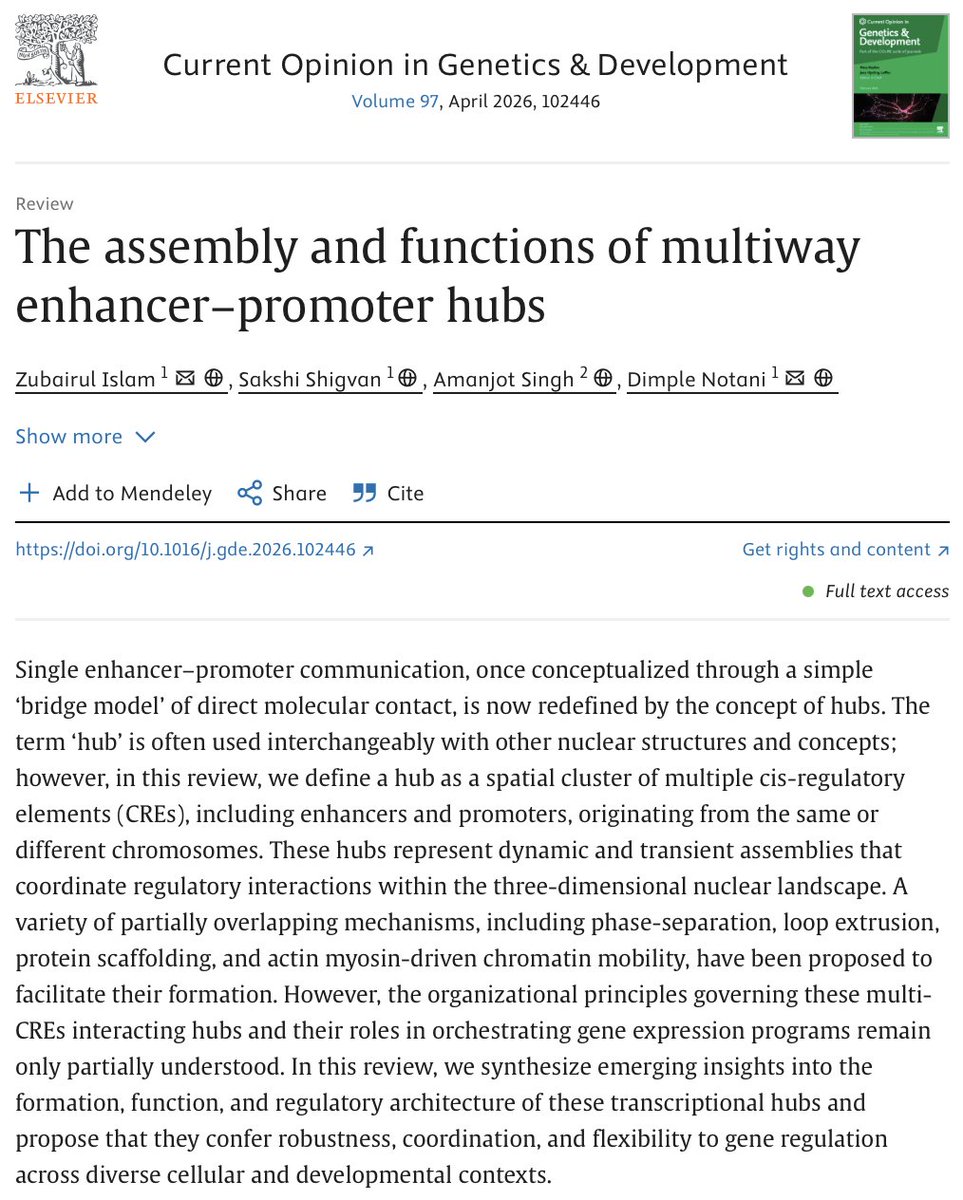
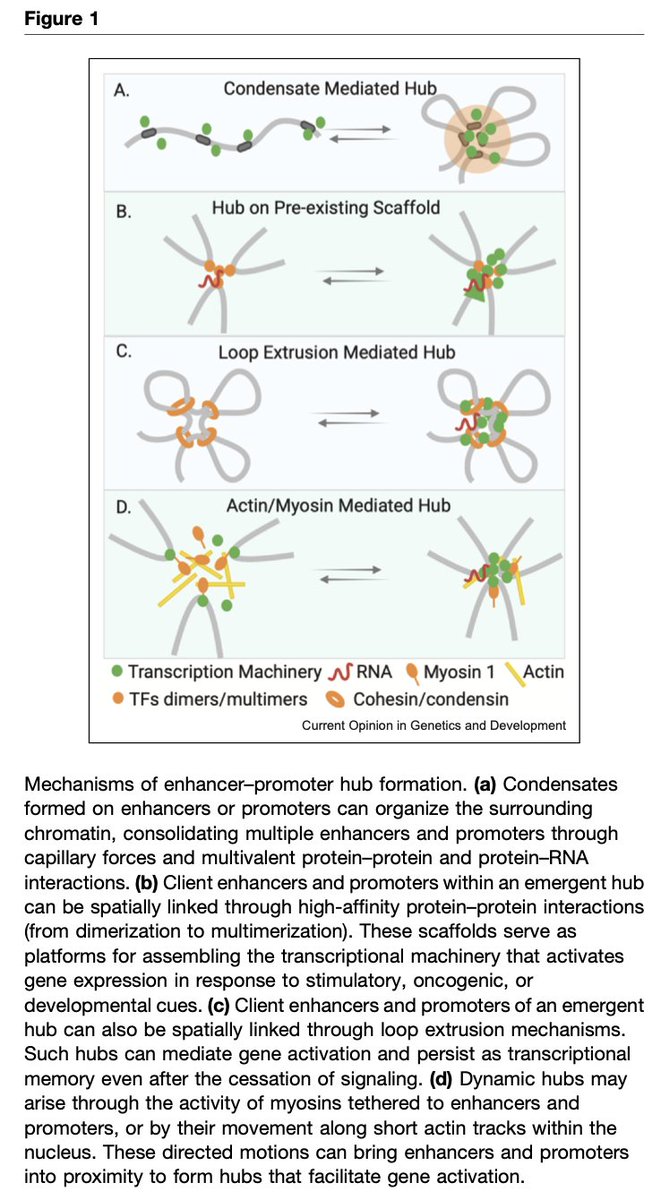
Exited to share Current Opinion review on how chromatin hubs involving multiple enhancers and promoters are formed, and their potential roles in gene regulation: https://t.co/E0bB0IgRWM. @zubi___@Sakshi_Shigvan@Amanjsingh1996@NCBS_Bangalore
Check this new work on BRD4's role in preventing the premature activation of developmental transcription factors via #Polycomb, providing new mechanistic insights into the pathogenesis of neurodevelopmental disorder #CdLS#NDDs, #chromatinopathies https://t.co/H3x3WJ9cUK