Pumping molecules without a pump?
Back-to-back with @BoekhovenLab, we describe minimal systems that use chemical energy (via catalysis) to transport molecules against a concentration gradient.
Us: https://t.co/LZsPDm7HZj
Job's team: https://t.co/2bNBT4iOoA
🦋for details &🧵
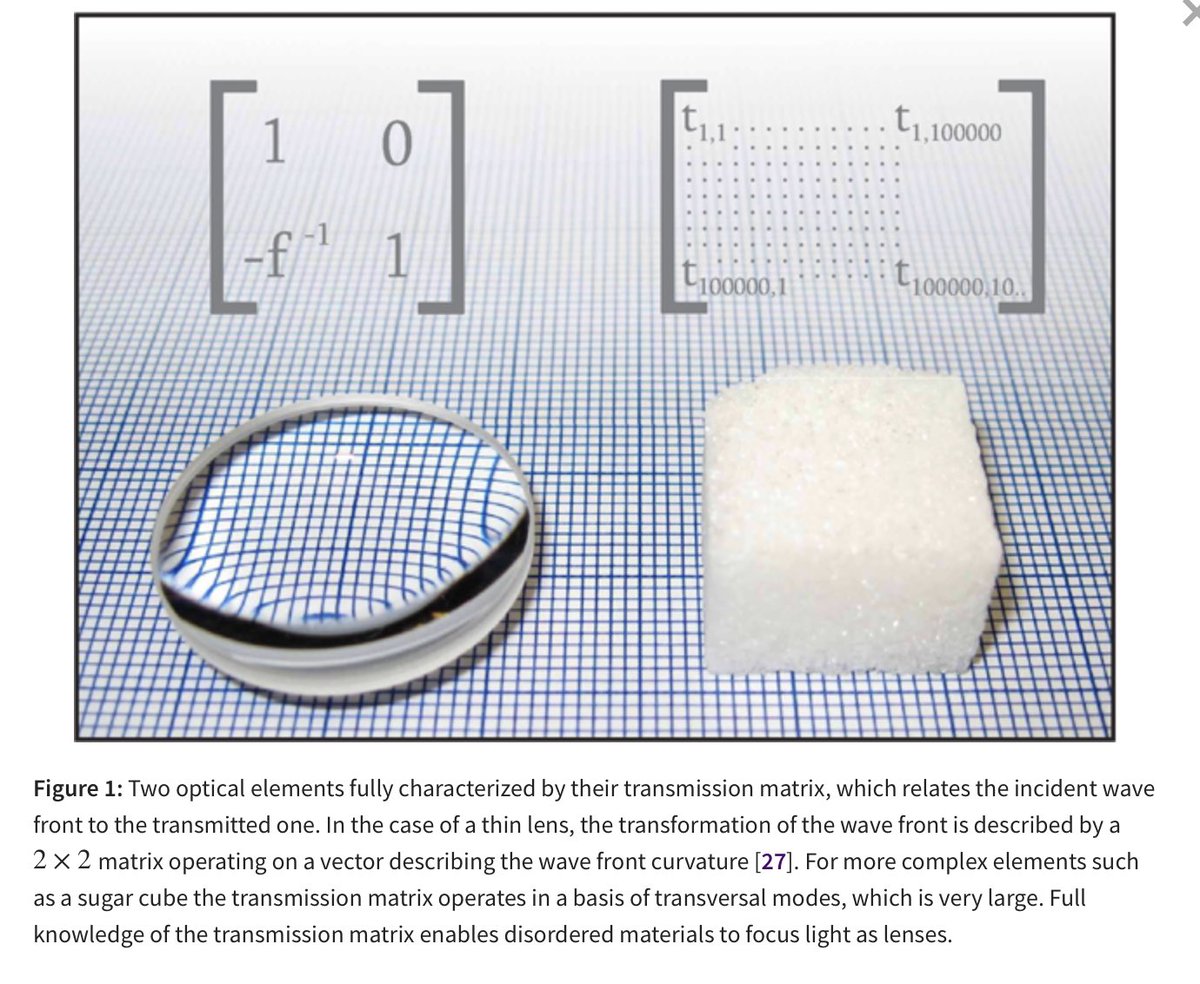
The paper was ultimately published in PRL (https://t.co/JWZZmX40Ez). It was highlighted in Physics «The information age in optics » by @AllardMosk (https://t.co/0xcGiXBga3), which really nailed it, with a beautiful illustration that I still use today (2/n)
🌟 Spotlight on Yoann Mocquin!
An interactive notebook demo of geometric MTF — ray optics and sliders reveal how signal, blur & diffraction shape image quality live across line-spread and MTF curves.
Notebook: https://t.co/VNM4pBBunB
This is a rock.
More precisely, it's a sample of my favorite mineral: Zn Cu3 (OH)6 Cl2, otherwise known as anarakite or Herbertsmithite.
Here's what it may be telling us about the fundamental structure of space, time, and the universe. (1/17)
Researchers at @NorthwesternU University captured the formation of nanoscale water bubbles as hydrogen and oxygen combined in real-time. Using a new method involving nanoreactors and electron microscopes, the team observed how palladium helps generate water from these gases. This breakthrough has potential implications for water production, especially in space travel, where it could help astronauts create water from gases without extreme conditions.
👉 https://t.co/CPAj7bRDKH
How to Read a Paper—
The Three-pass Method
Researchers usually spend much time reading papers, but are never taught to read well.
Take a look at this two-page instruction by S. Keshav https://t.co/LgpJaadLRu
Accounting for correlations (both temporal and spatial) in simulation data can be stressful. To help, @MarkusDeserno and I have written a guide on the basics of calculating error bars, and it’s freely accessible for 50 days! Now, a 🧵
https://t.co/zFjMBDPRTG
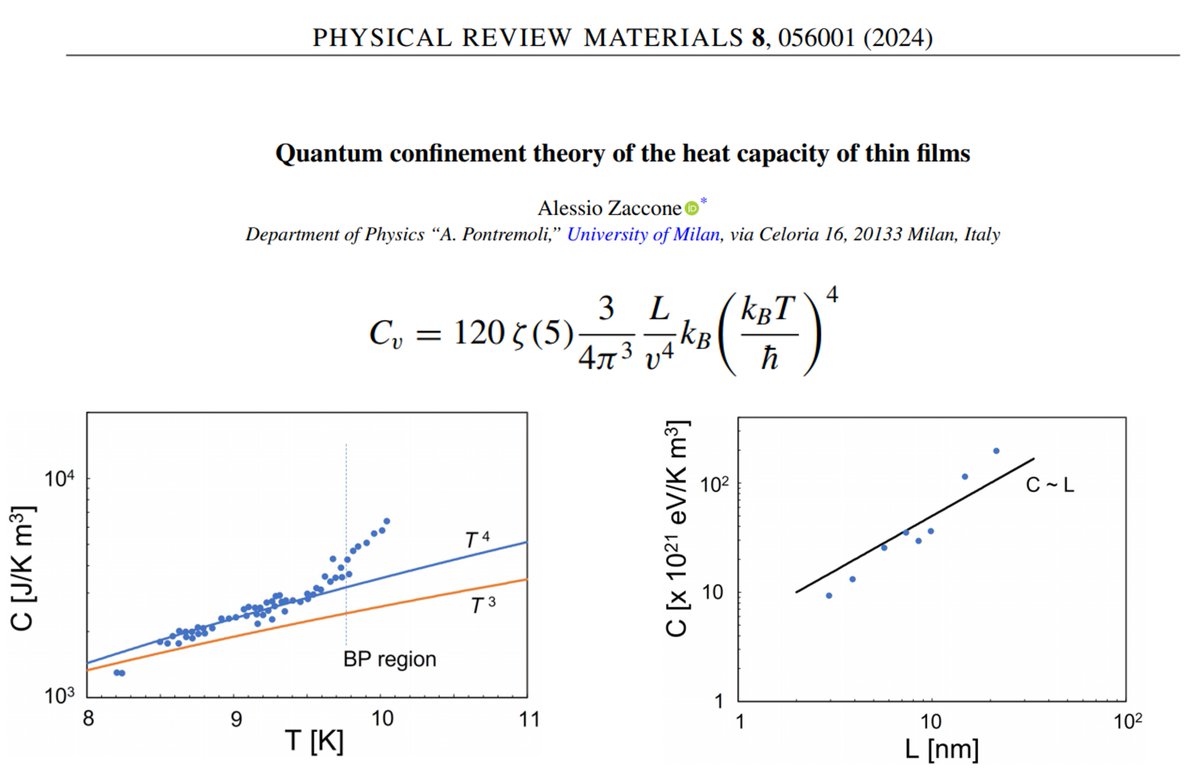
We learn in undergrads that the Debye model predicts the specific heat of solids at low T to scale as ~ T^3. But what about #nanoscale materials, e.g. thin films? A new theory @PhysRevMater gives ~ T^4 and a direct proportionality to the film thickness L: https://t.co/2BhMHaVtVW
Did Newton know F=ma?
Newton's 'Principia' uses geometric proofs, not calculus. He didn't give differential equations for his laws, but did he know them?
Exploring whether Newton knew diff expressions for forces is a fascinating rabbit hole
NB @rmathematicus
🧵1/9
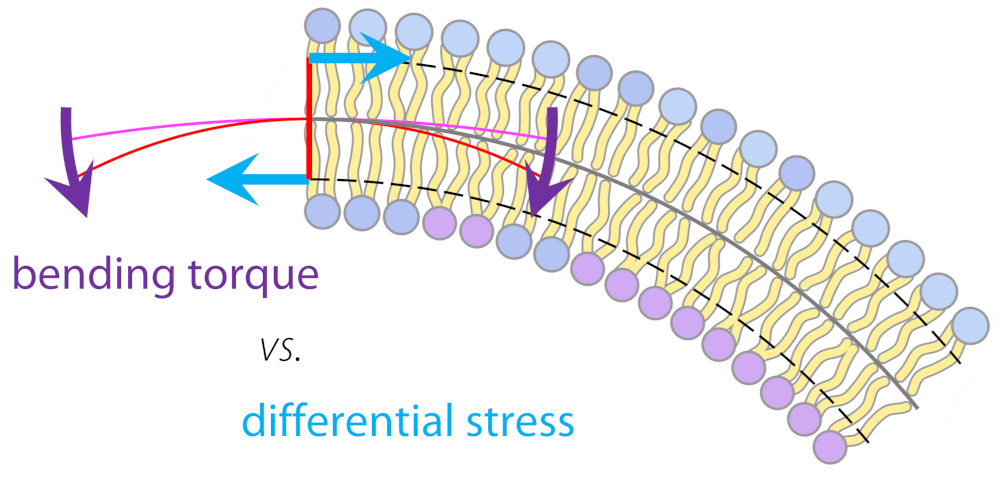
Hello, my absolutely lovely membrane peeps! Would you maybe, pretty-please, let me proudly steer you to a MINI-REVIEW I recently wrote? It’s on asymmetric membranes in general, and differential stress in particular—subjects that I am massively interested in right now!
1/26
I have got multiple requests on allowing remote participation for our upcoming #MCX_MMC and @NeuroJSON training workshops
Happy to announce that we plan to stream our training workshops for remote participants
Please register for joining us remotely:
https://t.co/6Yl6lvbcWa
We need you in our next group photo, and for a PhD student position on dynamic organic optical metasurfaces in our recently started ERC project. Share, or apply yourself: https://t.co/64dNOBmgGX
If you want to learn #Python, #MATLAB, #R, #Unix Shell, and Version Control with #Git, then Software Carpentry is probably the best place for you since it offers well-curated courses for free.
List of all available courses at https://t.co/Mwr0uj47Ge