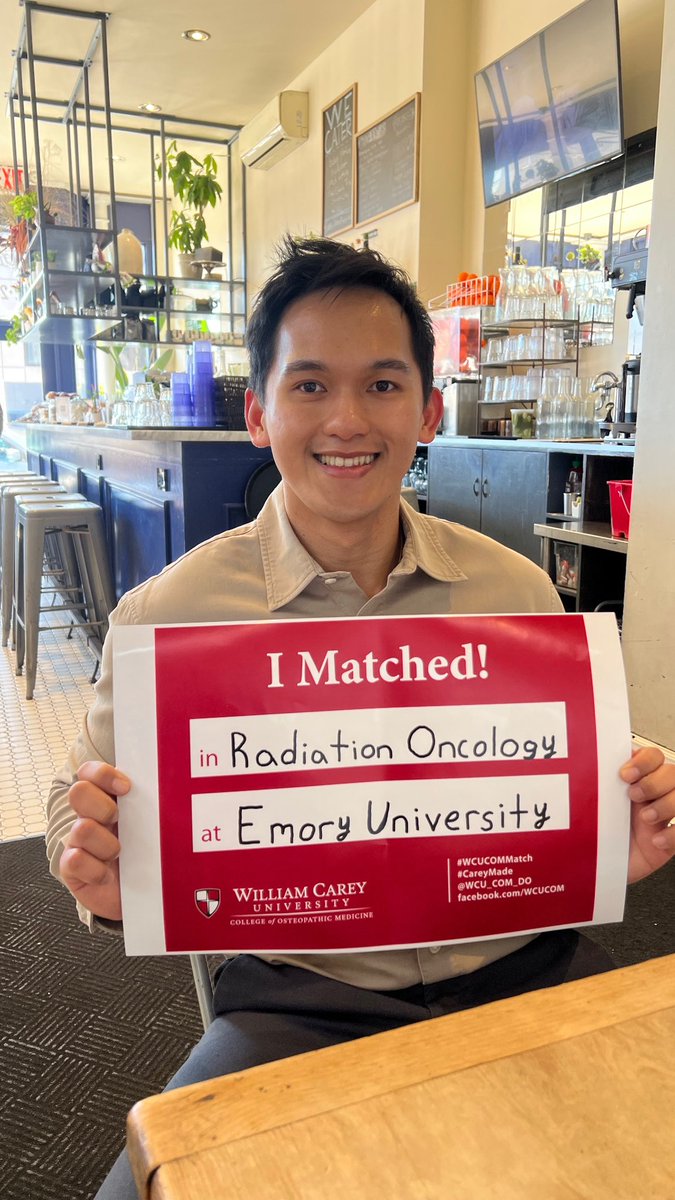
Ahhh!!! I’m thrilled to share that I matched into Radiation Oncology at Emory University (Atlanta, GA) and Transitional Year at Sutter Health (Oakland, CA). Excited for this journey ahead! ☢️☢️☢️
Thank you to my mentors @apolo_andrea@RoufDr@EChrisDee for all the support! 💪🏽
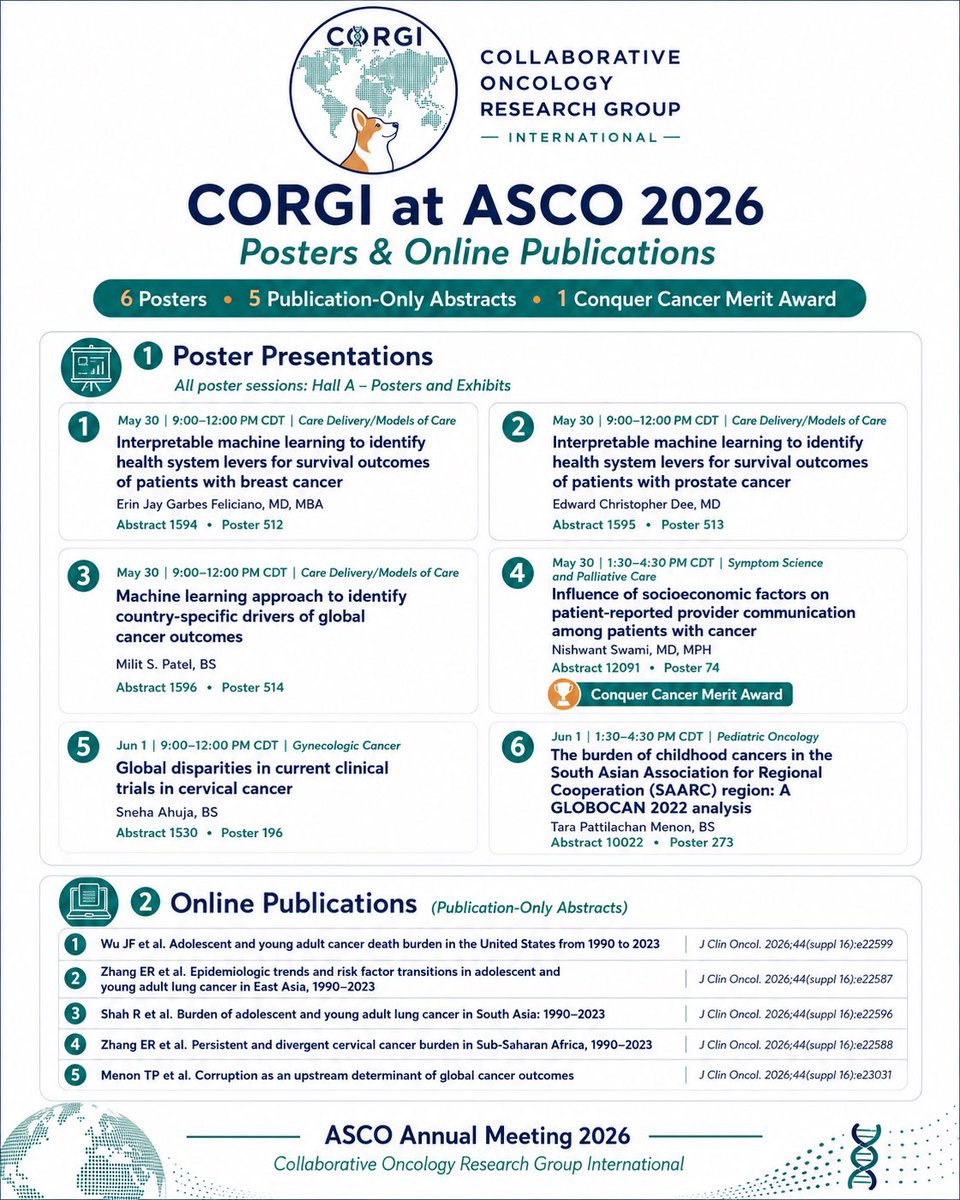
Proud to share the amazing work to be presented at #ASCO26 by our research group fondly named CORGI & led by @EChrisDee ✨
The core of the group spans trainees from high school to fellowship w/ collaborators from all over the world 🌎🌍🌏
Come stop by & say hi at @ASCO 🤓
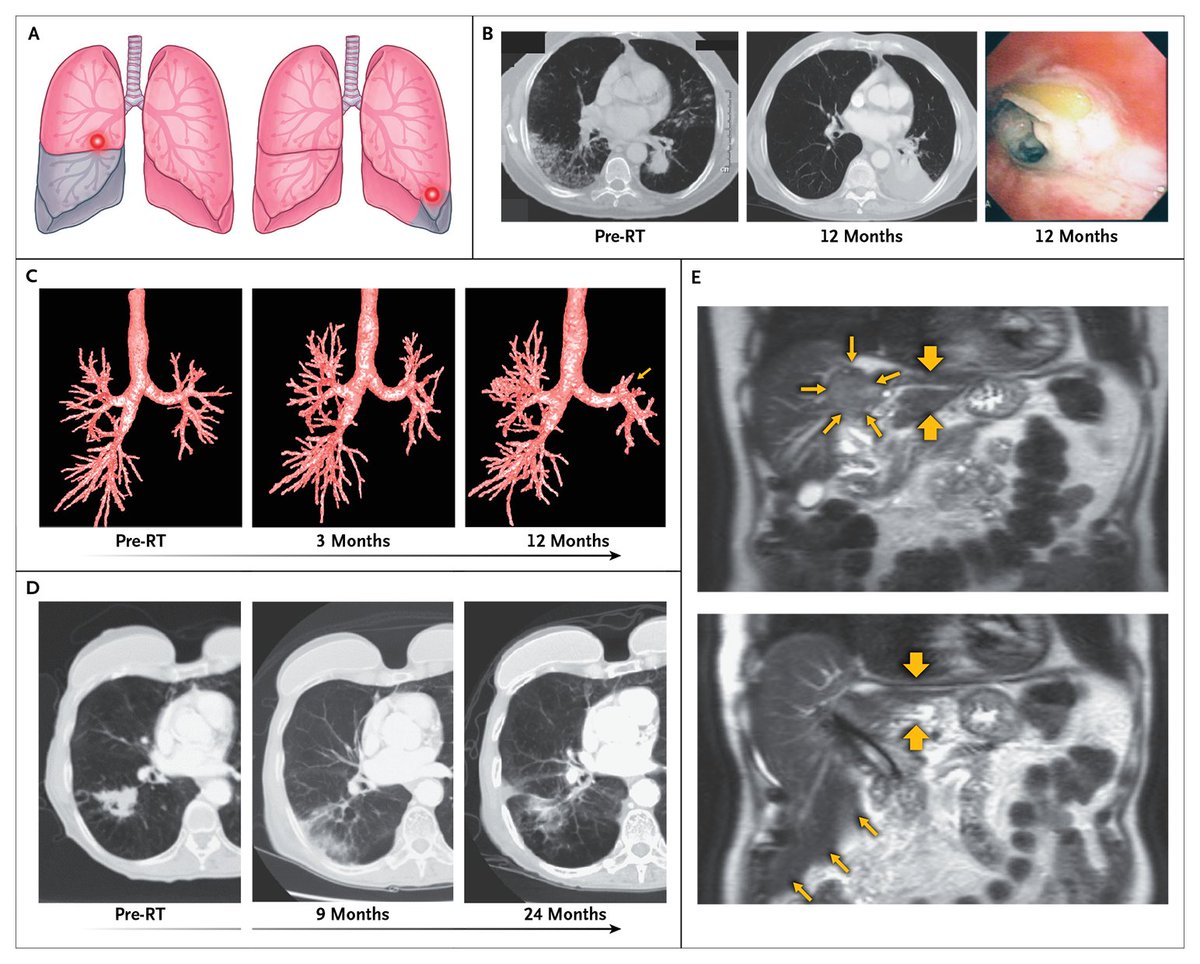
𝗕𝗶𝗼𝗹𝗼𝗴𝗶𝗰 𝗨𝗻𝗱𝗲𝗿𝗽𝗶𝗻𝗻𝗶𝗻𝗴𝘀 𝗼𝗳 𝗦𝗶𝗱𝗲 𝗘𝗳𝗳𝗲𝗰𝘁𝘀 𝗼𝗳 𝗥𝗮𝗱𝗶𝗮𝘁𝗶𝗼𝗻
Radiobiologic models developed with the use of characteristics such as mitotic capacity, tissue hierarchy, and differentiation state can predict responses in normal tissue at the levels of the cell, tissue, and organ. For example, the interaction of the dose and volume of radiation with the risk of effects in normal tissue is tissue- or organ-specific and dependent on the organization of the smallest functional subunits (e.g., nephrons, neurons, or alveoli) within the tissue. For some organs in which the functional subunits are organized in parallel (e.g., nephrons in the kidney), approximately a third of the total volume of the organ must be spared from receiving a relatively low threshold dose to maintain functional organ viability. The remaining two thirds of the organ constitutes a functional reserve. In contrast, when functional subunits are arranged in series (e.g., spinal cord neurons), even a focal injury threatens organ function (e.g., spinal cord myelopathy). Tissues with parallel organization generally have a higher tolerance for radiation than tissues with serial organization. Ablative treatments such as stereotactic ablative radiotherapy are more likely to have an acceptable safety profile when applied in and around tissues with parallel organization or in tissues capable of compensatory hyperplasia after injury than in serially functioning tissues (seen in figure).
Learn more in the Review Article “Effects of Radiotherapy in Normal Tissue” by @DeborahCitrin, MD, and Robert D. Timmerman, MD (@BobTimmermanMD), from the National Cancer Institute and @UTSWMedCenter: https://t.co/glyNSgSazP
Radiotherapy Review in NEJM:
“Underuse and refusal of indicated radiotherapy have been shown to increase cancer-specific mortality and the risk of death in both curative and palliative settings”
https://t.co/AVKnIbrw6M
Scientists from Caltech and USC have developed a new technique that can quickly provide 3D color images that capture both the structure of soft tissues and details of how the blood vessels are functioning.
https://t.co/gwdQhjuTpe
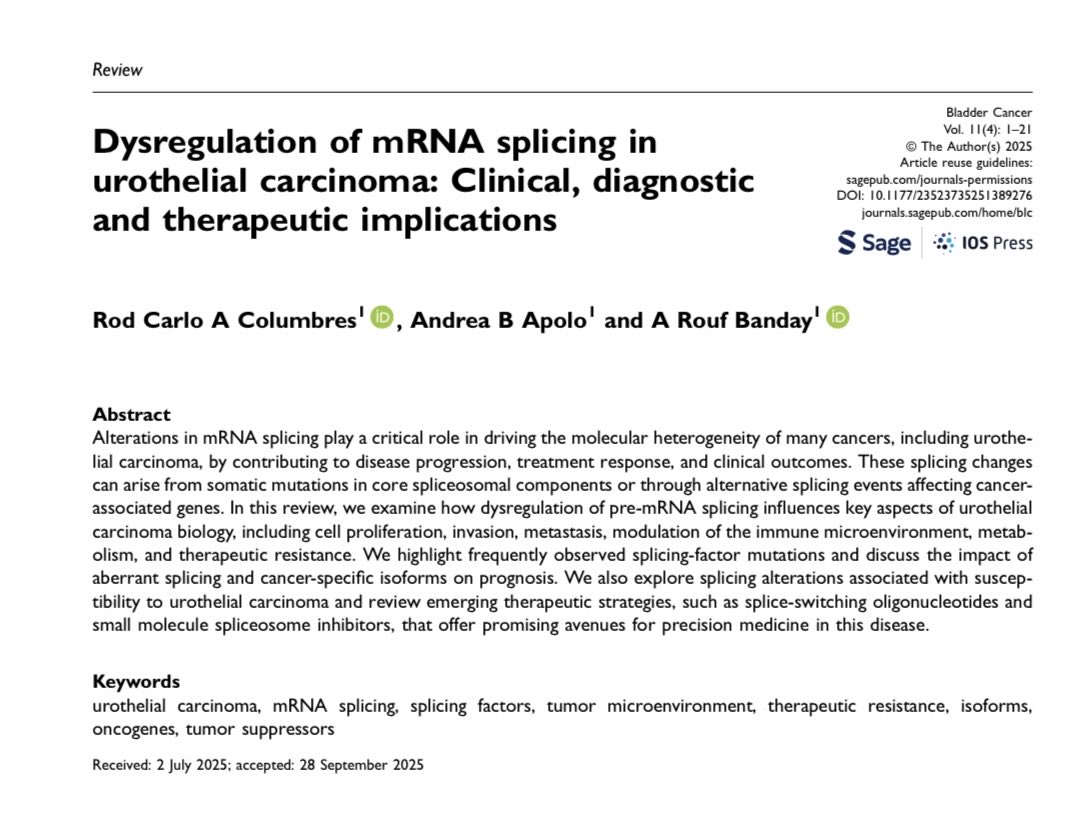
🚨📃🔥 Our invited review on splicing dysregulation in urothelial carcinoma is now published in @BladderCaJrnl!
A deep dive into the clinical, diagnostic, & therapeutic relevance of mRNA splicing alterations in #BladderCancer.
https://t.co/uHnxXQVYsu
@RoufDr@apolo_andrea
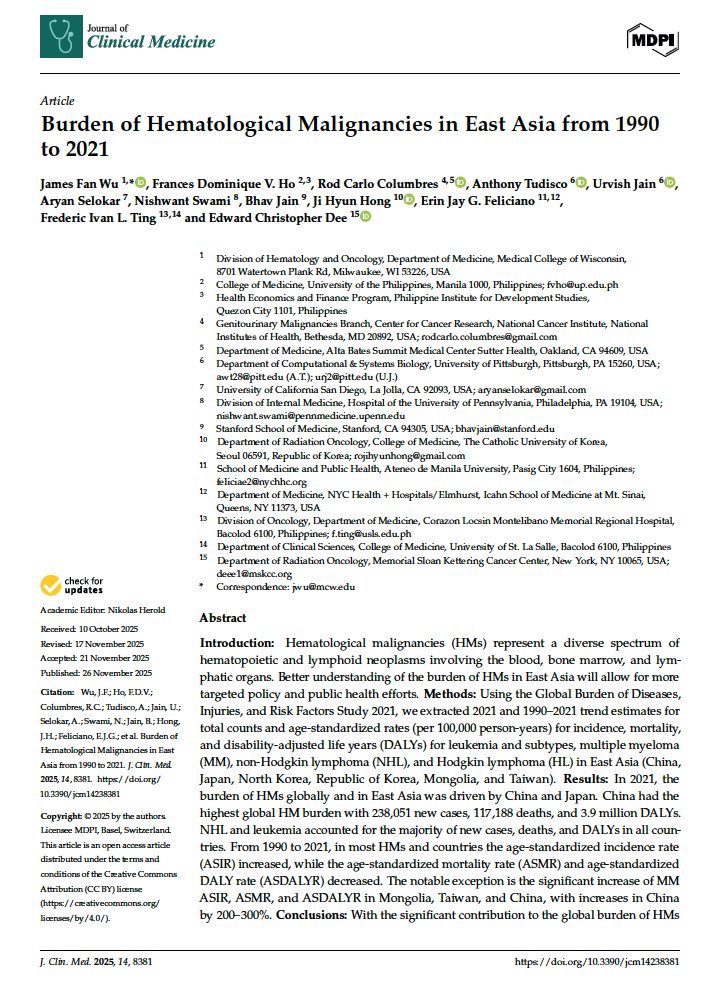
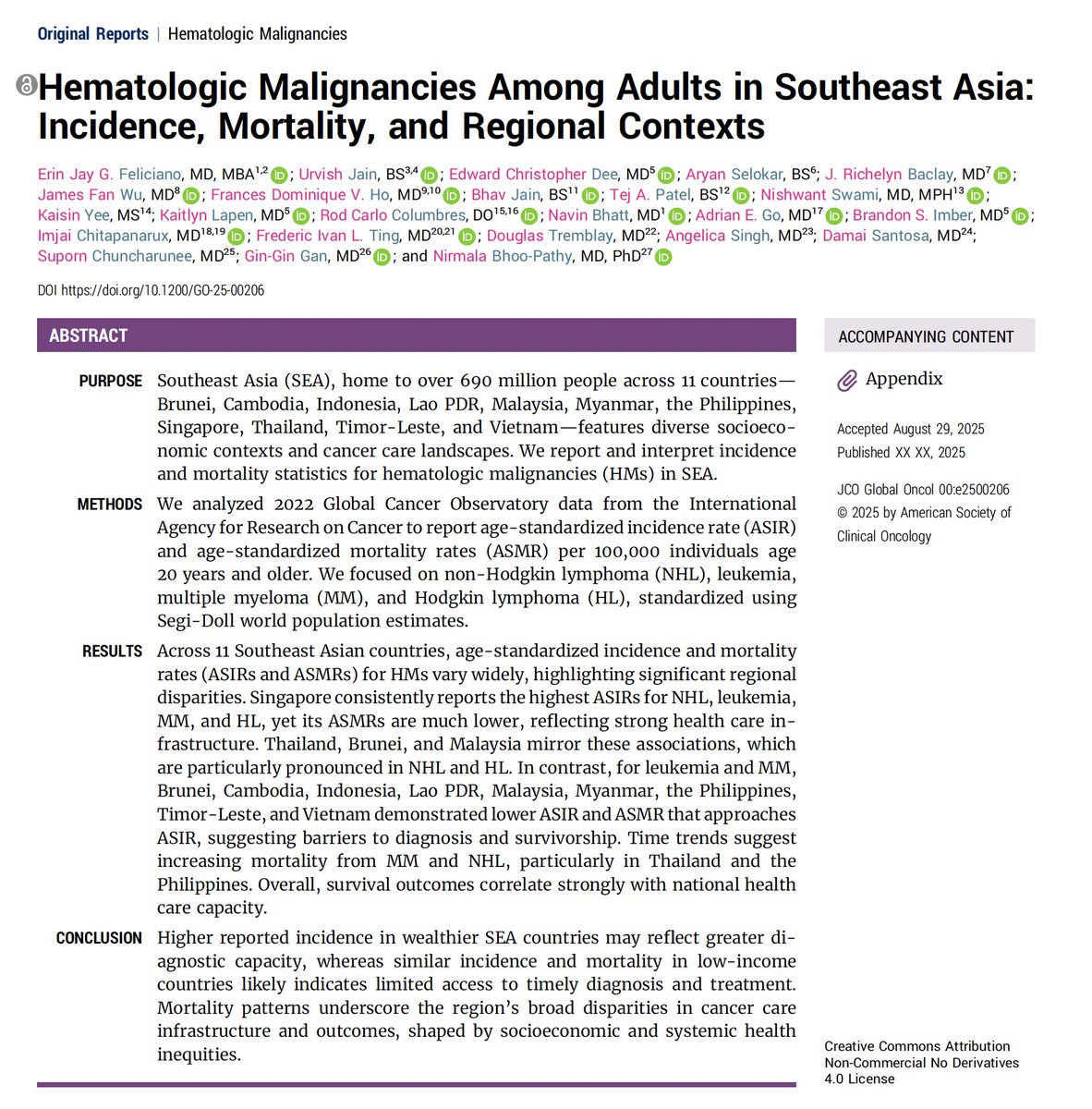
1/ 📢 New publication in @JClinMed_MDPI!
We analyzed @IHME_UW GBD 2021 data to quantify 30 years of trends in heme cancers across six East Asian countries, revealing major shifts in incidence, mortality & overall cancer burden.
🔗 https://t.co/rpMkvNra1o
#mmsm#lymsm#leusm
A global investigation into the drivers of cancer care disparities. @EChrisDee@MSKCancerCenter sits down with @zklaassen_md@GACancerCenter to discuss global prostate cancer disparities and health system factors influencing outcomes. #WatchNow on UroToday > https://t.co/8GqVhsMeQz #PCFRetreat25 @PCFnews
🚨📃🔥 Our invited review on splicing dysregulation in urothelial carcinoma is now published in @BladderCaJrnl!
A deep dive into the clinical, diagnostic, & therapeutic relevance of mRNA splicing alterations in #BladderCancer.
https://t.co/uHnxXQVYsu
@RoufDr@apolo_andrea
So proud of @RodColumbres our former @NIH Medical Research Scholars Program student who worked with us in our lab @RoufDr and put together this comprehensive review on splicing dysregulation in urothelial carcinoma #BladderCancerResearch@BladderCaJrnl. Please check it out!
BREAKING NEWS
The 2025 #NobelPrize in Physiology or Medicine has been awarded to Mary E. Brunkow, Fred Ramsdell and Shimon Sakaguchi “for their discoveries concerning peripheral immune tolerance.”
Phil and Penny Knight announced today a record-breaking $2 billion gift to the Oregon Health & Science University’s Knight Cancer Institute to transform the future of cancer care and set a new standard globally.
Thank you to Phil and Penny Knight for their incredible generosity.