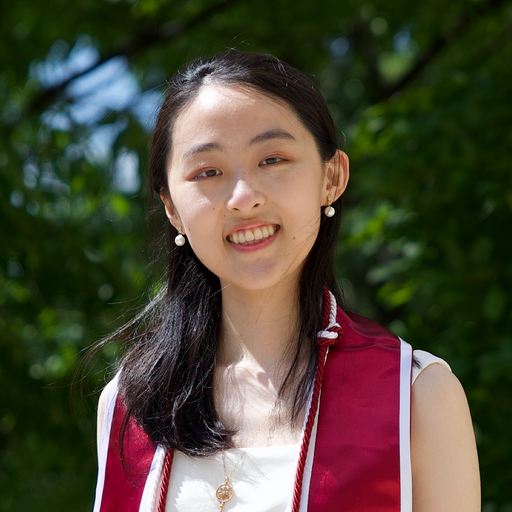
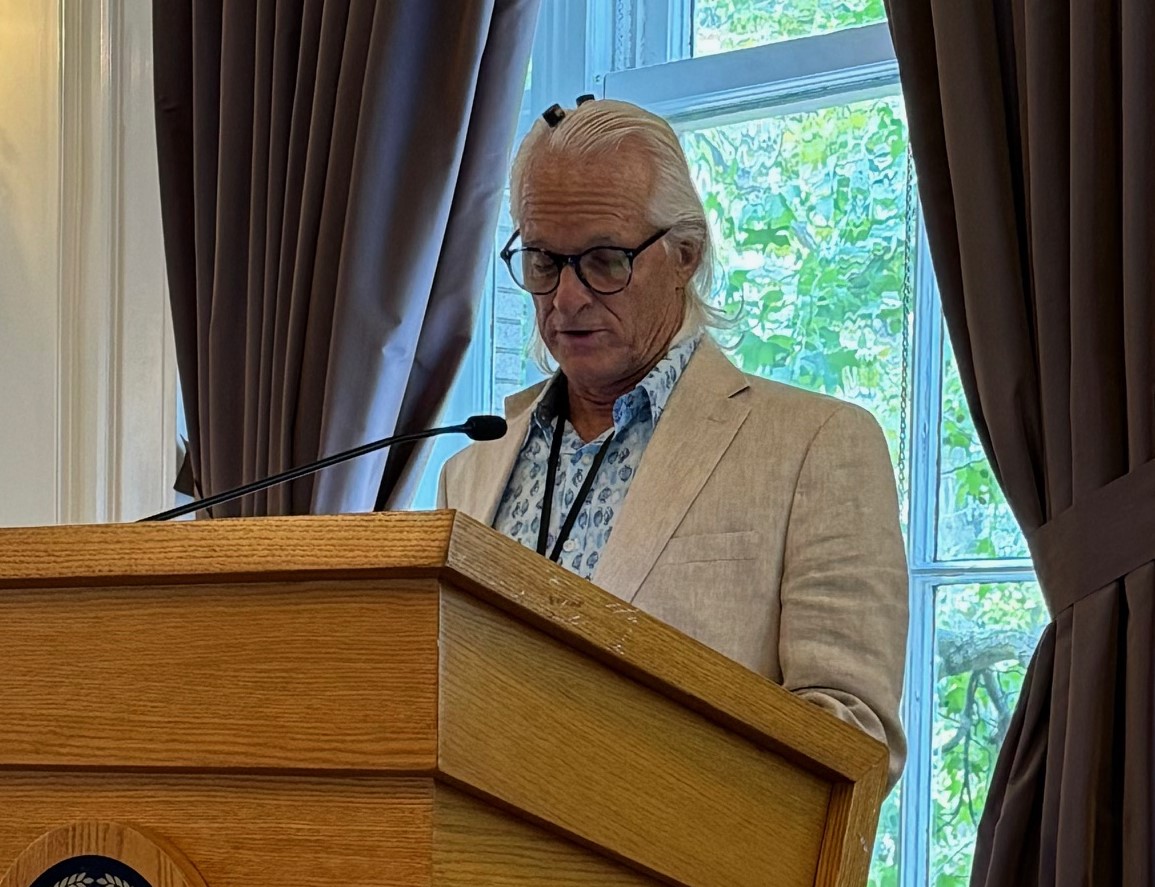
Our colleague Eva Yi Xie, a Princeton neuroscience PhD student, was detained by ICE at Reagan National Airport on her way home from SfN, where she’d just presented her poster. She’s being held in Chantilly, VA. Please help us bring her home. 📷
Join us at the @AsteraNeuro Social at SFN Monday Nov 16 8-10 pm to learn more about our mission and meet our team. We will have complimentary drinks and hors d'oeuvres. Hope to see you there! Please RT
An internal model at OpenAI has produced a claimed refutation of ETH! Russell Impagliazzo, Mohan Paturi, and I have been asked to help organize an open and independent examination of this claim. 1/4
We have 15 open positions at Astera Neuro! We're hiring experimental and computational neuroscientists and engineers to build a large-scale research effort aimed at understanding consciousness = the brain's internal model of world and self.
https://t.co/3modGIsJRG
We're looking for:
• Experimental Neuroscientists
• Computational Neuroscientists
• Optical Engineers
• Hardware Engineers
• Software Engineers
• Probe Engineers
• and more!
I'll share much more about our scientific vision soon. For now: I know we could never have built this in academia. The confluence of talent across different domains, the purposive design of the org structure and open science approach, and the deep, long-term support, all aimed at cracking the brain's internal model, is unprecedented.
If you want to understand consciousness, if you sense a huge gap between our internal experience of the world and our scientific understanding of it, if you believe systems neuroscience needs a fundamentally different, collaborative, and scaled up approach, we are building the ideal research environment for you.
I've never been more excited in my life. Across Astera Neuro, Astera AI, and Astera Simplex, we're creating a whole new discipline around one question: how does the brain build a world model: a symbolic system that perceives the real world from flickering sensory input streams and can think, plan, and experience? Everyone here is converging on this question from a different direction. The degree of conceptual focus combined with tactical breadth is thrilling.
If this sounds like you, come join us.
https://t.co/3modGIsJRG
@VillianOfCode or does it? both doomer/boomer positions are prophesies - we don’t really know if knowing vastly more about the world changes one’s values in predictable ways. it seems to me having one’s prior spread out in the space of arbitrary value functions is unjustified
natural alignment by convergence of the true and the good.
heard one too many doomerism talk today. my optimistic belief: objective morality will be the natural preference of agi as a consequence of learning about things that are true in the world.
Reward function that drives the pursuit of meaning and knowledge would be really helpful. The satisfaction from seeing a good explanation remains uniquely human (maybe primate?)
There's a quadrillion-dollar question at the heart of AI: Why are humans so much more sample efficient compared to LLM? There are three possible answers:
1. Architecture and hyperparameters (aka transformer vs whatever ‘algo’ cortical columns are implementing)
2. Learning rule (backprop vs whatever brain is doing)
3. Reward function
@AdamMarblestone believes the answer is the reward function.
ML likes to use pretty simple loss functions, like cross-entropy. These are easy to work with.
But they might be too simple for sample-efficient learning.
Adam thinks that, in humans, the large number of highly specialised cells in the ‘lizard brain’ might actually be encoding information for sophisticated loss functions, used for ‘training’ in the more sophisticated areas like the cortex and amygdala.
Like: the human genome is barely 3 gigabytes (compare that to the TBs of parameters that encode frontier LLM weights). So how can it include all the information necessary to build highly intelligent learners? Well, if the key to sample-efficient learning resides in the loss function, even very complicated loss functions can still be expressed in a couple hundred lines of Python code.
Do you or someone you know work on the neurobiology of cognition, and is an early career researcher? The cognition GRS is open for applications! Human, non-human, computational models are all welcome. Apply here now: https://t.co/2ORHmooiP8
A new study out of Mehrdad Jazayeri's lab reveals how the brain integrates observations of others’ experiences with personal experience to better understand the world. https://t.co/ZjfPzhtAYo
The findings are published today in the journal @Nature.
@gregeganSF this is a cool puzzle because one may have intuition of 1/2 due to symmetry. “A and B are equally likely to be further from the mean!” but obv this formulation does not ask that.
Glad to share my first paper in postdoc! This was a huge undertaking by many people over the years: @SetayeshRadkani Neelima Valluru @neuromochi @mjaz_jazlab I hope you read it! But the short version is this: ACC integrates evidence from self experience and observed experience...
Moving talk from Michelle about how basic neuroscience research changed her life. She had debilitating tremors for more than 50 years and after her DBS surgery they stopped "like a light switch." #SimCo24
@Noahpinion It’s an advantage, but not that useful. you get shorter trip times if fuel is not limiting. in combat, torpedos and railguns are much faster than ships, though earthers may be better at sustained evasive manuevers. mcrn is much better at stealth tech which matters a lot more.