MIT President Kornbluth and MA Governor Healey announced plans for the new Quantum Systems Lab at @MIT, which will accelerate development of next-generation quantum technologies to enable the commonwealth to remain a national hub for quantum innovation. https://t.co/Ss9M74q2oZ
Pluto runs Earth's entire geology in a different chemical language, and nobody ever explains the part that should break your brain.
On Earth, rock is structural and water is the soft, flowing stuff. On Pluto, water ice replaces rock. It's the only ice rigid enough at minus 390°F to hold up 11,000-foot mountain ranges. Nitrogen ice replaces water. It's geologically soft and malleable at those temperatures, flowing between the mountains exactly like glaciers do here.
The density inversion is where it gets wild. On Earth, water ice floats in liquid water. On Pluto, water ice floats in nitrogen ice. Same buoyancy physics, completely different materials. NASA found mile-wide chunks of water ice drifting through Sputnik Planitia's nitrogen plains like Arctic icebergs, clustering into formations 12 miles across.
The nitrogen ice in that basin actively convects. Warm nitrogen rises from below, spreads across the surface, cools, and sinks back down, turning over the entire plain. That convection pushes the water ice "icebergs" to the edges of each cell the way foam collects at the edge of a boiling pot. The surface is so young from this constant recycling that it has zero impact craters.
Pluto also likely has cryovolcanoes. Wright Mons is a broad mountain with a central summit crater that looks exactly like Mauna Loa, except instead of erupting magma, it erupts volatile ices.
Every geological process Earth uses, Pluto duplicates with different chemicals. Mountains, glaciers, convection, icebergs, volcanoes. Same physics engine, different material inputs. A world 3 billion miles away running the same planetary operating system on completely foreign hardware.
Yann LeCun closed $1.03B for AMI Labs on March 10. Three days later, this paper dropped from his NYU collaborators.
15M parameters. Single GPU. A few hours of training.
LeWorldModel is the first JEPA that trains end-to-end from raw pixels. Two loss terms: predict the next embedding, keep the latent space Gaussian. Previous JEPAs needed exponential moving averages or pretrained encoders to avoid representation collapse. LeWM doesn't.
Six hyperparameters down to one.
The numbers are the story. Foundation-model-based world models require hundreds of millions of parameters and serious compute to plan a control task. LeWM plans up to 48x faster while staying competitive on 2D and 3D benchmarks. The whole thing fits on a laptop GPU.
Look at the trajectory. Yann announced his Meta departure in November 2025 after 12 years and called founding FAIR his "proudest non-technical accomplishment." On March 10, 2026, AMI Labs closed the largest seed round in European history at a $3.5B pre-money valuation. Bezos, Nvidia, Samsung, and Toyota all wrote checks.
Three days later: a paper showing that JEPA-from-pixels is no longer fragile and no longer compute-heavy. The engineering scaffolding that made it look like an academic curiosity is gone.
The authors sit at Mila, NYU, Samsung SAIL, and Brown. None at Meta.
Yann's bet was that the path to machine intelligence runs through world models, not language models. He left a public company to build it. Each JEPA paper from his network resets the assumed cost structure for that bet. This one makes world modeling laptop-cheap.
Meta still has the GPUs. The architecture left.
NASA scientist discovers a 'new force' he has tested over 2000 times and explains the method of operation and his test results, of achieving 2 milli-newtons of thrust with 6000 volts.
In a vacuum, with no propellant mass.
Welcome to the sci-fi future.
This is cool. Not sure why you need so much money if you are making drugs faster and cheaper. But it is great - maybe I should be thinking about raising more to scale. At the end of the day, we launched more drug candidates discovered using genAI into clinic with longevity therapeutic potential than any other company on the planet. What do you think?
Lead Scientist of NASA Electrostatics Physics Laboratory, Charles Buhler, explains his discovery of the 'new force' behind the Biefeld-Brown Effect - Non-Newtonian propulsion.
Exodus Propulsion is the company he now leads as CEO and first presented publicly at NYC 2026
1/I'm not a scientist, but have spent my career learning that the most important thing you can build in life sciences isn't a drug, but the infrastructure that makes better drugs inevitable.
Today we're starting to talk about what we're building at @satomic_ai to do just that.
Flywing has developed the X-WING, a compact VTOL FPV aircraft that combines vertical takeoff with fast fixed-wing flight.
It can take off vertically, hover, and switch to forward flight with a single command for smooth and stable performance.
With long flight time and a foldable design, it blends the advantages of both drones and airplanes.
Source: Barriocanal-Casado et al. (2026), "Spatial Mapping of CoQ10 Repletion by BPM31510..." Journal of Lipid Research. 🔬 Corresp. Author: Michael A. Kiebish (BPGbio Inc.) 🔗https://t.co/gQvkcDmx9B
The cost of sequencing a human genome dropped from $100M to less than $100 in about 25 years.
That's a million-fold decrease, which outpaces even Moore's Law.
We're about to enter the era of personalized medicine.
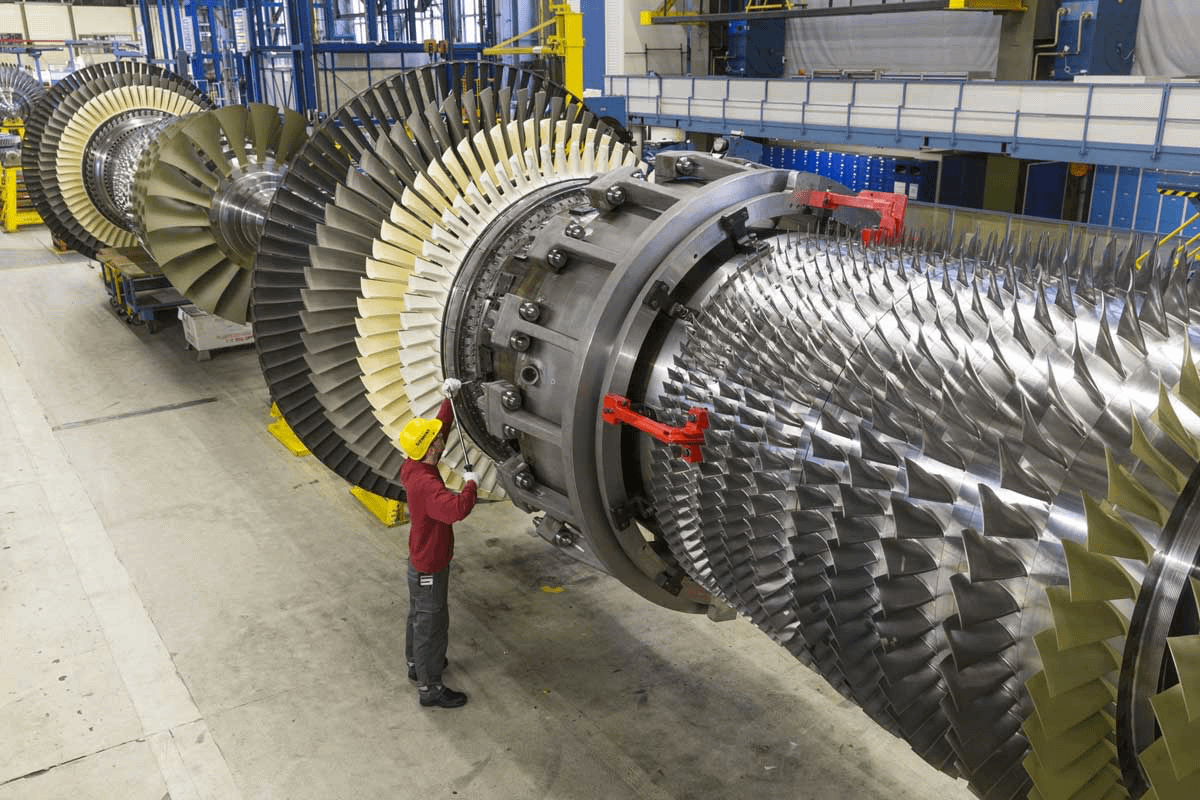
You cannot buy a new gas turbine until 2030. Order books at GE, Siemens, and Mitsubishi stretch to 2029. Turbine prices have nearly tripled since 2019. Every AI data center needs power and every gas plant needs a turbine. And every turbine has one part that bottlenecks the entire industry: The blade. It has to survive in gas 500°C above the melting point of the metal it's made from and spin at up to 20,000 RPM under 10,000 g of centrifugal force. Each blade is grown as a single crystal of nickel superalloy, pulled through a vacuum furnace at 3 mm per minute. A set of blades costs $600,000 and takes 90 weeks to grow. The same metallurgy powers modern jet engines. Only 3 companies on Earth can build one. China spent $42 billion trying to catch up. They bought a Russian fighter engine, took it apart, and copied every part. Their copy ran 30 hours between overhauls versus 400 for the original. Modern Western engines run 4,000. You can reverse engineer the shape of a turbine blade. You cannot reverse engineer 60 years of metallurgy.
The longevity market hits $8T by 2030. Surpassing AI.
@JeffBezos put $3B into @altos_labs Labs. Altman $180M into @RetroBio_ . Armstrong co-founded @newlimit at $5B valuation. Longevity investment doubled in one year.
Family offices are building this economy. Not just funding it.
LINews 👇 https://t.co/QkqSd5WCyq
Muscle loss with age is common, but much of that decline is driven by inactivity, not aging alone.
On average, we reach peak muscle mass somewhere between 20 and 30, then lose about 8% per decade after that. By the time many adults reach their 70s and 80s, they may have only 60–80% of the muscle mass they had at 30.
A big reason why is anabolic resistance. As we get older, muscle becomes less responsive to amino acids, one of the key signals for building and maintaining muscle.
This is where resistance training becomes non-negotiable. It's one of the main signals that tells muscle to grow. And just as importantly, it helps re-sensitize muscle to amino acids, so the body responds to protein more like it did when you were younger.
YOUR PHONE ISN'T LISTENING TO YOU BY ACCIDENT.
It's doing exactly what it was designed to do.
I said "Rome" once out loud.
10 minutes later, flight ads to Italy everywhere.
This is called shadow logging.
And it runs through 5 settings that 90% of people never check.
Here's how to shut it down:
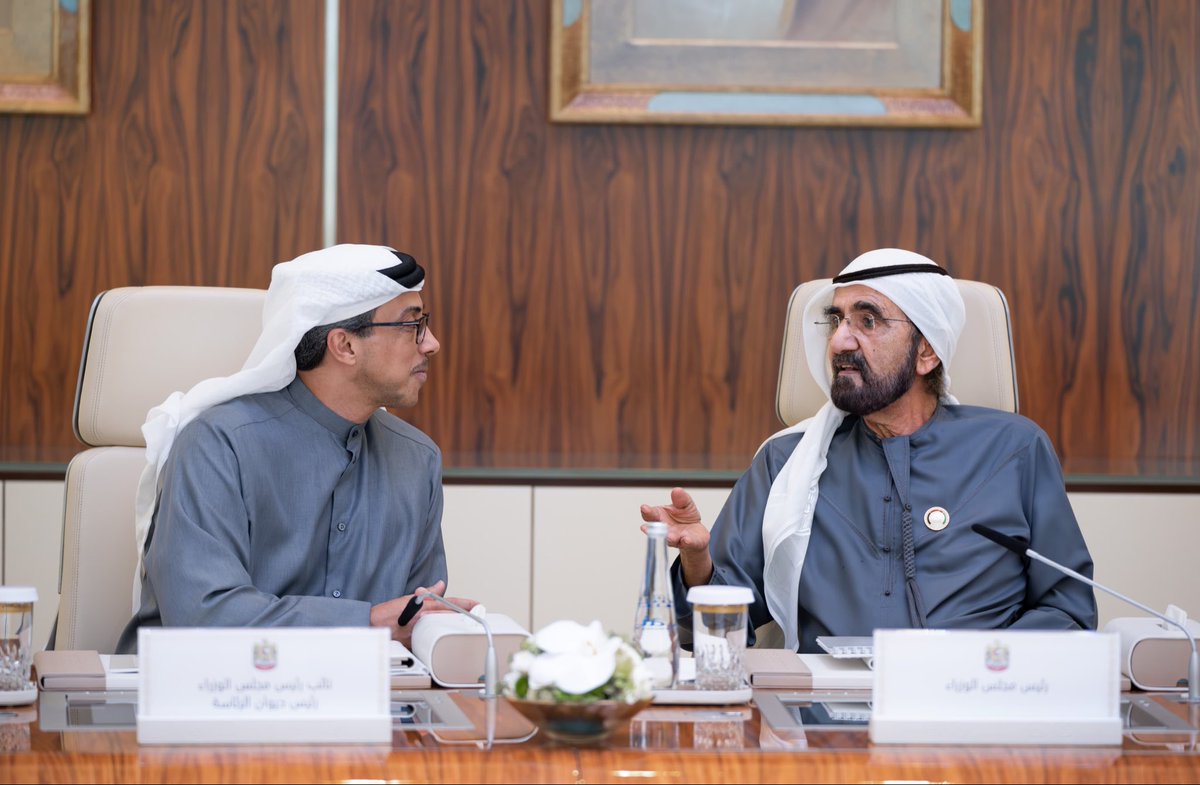
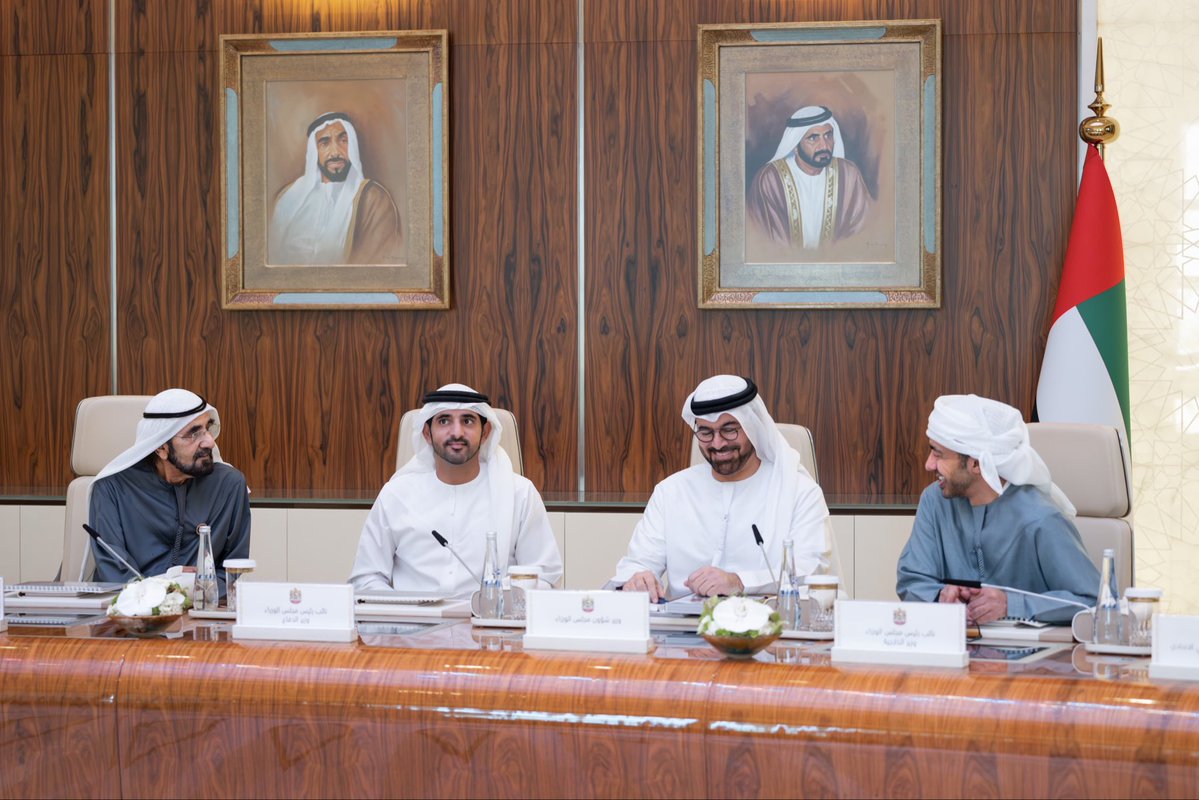
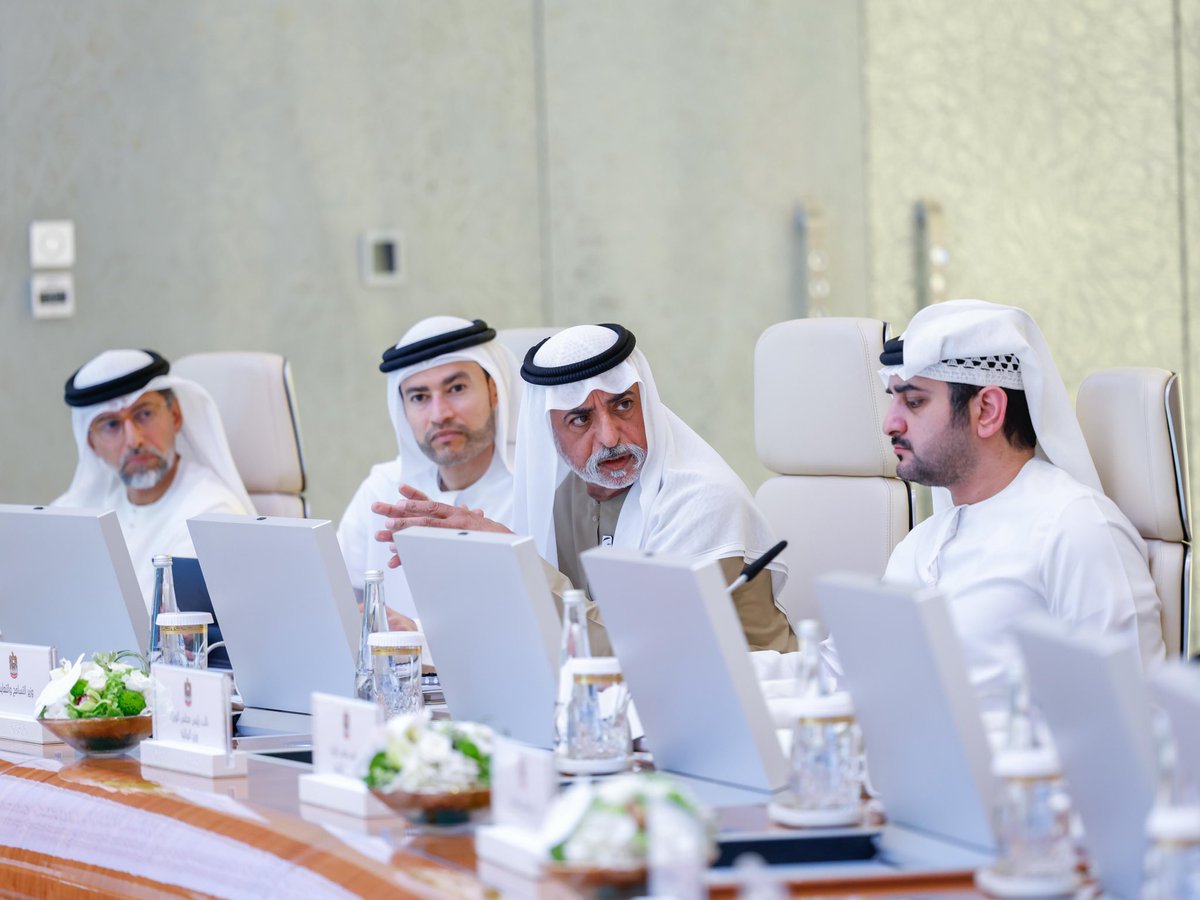
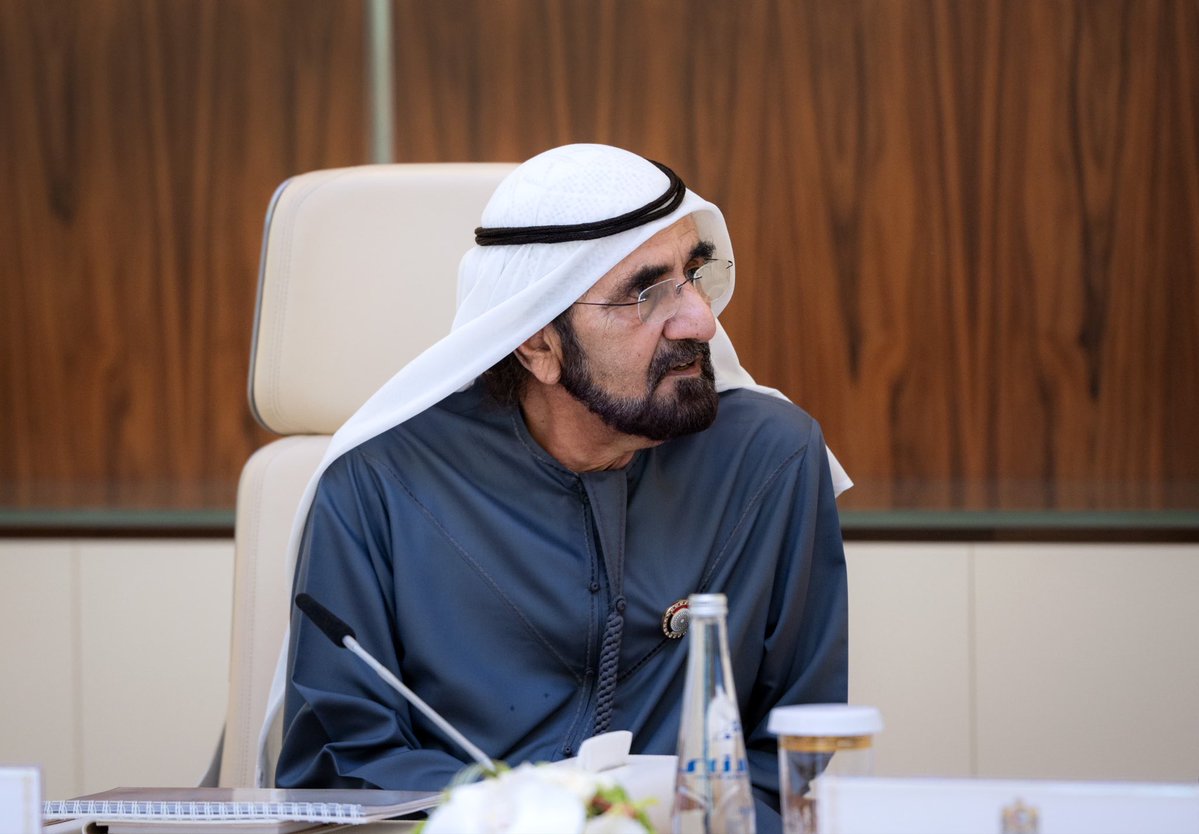
Under the directives of the President of the UAE, we launch a new government model. Within two years, 50% of government sectors, services, and operations will run on Agentic AI, making the UAE the first government globally to operate at this scale through autonomous systems.
AI is no longer a tool. It analyses, decides, executes, and improves in real time. It will become our executive partner to enhance services, accelerate decisions, and raise efficiency.
This transformation has a clear timeline. Two years. Performance across government will be measured by speed of adoption, quality of implementation, and mastery of AI in redesigning government work.
We are investing in our people. Every federal employee will be trained to master AI, building one of the world’s strongest capabilities in AI-driven government.
Implementation will be overseen by Sheikh Mansour bin Zayed, with a dedicated taskforce chaired by Mohammad Al Gergawi driving execution.
The world is changing. Technology is accelerating. Our principle remains constant. People come first. Our goal is a government that is faster, more responsive, and more impactful.
In the AI era, the traditional biopharma industry is the underdog. Big tech and AI labs are building wet labs. China has overtaken Europe in molecules produced. But the tools available to the industry discuss science, not do it.
The hard problem in AI for science is at the interface between the physical and digital worlds.
We built an AI Scientist at that seam. It wires together the digital and physical worlds of R&D. Predictive models, data infrastructure, wet lab execution feed into a single loop that reasons, acts, and improves with every experiment. Our ambition: get molecules to the clinic twice as fast.
Last fall I wrote about why biotech needs to be rebuilt for the AI era. Today I'm sharing the next chapter: what the AI Scientist is, a blueprint for how it works, and why even Richard Feynman couldn't hack it in a wet lab.
RFK Jr is pushing a misleading narrative using an example stripped of context.
What actually happened: Australian entrepreneur Paul Conyngham used AI to analyze his dog’s cancer, then partnered with university scientists to develop a personalized, experimental mRNA vaccine. The tumors shrank, but this was a one off, early stage intervention, not a proven or widely available cure. He did not “invent” a cure, this was expert led science.
Half baked claims about something as serious as cancer are dangerous. Public figures must do better.