Excited to share that I'll be starting a new position as a Logger at SILVERBACK FILMS, Studios! l'm thrilled to join the team at Silverback Studios and contribute to their world-class environmental content. Looking forward to this new chapter in my career…https://t.co/UJrMBIzpul
New milestone set by India in the field of #Tiger conservation.
The country is home of more than 3000 wild tigers now.
Time to celebrate, feel proud and re-dedicate ourselves for ensuring a safe future for this charismatic Cat. @ntca_india@PMOIndia@moefcc
4% of the earth's mammal biomass are wild species! Just 4%! Let's celebrate our wild relatives today. Happy world wildlife day! There really isnt any joy quite like being with wildlife!
I am really looking forward to attending the event as it will provide me with incredible learning opportunities and I would really like to be a part of this once in a lifetime experience and represent India. @IndianDiplomacy@PMOIndia@Dev_Fadnavis@HCI_London@IndianEmbassyUS
I am a student filmmaker from India based in UK. My film Puffin Island is shortlisted for the #SONY Future Filmmaker Awards from among 4000 entries. Sadly, unable to travel to the #US for the ceremony & workshop due to visa issues. Any help will be appreciated
@DrSJaishankar
#ConnectivityScience Researchers consolidated five connectivity studies based on different data types and modeling approaches to create consensus maps for tiger corridors in central India. To know more watch the video below:
What do a chestnut bunting and a remote sensing satellite have in common? A great bird's-eye view of #connectivity . But they might be paying attention to different aspects of the landscape. Learn more about structural vs. functional connectivity:
https://t.co/9ny6tarkiT
Amazing day at @ddnandankanan with @Vinay_Sagar8 and Rajesh Mohapatra. Wow! just look at the signage outside the black tiger enclosure! Amazing to have been a part of this discovery, and to share it with the public! The QRcode even links to the @PNASNews paper.
DeFries Bajpai Foundation invites proposals for research to develop the science base for understanding and sustainably managing the central India landscape. Interested candidates to submit the application form for initial screening by 15 Oct 2021. Details: https://t.co/yFg3xycDZt
Absence of evidence is NOT an evidence of absence!
We compared results from occupancy estimation with other popularly used methods for distribution mapping such as #MAXENT & expert-opinions, report potential biases:
https://t.co/mJkFIV0jj0
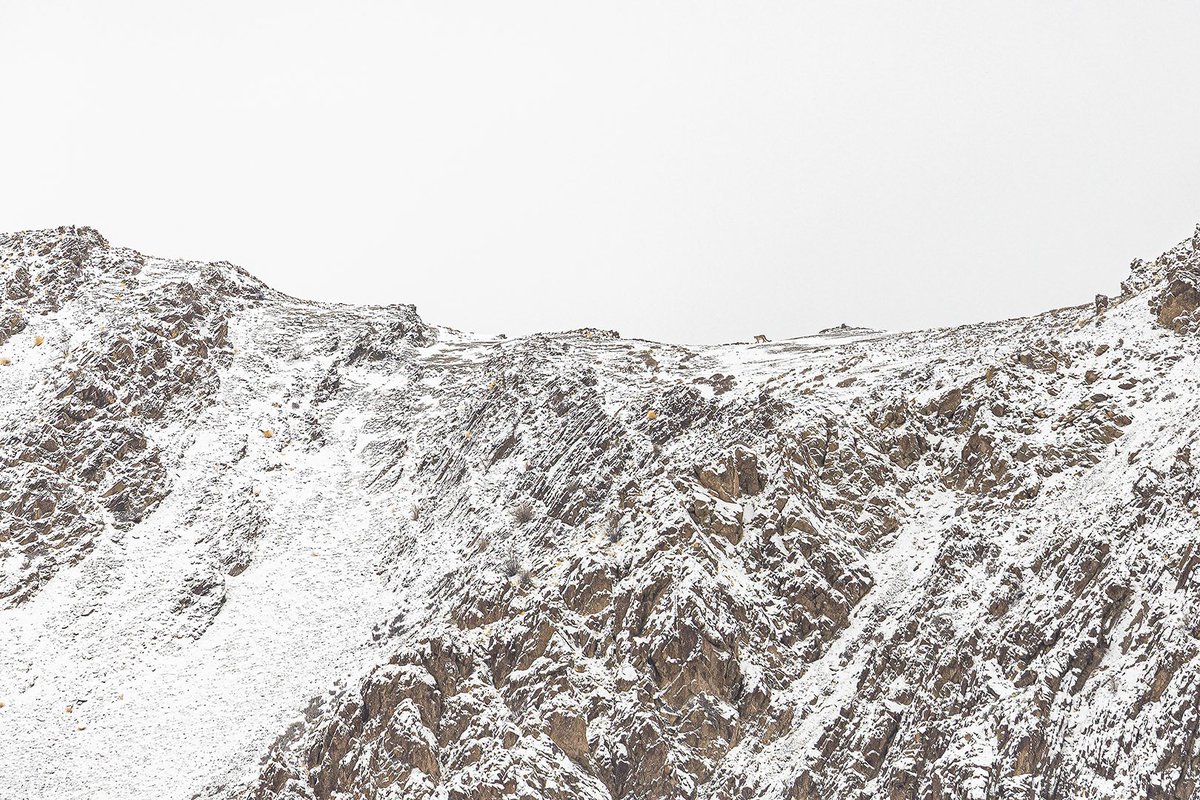
#snowleopard pic: @ismails
p.s. zoom in!
#Newprojectspotlight
How is migration related to climate variability? NCCI members examine seasonal migration as a livelihood strategy given current climatic variability in the vulnerable populations living in forest-fringe villages of CIL.
Read here:
https://t.co/ysZGiVuspD
Population genetics simulations suggest that a founder effect (few ancestral individuals contributing to the gene pool within a population) coupled with subsequent drift and inbreeding in Similipal could result in the observed frequency of pseudomelanistic tigers in Similipal.
Population genetics analyses suggest that Similipal tigers form a small population geographically distant and genetically isolated from other source populations. Such small and isolated populations can rapidly lose genetic variation due to genetic drift.
Using fecal and shed-hair samples of wild tigers, we show that this mutational variant of Taqpep is present in the wild only in Similipal at a relatively high frequency of 0.6, i.e., it is very common in Similipal tigers but completely absent in other tigers.
Our study uncovers the genetic basis of pseudomelanism in tigers. Using the DNA sequences of captive tigers of Bhubaneswar zoo we show that all pseudomelanistic tigers must have a mutation on both copies of their Taqpep gene that they inherit each from their mother and father.