In our new @NatureBiotech Comment with Tiannan Guo @Guomics, we argue: depth without quality control is artifact, not discovery.
https://t.co/UAVCZFBIKI
Does identifying thousands of plasma proteins mean more biology? Not always. Over half of 210 published datasets contain contamination markers reported as disease biomarkers.
📰Brand-New Biomarker for Alzheimer’s: Circulating, Circular RNA Top of Form | @AlzForum🥼 🔬
“Ring-shaped RNAs floating in a person’s bloodstream might mean bad news for their brain. At the 18th Clinical Trials on Alzheimer’s Disease, held December 1–4 in San Diego, Bridget Phillips, a graduate student in the laboratory of @ccrugom at @WashU in St. Louis, reported that a select panel of these durable RNA loops can pick out who is at risk of developing Alzheimer’s symptoms even better than does p-tau217. A clinical blood test based on this approach is in development.”
🔗Continue reading: https://t.co/nmFFsfvDiv
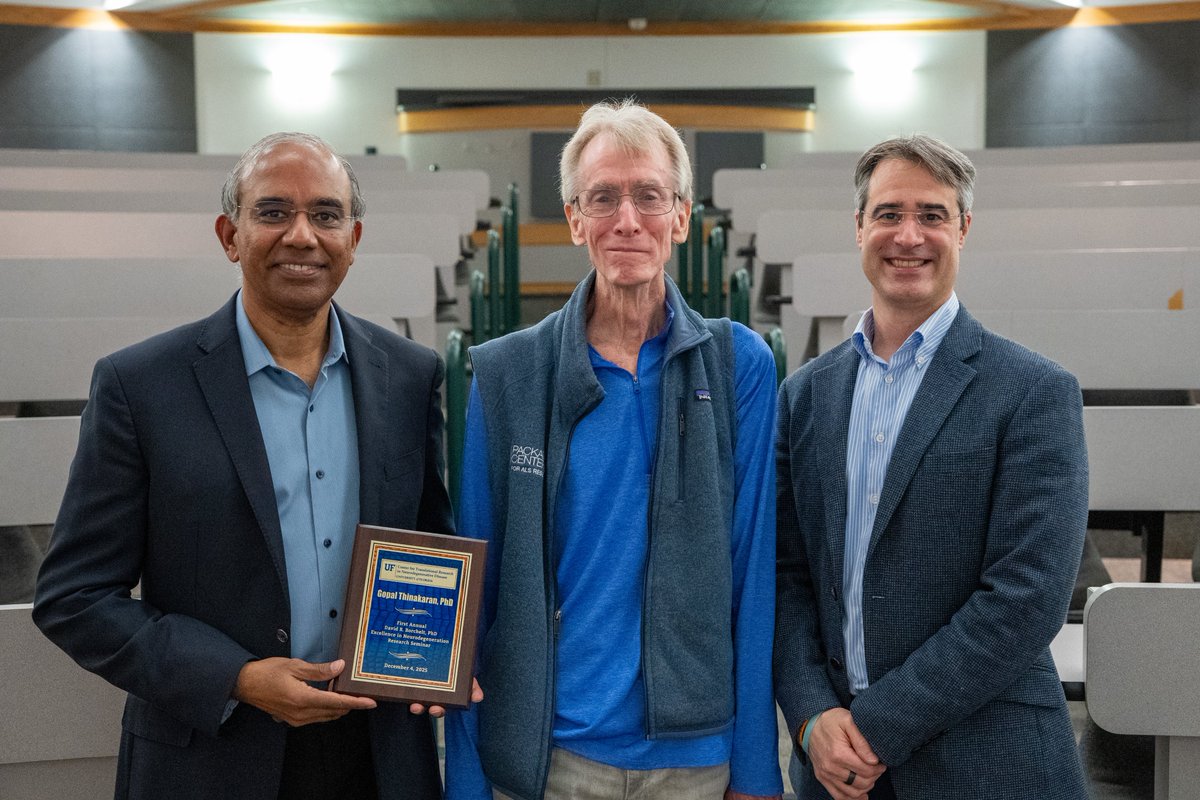
The MBI community gathered today to honor longtime colleague Dr. David Borchelt.
Dr. Gopal Thinakaran, a close collaborator of Borchelt's, opened the First Annual David R. Borchelt Excellence in Neurodegeneration Research Seminar with a talk on BIN1’s role in Alzheimer’s.
'#Plasma TDP-43 is a potential #biomarker for advanced limbic-predominant age-related #TDP43 encephalopathy neuropathologic change'
Jijing Wang, Julie A. Schneider, David A. Bennett, Nicholas T. Seyfried, Tracy L. Young-Pearse & Hyun-Sik Yang @harvardmed
https://t.co/hnOuBFDhGs
Large-scale proteomics study of the Alzheimer’s hippocampus uncovers pathogenic protein operatives, including the astrocytic scaffolding protein, AHNAK. @IcahnMountSinai https://t.co/o7MMcI5pDY
Mary Brunkow, Fred Ramsdell and Shimon Sakaguchi have been awarded the 2025 Nobel Prize in Physiology or Medicine for their groundbreaking discoveries concerning peripheral immune tolerance that prevents the immune system from harming the body.
The Nobel Prize laureates identified the immune system’s security guards, regulatory T cells, thus laying the foundation for a new field of research. The discoveries have also led to the development of potential medical treatments that are now being evaluated in clinical trials.
The hope is to be able to treat or cure autoimmune diseases, provide more effective cancer treatments and prevent serious complications after stem cell transplants.
#NobelPrize
Highly reliable sources tell me @NIH will still fund purely animal model grants (new ones too). NOAs (notice of awards) will be more human focused & justification for animal models must be made but $ for new & funded animal grants will continue. @Nature@ScienceMagazine@HHSGov
Is it your first time (or even your 10th time) giving a talk at a big conference like #AAIC25?
Timing is important for your confidence, and out of respect for the audiovisual team, your co-chairs, and hybrid audience.
10-minute presentation tips:
Sketch out 10 slides on paper to give your brain a big picture sense
Slide 1: Title
Slide 2: Disclosures
Slide 3top: Text based overview of slides (images guiding optional)
Slide 3bottom: Include goal or hypothesis
Slide 4: Methods critical for the audience or mixed into data slides
Slide 5-8: Data with title or text guiding interpretation
Slide 9: Summary
Slide 10: Acknowledgement (lab, collaborators, FUNDERS)
12-minute presentation tips:
Sketch out 12 slides on paper to give your brain a big picture sense
Slide 1: Title
Slide 2: Disclosures
Slide 3: Text based overview of slides…or
Slide 3: Graphical big picture slide summarizing what you hope they gain from talk
Slide 4-10: Methods critical for the audience and data
Slide 11: Summary
Slide 12: Acknowledgement (lab, collaborators, FUNDERS)
Build out powerpoint:
Pretend like you will not have a pointer when you create slides
Make use of arrows, circles, or translucent boxes that animate
Write in space below what you would want to say
Practicing talk:
Practice with text visible to time yourself
Generally 1 minute per slide
Practice without notes in front of the mirror
Do you feel robotic, nervous, or not confident…
In the mirror change to a 3-minute description of something you love
Notice any differences?
Switch back to practicing your talk (then or later)
Pause for umms or like
Use pencil/pen to advance slides and squeeze object to help pause
Goal: revel in the beauty of sharing your science
Breathe, you got this!
Day of (or day before):
Drop off your slides in speaker ready-room
Arrive to your room 15-30 minutes early and breathe
Find one of your co-chairs to introduce yourself
Remember you belong there and soak up the moment
Inspiration for #AskMEM answers above came from these questions I received following an @ISTAART Guide to AAIC: Podium Presentations…video soon to be uploaded😊
https://t.co/yc2iQ8mlaz
Do you have any tips regarding timing oneself? I’ve presented orally in more blitz-type of events, or longer (like my thesis was), but never the middle-ground, which would be the 10-ish minutes at AAIC. I’m a little worried, since I want to include a decent amount of data but kind of wary about the timing and projection it’ll allow me.
Gia Paterno and members of Dr. Giasson's lab recently developed and characterized a highly selective monoclonal antibody against tau phosphorylated at Thr217, a form of tau closely associated with Alzheimer's Disease. Read more about it here: https://t.co/hrfBoiy3Ez
Inspired by her mother’s battle w/ Parkinson’s MBI researcher Dr. Vinata Vedam-Mai pursued a career in neuroscience & studies the immune system’s role in Parkinson’s. She also teaches Bharatanatyam, a classical Indian dance, to carry on her mother’s legacy https://t.co/Mhedkdg0ja
Today, the FDA cleared for marketing the first in vitro diagnostic device that tests blood to aid in diagnosing Alzheimer’s disease. This is for the early detection of amyloid plaques associated with Alzheimer’s disease in adult patients, aged 55 years and older, exhibiting signs and symptoms of the disease. https://t.co/s0Bf0LdlCm
With funding from the @NIH, @UFMBI researcher, Dr. Carol Mathews, co-led the most extensive study to date into the genetics of OCD. https://t.co/UaTnz24eIh
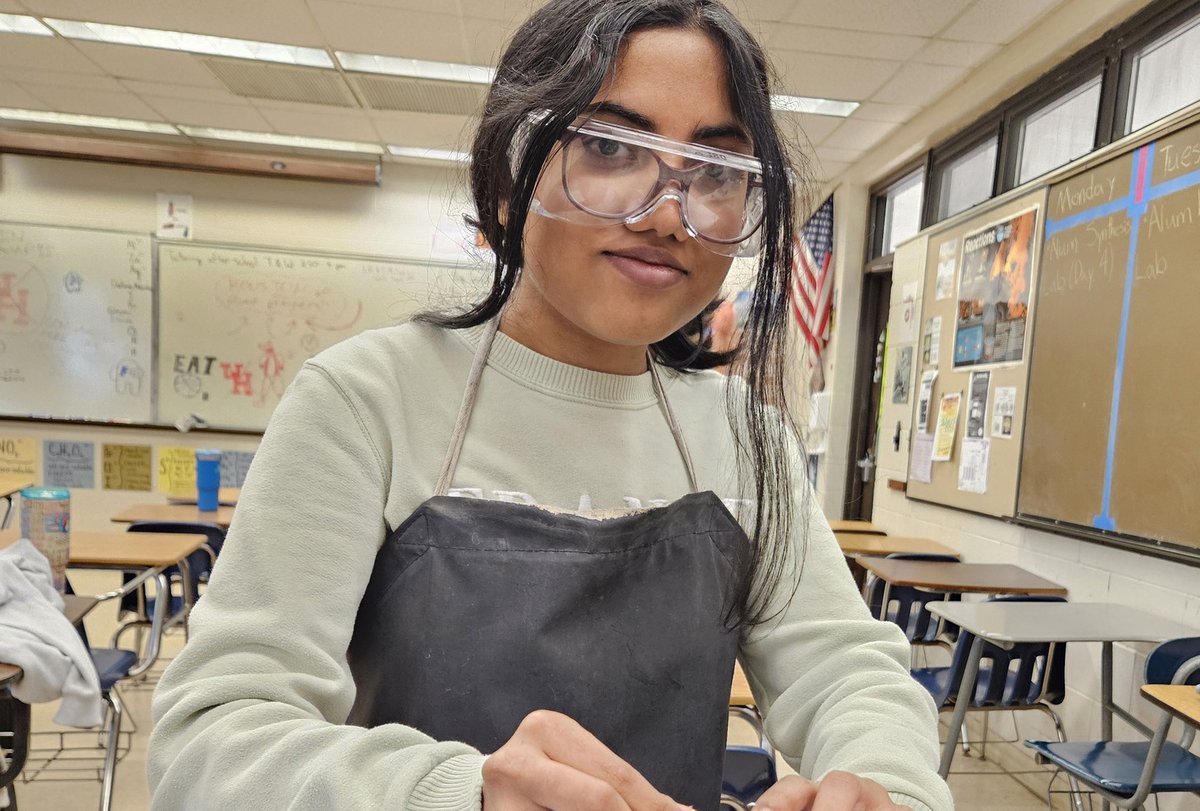
Congrats to Gainesville High School's Navya Goyal for representing the MBI at the USA Brain Bee at Rutgers University on Saturday.
After winning the Alachua County Brain Bee, she advanced to the national stage to compete w/ the country's top students in neuroscience knowledge.
In the latest episode of Cup O' Joe, Interim Provost Joe Glover visited MBI researchers Drs. Stefan Prokop and Matt LaVoie for a tour of the @UF Neuromedicine Human Brain and Tissue Bank. https://t.co/7J29D1U75N
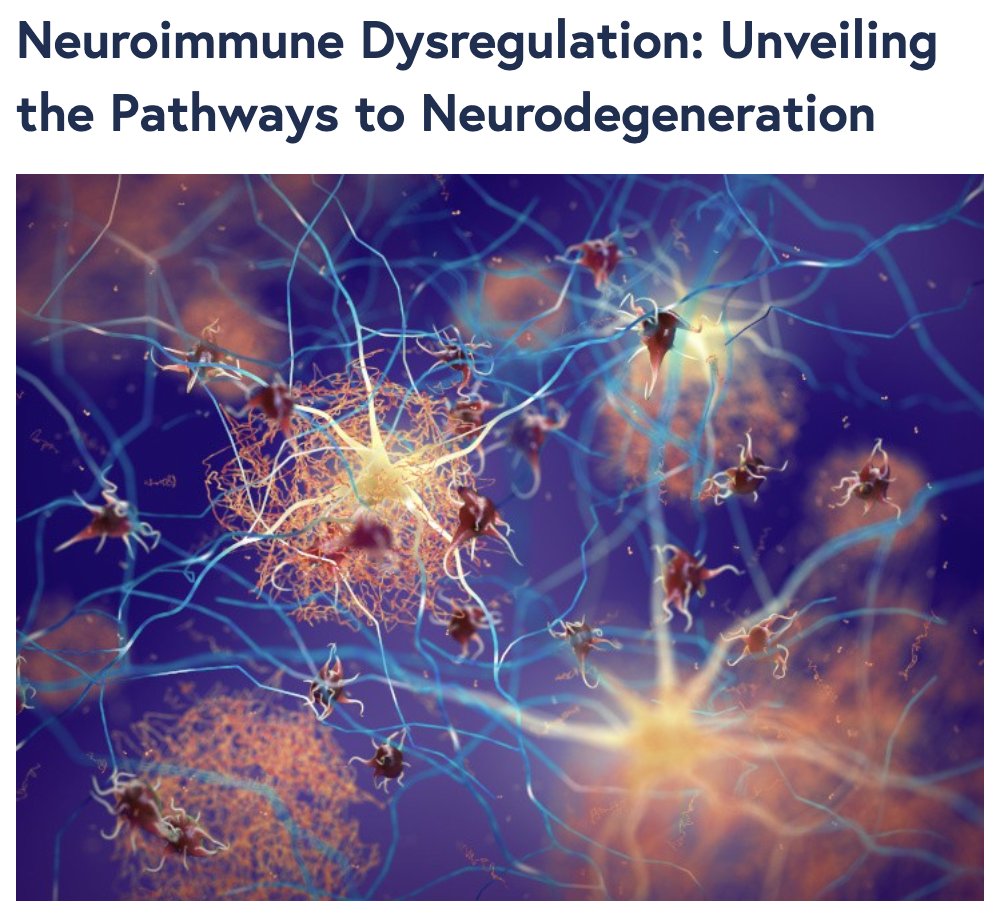
✨Introducing our new review series "Neuroimmune Dysregulation: Unveiling the Pathways to Neurodegeneration" led by Drs X. William Yang & Li Gan
This series aims to consolidate the complex interplay between the immune system & neurodegenerative diseases! https://t.co/Vd46ckYJsb