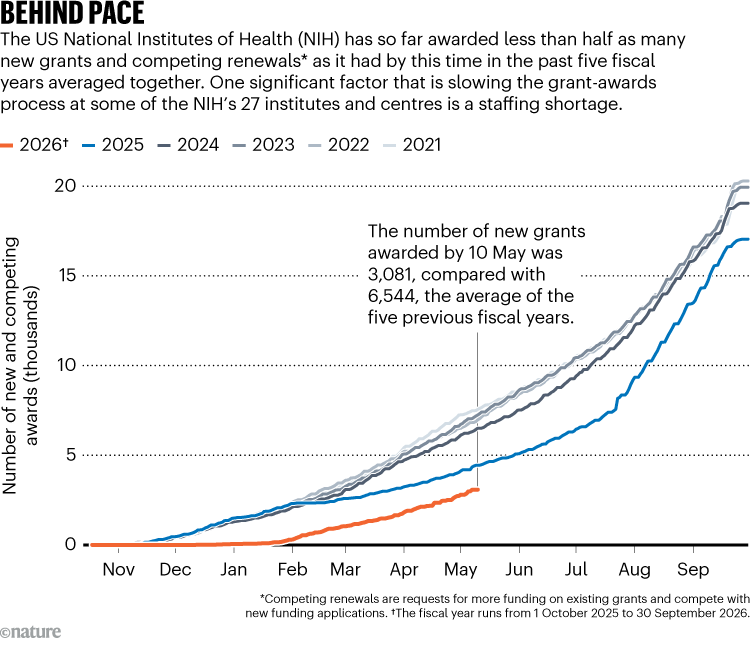
NEW: A serious staffing shortage — of the Trump admin's own making — is delaying the agency's ability to send billions to universities around the US, leaving labs reeling.
“I thought we were at rock bottom”, a senior NIH official said. “We are below rock bottom now.”
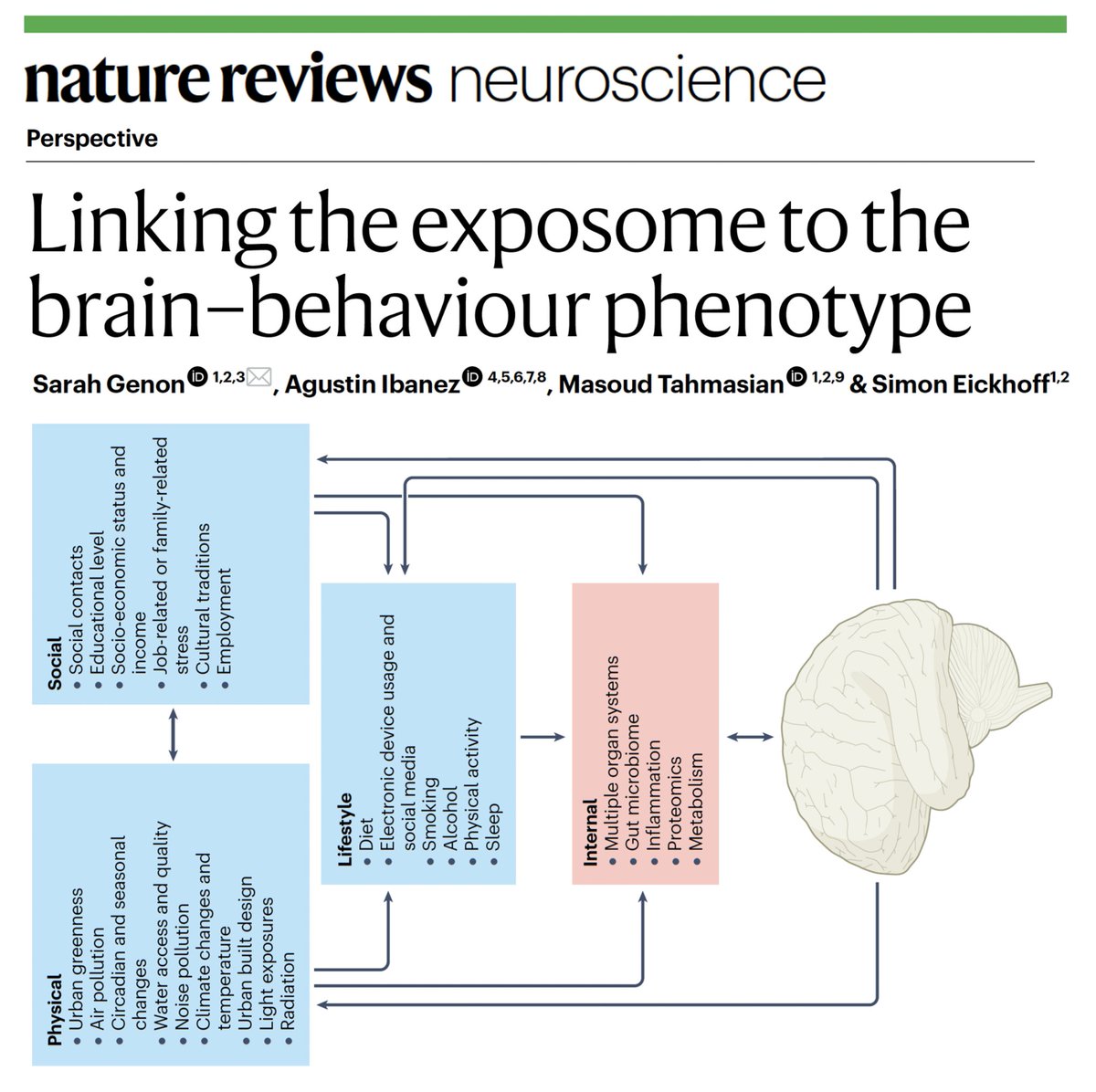
Brain–body-environment interactions must move beyond isolated exposures toward the expotype: the dynamic configuration of physical, social, lifestyle, and internal factors that jointly shape brain–behaviour phenotypes. At @NatRevNeurosci (https://t.co/FIMA1E1dxM), we propose a future agenda to assess the exposome as a complex, time-varying system that requires nonlinear models to capture interactions, thresholds, synergistic effects, and cross-domain buffering mechanisms. Although predictive machine learning can support individual risk estimation, the next frontier is to move from prediction to mechanism, from association to dynamic synergetic inference. Multivariate learning, causal machine learning, aging clocks, longitudinal designs, and generative biophysical digital twins are beginning to provide this bridge. Brain–body–environment diversity can reveal how ecology becomes biologically embedded. We call for a future exposomic neuroscience that integrates nonlinear temporal modeling, generative mechanisms, and population diversity to understand, simulate, and modify trajectories of brain aging and disease. Congrats Sarah Genon, @MasoudTahmasian & @INM7_ISN
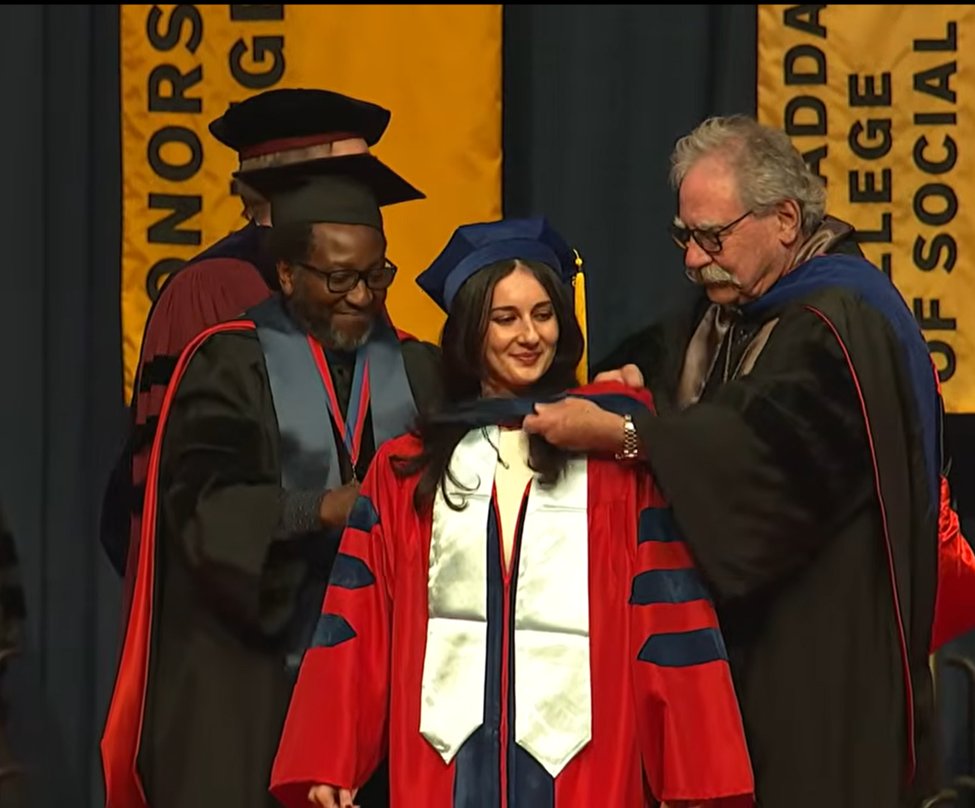
Commencement is always a special time but this year, @UIConect lab is proud to have two of our graduates get their doctorates. Congrats to Dr. @aksuugunay and Dr. @michelleksheena!
An important policy position statement from the leading peer-support network for people living with mood disorders in the U.S., @DBSAlliance
https://t.co/FokwudnG66
Rising Star spotlight at @SOBP✨
Catch Dr. Jeesung Ahn’s (@JeesungA) talk: Personalized Treatment Selection in Depression Using Clinically Interpretable Neuroimaging Biotypes
What if matching patients to treatments based on brain circuit profiles could more than double remission rates?
This work uses fMRI to turn neural circuitry into actionable, individualized treatment decisions—moving precision psychiatry closer to reality.
📅Fri, May 1 | Rising Star Oral Presentations (3–5 PM EDT)
⏱️Talk: 4:05-4:25pm EDT
📍SOHO Complex
#PrecisionPsychiatry #fMRI #DepressionResearch #SOBP2026
ACNP Travel Award Applications open TODAY for the ACNP 65th Annual Meeting: January 10-13, 2027, San Diego, California. Deadline to Submit is May 14, 2026, at 5:00 pm Central. https://t.co/tciCGq4ELQ #ACNP2027#travelawards
Digital phenotyping uses smartphone & wearable data to study mental health, but many methods rely on static summaries. @ConstantAxel, @lena_pl & co propose dynamic digital markers that better capture how behavior & physiology change over time
https://t.co/3uHRp9MizV
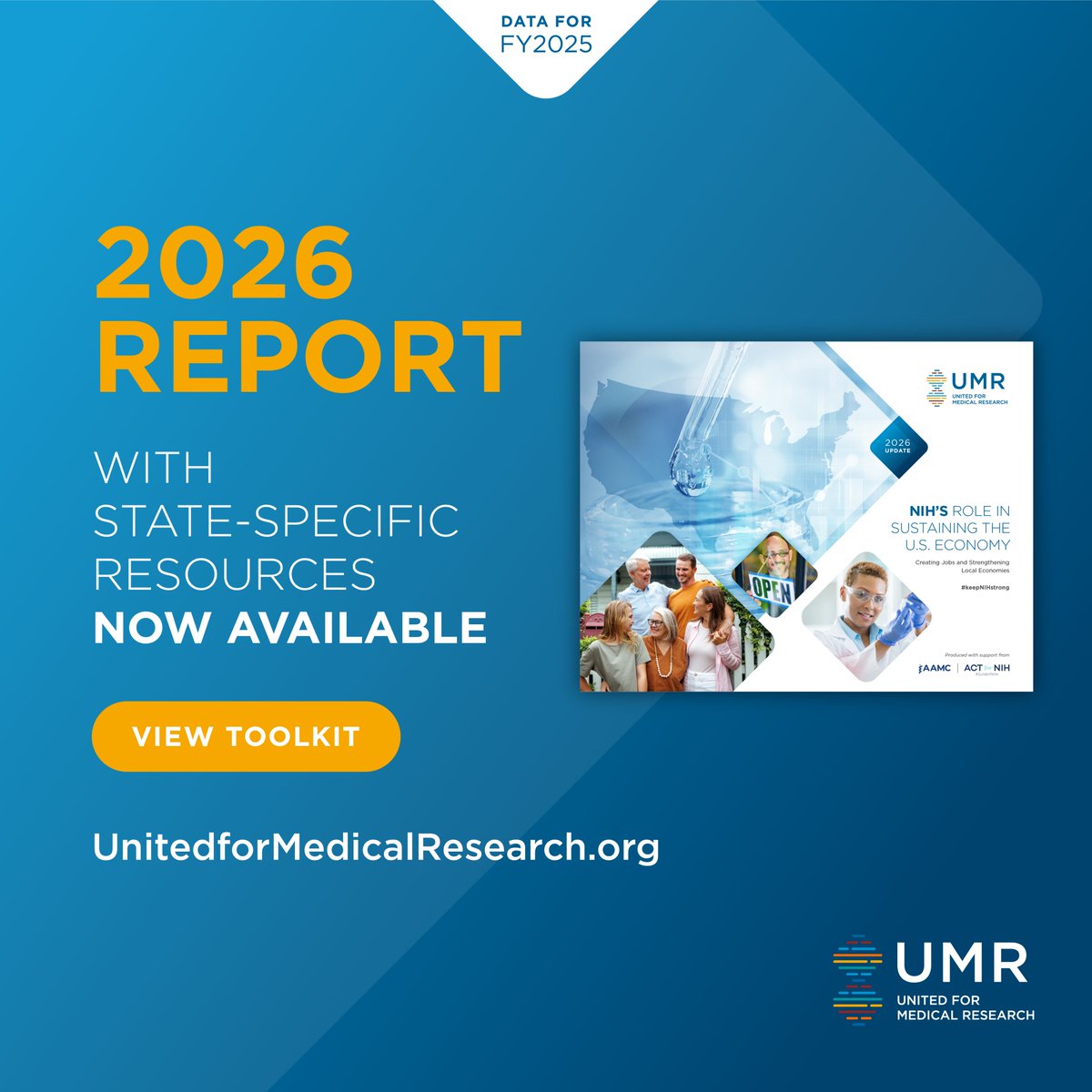
Just released: UMR’s FY2025 data on the national and state-by-state impact of @NIH research funding.
The numbers underscore why we must #keepNIHstrong
Read our report here: https://t.co/hK6EwX6yPf
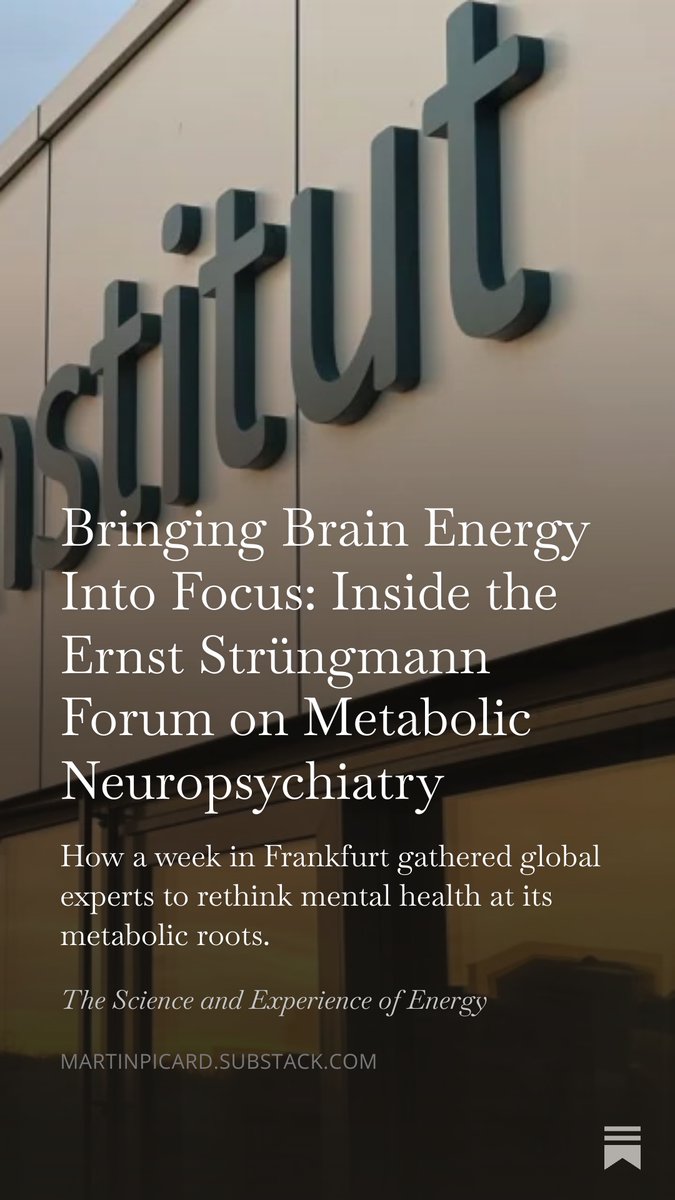
In this morning's article, I share my experience at a remarkable scientific meeting organized by Dost Ongur around Metabolic Neuropsychiatry.
A new field has emerged focusing on the energetic basis of brain function and mental health. Exciting times!
https://t.co/tRssBAr5WU
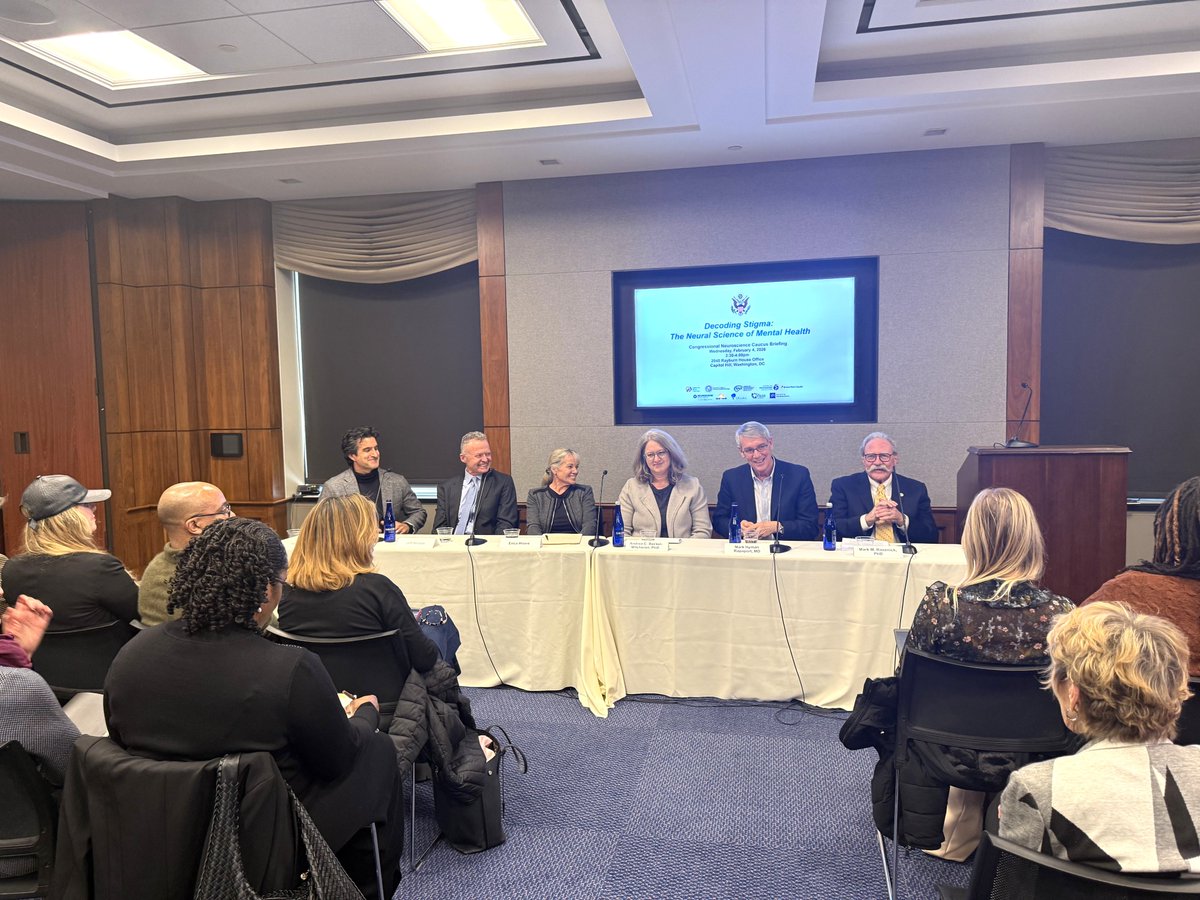
ACNP was proud to support "Decoding Stigma: The Neural Science of Mental Health" Congressional Briefing on Capitol Hill today. The bipartisan Congressional Neuroscience Caucus promotes a better understanding of how the brain develops, functions, and ages.
Why on earth does tDCS do anything given how low the fields are? Here is a nice paper: https://t.co/o7wOeh40BY -- also from one of the labs whose webpage is in the dark due to their Tehran location.
Brain lovers: over the years the New Yorker has published several neuro-related stories; a few years ago they collected up the best ones (including a profile piece on my research). Good selection of articles to scratch any cerebral itch 👍
https://t.co/VsRFWU276k
Our first Deep Dive of 2026 covers a recent Perspective calling for recognizing and removing the barriers faced by researchers with lived experience of mental illness or SUDs who work in our field.
By @UmaRChatterjee, @SchumerMaya, @devin_effinger & colleagues.
https://t.co/Qb3ZRpy2Ss
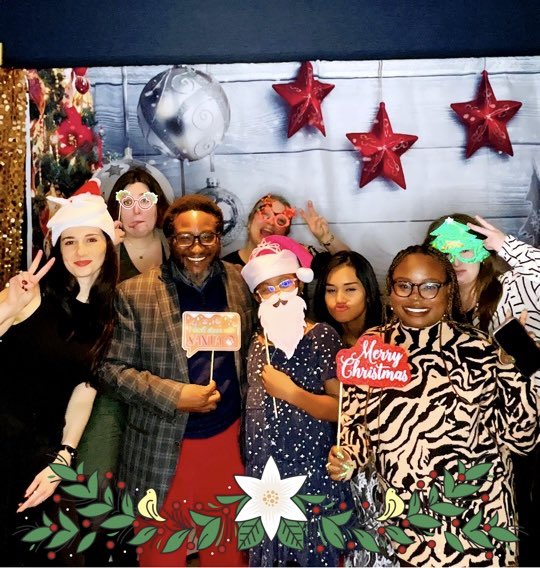
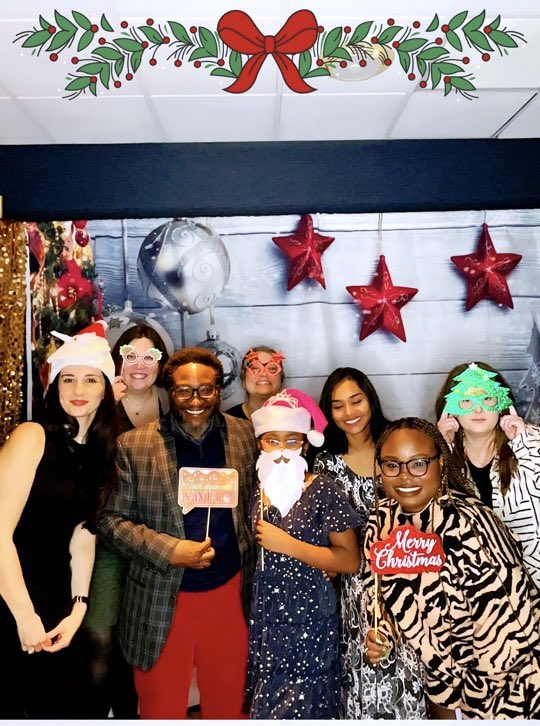
The Psychiatry Holiday Party was a blast! Thank you to everyone who organized such a festive event filled with holiday cheer and camaraderie. It was really nice to celebrate the holiday season with CoNECt lab members. 🎄✨🤗🪩
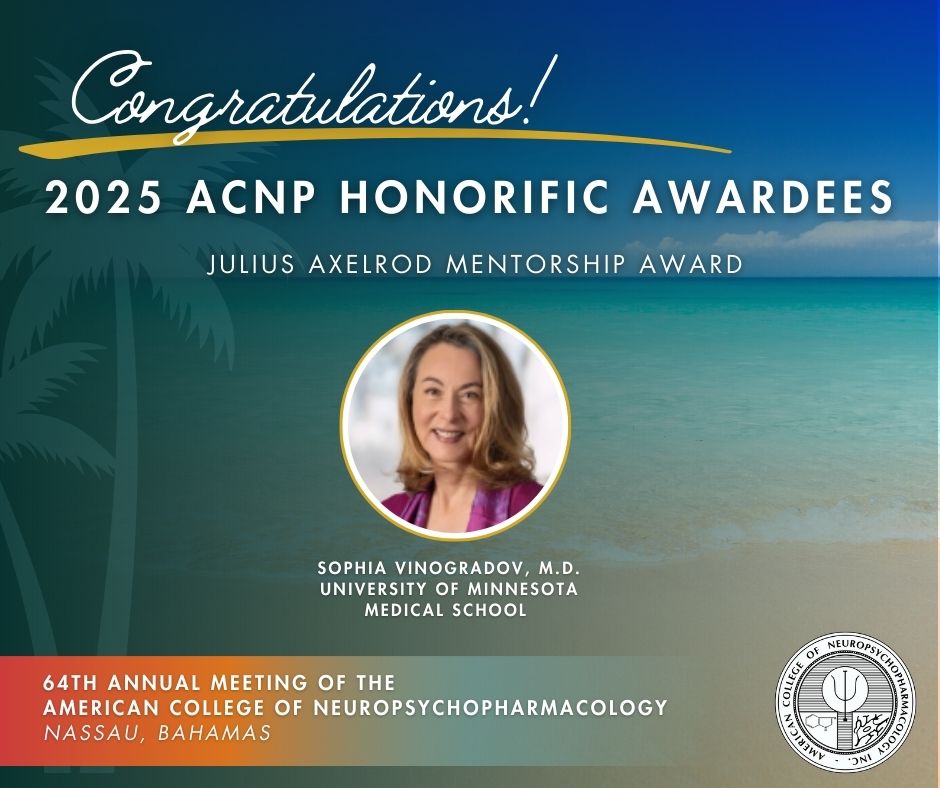
Congratulations to Sophia Vinogradov, M.D. on being awarded the 2025 Julius Axelrod Mentorship Award! #ACNP2026
Please click here ➡️ https://t.co/BeWOZRNAPc to watch the acceptance video by Sophia Vinogradov, M.D.
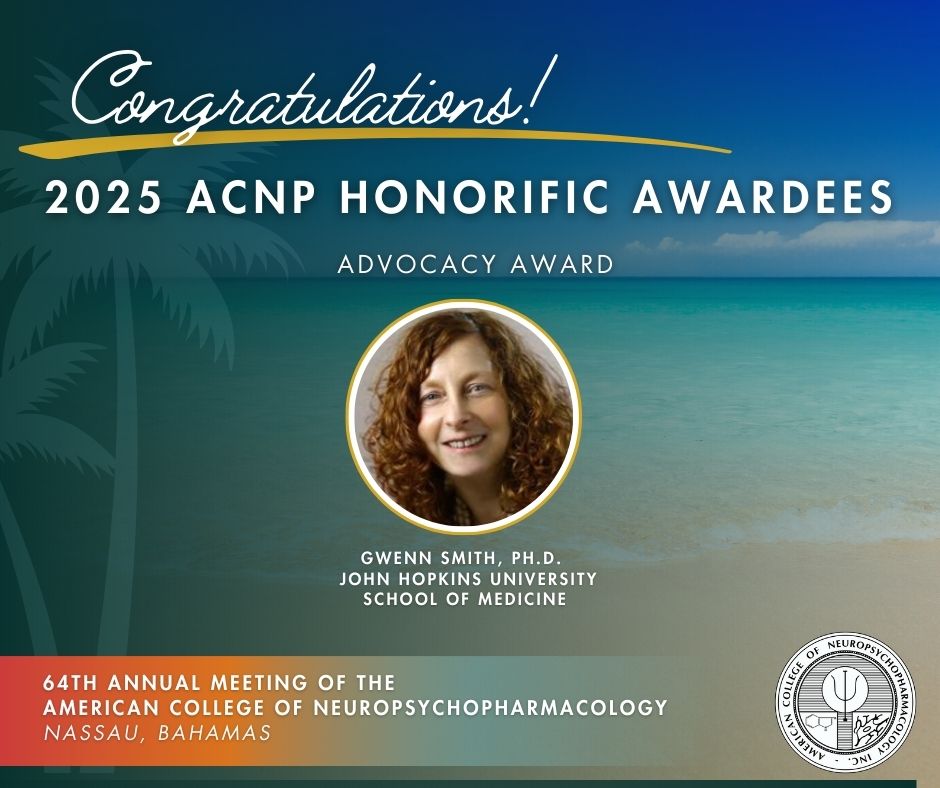
Congratulations to Gwenn Smith, Ph.D. for being awarded the Advocacy Award! 😀 #ACNP2026@SmithGwenn
Please click here ➡️ https://t.co/buBM2vqI3l to view the acceptance video by Gwenn Smith Ph.D. for the Advocacy Award.