Our latest work tracks the continued spread of Aedes albopictus 🦟in Iowa, now detected in at least 10 counties. Representing its northern range in the Midwest, this has broader implications for its continued spread in the US. https://t.co/FJQTblbZXo
Join us! We're hiring a Research Scientist to support projects on mosquito immunity and mosquito‑borne disease transmission. Ideal for a post‑bac or recent M.S. looking to gain experience in cutting-edge research in vector biology.
https://t.co/YDyHx0xVE0
👀There will be a Keystone Symposium with a focus on Vector-Pathogen Interactions to be held in Geneva, Switzerland in February 2027. It should be a great meeting and hope to see you there! https://t.co/YfXJCPVPJX
As a heads up, it is now required that your NIH biosketch be created using Sciencv. This can be tricky since ORCID must be linked to your MyNCBI account, and for many, including myself, multiple accounts may have to be merged by NIH support staff. https://t.co/twVKFgCO0g
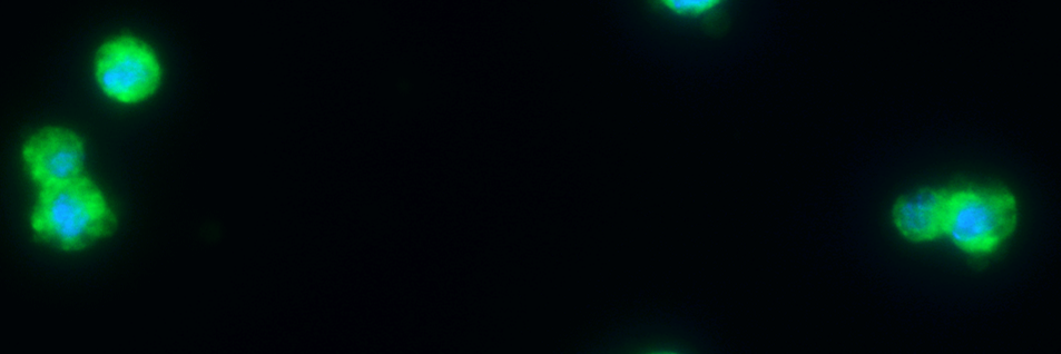
Our latest work developing genetic markers for mosquito hemocytes and their characterization using spectral imaging flow cytometry. The result is an advanced characterization of mosquito immune cells and the foundation for building genetic tools. https://t.co/x4SQQp6zwZ...
Pleased to share our recent work in collaboration with the @PerrimonLab in which we perform the first genome-wide CRISPR knockout screen in Anopheles to examine essential fitness genes and genes associated with clodronate liposome function
https://t.co/wzrQnfH7qY
🦟 We've just published the world's first head-to-toe single-cell atlas of the Aedes aegypti mosquito in @CellCellPress! The #MosquitoCellAtlas maps 69 cell types across 19 tissues, revealing surprising biology: mosquitoes taste with their legs (more than we thought), glial cells (not neurons!) dramatically rewire after blood meal & males/females are nearly identical at the cellular level—with intriguing exceptions. Read it here: https://t.co/Al71BarC4T
Celebrating the holiday weekend with another bang! Our work describing roles of TNF signaling on mosquito immune cell function and in limiting malaria parasite infection is now published. Big shout out to @samantsidis and others for their contributions! https://t.co/Ry0l1En9Ne
@TheBaiLab My understanding is that STING signaling isn’t present in mosquitoes, although there could be some other type of suppression. We have a lot of work to do still!
Excited to share our latest collaborative work with looking at the role of mosquito immune cells in virus infection. It turns out that these cells actually help disseminate an infection, increasing the potential for virus transmission https://t.co/8z7AWGZHLp
I am thrilled to present the Mosquito Cell Atlas! We analyzed 367K nuclei from 19 tissues in male & female mosquitoes, creating a comprehensive resource for vector biology & infectious disease research.
Plus we made some surprising discoveries! 🦟🧵
https://t.co/QhkJ3Ylowr
1/n
BIG NEWS! The Mosquito Cell Atlas preprint is live! 🦟🧬 My first senior author paper! Massive and accessible snRNA-seq dataset and a lot of cool mosquito biology. A true collaborative achievement! #MCA
https://t.co/FFGCvQZ7sa
See @oliwiagoldman thread ⬇️
I am super excited to share our latest review about the effects of blood-feeding and infection on arthropod (mosquitoes and ticks) hemocytes.
Huge thanks to @theticklab and my mentor, @Vectorimmunlab, for their efforts in putting this together..
https://t.co/YaXnVk4vOY