🤯Introducing Team Memory, same idea as Agent Memory, except your teammates' agents can read it too
2.0.0 beta out today, and the repo hit #1 on github's typescript trending this week
Highlights:
> Solo builders: one place to manage memory across all your agents and AI tools, chat, code, tasks. Built for the one-person company
> Teams: a shared memory hub that turns conversations, docs and code into four reusable assets, Chat Memory, Skill, LLM-Wiki, Code-Graph, governed and shared across agents and frameworks
changelog and repo → https://t.co/BFObcln0Uk
Build a plugin once and use it across compatible agent clients.
Introducing Agent Plugins, an open standard developed with @awsdevelopers, @cursor_ai, @github, @code, and @vercel that packages Agent Skills and supports MCP server configurations in a shared format.
Announcing Discovery Loop!
I am very excited to announce that, along with my longtime friends and collaborators @Sanjay_Ghemawat, @OriolVinyalsML and @quocleix, we are founding Discovery Loop (@DiscoLoopAI), a Public Benefit Corporation whose mission is to automate machine learning, science, and engineering to accelerate discoveries and progress. The four of us have worked together for 14 to 30 years, and have helped build some of the world’s most used products, infrastructure and AI models, and we’re excited to turn our attention to this ambitious endeavor.
♾
Learn more at: https://t.co/Rv3LMdLluK
I try not to get excited about models before they've been released, but I gotta admit I'm very much looking forward to the upcoming laptop-sized Qwen 3.8 models
GPUs need a new operating system. We're stuck in this paradigm of launching kernels when really we have 256 independent processors with various synchronization and communication primitives.
An internal version of our next major model produced 10 new results on long-standing open problems in mathematics and theoretical computer science, using roughly $2,000 worth of tokens at GPT-5.6 Sol API rates.
It's a red flag to emphasize (or worse still exaggerate) your credentials when talking to investors. I can't imagine 19 year old John Collison leading with the fact that he was a Harvard student.
People forget to think of the actual differences between CoT and layer looping
Difference lies on how info is passed on over loops.
Layer looping passes this info fully in that final hidden state while CoT passes it through the kv cache of each layer (around like 70 layers, and passes through attention rather than a residual)
Make of that what u will
📢Meet Qwen3.8-Max — our most capable model to date.
Next week, the open weights of Qwen3.8-Max will be released, and Qwen3.8-27B is also going open-weights to meet you all!🎉
Qwen3.8-Max, a new bar for coding and cowork at 2.4T parameters:
- Autonomous coding: 10+ days of self-evolving development, from empty folder to production without hand-holding, complete project trace in the GitHub:https://t.co/iVHZWQoeSo
- Real work, real results: Production-quality deliverables across hundreds of professions.
- Long-horizon mastery: System-level autonomous planning with closed-loop adaptive learning, driving 500+ turns of chip design optimization and 365 days of e-commerce strategy.
- Native multimodal intelligence: Vision isn't just input — it's a continuous feedback loop for planning, execution, and self-correction.
💰Pricing:
Input: $2.0 / M tokens
Output: $6.0 / M tokens
Implicit Caching: $0.25 / M tokens
Start building with Qwen3.8-Max! 🚀
📖 Blog: https://t.co/iwjmQxLBof
✅ Qwen Studio: https://t.co/4V2pFvDovG
⚡ API: https://t.co/gAGqaLQGbN
What causes stagnation in the built world is one of the key questions of our era.
In this month’s @WorksInProgMag, @SCP_Hughes argues quite convincingly that some of today's housing shortage is downstream of aesthetic choices. In particular, he shows that the abruptly ugly turn of postwar architecture triggered a regulatory backlash in the form of the conservation movement, which in turn stymied construction and development in urban environments across the West:
https://t.co/KcotUv6V5j
It may seem tendentious to flatly declare postwar construction ugly, but survey data is quite consistent on this point. Indeed, the sentiment is so widespread that it has spawned the Tartaria conspiracy theory. While the idea that people didn’t like the modernist construction of the postwar years is not by itself a new finding, Hughes teases out the particulars of the causality and shows how this popular rejection led to ensuing stagnation.
This essay builds on Hughes’s prior work (“The beauty of concrete” and “Cheap ornament and status games”), and is I think an important contribution for anyone who cares about material progress.
Someone asked me recently why I’ve become interested in aesthetics after having spent most of my life more interested in STEM-adjacent topics. I hadn’t really considered the question consciously before, but I’m certainly thinking about aesthetics more than I used to. I think it’s a confluence of things:
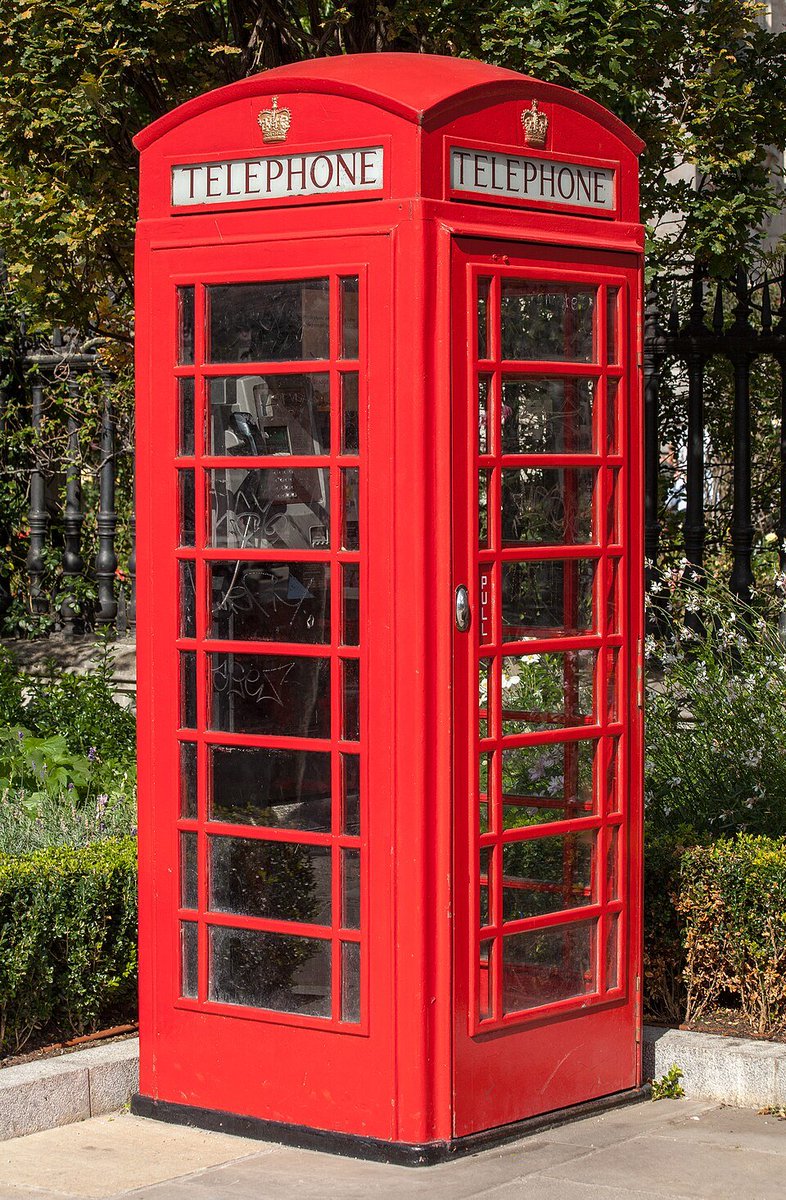
• Many things today are ugly and far uglier than they used to be or need to be. Once you see this, it’s kinda hard to stop perceiving it. (Early twentieth century phone boxes versus modern phone boxes; old water fountains versus new water fountains; etc.) As someone with a naively meliorist assumption that most things should be getting better rather than worse, it’s all a bit perplexing: why did we stop doing things nicely? Is it a choice? Was there a malevolent spell cast upon us? This vein led me to think more about modernism and why much of art became more intentionally "challenging", grotesque, opposed to prettiness, rebarbative, dissonant, etc. Can or should anything be done about this? Is this just how things ought to be?
• Relatedly, much of modernism involved a kind of explicit repudiation of cultural continuity and represented a schism with prior practices. This is maybe most evident in American architecture, where the International Style exhibition in 1932 initiated the displacement of a rich tapestry of prior styles. This cultural break seems important and interesting to me, and I suspect that the rejection had important consequences outside of the aesthetic domain. Samuel Hughes has been exploring this question in his recent writing at @WorksInProgMag; @RuxandraTeslo is also pulling on this thread. Elaine Scarry wrote about how beauty inspires creation. If so, the inverse may also be true: ugliness inhibits it.
• It’s clearly the case that changes in the aesthetic domain can at least inspire progress in other places. Petrarch helped set some of the preconditions for the Renaissance which in turn fostered the scientific revolution and Enlightenment. Things like World Fairs (the 1851 Fair at the Crystal Palace recorded 6 million admissions when the population was 21 million) reflect the popular interdependency that used to exist between aesthetics and material development.
• @tedgioia and others have written about stuck culture and how so many domains seem to have ceased to straightforwardly advance in the way that they did up until the nineties or thereabouts. This is obviously peculiar and interesting. What changed, and what does it mean? Is it about the internet and fragmentation? Is it about a loss of supply? Is it just about having reached the zenith of various mediums?
• I’m generally interested in markets and the dynamics of creation. In aesthetics broadly, I find the reflexivity between supply- and demand-side factors to be very thought-provoking. There’s a natural desire to view satisfaction of individual preferences as the yardstick to measure market success, but things get interesting and even a bit unsettling when we start to think about how the supply might start to shape the demand. I often think about this in the context of food. Why is food so much worse in Germany than many of its neighbors? Germany certainly doesn’t have less material ability to produce good food; indeed, Germany is richer than the countries around it. There’s probably something about German food supply chains that is impoverished relative to France and Italy, but the Germans themselves don’t seem too upset about it. It just seems that the Germans are stuck in an objectively worse market equilibrium than their neighbors: the food is bad and they’ve gotten used to it. The obvious question then is where else these kinds of reflexive patterns apply, and where else we’re stuck in some objectively inferior equilibrium, even if preferences are in some superficial sense being sated.
• While this is an extremely banal and obvious point, I hadn’t until recently thought much about or internalized how much one can study reasonably objective things ("the status of women in society", say) through artwork. (Thanks to @_alice_evans for opening my eyes here.) In this vein, I’m pretty excited about the possibilities over the coming years in computational art analysis. I want something that’s conceptually similar to Google Ngram timelines but for the visual arts.
• We've always tried to do things well at Stripe. I've come to see that attempting to do them beautifully is often a helpful way to break out of standard practices and to do something with greater novelty and in a way that might have other benefits besides. (Also, excellent people want to do great work because it is intrinsically satisfying. Explicitly allowing aesthetic considerations to carry weight avoids having to justify every assessment with some kind of torturous empiricism.)
• In his Nobel Lecture, Solzhenitsyn said that, among the Platonic virtues of goodness, truth, and beauty, that beauty is special, for it possesses a unique kind of irrefutability. He notes that arguments, writing, and philosophical systems can all be predicated on misapprehensions, but that “a true work of art carries its verification within itself.” He proceeds to observe that when goodness and truth are threatened, the “ever surprising shoots of beauty will still force their way through.” There is a lot of specious and motivated reasoning in the world today and plenty of questionable value systems. I don’t think that beauty directly reflects any definitive trait, but I’m intrigued by the idea that it can be a marker of deeper metaphysical coherence.
It's not time to slow down but to accelerate!
The recent AI-powered cyberattacks have everyone talking about the risks of AI. We should. But let's not lose sight of the bigger picture!
If we work hard at it, AI will make the world safer, not less safe, just as most major technologies have.
We've already seen a glimpse of that: we defended ourselves with AI (more specifically an open model). The same systems that helped stop an AI-powered cyberattack can now help defend against millions of cyberattacks every day, while helping us identify and fix vulnerabilities before attackers exploit them.
To get there, we need three things in my opinion:
- Increase transparency with mandatory trace sharing and incident disclosure for agent cyber-attacks
- Keep AI-powered cyberattacks illegal, with meaningful penalties to disincentivize them
- Equip defenders with the best AI, especially open models, to reduce the asymmetry of capabilities between attackers and defenders
If we get those three things right, AI won't just create new cybersecurity challenges, it will make cybersecurity fundamentally and meaningfully stronger.
And that's before considering AI's impact on science, healthcare, education, productivity, and much more.
It's not time to slow down but to accelerate!
Releasing weights indiscriminately isn't safe. Neither is keeping capable models inside a few labs.
We think there's a path between them. We haven't mapped all of it. Our new post covers the part we can see: how we assessed Inkling, and why access should widen in stages.
https://t.co/zGFbuXNr0Y
We have a product launch coming on 8/12 for people who want usable Qwen3.6-27B intelligence at home. For the optimal configuration, have an AMD 7900 XTX (still the best deal GPU 3 years running), an ATX power supply, and a computer with a USB port.
I finally have all 1.2 million raw image files from my latest mission to ISS! Here is a sample of one of my favorite Milky Way photos, taken from the Cupola with Nikon Z9, Arri Zeiss 15mm lens, T1.8 with custom sidereal drive that cancelled out star motion relative to our orbit.