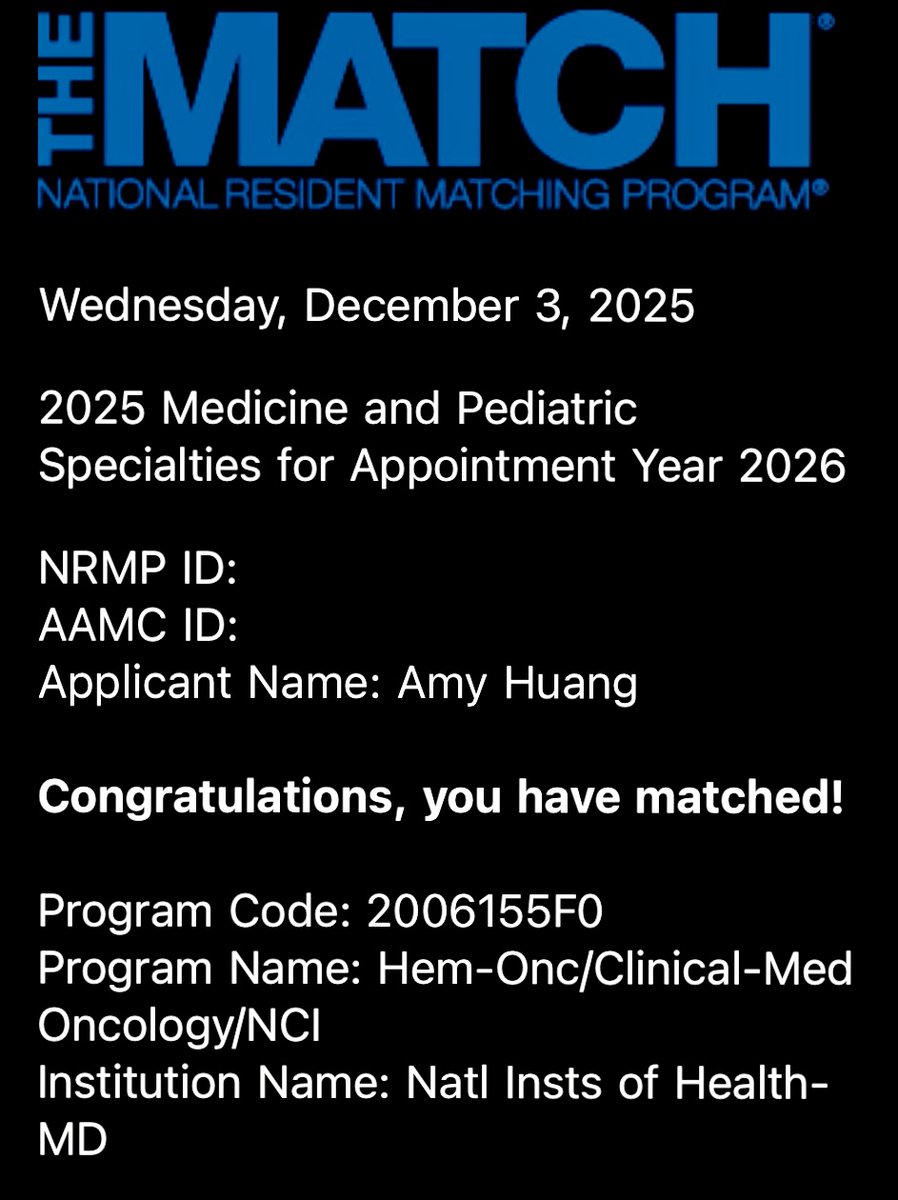
I will be joining the @NIH /@theNCI Hematology–Oncology Fellowship next year!
My interests center on multiple myeloma, particularly MRD-adapted strategies and mechanisms of resistance to CAR-T and bispecific therapies. I also have prior work in biomarker-directed treatment for colorectal cancer.
I am excited to learn more about other disease groups and explore my potential in academia!
#HemOnc #Fellowship #Match2026 #MedTwitter #WomenInMedicine
Here are the top 5 of my papers that I’m most proud of. Residents and young faculty and those interested in academic medicine may gain some insights on learning how these papers came to be and what kind of resources and preparation is needed if you want to pull off these type of studies and trials.
I’ve added a few lines about how each paper came to be, and why I consider them important. All of this represents team work not individual.
1. Clinical course of Smoldering Myeloma (SMM). @NEJM 2007
This paper established the natural history of SMM, risk factors, and provided the foundation to embark on early intervention trials. It’s cool to be last author on a paper with Bob Kyle as the first author! Working with him I watched and learnt how meticulous and careful you have to be with any kind of research. He called and verified the status of every patient in the cohort.
To do this type of study you need a large cohort of patients with very long follow up on a disease that not much is known about natural history or prognosis. I was lucky to work with Dr. Kyle and have this database.
Absolutely practice changing!! One of the most stunning developments in the treatment of patients with metastatic pancreatic cancer !! It is one of the rare moments in oncology which you will always remember ! Like the imatinib, trastuzumab presentations @ASCO#ASCO26@OncoAlert
Most important #ASCO26 myeloma abstract. Practice changing. Majestec-9 trial.
PFS significantly better with Teclistmaab vs PVd/Kd (HR, 0.29; 95% CI, 0.23–0.38; P<0.0001); 18-mo PFS rate: 69.8% vs 26.9%.
OS significantly better with Tec vs PVd/Kd (HR, 0.60; 95% CI, 0.43–0.83; P=0.002)
Based on this, teclistamab now becomes the leading first choice along with ciltacel for relapsed myeloma in dara refractory patients.
https://t.co/prY0QbS7nM
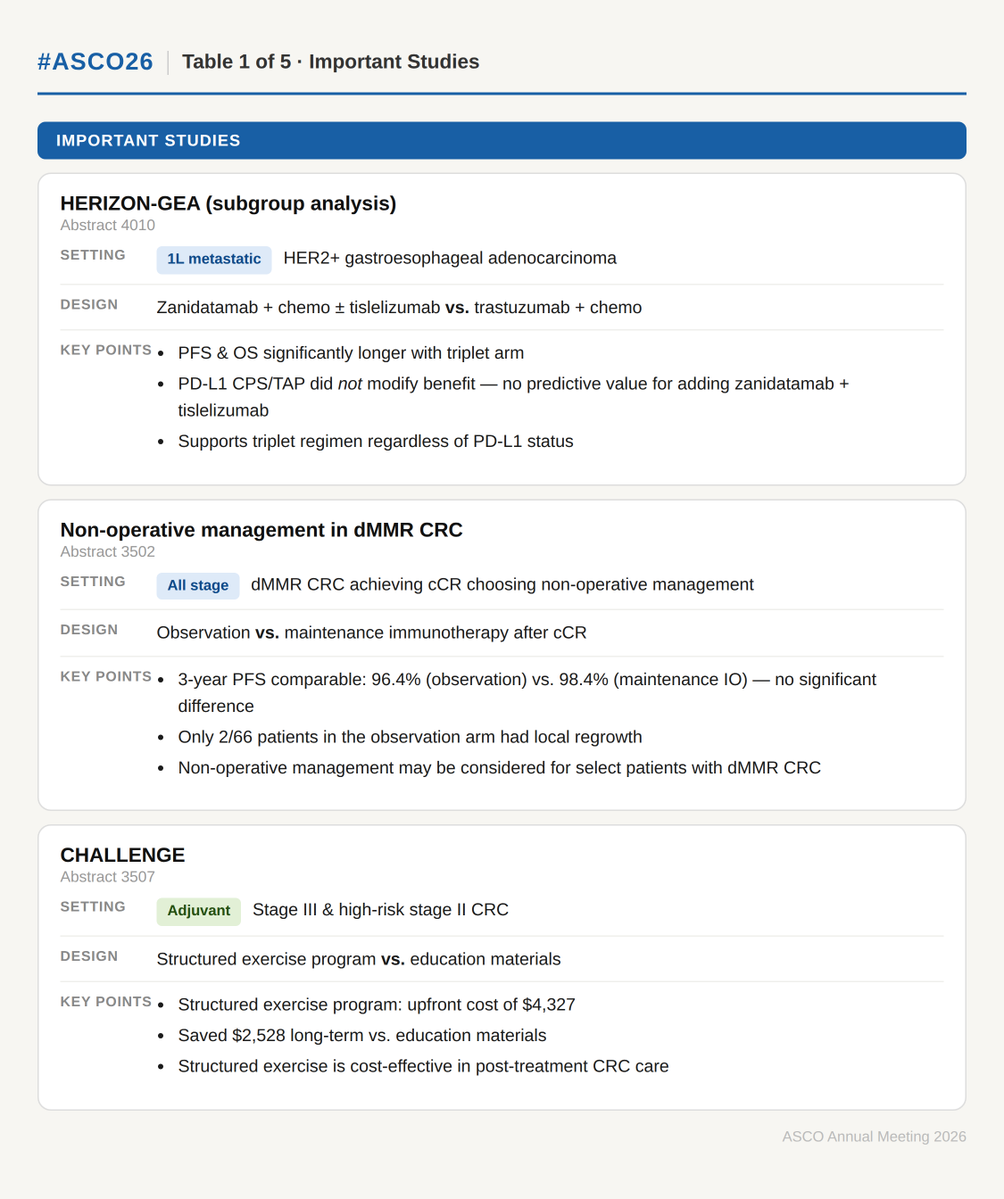
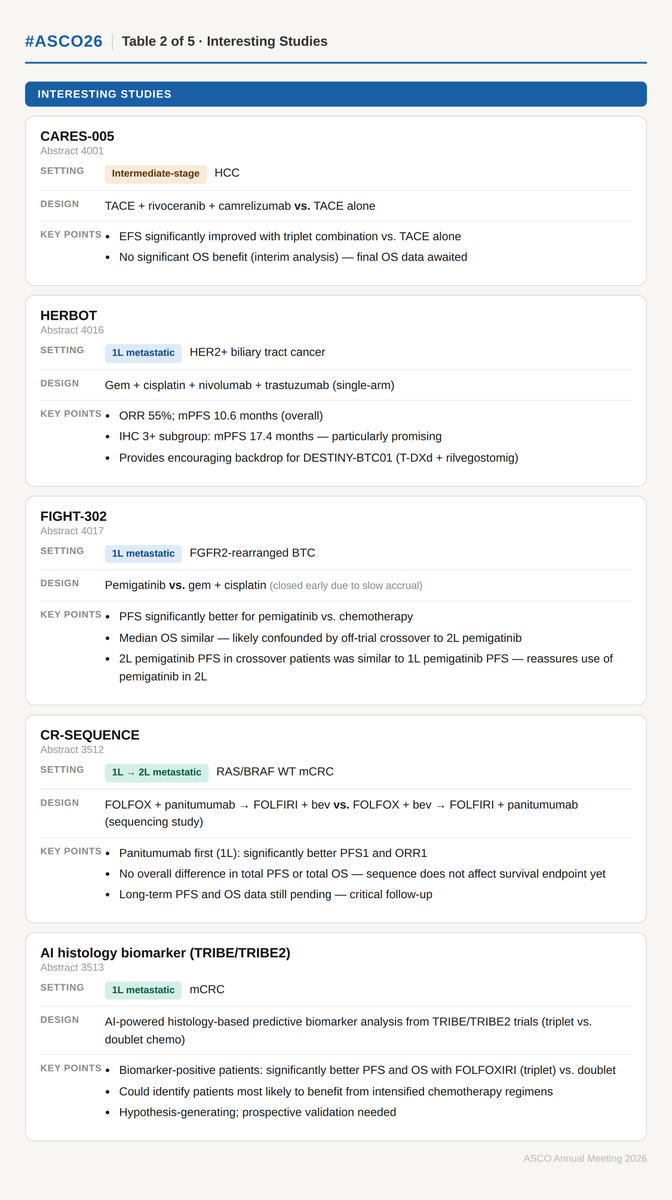
#ASCO26 has released most abstracts. I will break down GI cancer-related abstracts to five tables:
Important studies
Interesting studies
Important negative studies
Novel agents
Practice re-affirming studies
Abstracts that have not been released but are eagerly anticipated: RASolute-302, EMERALD-3, CIRCULATE (AIO), Episode-3, BREAKWATER update, PUMP.
Please see the tables below for the first two tables (important studies, interesting studies). More to come.
@OncoAlert@jgong15 #GIcancer
How are clinical trial leaders picked?
No one can or will hand you a principal investigator role on a platter. You have to work for it.
Some things you can do if you are interested in leading a clinical
trial.
1) Become a disease expert. Really understand the disease well. When you speak or write colleagues should recognize your talent and depth. The more you speak and write the more you will be noticed and sought out. Social media helps raise your visibility but it has no value if others think you are superficial. You must be credible. This is the most important step. There are no short cuts except to really understand the disease, what is known, and what remains to be known. It’s hard work.
2) Volunteer to be co-investigators on trials and help with trial design, development, and accrual.
3) Network. Most senior investigators will be more than happy to help you succeed.
4) Study trial protocols in depth to understand the elements and how it’s formatted. Better still write out protocol concepts and protocols. Clinical trial workshops help. There is an awful lot of detail.
5) Identify important questions that others are not thinking of. The question should be original, authentic, and important. If you have a great question, and you are credible, you are on your way to leading a trial. (The process from that point on is still very long and arduous — see second tweet in thread. But you have made it to being the PI).
Clinical trial leadership is not transferable. When you are asked to be a lead investigator it’s not in your power to hand it over. If you don’t want it, that spot will go to the next most credible person not the one you anoint. As it should be.
@ASH_hematology’s Trainee Council presents our 2nd podcast episode on Applying to Fellowship! This will be a great listen for those gearing up to apply momentarily and interview in the Fall.
Thanks to @TheFellowOnCall for continuing our collab!
https://t.co/MHbTxI7HlQ 1/
When can we say a cancer is curable?
We want to cure all cancers. Some cancers are curable. Some are not. As oncologists, we all have individual patients with cancer who are cured. Even those considered incurable! Anecdotes abound. But when can we say a cancer is curable compared to saying an individual patient is cured. There is a critical difference.
Let’s take myeloma, a form of blood cancer. With recent advances, some patients with myeloma are likely cured. But can we call myeloma a curable cancer? I am still reluctant. I still cannot look a young newly diagnosed patient in the eye and say that we are dealing with a curable cancer. I still cannot assure them like I do with diffuse large cell lymphoma or Hodgkins.
Cure is a straightforward concept:
-You need to be able to eradicate the disease.
-You need to be able to stop all therapy.
-You need to have a high probability that after a period of time of being disease free after stopping all therapy that patients have a very low risk (usually less than 5%) of recurrence.
Some cancers are clearly curable, eg. many localized solid organ tumors.
Some cancers are curable even in advanced stages. Eg., Hodgkins, acute leukemias, testicular cancer, diffuse large cell lymphoma. No one doubts that these cancers are curable. We confidently tell patients that.
For some cancers, like myeloma we are now at the threshold of cure. We are debating whether it’s curable or not. (The fact we are wondering whether we can cure myeloma is in and of itself a monumental advance and reflects the fact that many patients can live 10-15 years or longer after diagnosis.)
At present I am still not confident that we can call myeloma a curable disease because:
1) Most studies that show excellent disease free survival are in the context of continuous suppressive anti-myeloma therapy. Unlike curable cancers like diffuse large cell lymphoma, we don’t have studies that show a clear plateau in the disease free survival curve after stopping all therapy: the gold standard visual of a curable cancer.
2) The long overall survival we now see in myeloma reflects outcomes not just with frontline therapy but successful therapy of relapse with with sequential therapy of multiple relapses. The disease course of myeloma is still one of multiple remissions and relapses.
3) We don’t have sufficient follow up in patients with highly effective modern therapy. I’m hoping for example with ciltacel CART we can finally get there. Time will tell if we can fulfill requirement #1 above.
But we are very hopeful.
We want to cure both newly diagnosed and relapsed myeloma. We may already be achieving this, and all we need is time to demonstrate it.
Conference season is upon us with poster sessions, #oralabstracts, and #grandrounds on the horizon! To help prepare, we wrote this #ASCOconnection article:
🔗 The High-Stakes Talk 🗣️ @jennifermarksmd@ASCO
In the piece, we share practical strategies to:
🔹 Lead with the core message
🔹 Make the “so what” clear
🔹 And more
Because strong science should be easy to understand, discuss, remember, and carry forward.
🙋🏾♂️What is the best presentation advice you have received or the one lesson you wish you had learned earlier?
https://t.co/AxkLPao6Km
#Oncology #MedEd #ASCOtips #PresentationTips #PosterPresentation #ResearchTalks
@hemeoncfellow@HemOncFellows@SNMA@LmsaNational@ASCOTECAG@OncoAlert@oncodaily
Single arm phase II investigator initiated trials (IITs) used to be easier. Thats how I started my career. Budgets were low and institutions allowed you to open underfunded trials. Now due to a variety of factors the per patient costs of even single arm trials are very high, especially in oncology. Which means either you need industry support or NIH funding.
Industry funded IITs are the most common type but they naturally have to be of some interest to industry for you to get drug and funds. And that means collaborative development with some give and take.
NIH Grants and NIH cooperative group mechanism (ECOG, SWOG , ALLIANCE) is the second route. It’s quite a bit more tougher because there will be a lot of review and funding may not be sufficient. So often you need industry support in addition. But it is a good mechanism for truly important ideas to be tested.
Philanthropy and non profit foundations are a third path. More limited in number of trials that are supported this way.
I think if you are motivated single arm phase II IITs are a good way to start a clinical trial career. I strongly recommend that route. Much easier than trying to launch a career with a phase III. It builds your credibility and makes it more likely that in the future you will be in a competitive position to lead a phase III trial.
Start with a good clinical question and then work with pharma/NIH mechanisms to get a concept that’s mutually acceptable.
Phase I IITs may be a little difficult for young investigators to lead unless you have been involved in the lab development of the drug.
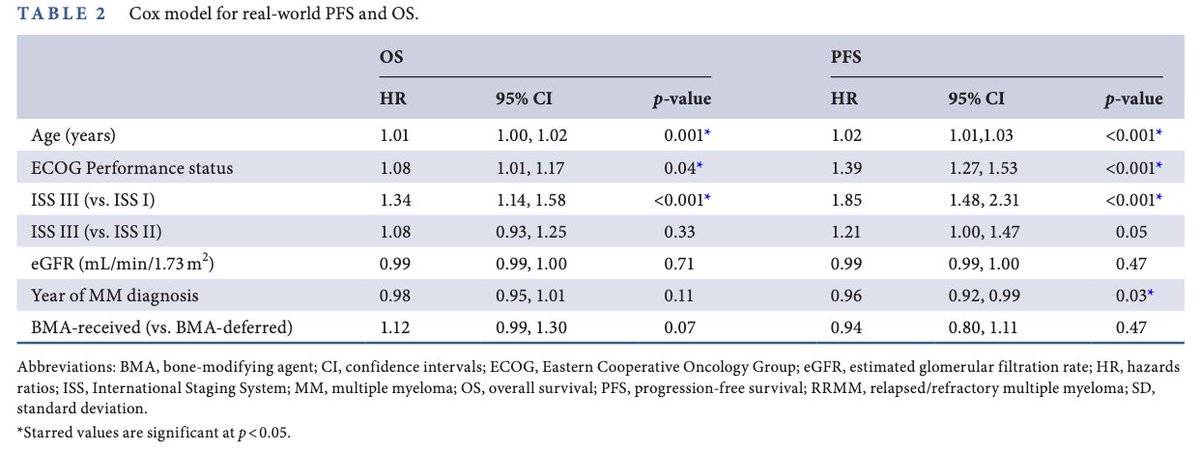
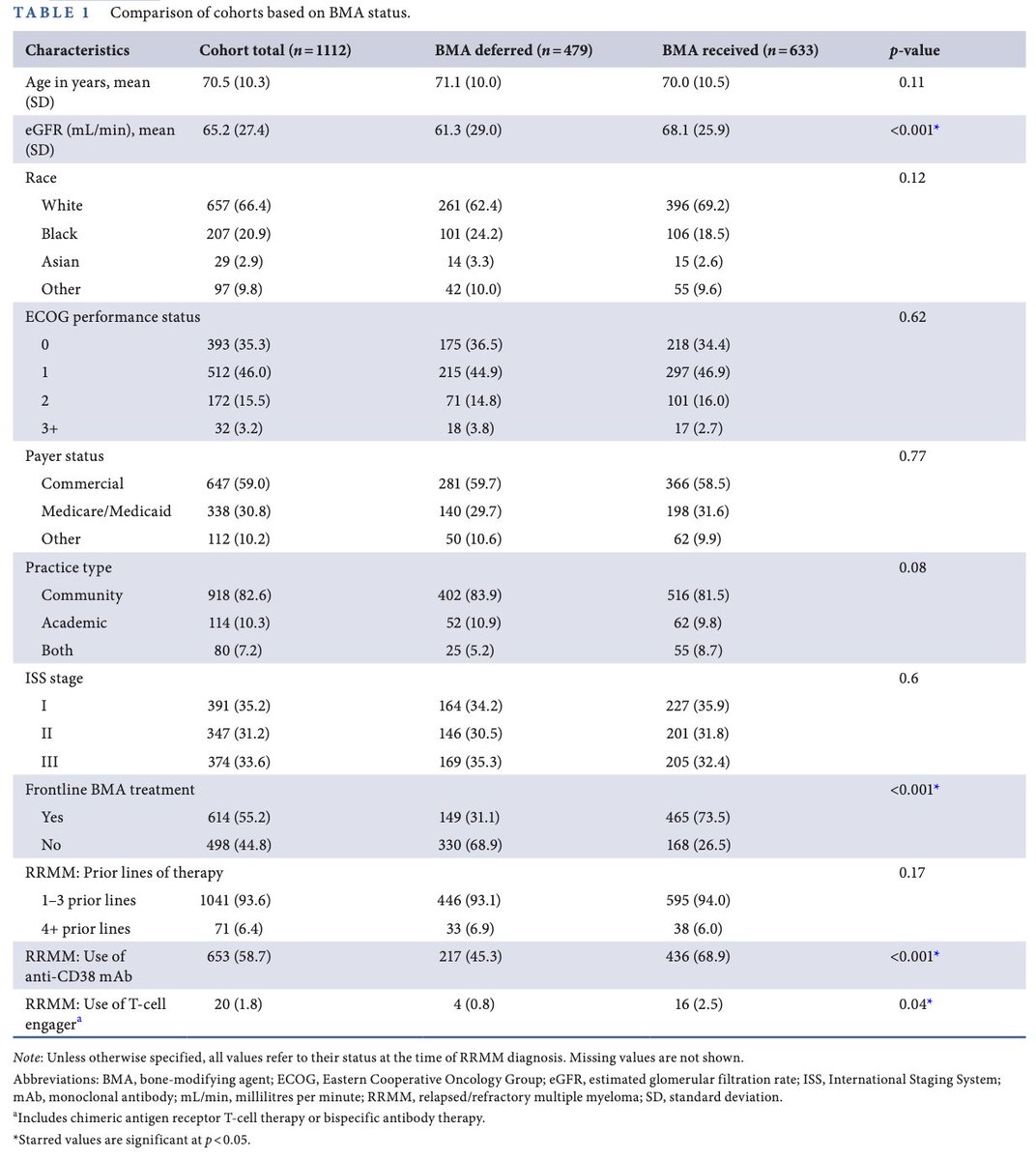
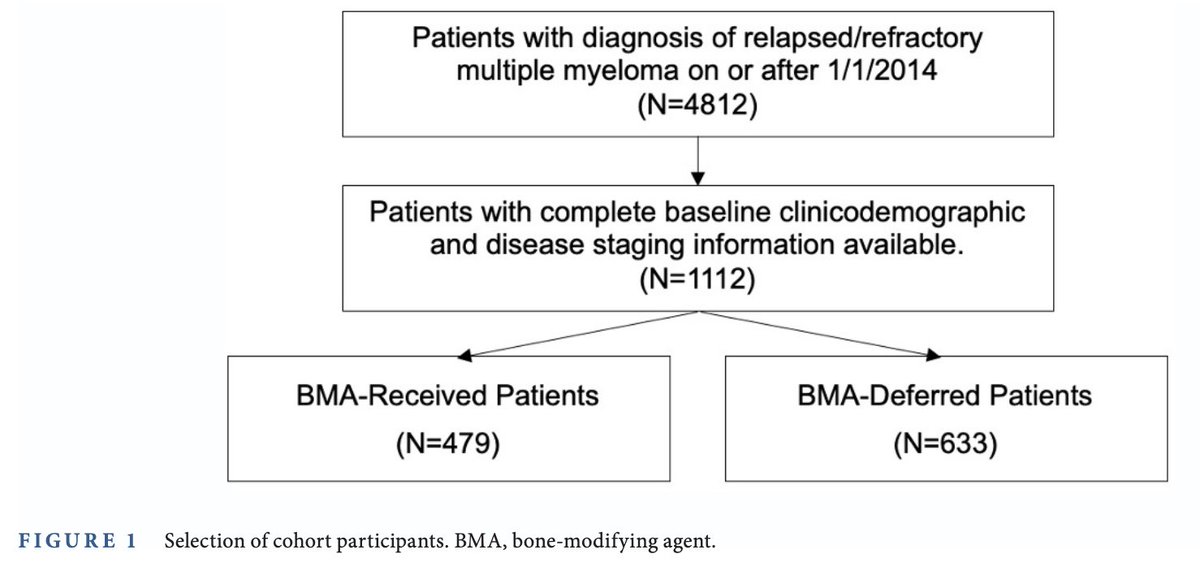
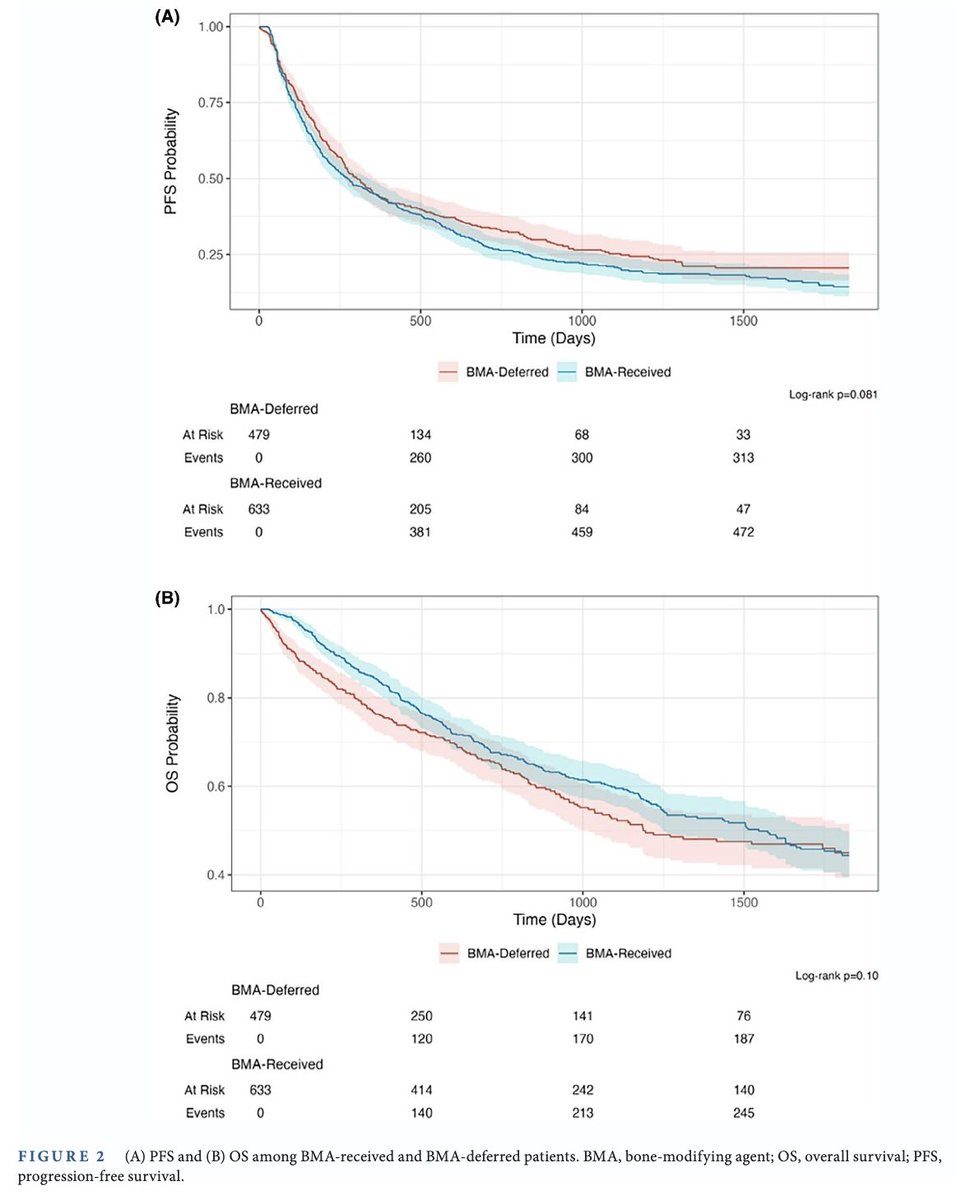
#Myeloma Paper of the Day: Real-world analysis of resuming bone-modifying agents in relapsed myeloma does not show improvement in long-term survival outcomes (median PFS 10.1 vs 9.2 months; OS 39.6 vs 51.5 months for deferred vs. BMA-received pts): https://t.co/uu8WW8HxFm. #mmsm
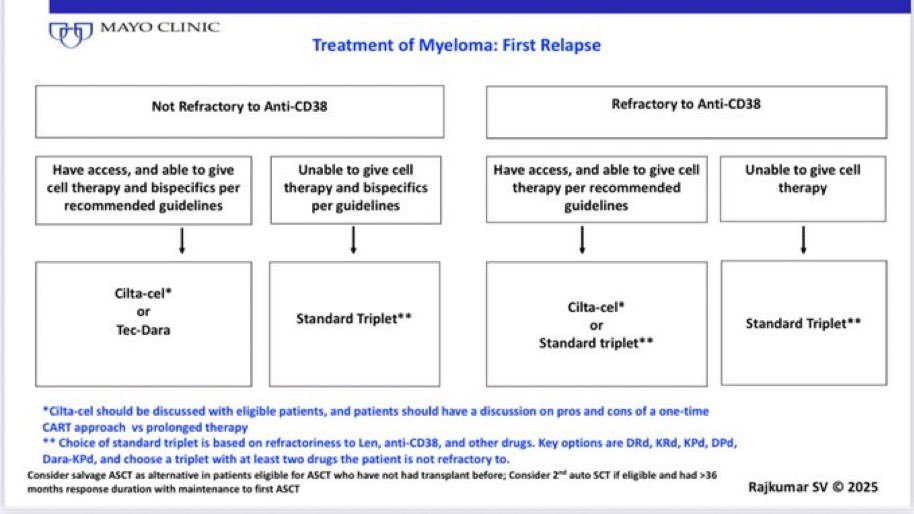
This changes how we approach first relapse.
In Dara sensitive patients: Tec-Dara or Cilta-cel are the top two choices.
If Dara refractory: Bispecifics alone or Cilta-cel are the main options.
CART and Bispecifics both need close monitoring and specialized care and certain requirements. So for some patients, we may still use triplets.
Rechallenge With an Epidermal Growth Factor Receptor Inhibitor in Metastatic Colorectal Cancer: A Systematic Review and Meta-Analysis. Co-authored by @amyhuangmd, @ronanhsieh, @IbrahimSahinMD1, and @JyotiMalhotraMD.
Read the full article. https://t.co/4mIJprgh8w
#crcsm
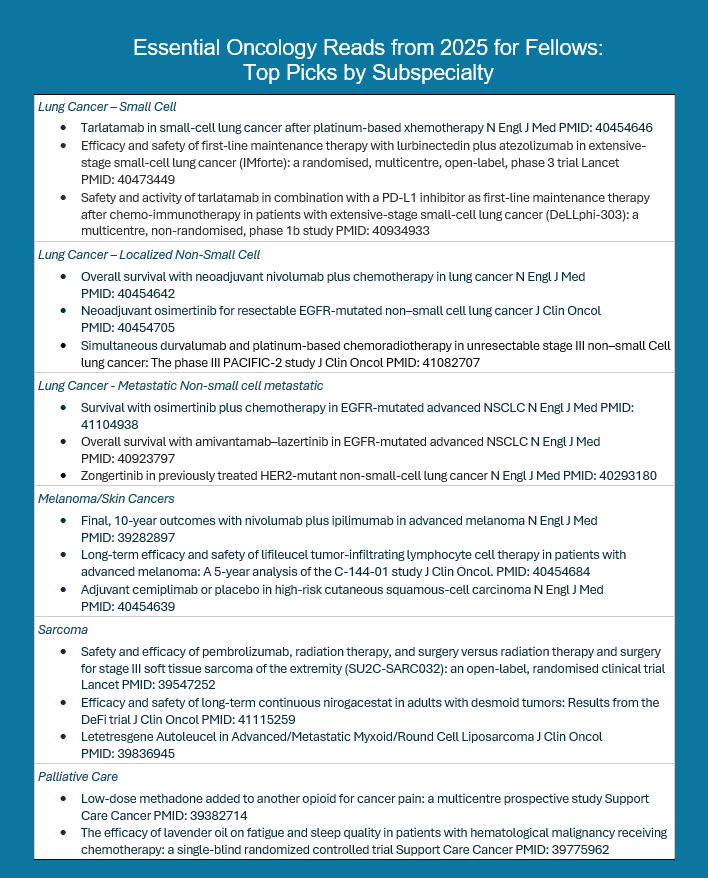
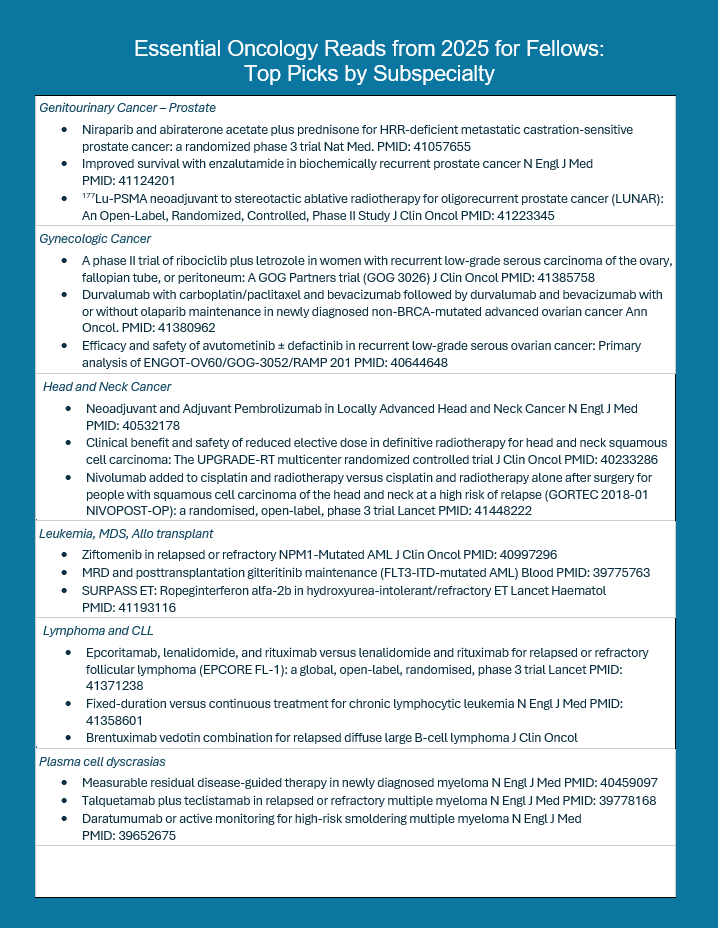
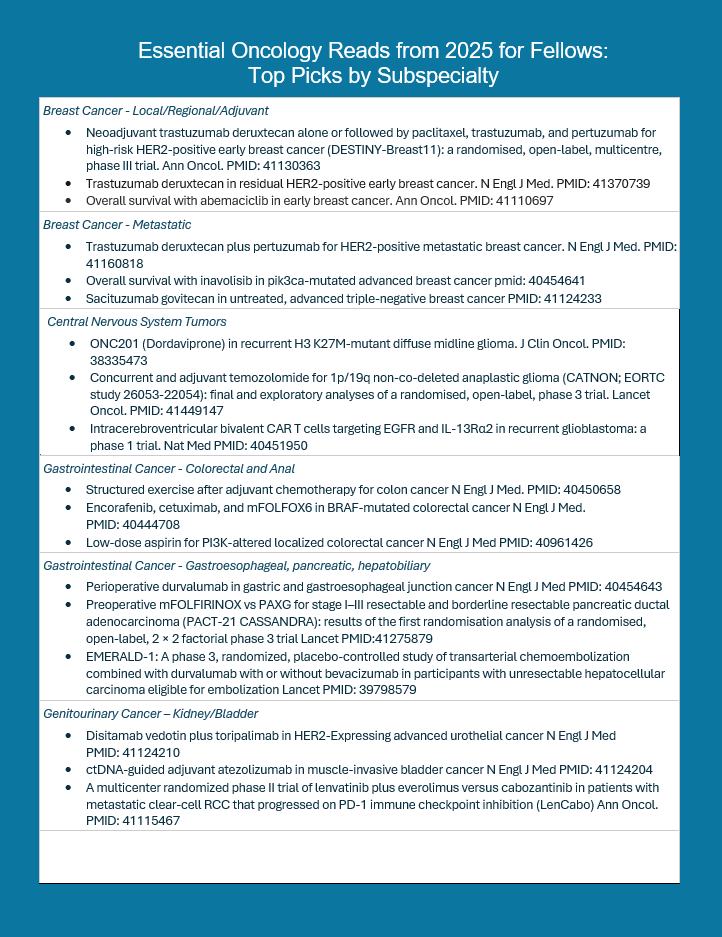
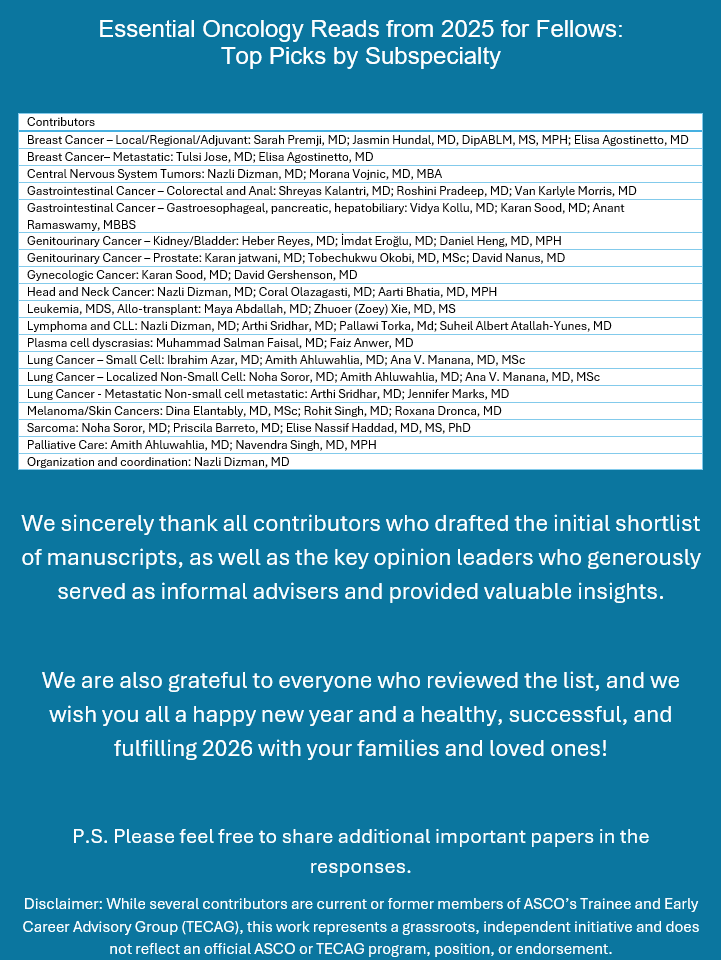
📚Check this out! With fellow TECAG members and guidance from KOLs, we put together a list of papers published in 2025 that are most relevant to #fellows w 2–3 picks per subspecialty.
🙏Hope it is helpful. 🎉Happy New Year! 🎊🎈
#MedEd#Trainee#OncMedEdCop@ASCO
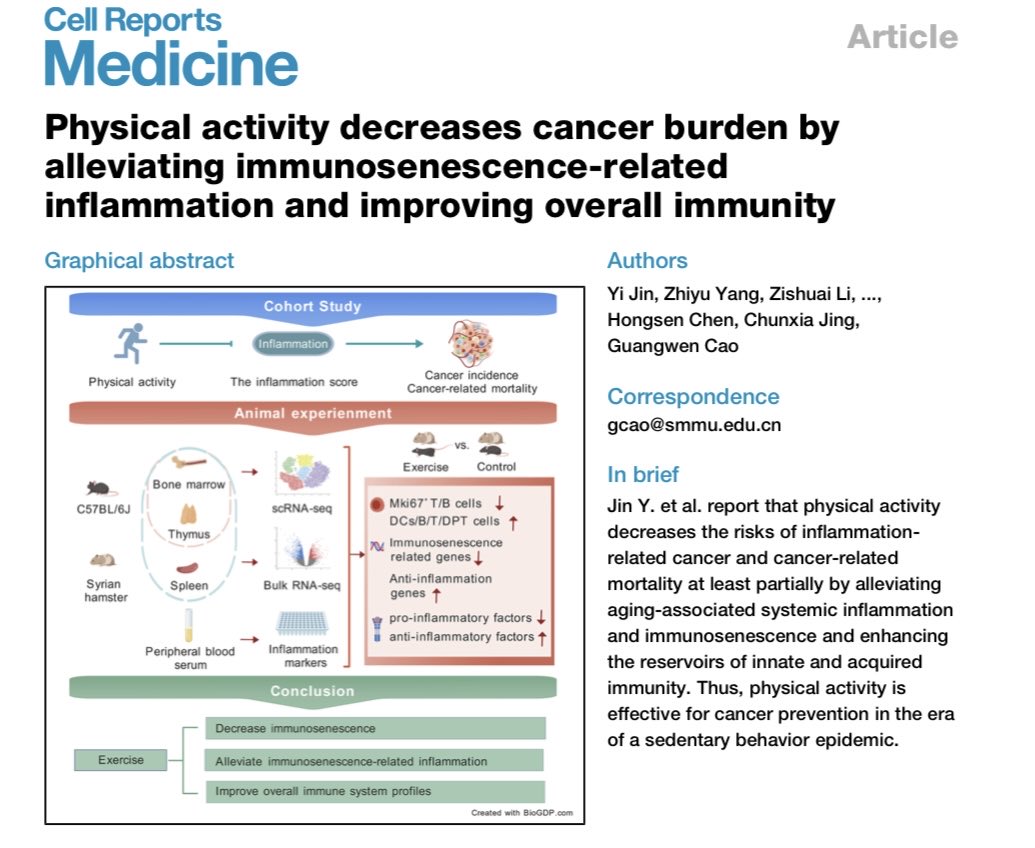
Physical activity decreases cancer burden by alleviating immunosenescence-related inflammation and improving overall immunity https://t.co/3tLuB6ZmOB @OncoAlert