With the recent announcement of the Cascadia CoPes Hub there are several exciting opportunities in my OSU research group including postdoc positions https://t.co/omEzUc7sk2, a related PhD position, and a project coordinator position https://t.co/TamUnHxB0r. Please share widely!
Oregon State University's @prugg50 of @OSUCEOAS will lead an @NSF-funded collaborative research hub focused on increasing resiliency among coastal communities in the Pacific Northwest. Learn more: https://t.co/qjmWh9PjGg.
@NicolasPucino@_kvos @magic_walnut @ISPRS_SC The Coastal Imaging Research Network has collected a bunch of useful repos - also keep an eye out for CoastalImageLib, it’s a python library with a lot of Argus-like support functions that will be released on CIRN’s page after review, stay tuned https://t.co/telp5eXwzb
Woah, striking overnight intensification. Thoughts are with the people of southern LA. This will be the biggest test yet for resilience strategies adopted post-Katrina
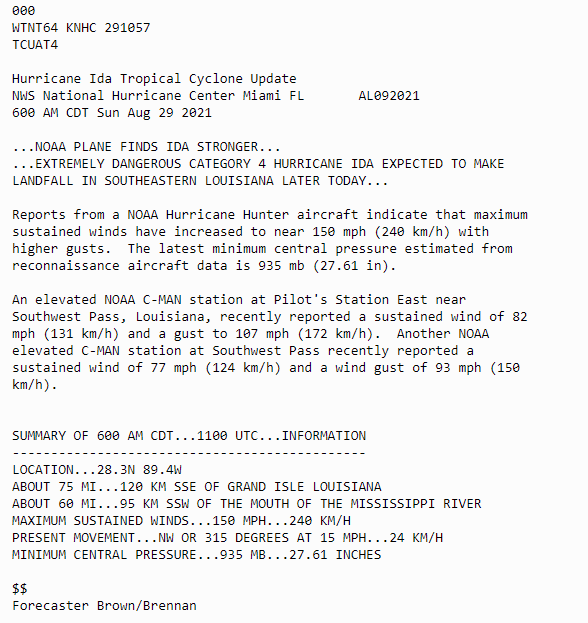
600 AM CDT Update: #Ida continues to strengthen and now has maximum sustained winds of around 150 MPH with higher gusts, and a minimum pressure of 935 mb (27.61 inches) https://t.co/tW4KeFW0gB
This is the wave buoy of Block Island, RI… my old stomping grounds are taking one to chin this weekend. And from a storm that didn’t even form in the tropics. Makes you wonder what our storm climates will look like in a warmer future…
"The beach of the Field Research Facility is the best-studied beach on the planet." Located on the coast near Duck, North Carolina, ERDC's Field Reseach Facility serves as a natural lab and test site for coastal science and engineering. Watch: https://t.co/XKdJRSF0qa
🛣️ The highway runs the length of the Outer Banks, supporting the economy, welcoming tourists and often providing a lifeline for residents. But as sands shift and the sea rises, can it survive?
This is "N.C. 12: The End of the Road." https://t.co/yJnWcmpy1O
Interesting how the media looks for a hook. In this case, the so-called "moon wobble" is simply the natural and highly-predictable 18.6 year tidal cycle. Convenient to shift the blame of future flooding to the extraterrestrial https://t.co/GbqiBT4HZG
So, this “moon wobble” thing has taken off obviously, coming from our study: https://t.co/QJjhWH8VAp. I realize my reach here is small compared to the attention it has gotten in the media (none of my co-authors are on Twitter!), but want to try to clarify a couple things…1/7
Time to launch a new initiative: Coast2Cast.
@DrAnaVC and @cocoltrane interview scientists around the world. We begin with @BrittRaubenhei1 and @KRB_CoastsRule:
https://t.co/uSeZPbtEMY
You can find more details about the project on our website:
https://t.co/N6ZDszWoWU
Interested in coastal sediment transport research? One year funded post-Masters or post-doc position available at the ERDC Field Research Facility (Duck, NC) to experiment with using holographic cameras to measure sand transport by wind and/or waves. https://t.co/9QaDRkxjau
I've been traveling along the coast of North Carolina over the past couple months talking to folks about what sea level rise could mean for our communities out there. This is the first in a three-part series... https://t.co/AYcVlUFDdi