Again robotics software sucks. Its so bad. Part of what makes it so bad -- and what makes stuft like ROS useful -- is the amount of boring middleware code you need to write between sensors, processes, etc. Coding models make it so much easier to work with, its wonderful.
@yunta_tsai They said it couldn’t be done.
Dozens of Starlink satellites simultaneously track Starship at all times and close the link through a gap in the plasma that is located in the leeward region towards the aft end of the rocket.
Mangos in the US also get treated in hot water baths so they get picked earlier in the ripening process, to minimize thermal damage. These mangos coming from India are irradiated and picked much closer to peak ripeness. Part of their pricetag is irradiation, in addition to freight. In my view, thats the main disadvantage to the taste of mangos coming from South and Latin America.
Only one chance in this lifetime…
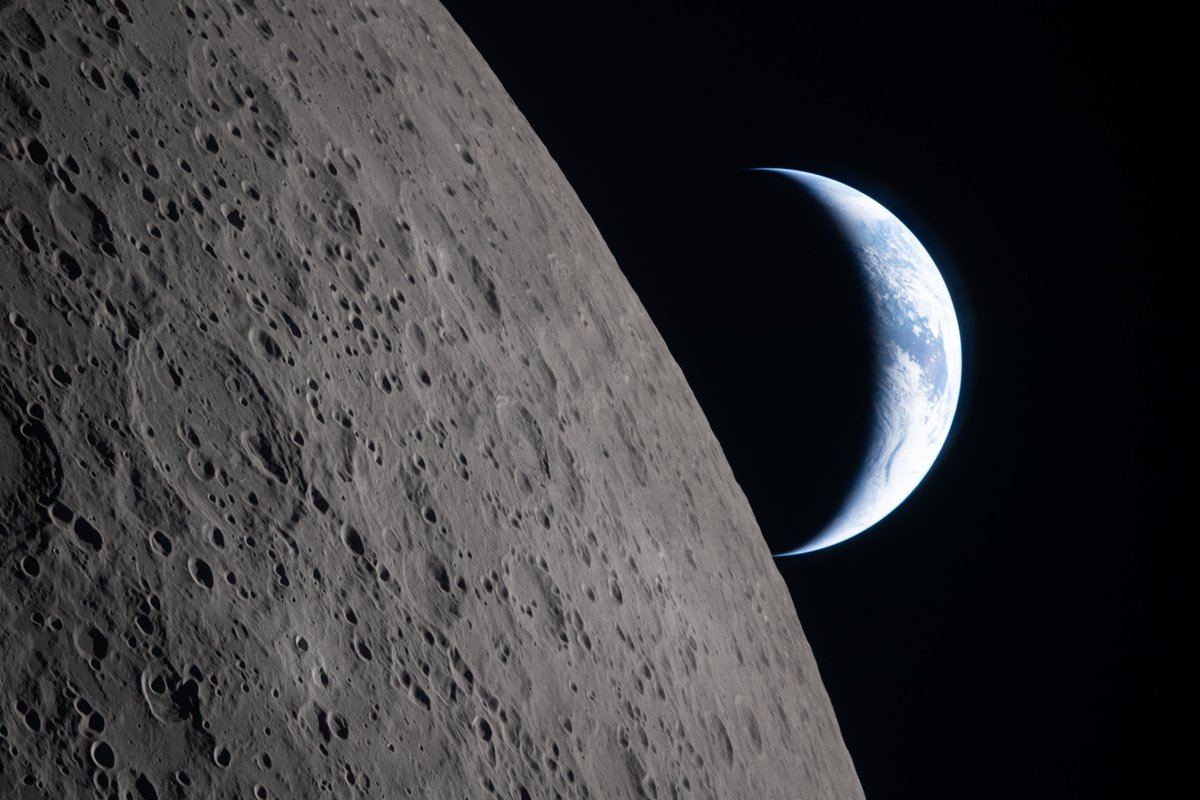
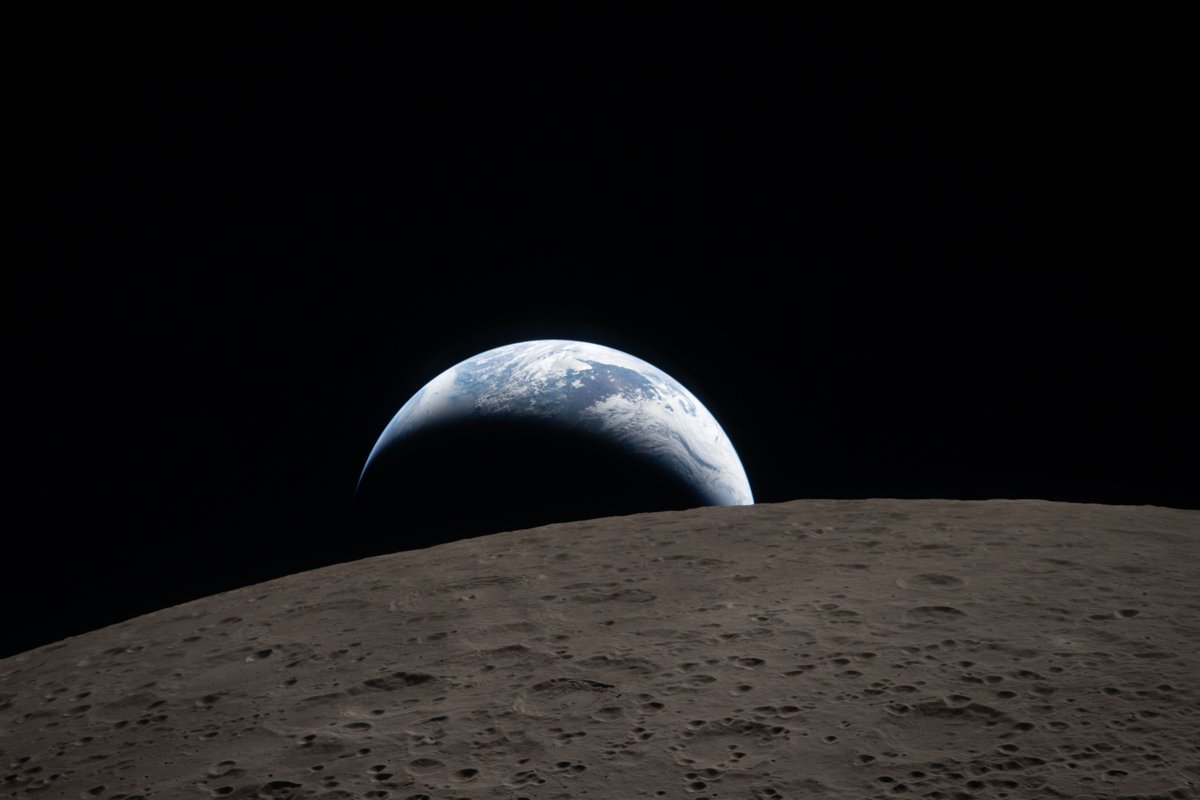
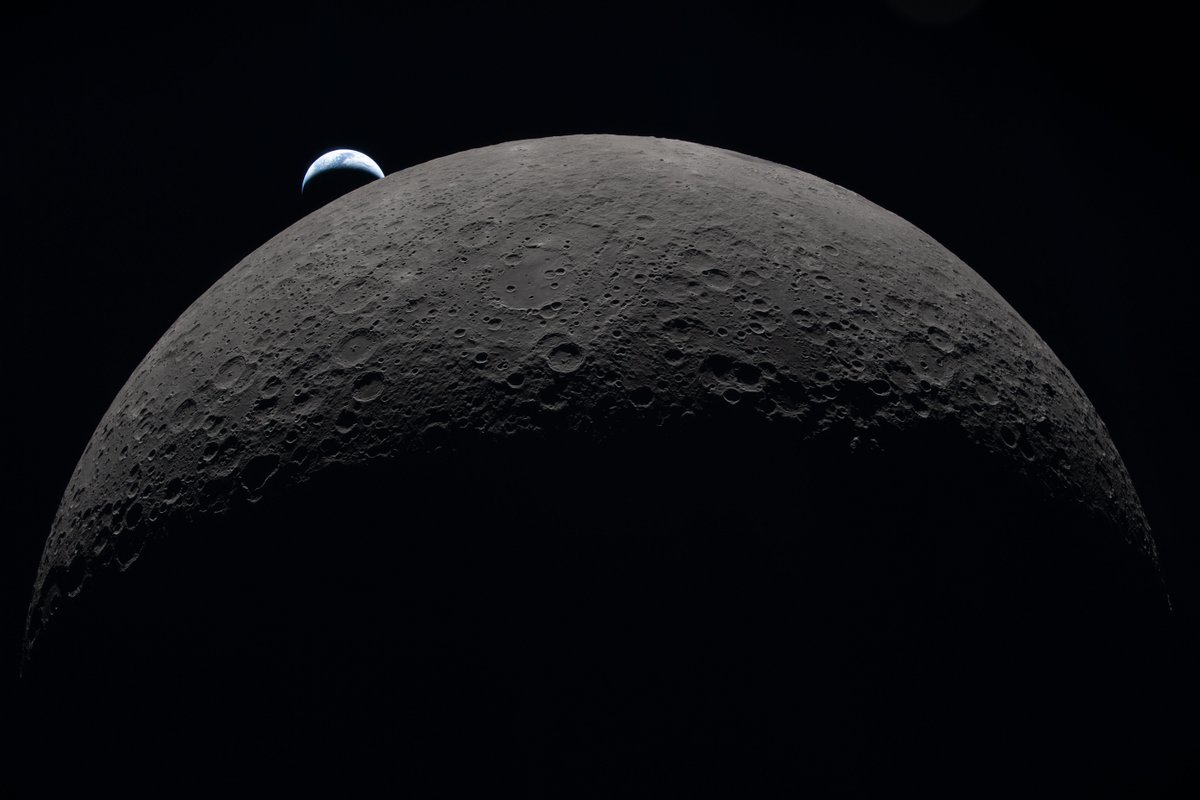
Like watching sunset at the beach from the most foreign seat in the cosmos, I couldn’t resist a cell phone video of Earthset. You can hear the shutter on the Nikon as @Astro_Christina is hammering away on 3-shot brackets and capturing those exceptional Earthset photos through the 400mm lens. @AstroVicGlover was in window 3 watching with @Astro_Jeremy next to him.
I could barely see the Moon through the docking hatch window but the iPhone was the perfect size to catch the view…this is uncropped, uncut with 8x zoom which is quite comparable to the view of the human eye. Enjoy.
Hello, Moon. It’s great to be back.
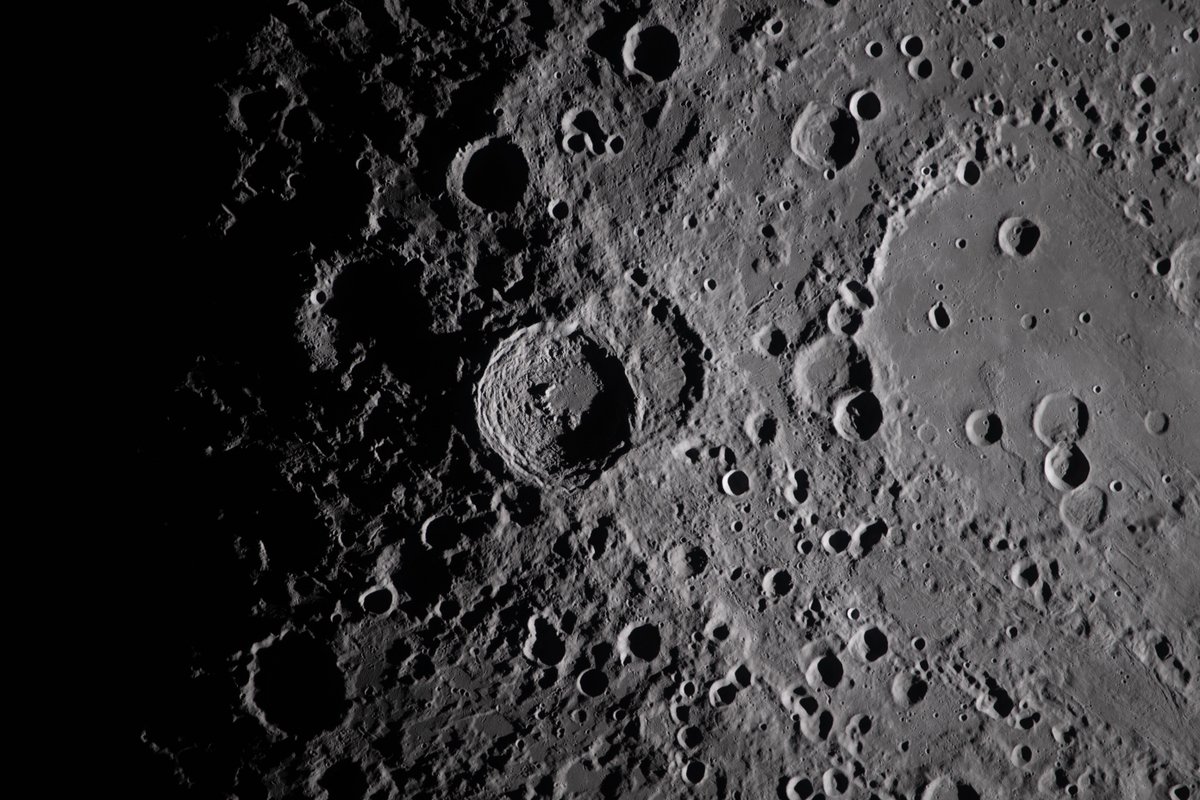
Here’s a taste of what the Artemis II astronauts photographed during their flight around the Moon. Check out more photos from the mission: https://t.co/rzM1P0QbOl
ultimate irony: bayes, the man whose name is on the most important eqn in rationality, never published it & likely did not think it was a law of the universe. bayes wrote his thoughts on inverse probability in a private notebook to solve a specific problem about billiard balls. when he died in 1761, the notebook was stuffed in a drawer. his friend, richard price, found the papers & price spent 2 yrs obsessively refining the math cos he wanted to use it to prove the existence of god (by calculating the probability that the universe's order was not an accident). price is the one who presented it to the royal society; w/o his search for god, the math for modern AI & medical screening would have been thrown in the trash.
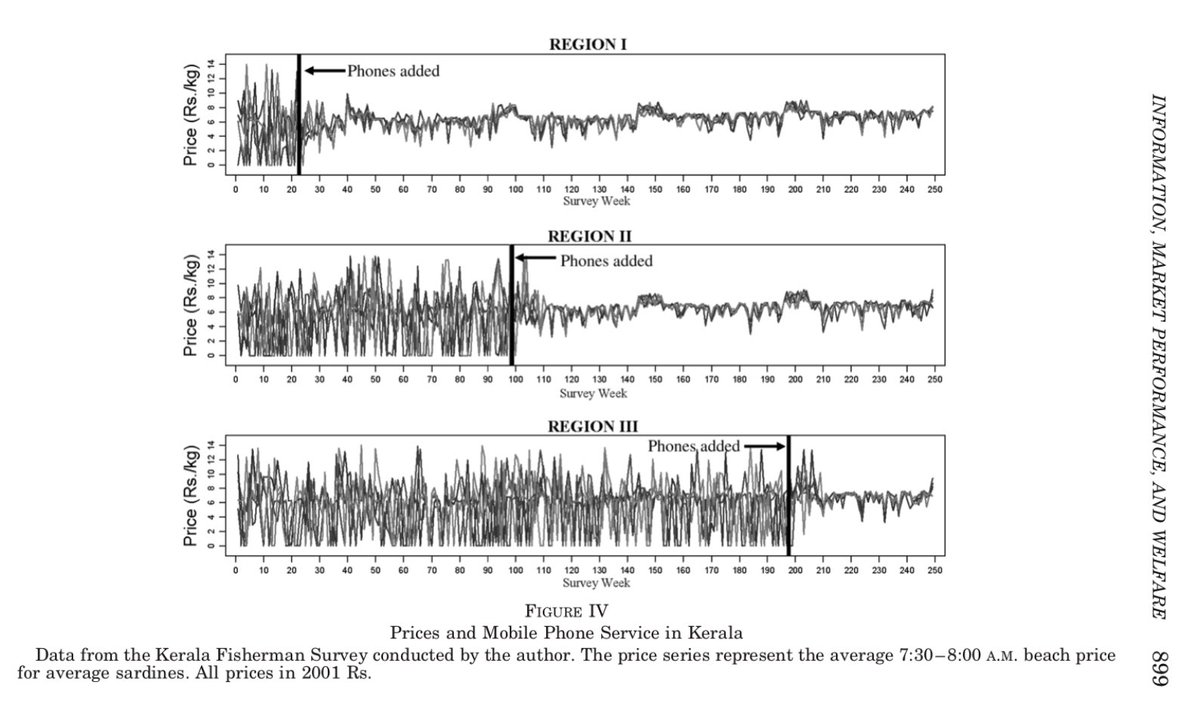
@jrkelly@EvanZhao6 I think they just beat on price a lot of the time, and suck the air out of the room for everyone else. It's not even clear that they're beating on price by using automation a lot of the time.
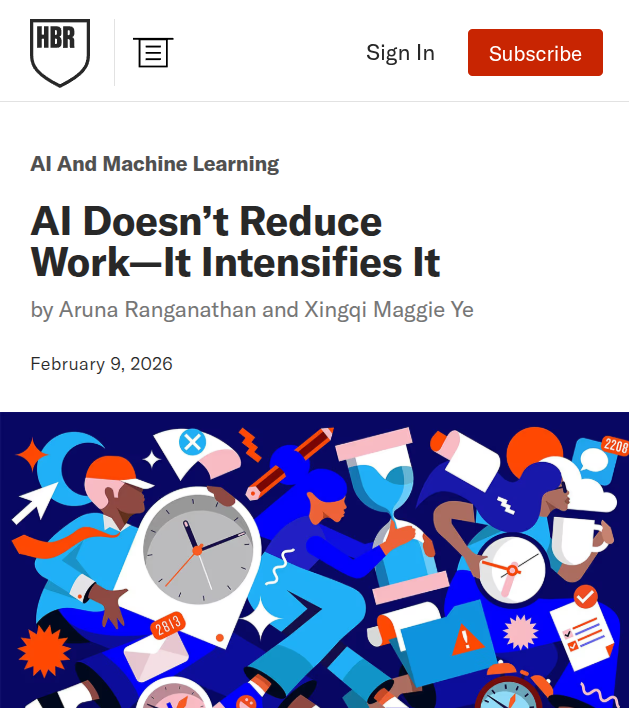
A super interesting new study from Harvard Business Review.
A 8-month field study at a US tech company with about 200 employees found that AI use did not shrink work, it intensified it, and made employees busier.
Task expansion happened because AI filled in gaps in knowledge, so people started doing work that used to belong to other roles or would have been outsourced or deferred.
That shift created extra coordination and review work for specialists, including fixing AI-assisted drafts and coaching colleagues whose work was only partly correct or complete.
Boundaries blurred because starting became as easy as writing a prompt, so work slipped into lunch, meetings, and the minutes right before stepping away.
Multitasking rose because people ran multiple AI threads at once and kept checking outputs, which increased attention switching and mental load.
Over time, this faster rhythm raised expectations for speed through what became visible and normal, even without explicit pressure from managers.
@rohanpaul_ai Isn't that a bit disingenuous? The software industry went through a whole cycle of downsizing after covid-era overhiring. It would be wrong to attribute this graph entirely to AI.
256 Tb/s data rates over 200 km distance have been demonstrated on single mode fiber optic, which works out to 32 GB of data in flight, “stored” in the fiber, with 32 TB/s bandwidth. Neural network inference and training can have deterministic weight reference patterns, so it is amusing to consider a system with no DRAM, and weights continuously streamed into an L2 cache by a recycling fiber loop. The modern equivalent of the ancient mercury echo tube memories. You would need to pipeline a bunch of them to implement modern trillion parameter models, but fiber transmission may have a better growth trajectory than DRAM does today, so it might someday become viable.
Much more practically, you should be able to gang cheap flash memory together to provide almost any read bandwidth you require, as long as it is done a page at a time and pipelined well ahead. That should be viable for inference serving today if flash and accelerator vendors could agree on a high speed interface.
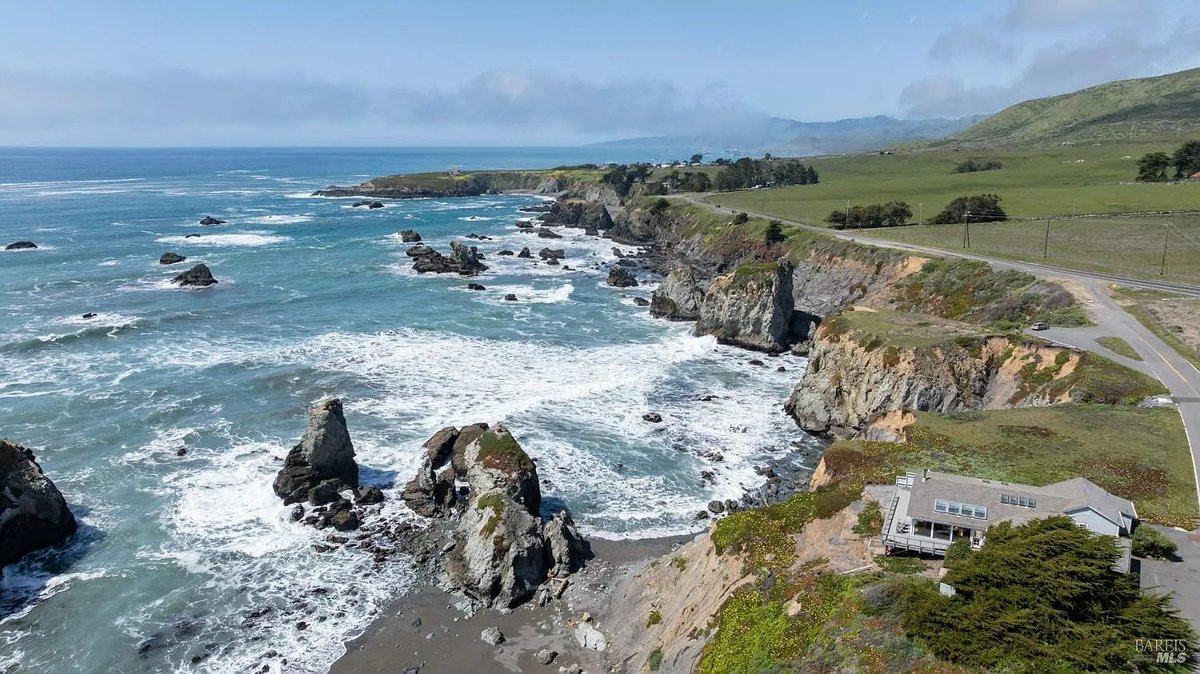
@babugi28@shloke_patel@ycombinator nice! Not a ton of good US grown mangos in the market. do you have to boil/irradiate? I'm in california and I know they're pretty strict, even across state lines.
Autonomous Snow Blower Update:
The @yarboglobal completed the first pass of the driveway and went back to the charging dock.
After about 1.25hrs, it will be 80% charged and will automatically return and continue to clear the driveway.
I plan to run it during the entirety of the storm and will post my review video on @stateofcharge this week.
So far, it's kicking A$$!
In 1848, engineers planning the first permanent bridge across the Niagara Gorge faced a basic but dangerous problem. They had no safe way to get an initial line across the nearly 250-meter wide chasm below Niagara Falls. The gorge was too deep for boats, the currents were violent, and walking or climbing across was impossible. Without a first line, construction could not even begin.
To solve this, a kite-flying contest was organized on the American side of the gorge. A young local boy successfully flew a kite across the gap, allowing its thin string to be secured on both sides. That string was then used to pull across a thicker cord, followed by progressively stronger ropes. Each replacement increased the load capacity until heavy cables could finally be drawn across the gorge.
Those cables became the basis for a temporary footbridge, which allowed workers to begin construction of the Niagara Falls Suspension Bridge, completed in 1855 under engineer John A. Roebling. The bridge later carried rail traffic and directly influenced Roebling’s work on the Brooklyn Bridge. What started with a kite became a key step in modern suspension bridge engineering.
#archaeohistories