We’ve selected a new @NASAUniverse mission! UVEX — UltraViolet Explorer — will conduct a deep survey of the whole sky in two bands of ultraviolet light, providing new insights into galaxy evolution and the lifecycles of stars. Congratulations to Principal Investigator, Fiona Harrison and her team! https://t.co/H9nNIb37rV
New @NASA mission UVEX (UltraViolet EXplorer) is targeted to launch in 2030 to survey ultraviolet light across the entire sky.
IPAC will provide the UVEX Science Data Center (USDC) to support community use of its data.
https://t.co/EeP8fxdD1N
Don't miss the @novapbs on @nasawebb premiering tonight! IPAC scientist Lee Armus was interviewed at length about early #JWST science results for this episode, and there are glimpses of IPACers Justin Howell, Thomas Lai, and Joe Mazzarella! #unfoldtheuniverse
It was exactly five years ago today that the seven-planet TRAPPIST-1 system was announced. Learn from @NASA scientists how they characterized and visualized the rocky worlds in ~30 minutes! #AskNASA
#NITARP Carries On!
Despite a pandemic and telecon fatigue, the NASA/IPAC Teacher Archive Research Program welcomes a new class while bidding a temporary farewell to last year's class, who hope to present their results at this summer's #AAS240 meeting.
https://t.co/7b7iTubKd7
Congratulations Jessica!
Fun Fact: When she was a graduate student in summer 2011, Jessica Watkins was an intern for the #NEOWISE mission and worked with @AmyMainzer and @JoeMasiero at IPAC.
#OTD in 2020 we said goodbye to #NASASpitzer. After 16+ fruitful years of revealing the cold and dusty corners of space through its observations of infrared light, the spacecraft was retired. Its legacy lives on in future missions like @NASAWebb, set to launch later this year.
The power of infrared vision is revealed in this Spitzer Space Telescope photo of a newborn star and its twin jets of material—a potential target of @NASAWebb. Infrared light penetrates the star’s dusty cocoon (inset). Credit: NASA/JPL-Caltech/A. Noriega-Crespo (SSC/Caltech).
If you missed seeing Comet NEOWISE (C/2020 F3) this month, you have a few more chances over the next few days. It'll be visible about an hour before sunrise, close to the horizon in the northeastern U.S. sky. No telescope needed!
https://t.co/3gn6Y1RzfA
Davy Kirkpatrick @caltechipac searches for brown dwarfs — the coldest "stars" — in the vicinity of the Sun using data from NASA's @WISE_Mission. Fun fact: As a kid, he collected fossils from the creek on his parents' dairy farm in Tennessee. #PrideMonth
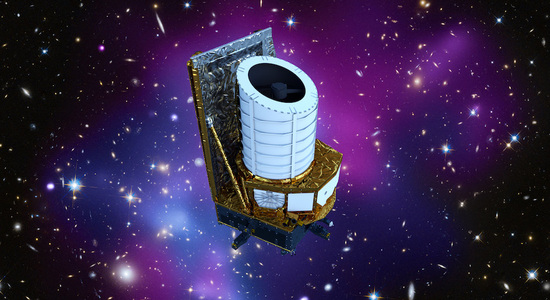
#Euclidmission is planned for launch in 2022 to survey 15K sq. deg. of the extragalactic sky, obtaining near-IR and wide-band optical imaging & NIR grism spectra. How should we prepare for this archival research opportunity? Come to a June 8 online panel. https://t.co/DTChXfkMQ7
Today we celebrate the 90th birthday of Frank Drake, and the 60th anniversary of his pioneering Project Ozma. Frank laid the foundation of the modern search for extraterrestrial intelligence, including @brkthroughprize Listen. https://t.co/nDP8nnrvPR
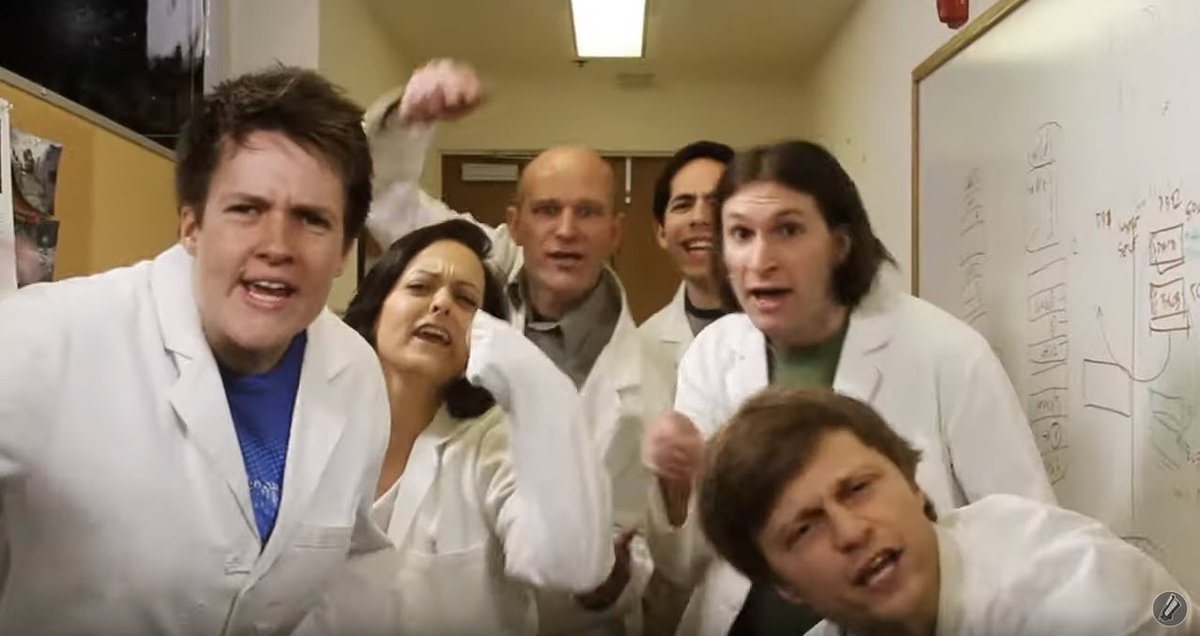
That time the @NASAspitzer team burst into song 🎤...
🎵 infrared
capturing the heat instead 🎵
there is light from the sky we can't see
🎵 in the darkest parts of the galaxy
with Spitzer's spectrum we can detect them
easily 🎵
https://t.co/Cape6f3nST #SpitzerFinalVoyage