Balaj Singh shares what has been his biggest challenge, and opportunity this year, as well as what he thinks should be on everyone's summer reading list - with @ashleymlowe of our Audience Development Team.
#CitywirePB
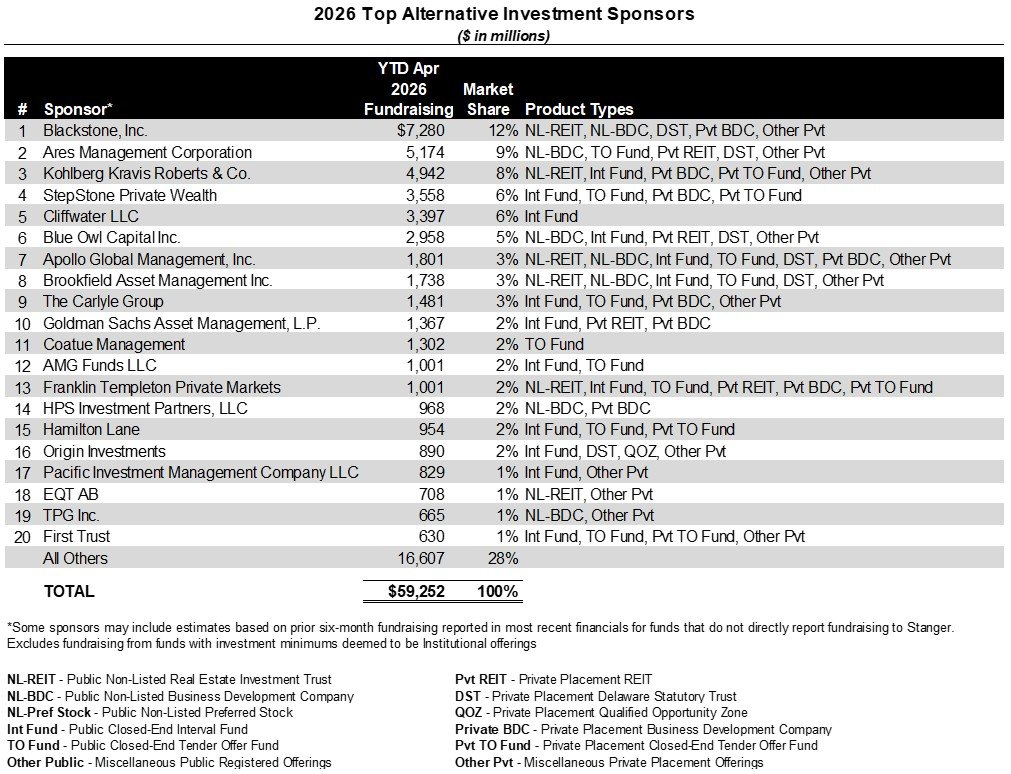
The only moat left at the top end of the private equity firms is being able to raise capital better than everyone else
Within the next decade, I fully expect investor relations and fundraising to be considered a more "front office" role than the investment seats
First week of M7 MBA is paradise
You wake up at 7:42am, eighteen minutes before your alarm. Your body just knew. You lie still for a moment in your new apartment, the one that costs $2,400 a month and came unfurnished, a detail you learned the hard way, and you let it wash over you.
You think about the nights spent grinding GMAT problem sets while your friends were at happy hour. The seven drafts of your "Why an MBA?" essay. The recommender who took six weeks to submit a letter you'd basically written yourself. The waitlist purgatory. The $240,000 you are now contractually obligated to convert into a better version of yourself. It all led here, to a twin XL mattress on the floor, on the first morning of the rest of your life.
You're a warrior. And today, the warrior goes to orientation.
You get to campus thirty minutes early, because that's what serious people do. A cheerful admin hands you a tote bag and a lanyard. You put the lanyard on immediately.
The atrium is a sea of business casual and forced eye contact, and everyone is networking. Nobody knows what networking is, but everyone is doing it hard. You shake a hand. You shake another. Somewhere a man laughs too loudly at something that was not a joke.
"Hey, what's your background?" a guy asks before learning your name.
"Oh nice, you were at Meta?" you say, after he tells you.
"Ex-Meta," he quips, with the gravity of a man disclosing a Purple Heart. "Yeah, I was there for, it was a whole thing with the reorg, you know how it is." You do not know how it is. You will find out over the next nine months that he was there for seven weeks before getting caught in a layoff, and that he will introduce himself as "ex-Meta" at every single event until graduation, including, at his own wedding.
You nod. "That's a great background." It is the only phrase anyone says here. Everyone has a great background. The backgrounds are uniformly great.
They herd you into the auditorium for the welcome session. You sit next to a guy who, within ninety seconds and completely unprompted, tells you his girlfriend went to Trinity School.
"Oh, where's she from?" you ask, trying to be polite.
"Trinity. The school. In the city." He says the city the way other people say the war. You mention, foolishly, that you went to a public school in the South.
"Ah." He loses interest and starts scanning the room for someone who has also heard of Trinity School. Twenty minutes later you watch him corner a classmate who mentioned she's from New York. You realize this is not a fact about his girlfriend. It is his entire personality.
You ignore the small voice in your head pointing out that these are your peers for the next two years. Nonsense. The admissions blog said this would be the most talented and inspiring cohort in the school's history. There's no better place to find your people, you tell yourself.
Then, during a break, you meet a genuinely cool guy. You talk for twenty minutes about everything except business school. He says he wants to break into Biotech VC, and the way he says it actually sounds interesting instead of rehearsed. As you're splitting off he pulls out his phone. "We should grab a drink and catch up, what's your number?" You give it to him, buzzing. This is the connection. This is what people mean when they say the MBA is about the network.
He never texts you. For the next two years you and him will wave at each other across the atrium with the warm, hollow nod of two people who almost became friends. He took a full time job at BCG.
The lights dim. The Director of Recruiting and Career Services walks to the podium. She has the energy of a woman who has given this exact speech to seven previous cohorts and watched every one of them spiral into a recruiting panic right on schedule.
"Look around this room," she says. You look around the room. Ex-Meta is taking a selfie. "The person next to you is a future CEO. A founder. A senator, maybe. You are going to change the world."
You wonder whether ‘change the world’ is a prerequisite for eventually testifying before Congress.
A wave of validation moves through the auditorium. Three hundred people who quit their jobs to be here all decide at the same time that she is talking specifically about them. Your chest swells. You ARE going to change the world. You're not sure how yet. PE ideally, maybe Product Management, but you're keeping an open mind. The world-changing feels close and inevitable.
She keeps going. She tells you this is the most accomplished class in the school's history, which is a thing she will say word for word to next year's class. She tells you the only limit is your ambition. She tells you to "lean into the experience" and "trust the journey" and a half-dozen other phrases that mean nothing and feel incredible. She does not tell you when applications actually open. That part, the only part that will matter in about six weeks, is buried in an email. For now there is only the hype, and you drink all of it.
You leave the auditorium ten feet tall. A future senator. A world-changer.
At the welcome happy hour you collect eleven LinkedIn connections, a vague promise of a coffee chat from a second-year who will never respond, and a slowly dawning understanding of your peers.
There's Ex-Meta, who has found two other former tech guys and is explaining the reorg again. There's Trinity Boyfriend, locked in a staring contest with someone from Greenwich, the two of them performing geography at each other like rutting elk. There's the cool VC guy, already holding court with a different group, who will not text you. There's the ex-consultant who says "to your point" right before disagreeing with everyone. There's the finance guy who asks which bank you're recruiting for and physically deflates when you say you're "open to a few things." There's a genuinely great person from Lagos who you'll actually become friends with, though you don't know that yet.
You stand at the edge of it with a warm beer and feel a strange sense of accomplishment. You pull out your phone to text an old friend back home. You look out at the room, the tote bags, the name tags, the future senators, the man who was at Meta for seven weeks, and you think:
incredible. these are gonna be my people for life.
You believe it, too. You haven't checked the recruiting calendar yet. You haven't tailored a single resume. You have eleven new connections, a free tote bag, and a director who told you you're going to change the world.
You smile. At least you're not just grinding at some job anymore.
first week at a M7 MBA is paradise.
___
Credits: r/MBA from PosterAbbreviationsAgile29
Monthly VC/LP debrief.
What I actually saw in June 2026:
1/ Platform funds might be the new ZIRP, not the US government providing free capital but mega funds doing it instead. When that slows down, the script from 2022 plays again: growth at all costs stops working, and the profitability math is harder this time bc compute and energy pricing power sits with infrastructure providers, not with the startups burning it. The catalyst is probably a credit or public equity correction pulling corporate AI budgets with it. (h/t @MKRocks)
2/ The whole VC industry is converging. Mega platforms are going to seed doing 3x more early-stage deals than in the SaaS era, @a16z went from 16.6 to 75.3 deals/year and @generalcatalyst from 15.2 to 61.5. And @benchmark, the firm that built its entire identity around early-stage high-ownership investing, just raised a $1.25B growth fund. The middle is getting squeezed from both ends.
3/ Coatue's Power Law Paradox: a company valued between $100B and $1T has a 31% statistical likelihood of 10x-ing its value, compared to 8% for earlier-stage unicorns. At that scale, the right-tail distribution gets fatter, not thinner, which is exactly why mega platforms are structurally compelled to compete for every large late-stage round, and why 73% of LP capital in Q1 2026 went to just 5 firms. (h/t @trengriffin)
4/ Across 10,000+ venture-backed companies from 2005-2023 vintages, collective gross MOIC is 3.1x but remove the top 1% and it drops to 1.9x. 104 companies generated 44% of all value: @OpenAI, @AnthropicAI, @SpaceX, @stripe, @databricks, @Revolut. They all looked expensive at some point, but missing the winners in VC is often more expensive than overpaying for them. (h/t @daveclark85)
5/ @cartainc data across 2,689 US venture funds: only 49% of 2019 and 2020 vintage funds have returned even $1 of DPI after 5-6 years. The 2017 vintage is at 84%, 2018 at 69%. DPI has become the single important metric and many VCs are optimizing fundraising around it. Others are experimenting with various liquidity strategy (e.g. mix of early-stage deals and secondaries).
6/ There are 3 dominant strategies keep coming up across EMs: defense and national security, AI across the stack, and genuinely weird stuff nobody else will underwrite. The third bucket is the smallest, the quietest, and probably the most interesting from an alpha perspective. Still a lot of noise with GPs trying to raise without real GP-thesis fit, but much less than at peak ZIRP.
7/ The SaaS investing playbook was built around high gross margins, low service load, capital efficiency, and predictable free cash flow, parameters that fit neatly into a spreadsheet. AI broke most of them bc low gross margins are now often fine since inference is expensive and high usage can signal a healthy product rather than broken unit economics. The spreadsheet still runs but the assumptions underneath it are wrong. (h/t @EverettRandle)
8/ The pre-seed round has no standard size anymore. For some companies it's $500K–$1.5M, for others in AI infrastructure, hardware, and energy it's $5M–$10M before the first real product decision gets made bc the early work objectively requires that capital. The capital is now calibrated to the work, not the other way around, which means "pre-seed fund" no longer communicates a strategy. You have to explain exactly what early work you're financing. (h/t @chudson)
9/ 37 funds closed in June. 10 of them are Fund Is, 27% of the total, in a month when the consensus says first-time fundraising is effectively shut. Non-US funds outnumbered US ones for the first time in a while: 20 vs. 17, with Germany at 5 funds and Europe accounting for 16 of the 37 total. The size distribution is bifurcating: 12 funds under $50M, 9 above $200M. Is Europe so back?
10/ LPs don't underwrite venture performance bc the time horizon is too long, the sample size is too small, and outcomes are usually driven by 2-3 companies anyway. What they're actually underwriting is judgment: how a GP sees the world and makes decisions when nobody knows the answer. One LP framed it as a "shared mind" – if this person sees reality similarly to how I do but is sharper in this corner of the market, I want to be where they're looking. Every post, thread, and quarterly letter is months of free underwriting before the first LP meeting.
More insights in @murphcapital newsletter where we also track new fund launches, LP events, market reports, moving signals and what's actually moving in VC/LP: https://t.co/AFTrAVjeFJ
Scoop: Ashton Kutcher exits from Sound Ventures to set up a new firm with Morgan Beller, former GP at venture firm NFX. https://t.co/8dQ1ik8buR via @WSJ
2026's biggest software deals:
#1: Onestream, $6.4bn (Hg, check split 3 ways)
#2: Sirion, ~$1bn (Haveli, a debut-fund manager)
Last year the 10 largest each topped $2bn. This year, the big names aren't even showing up.
Ok bad stories about VCs are spreading on X right now, but VCs have horror stories about founders too
Like, that one time when a founder decided to take another term sheet with a higher valuation despite our obvious ability to add value, thought leadership and vendor discounts
Goldman Sachs CEO and a16z co-founder both said the same thing:
This is the sweetest macro spot in 40 years.
Between them they control $3T in banking assets and $43B in VC.
35 min - bookmark it if you want to understand where the big money is moving in 2026
This is what the "smart money" thinks about the growth of retail capital in private markets:
(from ILPA's survey of LPs):
- 35% identified the growth of retail capital as the single greatest THREAT to alignment of interests between GPs and LPs.
- 84% said they are LESS likely to invest with a private equity manager that has significant retail exposure.
- 73% believe managers that raise substantial amounts of retail capital are more likely to experience suboptimal investment outcomes.
Something to keep in mind, fellow retail investors.
I valued SpaceX for its IPO a few weeks ago, with minimal information and a promise to revisit the valuation, when the prospectus was made public. The prospectus is public, the offering price has been set and my update is up and running. https://t.co/zRjpD1C0wv