I’m excited to share that today @liquidcompute emerges from stealth with a $15 million seed round. We are announcing pending applications before the CFTC for Designated Contract Market (DCM) and Derivatives Clearing Organization (DCO) status to build the first regulated orderbook to trade both cash and physically settled contracts on compute.
The reality of compute is that it is heterogeneous and cannot be stored, functioning much like electricity rather than oil. Our approach focuses on developing a highly efficient short-term market to underpin a cash-settled derivatives layer, operating similarly to PJM or ERCOT sitting below liquid derivatives markets.
Over recent months, I’m also happy to announce that Liquid Compute has collaborated with leading financial firms like Susquehanna International Group, @BGCGroupInc and @wintermute_t to facilitate liquid OTC trading for AI startups, neocloud providers, and lenders.
This round was co-led by @chemistry and @FirstMarkCap , with participation from K8 Cap, Night Capital, @ufo_holdings, @TrueBridgeCP, Brainchild Holdings (@kalvepuri), @ycombinator, and angels such as Dmitry Balyasny, @taro_f , @JdotJdotF, Ethan Lin and others from companies like CoreWeave, Jane Street, OpenAI
@meggmcnulty@burrytracker The loans are underwritten against contract cash flows instead of GPU values - no lenders are comfortable yet lending against GPU residual values as of yet!
We’re sharing the next major milestone in our non-invasive brain-to-text decoder research: Brain2Qwerty v2.
Building on v1, which was published today in @Nature, Brain2Qwerty v2 is the highest-performing end-to-end pipeline capable of real-time sentence decoding from raw brain signals. It advances beyond character-level performance to decoding words and semantics, enabling accuracy for overall communication.
We believe this research has the potential to make a real difference for the millions of people who suffer from brain lesions or disorders that prevent them from communicating.
🧵👇
Have written about this 2yrs ago - cool to watch but still not sufficient to arb or trade; for it to have institution-like liquidity we need hedgers and not just speculators, which has to introduce risk premium and makes it less good as pure forecaster…
https://t.co/qMzulkX1Fb
A new paper shows Kalshi is close to or better than Bloomberg consensus at forecasting CPI, GDP etc. And same vs fed funds future for the Fed rate decision.
This is partly because Kalshi odds are very good at tracking all those other sources:
“People live in homes, not corporations,"
- DJT
"Houses are for living, not for speculation"
- XJP
At times, I was truly struck by how much these two leaders have in common.
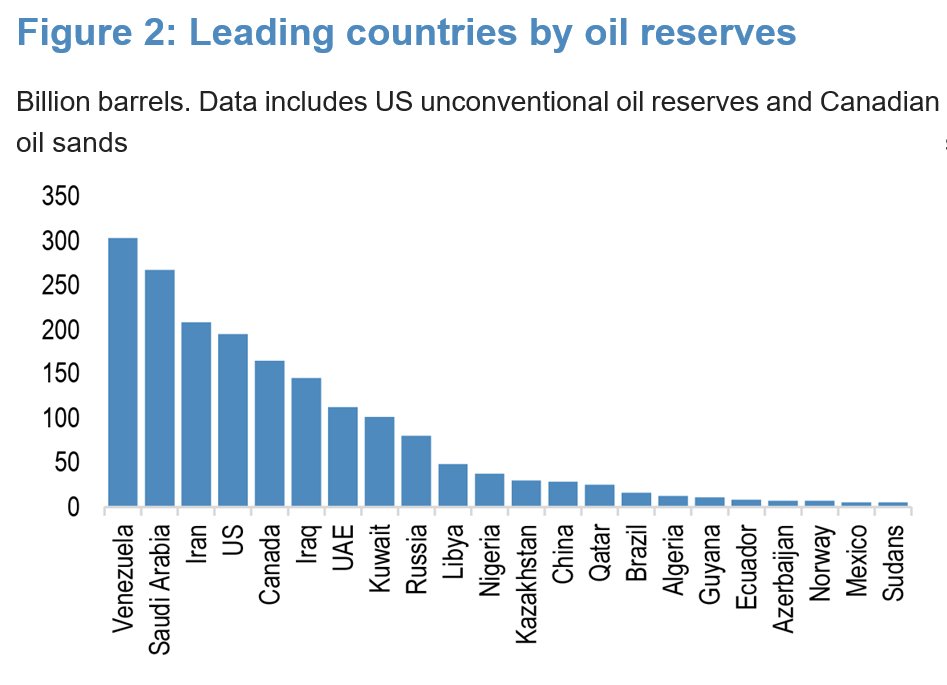
Investors: JPMorgan says Venezuela has largest oil reserves
JPM: That comes from an OPEC report
OPEC: Our members self-report. Ask Venezuela
Venezuela: We get that from PDVSA
PDVSA: Hugo Chavez told us years ago to report that for prestige & now we'd look bad if we lowered it
That makes the institution worse at its actual job (negotiation, crisis response, coherent rollout etc)
If the discovery of info hurts the ability of institution to which one has fiduciary duty to do to its job then it seems bad
If you’re inside a ministry and learn some ceasefire decision 12 hours early, trading it on PM does move price toward truth—but it also creates a standing incentive to monetize privileged access: leaks become valuable, colleagues tip friends … etc
Jesus Christ did not return to Earth in 2025 — returning a tidy annualized profit for some bettors on Polymarket and even beating US Treasury bills before fees.
Wagers are now open for 2026, with a potential 5,700% gain in the event of a Second Coming: https://t.co/A8jVb9Goaf
📷️: Egberto Ras/AFP via Getty Images
Girls in China have become so delulu that their government has had to step in.
Specifically, the government of China is stepping in to regulate TV dramas to help curb the delusion of young women who have been led to believe that a rich man will fall in love with them.
Chinese authorities are looking to regulate a specific type of internet/TV drama that romanticises extremely wealthy business leaders like CEOs and promotes unrealistic “billionaire-meets-ordinary-girl” storylines.
The government is worried certain content promotes unhealthy values of wealth worship, materialism and unrealistic relationship ideals.
Chinese media regulators have issued guidelines aimed at “CEO romance micro dramas”, which are short series dramas popular online that feature stereotypical plots like a powerful, wealthy CEO falling in love with an ordinary woman.
The regulation discourages portraying unrealistic plots such as marriage solely to wealthy/powerful people, warns against celebrating materialism, flaunting wealth, and other content that could distort public perception, especially about entrepreneurs and social values.
Regulators further suggest reducing quantity and improving quality, and avoiding tropes like “domineering CEOs” used just to attract clicks.
Source: https://t.co/1nul2Q2Kl2
>be a solo founder in Estonia running a SaaS startup from my laptop
>get first customer in France
>spend 3 days learning French VAT rules
>get second customer in Germany
>German VAT is different, apparently 16% on Tuesdays
>VIES portal down again
>invoice rejected because sequential number has wrong font
>pay 500€ for VAT consultant to tell me I owe 12€
>GDPR email arrives from Austrian data authority
>it's about a user who signed up with a fake email
>accountant says I need a local rep in 7 countries now
>total revenue: 78€
>total compliance cost: 2,400€
>EU says they're "supporting innovation"
>close laptop, apply for remote job at US startup instead