Bengaluru has been going beyond its ecological carrying capacity owing to unchecked migration, concretisation and weakening enforcement of planning regulations, according to R. Ganesan.
He also criticised the dilution of building regulations, saying authorities were increasingly favouring structures that violated rules while ignoring long-term environmental damage.
Read the full article, featuring R. Ganesan, a scientist and botanist associated with ATREE, here: https://t.co/pdtvwmIbil
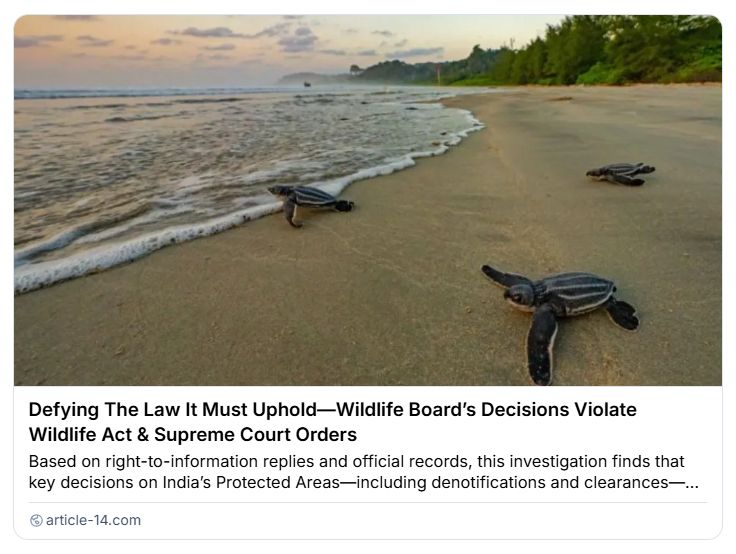
Across 2,121 approvals, the National Board for Wildlife’s own records show no acknowledgement of substantive ecological harm—and no recorded dissent, including from its lone independent member, Prakriti Srivastava & @prernabindra’s analysis based on RTI replies. 2nd of 2-part series
https://t.co/h3HEzKNLh3
#India: We regret fast passage of Transgender Persons (Protection of Rights) Amendment Bill, 2026, without adequate stakeholder consultation. The amendments risk setting back hard-won rights of transgender people, replacing self-identification with mandatory medical verification processes.
India has been a pioneer for rights of transgender & gender-diverse people. This Bill will have far-reaching impacts on right to privacy & risk marginalisation of transgender people.
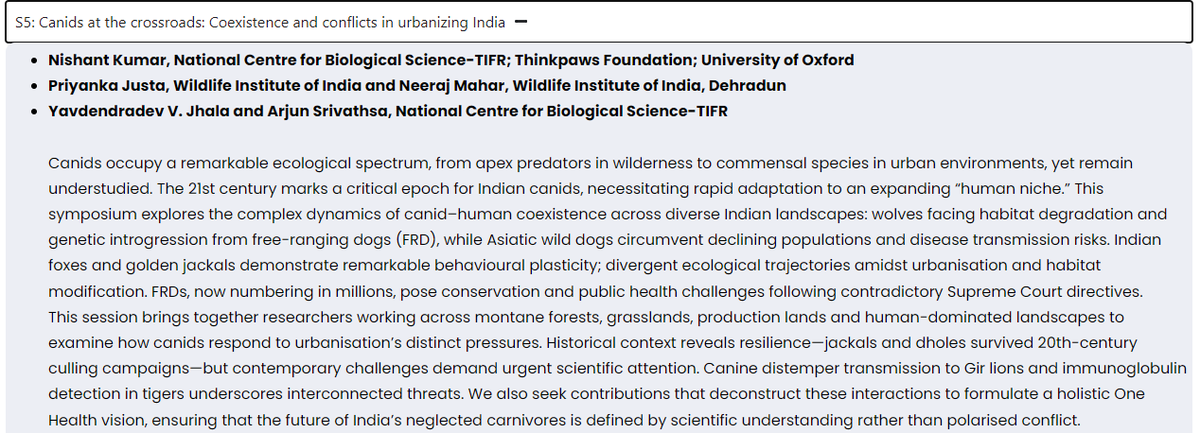
🦊 Submit your paper abstracts for Canids at the Crossroads🚨 (https://t.co/KQ8PKeF8PJ) – where wild meets urban, conflict meets coexistence. India’s canids are writing one of the most dramatic ecological stories of our time:
1) Wolves navigating genetic swamping and habitat loss
2) Dholes dodging disease in shrinking forests
3) Jackals & foxes thriving (or struggling) in farmlands
4) Millions of free-ranging dogs reshaping cities, public health, and One Health realities
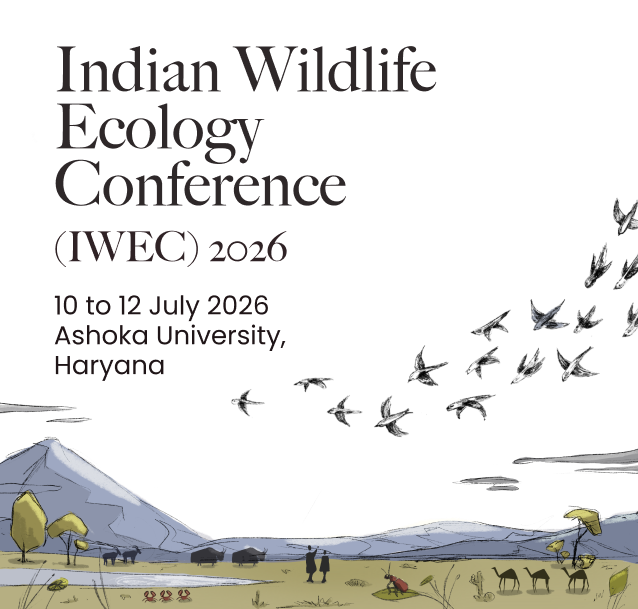
I’m thrilled to announce that Symposium #5: Canids at the Crossroads – Coexistence and Conflicts in Urbanizing India is now open for abstracts at the Indian Wildlife Ecology Conference (IWEC) 2026! Join @Priyanka Justa, Neeraj Mahar, @Yadvendradev Jhala, @Arjun Srivathsa and me at @AshokaUniv, Haryana (10–12 July 2026) to bring cutting-edge science, real-world solutions, and bold One Health thinking into the spotlight.
Whether you work on wolves in the Himalayas, street dogs in megacities, jackal behavioural plasticity, or disease transmission at the wild–domestic interface — this is your stage.
Deadline to submit your abstract: 31 March 2026 (just 10 days left!). Don’t miss the chance to shape the future narrative of India’s most adaptable carnivores.
Link (https://t.co/KQ8PKeF8PJ) / DM me for the abstract template. Let’s turn data into action, CreIndia Foundation @epiharish@abi_vanak@anyadoc@Abhadra7@kritcrit et al.
#IWEC2026 #CanidConservation #UrbanEcology #OneHealth
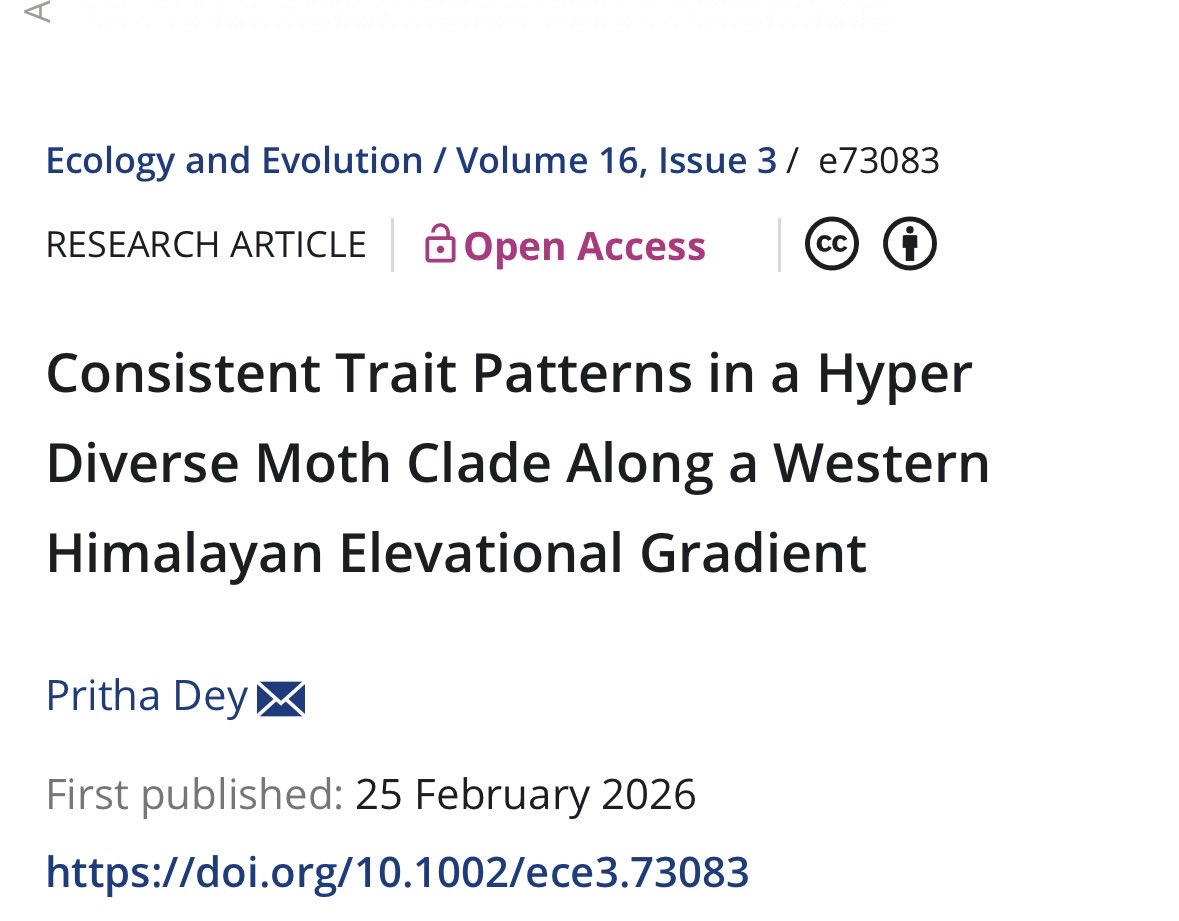
New paper out!
How do flying insects cope with a 1500 m elevational climb in the western Himalayas?
Species diversity declines with elevation
Strong species turnover. But key traits (body size, wing loading, maneuverability) remain remarkably stable
https://t.co/UZMkeIH04k
Alumnus @sidharth9610 and colleagues study in @AnBehJournal reveals that mixed-species bird flocks in Himalayan bamboo are more cohesive and interconnected than those in rainforests. Read more here https://t.co/YgEu66jwhe
500+ annual nestings on the beach in Galathea Bay every year for the last 3 nesting seasons. And the NGT order says this is not CRZ1? (This is data from the A&N FD that is published in our new volume ‘Island on Edge’)
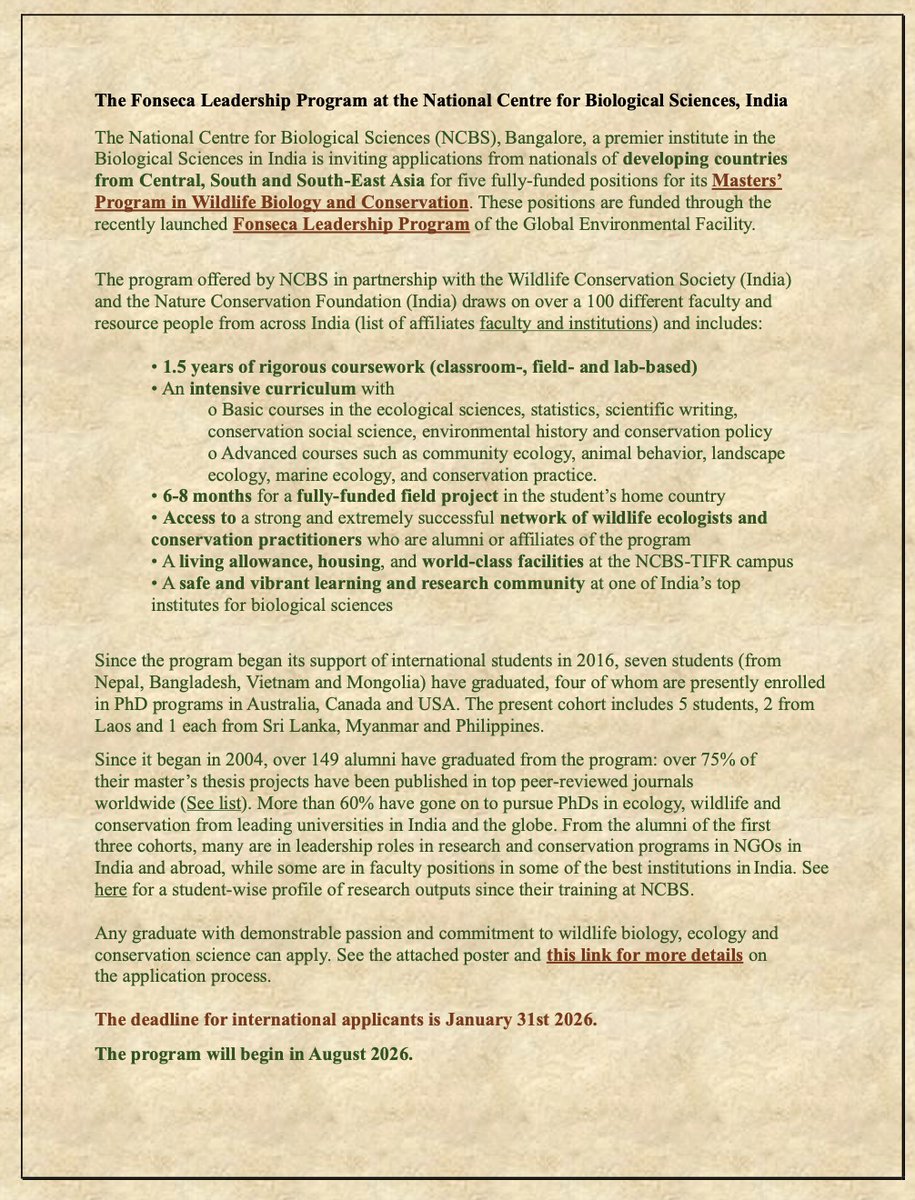
📢Attention! International students from developing Central, South and Southeast Asia, last date for applications to the MSc program in Wildlife Biology and Conservation is 31st January'2026 https://t.co/thPbxuYWm7
@NCBS_Bangalore@ncfindia@WCSIndia
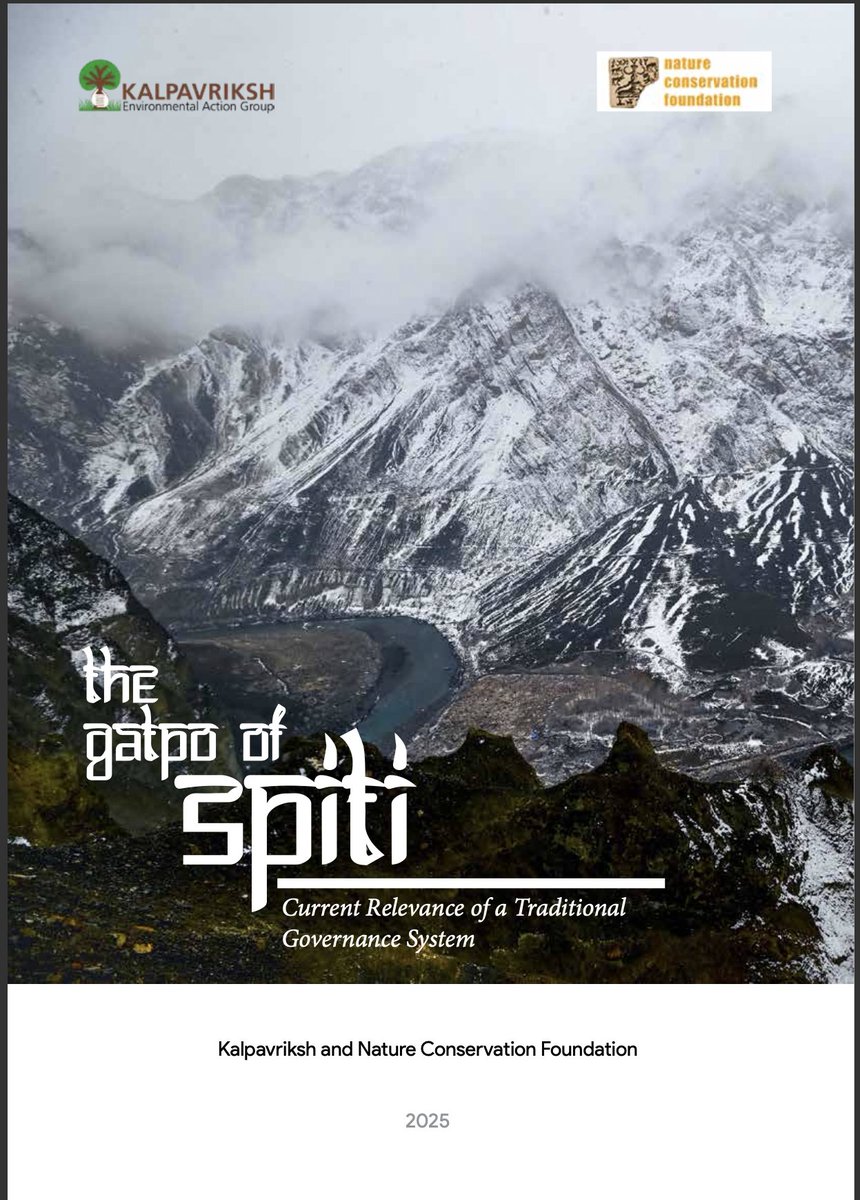
📢We are happy to release the report on the traditional governance system of Spiti (Himachal Pradesh), focused on the village of Kibber.
Read the full report here: https://t.co/XkqpbNtejq
Carnivore survival in human-modified landscapes is complex! 🐾 In Kachchh, we see key roles for body size and habitat fragmentation in shaping species interactions say alumnus @divyajyoti97 and colleagues https://t.co/RGBqefiU1H
🏛️ When the Indian #SupremeCourt meets the Street #dog case: Are we barking up the wrong tree? 👉 [#Policy paper I developed with @ProfExistence Tim Coulson. Its need was felt by one and all; access link to the Preprint: https://t.co/cSypVyL7hW] #ThinkPaws
In August 2025, India’s Supreme Court ordered the relocation of nearly 2.5 million free-ranging dogs from #Delhi streets — then reversed course twice (22.08.25 and 07.11.25) The intent was public safety; the outcome was confusion, protest, and paralysis.
Q. Why? Because the problem isn’t the dogs — it’s how we govern coexistence.
Our new policy paper argues that India’s “dog crisis” is a mirror to deeper failures in urban ecological governance. Reactive capture-and-remove strategies in isolation will always fail because they attack symptoms, not systems
🔍 Here’s what the #science and evidence show:
1) Dog populations are human-made. They grow where our waste and feeding practices create abundant food subsidies.
2) Mass relocation is a mirage. India lacks the shelter infrastructure, and ecological “vacuum effects” quickly refill emptied areas.
2) #Compassion ≠ feeding alone. True welfare comes from sterilization, vaccination, and infrastructure that reduces suffering and conflict.
3) Rabies control = systems control. Waste management, public education, and CNVR (Catch–Neuter–Vaccinate–Return) must work in sequence, not isolation.
4) Environmental justice matters. Poorer communities bear the brunt of dog bites and inadequate urban sanitation — yet remain voiceless in policy discourse.
🐾 What India needs is not courtroom compassion, but coordinated governance. A 5-year phased framework — beginning with waste management, followed by education, and then high-coverage sterilization — offers the only sustainable route to coexistence.
#inshort: if we keep treating dogs as a nuisance to be removed, we’ll keep missing the real problem — the cities we have built for ourselves.
You can also access the main #Research Article for study details: https://t.co/qYLakH2nyp (Going with, or going to the dogs: City Serenade of Multispecies Survival)
#UrbanLiving #PublicHealth #SupremeCourt #Policy #India #Rabies #coexistence #ThinkPaws @NCBS_Bangalore - TIFR @OxfordBiology, @India_Alliance #DBT/Wellcome Trust @highlight #OneHealth
Basic Income for Nature and Climate Change is a new approach that proposes unconditional cash payments to communities in biodiversity- and climate-critical areas to support livelihoods and ecosystems.
@KhanyariMunib@ncfindia writes in this #commentary.
https://t.co/YR97l9bZhx
Dear @PetaIndia and @peta world. Please understand that the connotation of "starving" is very human centric. In nature, nonhumans, like humans, over produce in terms of #no. of offsprings. Based on the skill of parents (or otherwise the access to resource pool, when parental care is not involved), a fraction of these offspring survive to become adults.
Once they are adults, the struggle continues to secure habitats where they can breed, and the cycle goes on. In nature, you do not have "ICU and Medical Emergency"... else, you will have the whole planet ecosystems shaken.
Humans are different; we use physical forces of nature (heat, force, physio-chemical processes, nuclear, etc.) to carve more spaces for people. In the process, we do have emotional reflections towards a select nonhumans.
In current times, however, our ability to channalise the ability to target feed a few: pigeons, dogs, monekys, etc. is creating regional dis-balance, with costs (diseases and conflicts) borne by poor, who have no access to facilities.
Many animals are part of the urban web of life. Hence, we have no RIGHT to dramatically alter this web. Feeding and maintaining millions of pigeons is one such urban problem. Other being dogs that bite people. Countless animals are "starving", contributing to local extinctions, coz we care to grow bird feed that is worth billions of dollars per year. We have no right to play with who is intentionally fed, extending the ripples of "starvation" to billions that are not in immediate sight (of convenience).
If you really care for animals, please have some people who understand nonhumans beyond this rhetorical posturing. For details, you may refer to @ThinkpawsOrg
The Nobel committee has awarded the Peace prize to Maria Machado, who has actively supported US sanctions against her own country.
A CEPR study found these sanctions killed 40,000 people in the first year, 2017-2018. They are illegal under international law, and violate the Geneva and Hague conventions.
This is not "peace", it is war.
Machado also supports Israel's Likud Party, which has been conducting a genocide for the past two years, also in violation of international law.
This year she spoke at a conference of European fascists, which openly called for a new Reconquista, referencing the ethnic cleansing of Spanish Muslims and Jews.
Giving peace prizes to people who support war crimes is Orwellian doublethink in the purest sense.










![_NishantK's tweet photo. 🏛️ When the Indian #SupremeCourt meets the Street #dog case: Are we barking up the wrong tree? 👉 [#Policy paper I developed with @ProfExistence Tim Coulson. Its need was felt by one and all; access link to the Preprint: https://t.co/cSypVyL7hW] #ThinkPaws
In August 2025, India’s Supreme Court ordered the relocation of nearly 2.5 million free-ranging dogs from #Delhi streets — then reversed course twice (22.08.25 and 07.11.25) The intent was public safety; the outcome was confusion, protest, and paralysis.
Q. Why? Because the problem isn’t the dogs — it’s how we govern coexistence.
Our new policy paper argues that India’s “dog crisis” is a mirror to deeper failures in urban ecological governance. Reactive capture-and-remove strategies in isolation will always fail because they attack symptoms, not systems
🔍 Here’s what the #science and evidence show:
1) Dog populations are human-made. They grow where our waste and feeding practices create abundant food subsidies.
2) Mass relocation is a mirage. India lacks the shelter infrastructure, and ecological “vacuum effects” quickly refill emptied areas.
2) #Compassion ≠ feeding alone. True welfare comes from sterilization, vaccination, and infrastructure that reduces suffering and conflict.
3) Rabies control = systems control. Waste management, public education, and CNVR (Catch–Neuter–Vaccinate–Return) must work in sequence, not isolation.
4) Environmental justice matters. Poorer communities bear the brunt of dog bites and inadequate urban sanitation — yet remain voiceless in policy discourse.
🐾 What India needs is not courtroom compassion, but coordinated governance. A 5-year phased framework — beginning with waste management, followed by education, and then high-coverage sterilization — offers the only sustainable route to coexistence.
#inshort: if we keep treating dogs as a nuisance to be removed, we’ll keep missing the real problem — the cities we have built for ourselves.
You can also access the main #Research Article for study details: https://t.co/qYLakH2nyp (Going with, or going to the dogs: City Serenade of Multispecies Survival)
#UrbanLiving #PublicHealth #SupremeCourt #Policy #India #Rabies #coexistence #ThinkPaws @NCBS_Bangalore - TIFR @OxfordBiology, @India_Alliance #DBT/Wellcome Trust @highlight #OneHealth](https://pbs.twimg.com/media/G5p68GxaMAAJG0C.jpg)





