Simultaneous electrical and optical recording of brain activity can reveal aspects of brain function invisible to a single method. See why we think this combination offers many exciting possibilities. With @HoffmannNeuro and @FritjofHelmchen @SPIEtweets
https://t.co/isnMo0ntRV
There is a big elephant in the room in experimental systems neuroscience:
Before many trainees can test a single hypothesis, they spend 1–3 years becoming expert mouse surgeons rather than scientists.
Here's my proposal for how we can waste less time and do more research🧵
This might be of interest for those doing wide-field Imaging.
Layer-specific wide-field calcium imaging of neocortical activity https://t.co/c1toM0w5HL
Very happy to see this project with my compadres
@MatthiasGrabenh and @davidpoeppel
out in PNAS today:
“The anticipation of imminent events is time-scale invariant”
https://t.co/5x2drHZO3D
Working memory is crappy and cannot be improved. Most of human memory capability is earmarked for specific tasks, … navigation, social interactions, skill learning. Use Method of Loci for 1,000x better ‘memory’ https://t.co/t8Nc8j5X37
The subiculum: cell-type-specific composition, computation, and function: https://t.co/ZfS026quHd
"The subiculum, the primary hippocampal output region, exhibits rich excitatory neuron diversity that contributes to organizing information flow to downstream brain regions."
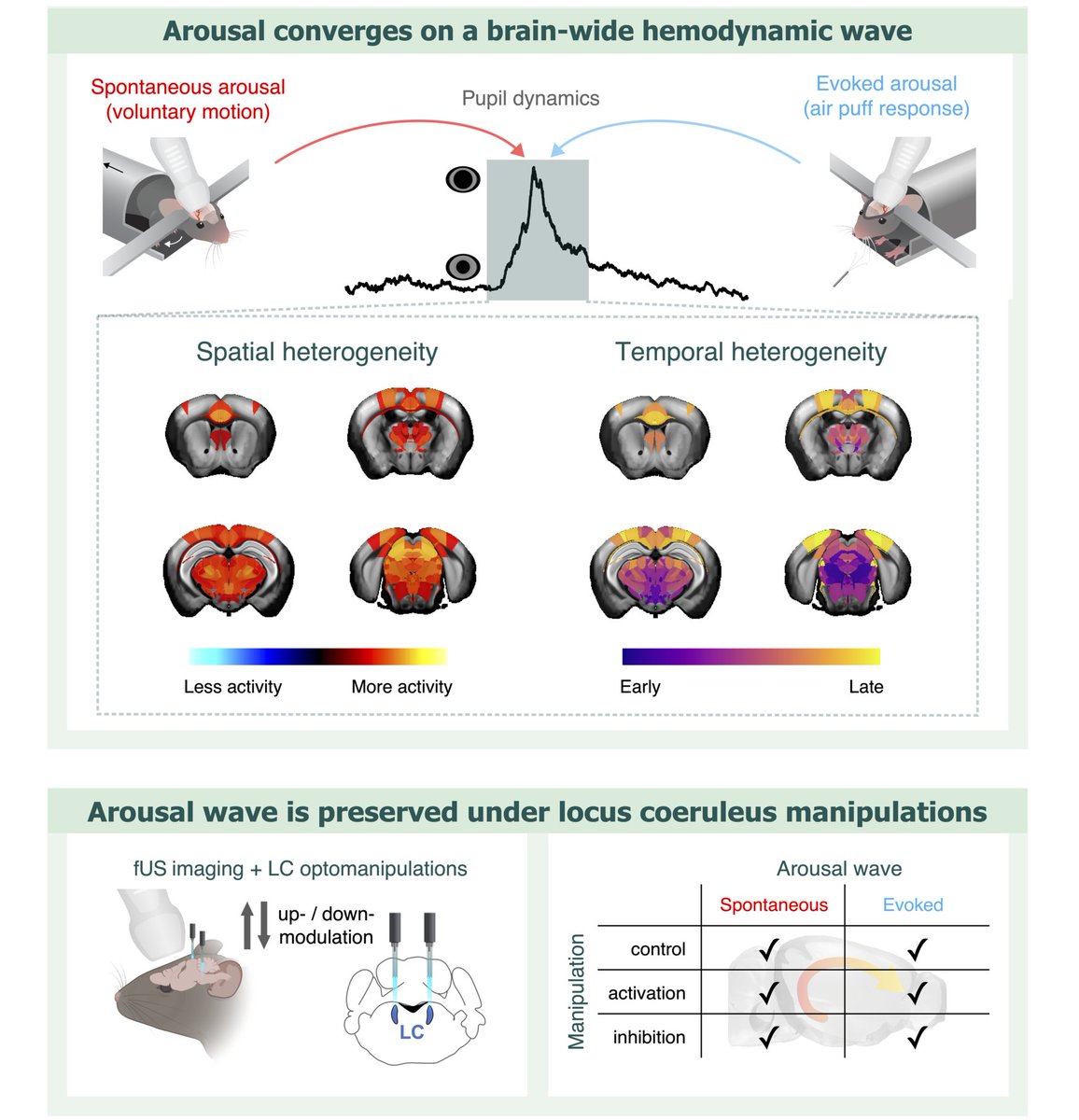
1/8. New preprint!
Using fUSi in head-fixed mice🐭, we found that arousal events trigger a brain-wide wave of activity 🌊🧠.
Surprisingly, this pattern was preserved during manipulations of the locus coeruleus, pointing to a minor role for noradrenaline.
https://t.co/TqB8VgQ4Hp
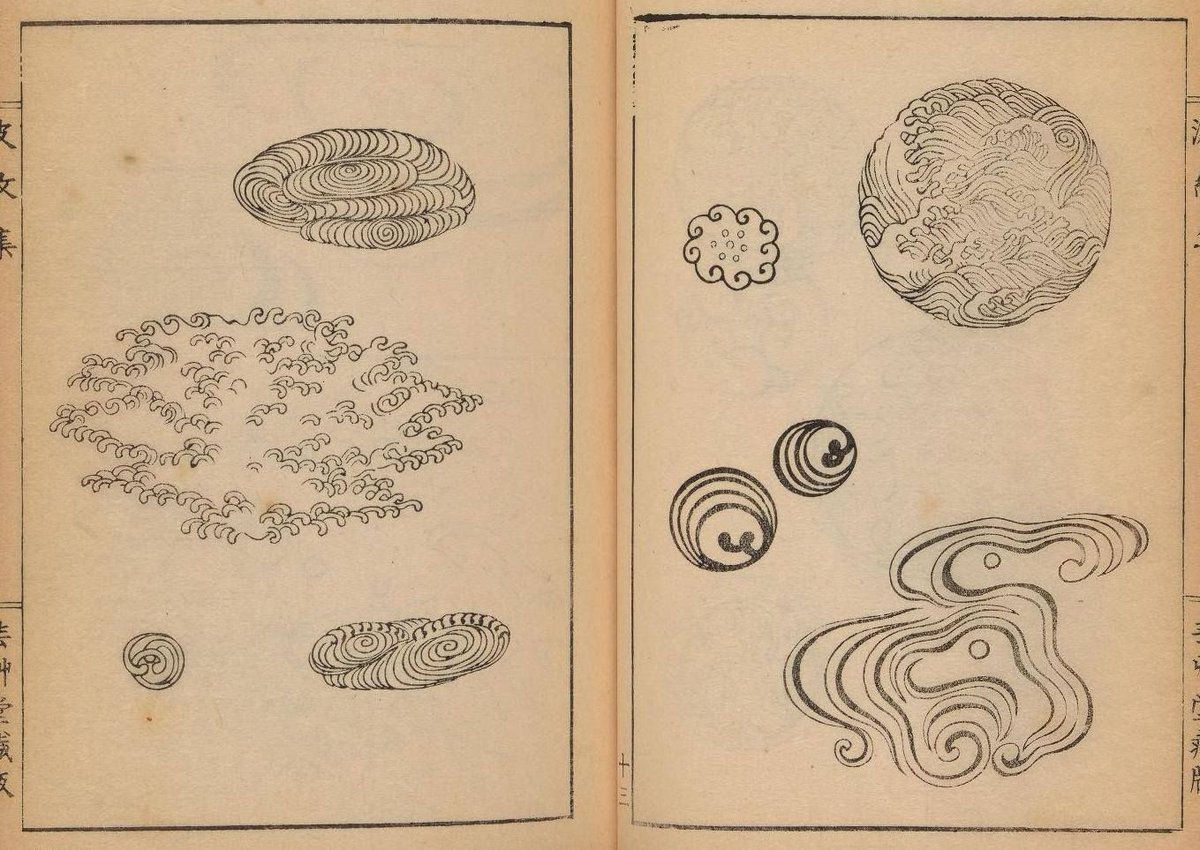
Double page spread from Hamonshu (1903), a Japanese book of wave and ripple designs that would have acted as a kind of go-to guide for Japanese craftsmen looking to adorn their wares with such patterns. See all three volumes of the work here: https://t.co/VQLFKiZ6pD
I’m excited to share our new @Nature paper 📝, which provides strong evidence that the walkability of our built environment matters a great deal to our physical activity and health.
Details in thread.🧵
https://t.co/omO3YcHrvG
My longtime collaborator Dave Patterson (long-time faculty at @UCBerkeley, @TheOfficialACM Turing Award winner, and fellow @LaudeInstitute board member) wrote a very good op-ed about how continued investing in basic science and technology research is essential for the U.S. Dave describes the government funding his labs received, but also the impact:
"For decades, my research received support from the NSF’s Directorate for Computer and Information Science and Engineering, through grants and Ph.D. fellowships. All told, American taxpayers invested just under $100 million in the labs I helped lead. Accounting for inflation, technologies that came out of them went on to generate over $1 trillion in product sales. That is a 10,000-to-1 return on investment to the public and surely at least 1,000-to-1 return directly back to the government in taxes. Not from luck, but from decades of public investment."
...
"Every American taxpayer is a silent shareholder in that success. If we walk away now, we lose not just future breakthroughs but also what we have already earned."
Continuing to invest in basic research in the U.S. is what leads to these sorts of extraordinary outcomes.
https://t.co/bmonyyt8dS
Such a devastating story. My heart goes out to the dedicated professionals that work at the NIH and other Federal research agencies, including my former colleagues at NSF. https://t.co/7rAoFAxQ46
New @VitalikButerin blog post on replacing the EVM with RISC-V in the long-term.
I am a huge fan of this direction for Ethereum's execution layer.
Today, RISC-V zkVMs like SP1 are the clear endgame solution for "ZK-ifying" Ethereum and quickly becoming the de-facto solution for ZK EVM. But as Vitalik cites in this post, our research at Succinct shows that the EVM is an extremely inefficient ISA for ZK proving.
This proposal to migrate the execution layer directly to RISC-V can be viewed as migrating to "native" code for a ZK world as opposed to living in an interpreted world that imposes between 100-1000x overhead. By replacing EVM with RISC-V for the execution layer, we can up the gas limit on L1 by orders of magnitude (assuming optimization of other bottlenecks like a more zkVM friendly state merkleization format), while preserving verifiability.
Link to full blog post below.
Great article, “How a Biofilm’s Strange Shape Emerges From Cellular Geometry” in @QuantaMagazine.
Here are biofilms grown by researcher Lars Dietrich, all from the same bacterium, fed different nutrients.
[Link in reply because of dumb new policy restricting tweets with links.]
This is flying a bit under the radar.
But in terms of damage to America’s innovation and knowledge supremacy, the chilling effect of these revocations on the country’s ability to attract and retain scientific talent likely dwarfs the impact of tariffs or other policies.









![gregeganSF's tweet photo. Great article, “How a Biofilm’s Strange Shape Emerges From Cellular Geometry” in @QuantaMagazine.
Here are biofilms grown by researcher Lars Dietrich, all from the same bacterium, fed different nutrients.
[Link in reply because of dumb new policy restricting tweets with links.] https://t.co/a5FO4hNj4O](https://pbs.twimg.com/media/GpHMyana8AAFXRR.jpg)


