Rolling out to users today. To claim your inbox, just ask Bot or tag @bot on X.
Admins must enable it for their team.
Try Grok Bot:
https://t.co/9vzMiVbBeW
A full tour through RAG, document context, and AI agents - from 2023 to 2026 🌎🤖
@hexapode gave a comprehensive 90-min workshop at @aiDotEngineer Singapore last week that comprehensively traces through how topics like retrieval, agent loops, agentic workflows, and document understanding have evolved in the last 3 years.
We’re excited to share the 116-page slide deck online. If you’re seeing this for the first time, you’ll get a sense of how all AI patterns have evolved since the very beginning. Including the following topics:
💡 The 12 pain points of naive RAG
💡The importance of reranking and query-rewriting
💡How we’ve increased offloaded logic to the agentic loop as models improved (and coincidentally, the retrieval layer can get simpler)
💡Retrieval being the bottleneck as agents improved
💡Why document parsing is an extremely hard problem, even now in 2026
💡Exploring parsing outputs, from markdown to chunks to structured JSON metadata
💡Modern agent form factors around workflows and deep research
If you’ve followed us or the space since the beginning, some of this will feel a bit nostalgic and will provide context on why our core focus today is narrowly focused on SOTA document parsing for agents.
If you’re seeing this for the first time, hopefully there’s some useful historical context in here!
Slides: https://t.co/ey15yuJ2AW
LLM Knowledge Bases
Something I'm finding very useful recently: using LLMs to build personal knowledge bases for various topics of research interest. In this way, a large fraction of my recent token throughput is going less into manipulating code, and more into manipulating knowledge (stored as markdown and images). The latest LLMs are quite good at it. So:
Data ingest:
I index source documents (articles, papers, repos, datasets, images, etc.) into a raw/ directory, then I use an LLM to incrementally "compile" a wiki, which is just a collection of .md files in a directory structure. The wiki includes summaries of all the data in raw/, backlinks, and then it categorizes data into concepts, writes articles for them, and links them all. To convert web articles into .md files I like to use the Obsidian Web Clipper extension, and then I also use a hotkey to download all the related images to local so that my LLM can easily reference them.
IDE:
I use Obsidian as the IDE "frontend" where I can view the raw data, the the compiled wiki, and the derived visualizations. Important to note that the LLM writes and maintains all of the data of the wiki, I rarely touch it directly. I've played with a few Obsidian plugins to render and view data in other ways (e.g. Marp for slides).
Q&A:
Where things get interesting is that once your wiki is big enough (e.g. mine on some recent research is ~100 articles and ~400K words), you can ask your LLM agent all kinds of complex questions against the wiki, and it will go off, research the answers, etc. I thought I had to reach for fancy RAG, but the LLM has been pretty good about auto-maintaining index files and brief summaries of all the documents and it reads all the important related data fairly easily at this ~small scale.
Output:
Instead of getting answers in text/terminal, I like to have it render markdown files for me, or slide shows (Marp format), or matplotlib images, all of which I then view again in Obsidian. You can imagine many other visual output formats depending on the query. Often, I end up "filing" the outputs back into the wiki to enhance it for further queries. So my own explorations and queries always "add up" in the knowledge base.
Linting:
I've run some LLM "health checks" over the wiki to e.g. find inconsistent data, impute missing data (with web searchers), find interesting connections for new article candidates, etc., to incrementally clean up the wiki and enhance its overall data integrity. The LLMs are quite good at suggesting further questions to ask and look into.
Extra tools:
I find myself developing additional tools to process the data, e.g. I vibe coded a small and naive search engine over the wiki, which I both use directly (in a web ui), but more often I want to hand it off to an LLM via CLI as a tool for larger queries.
Further explorations:
As the repo grows, the natural desire is to also think about synthetic data generation + finetuning to have your LLM "know" the data in its weights instead of just context windows.
TLDR: raw data from a given number of sources is collected, then compiled by an LLM into a .md wiki, then operated on by various CLIs by the LLM to do Q&A and to incrementally enhance the wiki, and all of it viewable in Obsidian. You rarely ever write or edit the wiki manually, it's the domain of the LLM. I think there is room here for an incredible new product instead of a hacky collection of scripts.
📊🤖 Stock Research Agent V3
(Made by the LangChain Community)
An AI platform transforming financial research, leveraging LangGraph and LangSmith for agent collaboration and real-time monitoring while delivering 73% cost savings.
Check it out on GitHub! 🚀
https://t.co/2C4rH3UuNh
Comparing Opus 4 to 4.1, side by side.
From sharper design mocks to smoother animations, 4.1 produces more polished outputs—with more depth and complexity.
Examples from us and the community:
Introducing Claude 3.7 Sonnet: our most intelligent model to date. It's a hybrid reasoning model, producing near-instant responses or extended, step-by-step thinking.
One model, two ways to think.
We’re also releasing an agentic coding tool: Claude Code.
Two updates you'll like—
📁 OpenAI o1 and o3-mini now support both file & image uploads in ChatGPT
⬆️ We raised o3-mini-high limits by 7x for Plus users to up to 50 per day
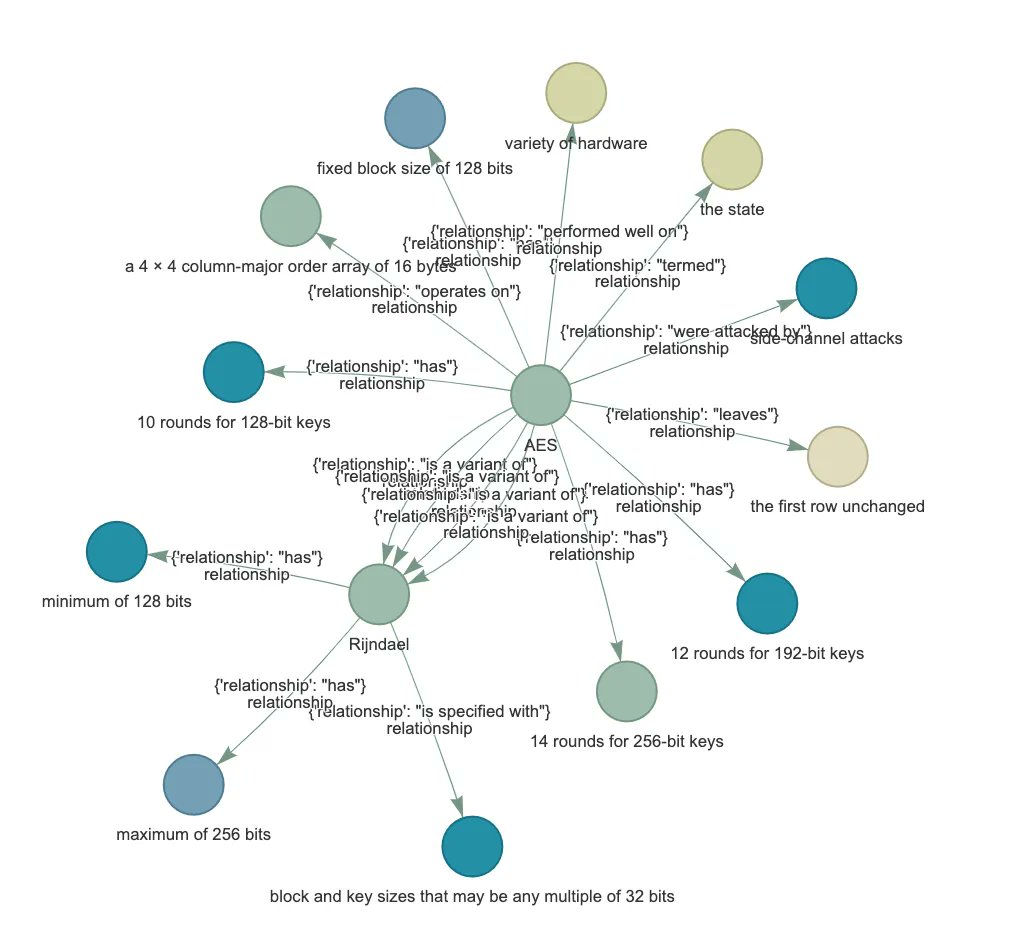
Building and Querying Knowledge Graphs with LLMs
Here’s a short but comprehensive tutorial of both 1) how to automatically generate a knowledge graph with LLMs, and 2) querying knowledge graphs in a RAG setup.
Knowledge graphs allow you to retrieve not only by vector search, but also through relations, helping RAG systems pull in more context to more intelligently synthesize a result.
https://t.co/SesZYqMs4J
Lost in the middle problem in RAG and how @langchain LongContextReorder addresses it.
In RAG, for really long context (10+ retrieved docs), turns out it's not the best way to just plug-in the docs in the descending order of vector similarity score.
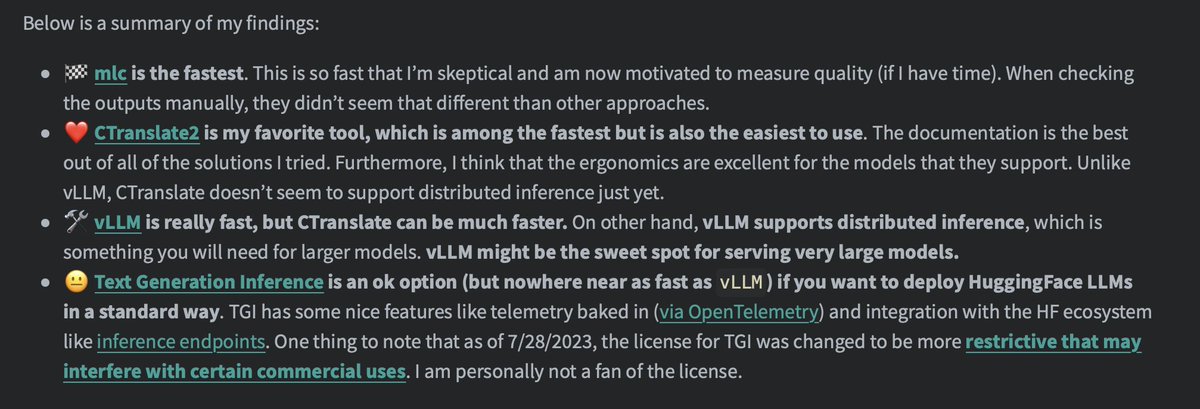
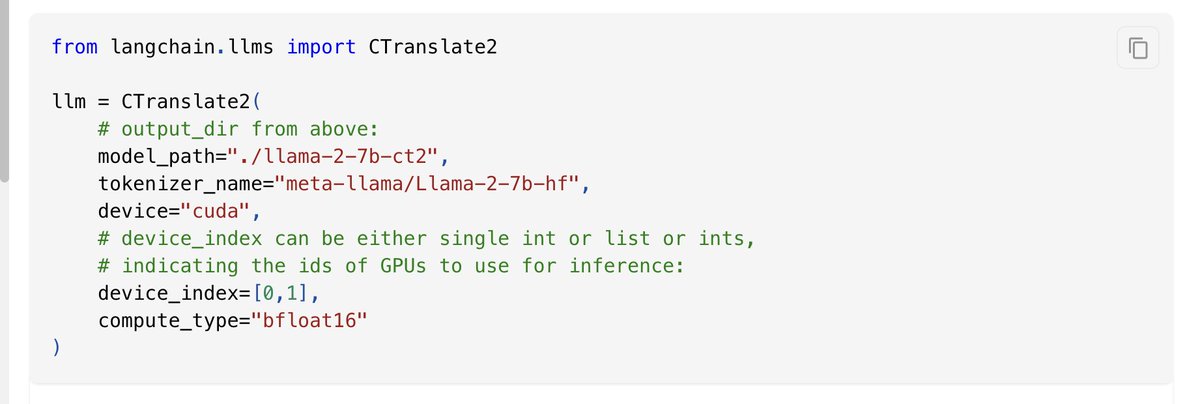
⚡️Run LLMs locally with CTranslate2
We've added support for running local models with the blazingly fast CTranslate2.
Thanks to GH eryk-dsai from @deepsense_ai for the feature and @HamelHusain for the great post that introduced us to the library!
Docs: https://t.co/VzgJDgtRaQ