Professor of Anthropology (biological, medical). PhD. Purveyor of STEM education: evolution. Avocation: space, astronomy. If I could live another time around...
Developed at NASA Langley, SCALPSS, or Stereo Cameras for Lunar Plume-Surface Studies, will fly on four commercial lunar landers in 2028 as part of NASA’s Moon Base Program.
The instrument helps researchers understand crater formation and the characteristics of ejected materials during landings—critical insight as larger landers touch down closer together. Last year, SCALPSS captured this first‑of‑its‑kind imagery during Firefly’s Blue Ghost Mission 1.
Listen as Moon Base Program Manager Carlos García-Galán talked about the importance of SCALPSS during the lander announcement on June 30.
Learn more about NASA's Moon Base Program: https://t.co/Q6sCCtM7B4
In celebration of the 250th birthday of the United States, @NASA has unveiled four cosmic images from its Chandra X-ray Observatory rendered in red, white, and blue that represent the wonders of the universe the agency explores. 🎆More: https://t.co/ucRectEWwK
The largest camera ever built is making the greatest cosmic movie ever shot, scanning a "frame" of the entire universe every few days for 10 years.
And it all starts...now.
https://t.co/aSBGFnImDO
118 years ago today, an asteroid exploded over Siberia, flattening an estimated 80 million trees.
On June 30, 1908, an asteroid or comet roughly 30 meters (100 feet) across, entered Earth’s atmosphere and exploded high above the remote Tunguska region of Siberia. The blast leveled approximately 80 million trees across 2,150 square kilometers (830 square miles).
The explosion is estimated to have released energy roughly 1,000 times greater than the atomic bomb dropped on Hiroshima. Had it occurred over a major metropolitan area, an entire city could have been devastated. Fortunately, it happened in one of the most remote regions on Earth, and no confirmed fatalities are known.
Every year on June 30, the global space community marks Asteroid Day, commemorating the Tunguska event and reminding us that near-Earth objects (NEOs) pose a real, natural hazard. Detecting, tracking, and characterizing these objects is one of the best ways to protect our planet.
That’s why The Planetary Society funds astronomers searching for NEOs. Investing in planetary defense today helps safeguard our world for future generations. 🌎
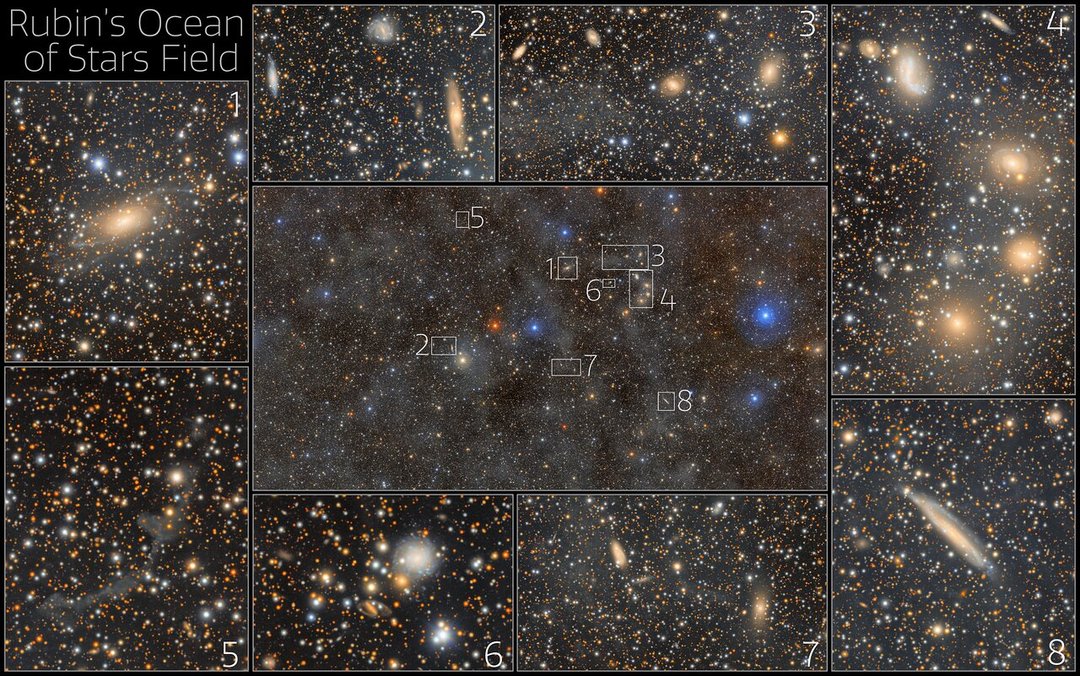
The start of a new survey of the Universe? That deserves a new view of the cosmos 🌌
Meet the Ocean of Stars, NSF–DOE Rubin Observatory's newest wide-field image.
🔗: https://t.co/4dGdSww0zT
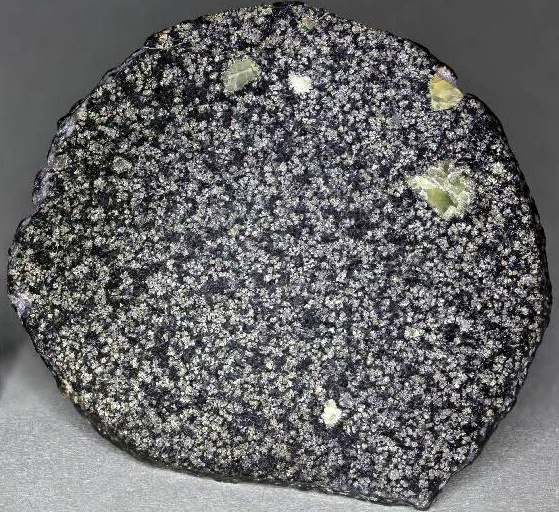
This rock, found in the Sahara, came from a smashed Moon-sized asteroid.
Out of 80,000 meteorites discovered on Earth, only 68 are like this one - formed under intense pressure deep underground, 4.5 billion years ago.
Must have been a whopper of a collision, with fragments falling to Earth ever since as shooting stars.
details: https://t.co/avOAco84rV
photo: Beat Booz (via Encyclopedia of Meteorites)
The hexagonal jet stream and vortex over Saturn's north pole; a view made from image data acquired with Cassini on June 25, 2013 #OTD. The entire structure is about 32,000 kilometers in diameter.
Photo finish! 🏁📸
On June 14, Perseverance completed a Martian “marathon” by surpassing 26.2 miles (42.195 kilometers) of travel. The day before, NASA’s Mars Reconnaissance Orbiter snapped this view of the rover and its tracks from space.
Our TESS telescope helped find two new “super-puff” planets that are about the size of Jupiter but have the density of cotton candy. TOI-791 b and c might even be the puffiest planets ever found! Further study can help us learn about planetary evolution. https://t.co/KvecR1vKJM
#PPOD: Enceladus, February 15, 2016 🛰️
This image was taken during Cassini's final close flyby of #Enceladus. It captures Enceladus' heavily fractured southern hemisphere from a distance of about 83,000 kilometers. Running left to right near the terminator is Cashmere Sulcus, and extending north towards the limb is Labtayt Sulcus. Mosul Sulcus is near the left limb. The moon's south pole is in winter night.
Credit: @NASA@NASAJPL@Caltech@spacescienceins / Justin Cowart
#planetaryscience
You've got a friend in me, Euclid!
Last year, @esa's Euclid space telescope paused its usual observations to look at the heart of our Milky Way Galaxy, previewing one of Roman’s major surveys.
Apollo 16 'Grand Prix' Rover Test on the Moon HD 60FPS Stabilised
Full video on the Moonpans Youtube channel
During the Apollo 16 mission in April 1972 the crew were tasked with putting the Lunar Roving Vehicle through a series of tests to asses its capabilities.
Commander John Young drove the electrically powered rover through a series of maneuvers—including S-turns, hairpin turns, hard stops, and acceleration to "high" speeds of roughly 6–11 mph (10–18 km/h)—while Charles Duke (lunar module pilot) filmed it with a 16 mm camera from a safe distance.
This video has been upscaled in quality, interpolated to 60FPS, Stabilised and synced with mission audio by Moonpans
Original Source Footage: Apollo Flight Journal
🆕 Hubble has watched an early galaxy transforming its neighbourhood!
The galaxy MXDFz4.4 existed at the end of the Era of Reionisation, a period in our Universe during which the ‘fog’ that filled space 😶🌫️ became transparent or ionised.
Astronomers are still trying to understand how this happened. 1/3
Comet 3I/ATLAS, the interstellar visitor that blew through our solar system, might have been truly ancient.
A new analysis of its unusual composition suggests the comet could be up to 12 billion years old, dating from the earliest era of our galaxy.
https://t.co/R92h9hqCu2
Happy solstice! ☀️
Yesterday kicked off astronomical summer in the Northern Hemisphere. This time of year, the summer triangle rises into view in the night sky. Between these stars, amazing deep-sky objects are visible with a telescope, including the Ring and Veil Nebulas.
You might have heard of interstellar comet 3I/ATLAS.
We don't get the opportunity to study objects like this often. Webb took a look at the comet's composition. It's showing us how unusual our own solar system might be.
Here's what we've learned 👇
The #SummerSolstice arrives today, June 21, bringing the longest day of the year to the Northern Hemisphere. But did you know the seasons aren't caused by Earth's distance from the Sun?
Instead, they're the result of our planet's 23.5° tilt—likely the aftermath of a colossal collision billions of years ago.