SLS vs. Saturn V, a real time comparison.
Saw a comparison yesterday using my video on the left at 50% speed. Here's a proper comparison with both rockets launching at their real speeds.
You'll notice SLS is significantly faster off the pad because of the dual massive SRBs!
Currently floating through the Great Square of Pegasus, Comet C/2025 R2 PANSTARRS now shines at about 5th magnitude. Its long tail was captured brilliantly by Chris Schur on April 9 as it stretched over more than 10° of sky. Catch this comet now!
High resolution view of Mare Orientale returned from Artemis. This one was uploaded today and looks to be the highest resolution view obtained near close approach.
Sub-km level resolution on the surface must make this easily the highest resolution colour view of this famous lunar feature ever obtained.
Colour tones represent various differing compositions of the surface material (see previous posts for explanations on this.)
This one really gets me. 📷❤️
Not just because of the view, though obviously... come on. Earth hanging above the lunar surface is the kind of perspective that makes you stop for a second and just take it in.
But as a photographer, I love the composition here too. The balance, the spacing, the way the Moon fills the frame without overpowering it, and then that small, bright Earth suspended in all that negative space. It feels simple at first, then the longer you look, the more it pulls you in.
And that’s the part I can’t shake. This is real. This is a human view now.
I really hope we get more images like this from Artemis II, and if I’m being extra nerdy, I’d love to see the RAW files one day too. Photographers can dream, right? I’d love to see just how much more detail is hiding in frames like this.
Mostly though, I hope this is a glimpse of what more people get to experience in the future. Because if one image can make Earth feel this beautiful, this distant, and this fragile all at once, imagine what it must feel like to see it with your own eyes. 👀
hoto credit: NASA
,
We see our home planet as a whole, lit up in spectacular blues and browns. A green aurora even lights up the atmosphere. That's us, together, watching as our astronauts make their journey to the Moon.
Nature Astronomy editorial: "With threats to astronomy from all directions, we must consider the true value of astronomy ... that we should be regularly reminding our elected representatives about."
https://t.co/59z6RfG8zs
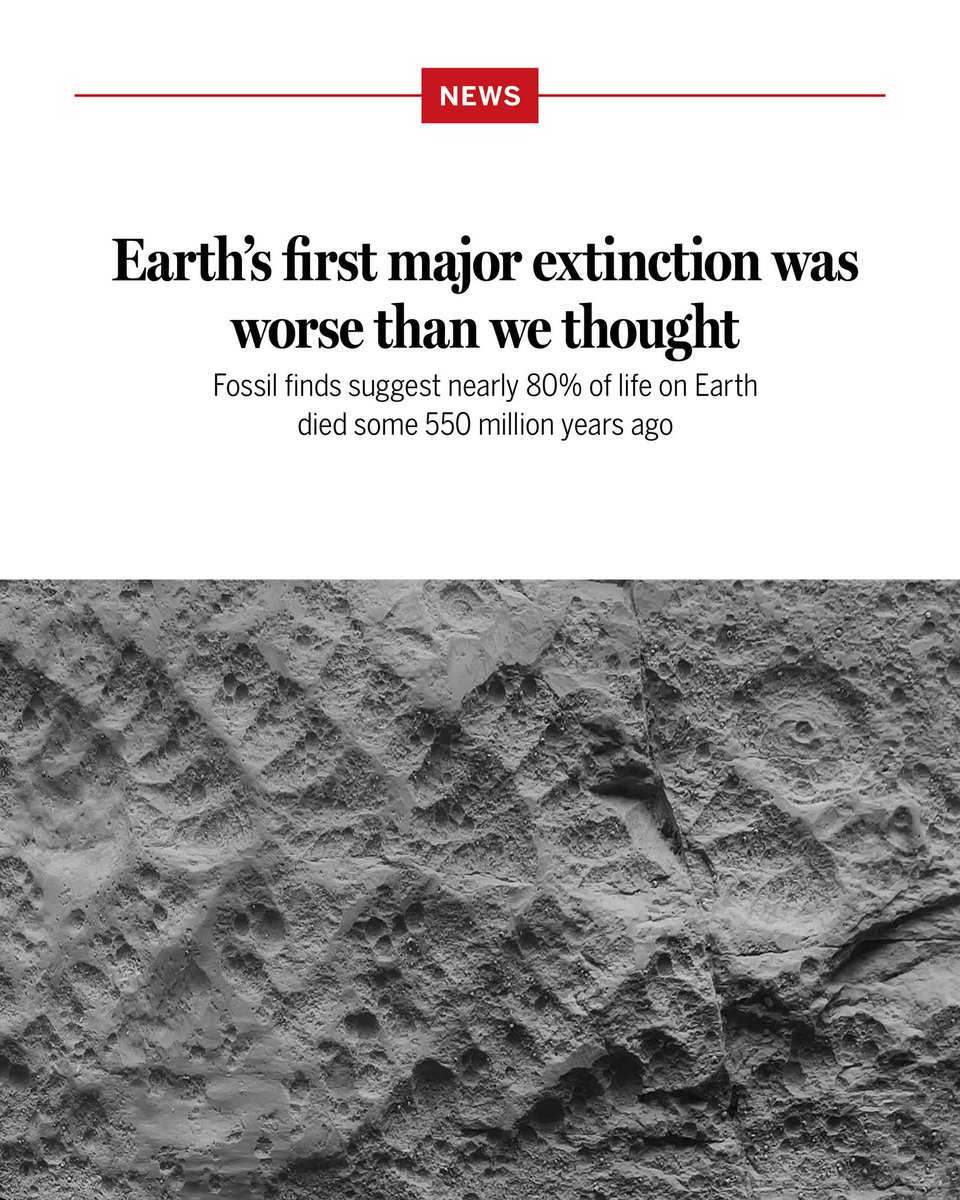
About 570 million years ago, life was confined to the seas. Large, strangely shaped invertebrates attached themselves to the sea floor, their fleshy fronds collecting nutrients that drifted by. These bizarre life forms, known as the Ediacaran biota, eventually disappeared. But researchers have long debated whether their die-off was truly cataclysmic.
New research now offers a reappraisal of the extinction that claimed many of these creatures, known as the Kotlin Crisis—and reveals that it may have been far more extensive than previously thought, extinguishing a similar percentage of species as the asteroid-driven calamity that killed the dinosaurs 66 million years ago.
Learn more: https://t.co/ijFlvGOkgz @NewsfromScience
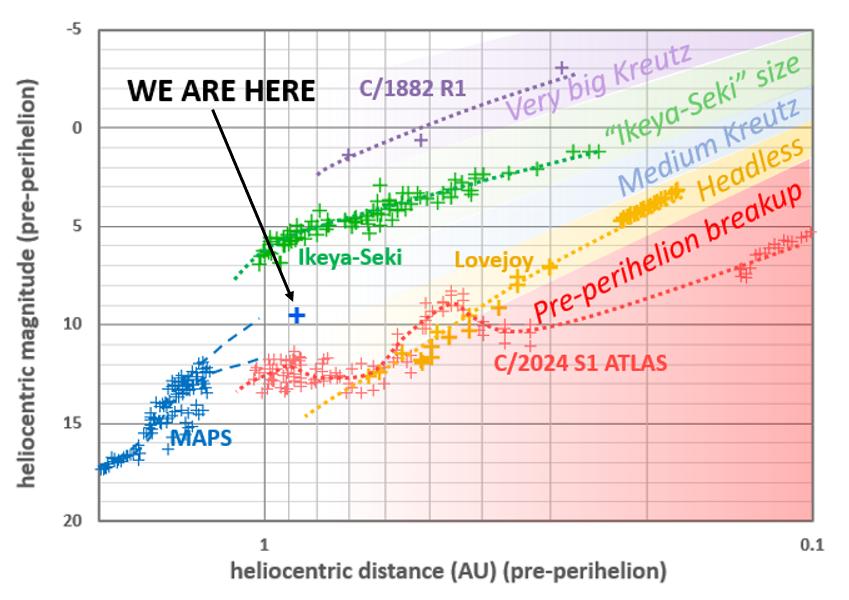
We are here! Plotting the current heliocentric magnitude (brightness) of the comet today, about 9.5 and the distance from the Sun (0.87 AU) puts MAPS well into the "Medium Kreutz" comet. It is currently significantly brighter than comets C/2025 S1 (ATLAS) and C/2011 W3 (Lovejoy). It may well be out of the woods for a pre-perihelion disintegration and may also be sufficiently bright/big to survive perihelion. We may be in for a nice comet in April - if the current brightness is anything to go by, something midway between comet Lovejoy in 2011 and Ikeya-Seki in 1965. On the other hand, if the brightening rate drops to that observed in Ikeya-Seki, it could still be in the Headless comet territory or even pre-perihelion breakup. Exciting!
Original graph by Nicolas Lefaudeux.
A bit more on the upcoming Kreutz comet(s?). We may be / likely are in for more Kreutz comets in the coming years. C/2026 A1 (MAPS) is actually an outlier in an interestingly unusual orbit, certainly unexpected. But according to Zdenek Sekanina, arguably the foremost expert on the Kreutz group comets, we are in for more. At least one is expected to arrive around 2027, with a window extending to 2040. This could be a major, bright member of Kreutz Population II, related to the Great September comet of 1882 and Ikeya-Seki in 1965. There is another one expected possibly around 2050, a major, bright member of Kreutz Population I, related to the Great March comet of 1843, comet Pereyra in 1963 and comet Lovejoy in 2011. There could be more than one major comet in either of the two expected arrivals.
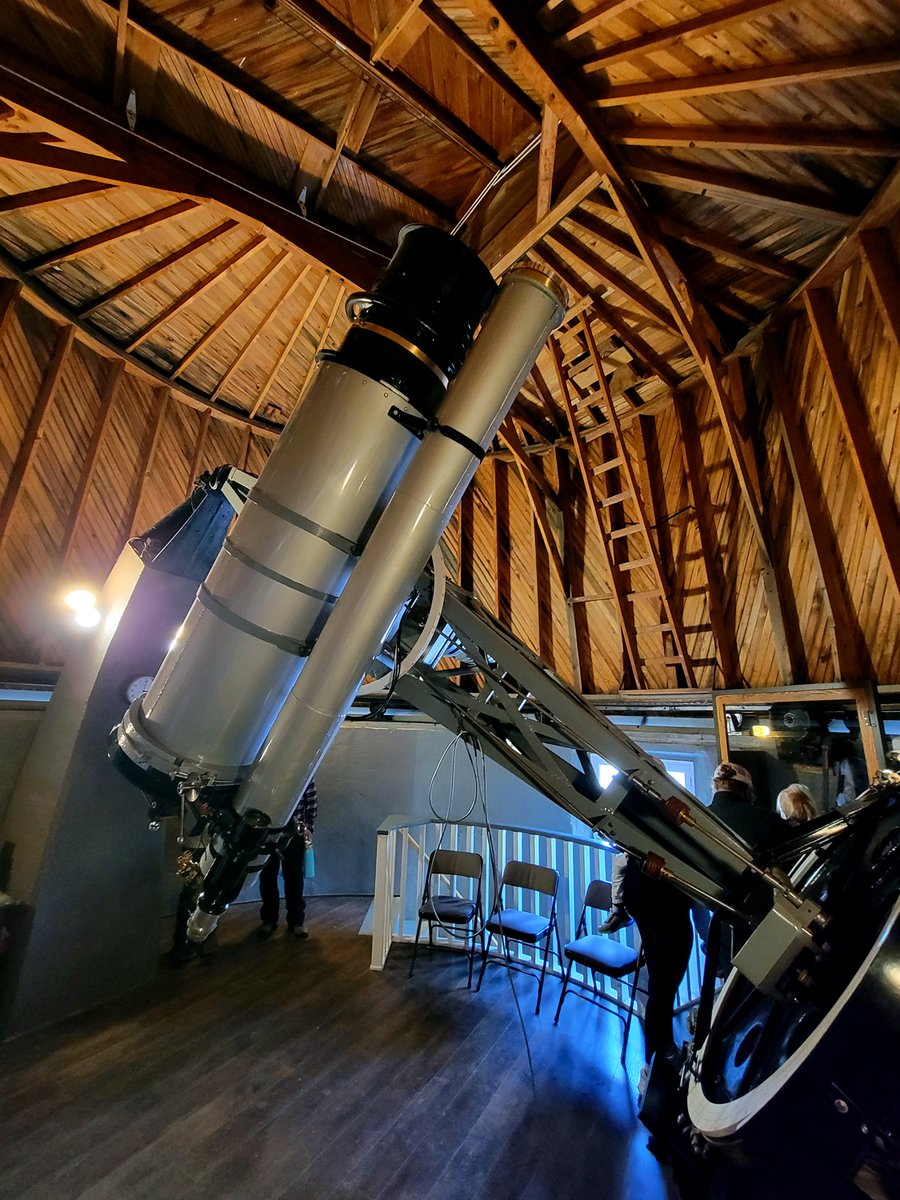
On February 18, 1930, Clyde Tombaugh discovered Pluto on plates he had taken with the 13-inch A. Lawrence Lowell Telescope, which we have always called the Pluto Camera. History was made.
Will comet C/2026 A1 (MAPS) - if it becomes bright - be visible from the northern hemisphere? Kreutz comets are notorious for being almost exclusively southern hemisphere comets. But they can actually be visible fairly far north in the spring and autumn: here is a drawing of Great March comet of 1843 (a bright Kreutz sungrazer) in the evening sky - from Kent, England (in Illustrated London News). This is 51°N. More on this soon.
Wow! Another great video showing tephra raining down during Kīlauea’s latest episode, and from a completely different angle, offering a rare view of the lava fountains than we usually see 🌋
https://t.co/EIhB8XqV9z
UPDATE: Mapping Ancient Human Cousins v1.4
A rough look at where the remaining hominins were at over the last 300kya.
Hold and click "load in 4k" for full quality.
Last update for a while, going to work on a human migrations map.
Thank you for sharing!
#evolution#science#edu
This discovery is shedding light on how and why birds evolved, and whether they evolved powered flight just once or many times during the age of the dinosaurs
https://t.co/mhi1lSSc09
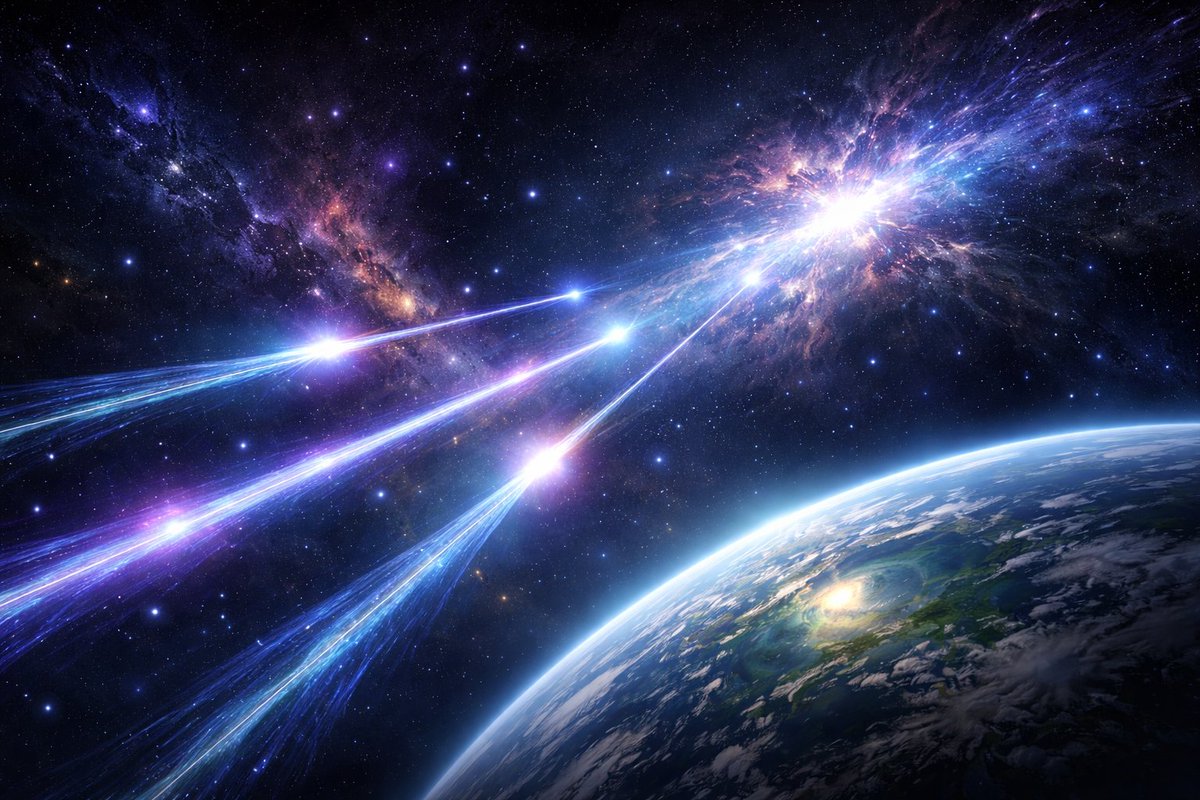
Researchers have conducted a stringent test of one of the core principles of Einstein’s theory of special relativity, that the speed of light in vacuum is constant and does not depend on energy.
This principle, formalized as Lorentz invariance, is foundational to both special relativity and quantum field theory, including the Standard Model of particle physics, and has withstood extensive experimental verification.
However, theoretical attempts to reconcile quantum mechanics with general relativity into a unified theory of quantum gravity often predict extremely small deviations from Lorentz invariance at very high energies.
To investigate these predictions, the team analyzed very-high-energy gamma ray observations from distant astrophysical sources, reasoning that even minute differences in photon speeds, if present, could accumulate into measurable delays after traveling across cosmological distances.
Using a novel statistical approach to combine existing gamma ray data, they searched for energy-dependent timing differences that would indicate violations of Lorentz invariance as parameterized within the Standard Model Extension framework.
The analysis found no evidence of such violations, reinforcing Einstein’s postulate and improving previous constraints by an order of magnitude, significantly narrowing the parameter space for new physics.
Although the results affirm the constancy of light speed at current observational precision, future observatories like the Cherenkov Telescope Array are expected to extend sensitivity further, allowing even more stringent tests of fundamental physics.
👉 https://t.co/QDAa5T4bVa
Indonesia is clearing 5 MILLION ACRES of one of the world’s most biodiverse, important and intact forests in Papua… for sugarcane.
We are losing Birds Of Paradise, Birdwing Butterflies, Rainbowfish all for nothing… 😤 https://t.co/OCIg1CyrAV