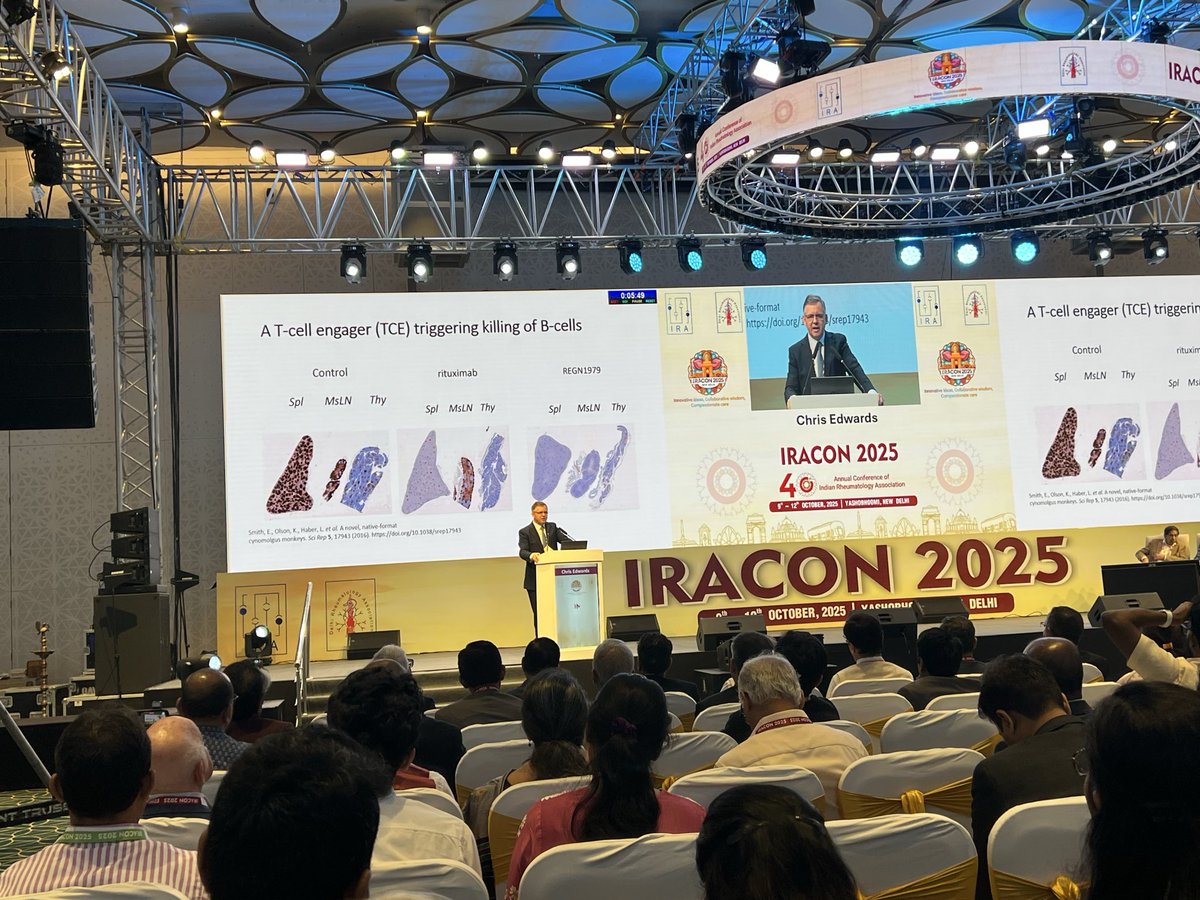
The #EULAR recommendations for the management of Polymyalgia Rheumatica and Large Vessel Vasculitis were presented today at #EULAR2026 at London by the task force lead Dr Chetan Mukhtyar. It was a privilege to represent India on this international task force! I hope these recommendations lead to the better management of patients with PMT, GCA and Takayasu Arteritis. Watch out for the publication of these recommendations in the future!
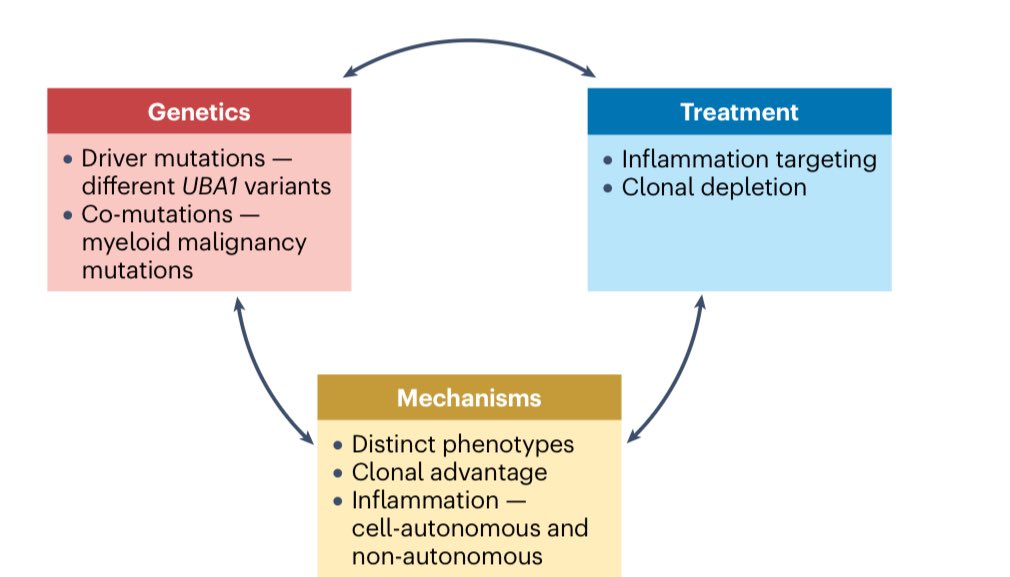
Inflammatory myopathies are typically associated with a myositis-specific autoantibody that determines the diagnosis and prognosis. Myositis subgroups have distinct pathomechanisms that now allow for targeted therapies.
Learn more in the Review Article “Inflammatory Myopathies” by Yves Allenbach, MD, PhD, and Olivier Benveniste, MD, PhD: https://t.co/ZeCKdNe87v
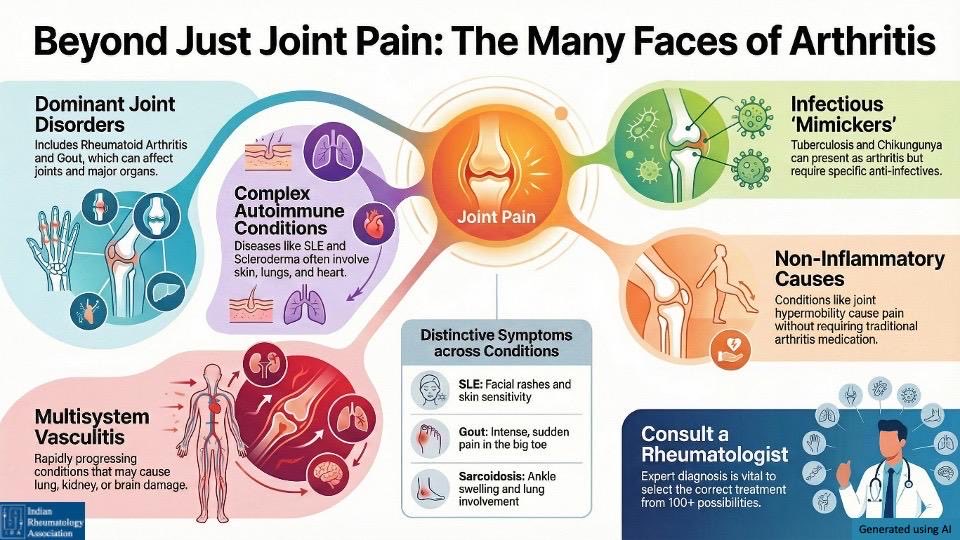
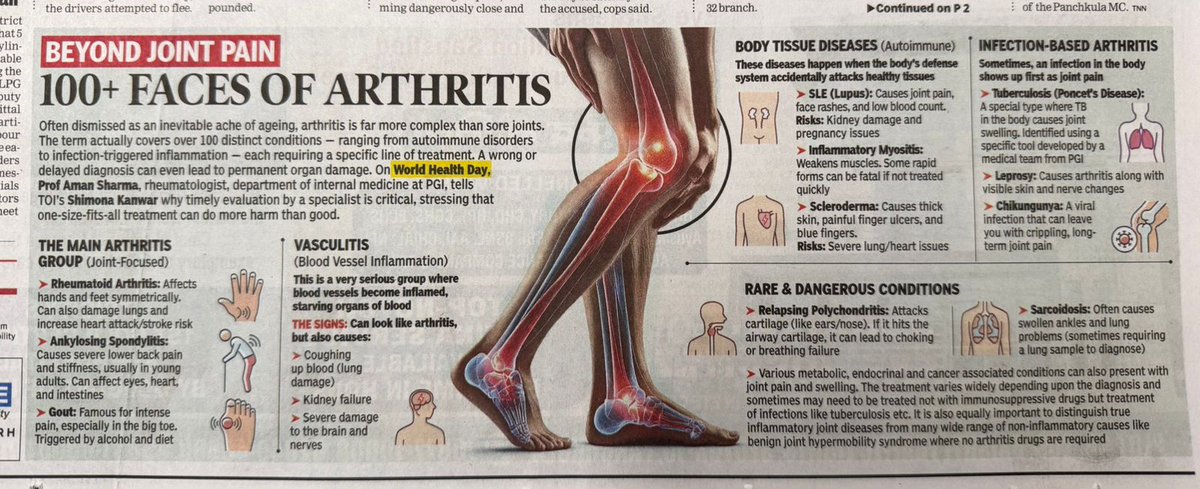
@PMOIndia@timesofindia@Amansharmapgi@JPNadda A well explained graphic could have been presented with the efforts of Prof Aman Sharma, a known rheumatologist from PGIMER #Chandigarh Arthritis is not only joint pains but a spectrum one could have not known until diagnosed.
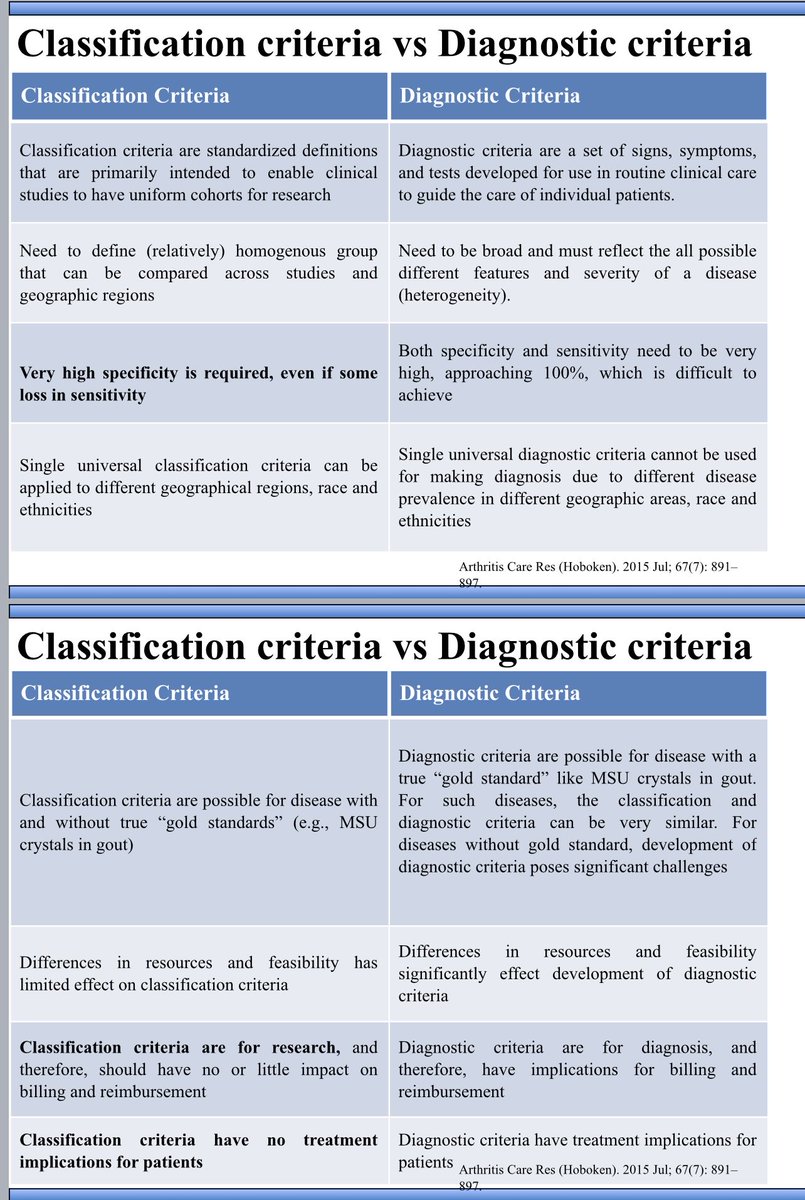
This is a very important concept. Classification criteria are not meant for use in making a diagnosis. They are to be used after a clinical diagnosis has been made, to ensure homogenous populations of patients are recruited in to clinical trials or research studies thus are comparable across regions of the world.
Classification criteria are meant to be specific, whereas diagnostic criteria are meant to be sensitive and capture the broadest range of clinical features related to a disease. For this reason, diagnostic criteria are difficult to devise and the @ACRheum has stopped trying to devise diagnostic criteria. Most “criteria” in Rheumatology are classification criteria.
Attached is a summary from a seminal paper in Arthritis Care and Research in 2015 detailing this concept. @IJRheum@IndianRheum@APLAR_org@eular_org
https://t.co/DYl3wv1Xvx
@Amansharmapgi the incoming President of @IndianRheum speaking on Relapsing polychondritis #RP at #IRACON2025 at New Delhi. Chondritis occurs in only 60%. Ear chondritis could be unilateral, bilateral or alternating. Ear deformities occur in a sixth. Leprosy is a close differential in India (relapsing polychondritis spares the ear lobule, which is affected by leprosy). Saddle nose occurs in a tenth, nasal chondritis can be subtle. Respiratory chondritis in a third to two-thirds, can be life threatening. Posterior membranous wall of trachea is spared vs granulomatosis with polyangiitis. Stenting of bronchus might be required. Aortic root dilatation can occur (a mimic of large vessel vasculitis). Episcleritis and scleritis are common ocular manifestation. A recent association with immune checkpoint inhibitors or #VEXAS (more eye, pulmonary involvement). Three different clusters described by @NIH group. Dynamic CT and PET (helps identify the hidden disease particularly aortic involvement). FAPI PET might have a role in the future. RPDAM and RPDAI for assessment, Indian involvement in the development. RP-QOL is being developed. Glucocorticoids remain the mainstay of treatment, with cyclophosphamide, TNFi, tocilizumab in difficult cases. Rituximab may not be useful. Surgical treatment for damage. @IJRheum@chengappa_kg@DrPradeepta@Rheumat_Aravind@petercgrayson@vascuk@kunalchandwar


![LastManStand85's tweet photo. IgG4 useful talk - diagnostic but also don’t forget Exclusion criteria including Fevers 🌡️ [makes IgG4] quite unlikely! [Dr B Davidson] #Rheumatology #MedTwitter https://t.co/K6KZQrPIKO](https://pbs.twimg.com/media/HHJJPwGWwAATU0_.jpg)
![LastManStand85's tweet photo. IgG4 useful talk - diagnostic but also don’t forget Exclusion criteria including Fevers 🌡️ [makes IgG4] quite unlikely! [Dr B Davidson] #Rheumatology #MedTwitter https://t.co/K6KZQrPIKO](https://pbs.twimg.com/media/HHJJPwCWcAE7xpr.jpg)
![LastManStand85's tweet photo. IgG4 useful talk - diagnostic but also don’t forget Exclusion criteria including Fevers 🌡️ [makes IgG4] quite unlikely! [Dr B Davidson] #Rheumatology #MedTwitter https://t.co/K6KZQrPIKO](https://pbs.twimg.com/media/HHJJPwAWoAAI-jP.jpg)







![LastManStand85's tweet photo. IgG4 useful talk - diagnostic but also don’t forget Exclusion criteria including Fevers 🌡️ [makes IgG4] quite unlikely! [Dr B Davidson] #Rheumatology #MedTwitter https://t.co/K6KZQrPIKO](https://pbs.twimg.com/media/HHJJPwJW0AAL4Ab.jpg)