@300bars@AfricaFirsts Like you all in SA know the difference... You guys just attack foreigners in the streets, hospitals, everywhere...
How are you sure you have not attacked a Professor?
And by the way... Isn't he taking your job? Or Professorship is not one of the jobs you are fighting for?
Nigeria Is Bleeding From Within
It is deeply troubling to read recent World Bank reports indicating that, while Nigeria’s Federation Revenue surged to ₦84 trillion in just three years, a staggering 41% —amounting to ₦34.44 trillion —never reached the Federation Account. This sum exceeds the combined ₦34 trillion earmarked for capital projects in the 2024 and 2025 Appropriation Bills, a comparison that underscores the gravity of the situation and signals that something is fundamentally wrong.
This is not a mere oversight; it points to institutionalised corruption on a massive scale. In 1994, when the Okigbo Panel reported about $12.4 billion from the Gulf War oil windfall as unaccounted for, Nigerians were outraged and the nation shook with indignation. Today, an even more troubling situation appears to be unfolding, yet it is met with a disquietening silence.
We are trapped in a lethal paradox: Earning more as a nation, yet having less to invest in healthcare, education, and infrastructure. From 2025, systemic “deductions” have allowed agencies to capture more resources than entire states and even critical ministries.
These leakages explain why countries with fewer resources are out-performing us across key development indices. With such a broken system, how can we fix power, strengthen our schools, build resilient healthcare, or develop critical infrastructure?
Nigeria has no business being poor. We must stop these leakages through disciplined, transparent leadership driven by character. It is time to redirect our hijacked resources back to the people and move Nigeria into the league of developed nations.
With our collective resolve to change this corruption-infested system, a New Nigeria is POssible. -PO
Would you like to detect and quantify bacteria in water, or perhaps, urine in 5 to 10 minutes? For less than $1/ test?
Check this out:
https://t.co/P0D5MpzoLF
Bacterial load correlates with the rate of particle sedimentation
Can we really make molecular diagnostic (MDx) platforms affordable for sub-Saharan Africa and other LMICs?
I mean $1 or less per test? Yes! But not without radical innovation that deviates from the status quo.
Check this out: https://t.co/qpAoI07RbI
Check out this work on Primer stacking (concatenation) and RNase-Polymerase LAMP. Witness LAMP amplification with 84-base LAMP primers
https://t.co/zIL0c1sUXa
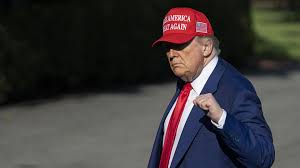
POPE LEO'S TRUMP CRITICISMS AND THE DANGER OF A POLITICIZED PAPACY
The papacy is not a political office, it is a sacred charge to shepherd the global Church with spiritual authority, doctrinal clarity, and moral consistency. Yet recent public criticisms of former U.S. President Donald Trump by Pope Leo have caused growing unease not only among Catholics, but across the wider Christendom and even among neutral observers. When the Bishop of Rome appears to single out, one political leader while echoing narratives commonly associated the political Left risks diminishing the universality of the office and entangling the Church in partisan conflict.
The Church has every right, and indeed a duty, to speak on moral issues that intersect with public life. But there is a clear difference between offering principled, consistent moral teaching and selectively criticizing specific leaders. By publicly rebuking Trump over policies tied to national security and the fight against terrorism, while not applying the same level of direct and visible scrutiny to other global actors, the papacy risks appearing politically selective. Trump was elected to govern and to act on threats as he and his administration judged necessary. When the Pope critiques those actions in isolation, it invites the perception not of moral leadership, but of political positioning.
That perception is reinforced by widely witnessed events. When Pope Leo visited Turkey and met face-to-face with Recep Tayyip Erdoğan, many across the Christian world expected a clear and unequivocal challenge regarding the conversion of historic Christian churches, most notably Hagia Sophia and the Church of the Holy Saviour in Chora, into mosques. These were not minor developments, they were globally recognized moments with deep symbolic consequences for Christian heritage. Yet no comparably strong public confrontation followed. Likewise, for decades, Iran has openly promoted hostile rhetoric against the United States and Israel, including repeated chants of “death” to those nations, with little sustained papal condemnation at the same intensity. In contrast, the willingness to sharply criticize Donald Trump stands out, and not in a way that strengthens confidence in even-handed moral leadership.
The issue extends beyond politics into theology. Assertions that God does not answer the prayers of those engaged in war are not minor misstatements, they cut against the plain reading of Scripture as understood by many believers. The Bible repeatedly shows figures such as David, Moses, Joshua, and Abraham praying in the midst of conflict and receiving God’s direction. God is called the “Lord of hosts,” and scripture affirms that He strengthens and prepares His people in times of battle. These are not obscure passages, they are central to the biblical narrative. Any suggestion that dismisses this reality risks creating confusion and undermining confidence in the Church’s teaching authority.
At a time when the world is deeply divided, the papacy must stand above political alignment and speak with clarity, consistency, and spiritual depth. Pope Leo has a responsibility not to mirror political rhetoric of the left, but to guide the faithful with timeless truth. By stepping away from selective political criticism, particularly of figures like Donald Trump, and refocusing on his core duties of teaching, unifying, and defending the faith, he can restore confidence in the papacy’s role as a truly universal and spiritually grounded institution.
@Pontifex@Pontifex266Arch@OfficeofMelania@realDonaldTrump@EricTrump@JohnBishop100@BishopBarron@bishop@cnalive@EWTN@NCRegister@USCCB@catholiccom@CatholicArena@CatholicVote@CatholicHerald@foxnewspolitics@FoxNewsOpinion@FoxNews@SkyNewsBreak@cnni@cnnbrk@World@ABCWorldNews
WHEN TRUSTED MEDIA LOSES BALANCE: A CLOSE LOOK AT SKY NEWS
Sky News has built its name on trust and credibility over many years. That is why it is deeply disappointing to see how Sky News is increasingly using its platform in a way that appears openly hostile toward Israel and consistently critical of Donald Trump.
This is not about avoiding criticism. Every government and leader should be questioned. But when the tone of reporting becomes one-sided again and again, it stops looking like fair journalism and starts looking like a fixed agenda. Many of their reports now feel predictable, with more focus on blame than on full context.
There have also been real incidents that raise concern. Sky News has had to issue corrections after misreporting on sensitive Israel-related matters, including a widely criticized misquotation by one of its presenters that drew over a thousand public complaints. In another case during Gaza coverage, the use of wording that suggested a child was killed by a “stray bullet” sparked backlash for appearing to soften responsibility. On the political side, analysis segments involving Donald Trump have repeatedly leaned toward strong negative framing, often emphasizing controversy while giving less attention to broader policy context. Each of these cases may be defended on its own, but together they point to a pattern that viewers are beginning to notice.
Concerns have also been raised about the reporting style of David Blevins. His coverage, like that of the wider network, has at times been perceived as leaning in a particular direction, especially on politically sensitive issues. While journalists are expected to ask tough questions and provide analysis, there is a responsibility to maintain balance and avoid framing that appears one-sided. When reporting consistently reflects a similar tone or angle, it risks reinforcing a narrative rather than presenting a full and fair picture. For a journalist in such a visible position, maintaining neutrality is not optional, it is essential to preserving public trust.
What makes this more concerning is that Sky News was once seen as a balanced voice. Today, it is beginning to sound more like Al Jazeera, a network often accused of pushing a particular narrative. Whether or not that comparison is completely fair, the fact that people are making it shows that something has shifted.
A respected media house should inform, not influence. It should present all sides clearly and allow viewers to decide. Sky News needs to reflect and return to the balanced reporting that earned it public trust. If not, it risks losing the very credibility that made it powerful in the first place.
@SkyNewsBreak@SkyNews@FoxNews@World@JournosPostLs@realDonaldTrump@cnni@BBCWorld@AJEnglish@AlJazeera@skydavidblevins@Israel@UKParliament@IsraelinUSA@US_EUCOM@IDF@IsraeliPM@UN@IsraeliPM@CBSNews@NEWSMAX@UN_News_Centre@BBCWorld
UN AND EU MUST STOP LOOKING AWAY FROM NIGERIA'S KILLING FIELD
For years, we have watched the United Nations and the European Union jump into action when certain groups are targeted. We see the press releases, the emergency sessions, and the threats of sanctions.
But when it comes to the systematic, daily slaughter of Christians in Nigeria, that same energy vanishes. It is replaced by a "blind eye" and a cold, academic silence that is costing thousands of lives.
The double standard is deadly because every human life is sacred and Christian lives matter. When a Muslim is killed, the world should be outraged. But that outrage must be consistent. Right now, it isn't.
In Nigeria’s Middle Belt and North, Christian communities are being wiped off the map. Mothers are being killed in their farms, and children are being hacked to death in their beds. Yet, the UN and EU continue to describe this as "communal clashes" or "consequences of climate change."
This isn't just a misdiagnosis; it’s a lie. It is targeted, faith-based persecution, and by refusing to call it what it is, you are giving the killers a free pass.
The UN and EU were founded on the idea that human rights are universal. If we are all truly "under the same umbrella" of humanity, then why is the focus so lopsided? Where is the equal attention? Where are the special rapporteurs for the thousands of Christian orphans?
Why is the plight of a Christian villager in Plateau or Benue State treated as a "local matter" while other conflicts get global intervention?
By staying quiet, you are telling the perpetrators that killing Christians carries no international price tag. You are effectively telling the victims that their faith makes them invisible to the world’s "protectors."
We don’t need more "expressions of concern." We need action that matches the scale of the tragedy. Stop hiding behind the "farmer-herder" narrative. Acknowledge that Christians are being hunted for their faith and their land.
Use your diplomatic leverage to force the Nigerian government to arrest and prosecute the killers. Financial aid should be tied to the actual protection of these vulnerable communities.
Give the slaughter of Christians the same floor time in Brussels and New York that you give to any other major humanitarian crisis.
Justice isn't justice if it’s selective. You cannot claim to stand for human rights while turning your back on one of the greatest organized killings of our time.
It’s time to stop looking away. It’s time to treat the blood of a Christian with the same urgency as any other human being on this planet. The world is watching, and history will remember your silence.
@TinubuMediaS@officialABAT@BBCAfrica@BBCBreaking@BBCWorld@euronews@EU_Commission@eu_eeas@UN@unfoundation@UNGeneva@foxnewspolitics@FoxNews@SkyNews@cnni@CNN@FRANCE24@daily_romania@UKParliament@HouseofCommons@BBCNews@10DowningStreet@GermanGarmendia@Trump@realDonaldTrump@EricTrump@DonaldJTrumpJr@Pontifex@cnalive@USCCB@CatholicArena@CConcern@LouboutinWorld
@POTUS
Please Sir, remember Nigeria in your efforts to sanitize the world. These people are definitely funded and the government is not intervening.
https://t.co/YiZt1IYZZI
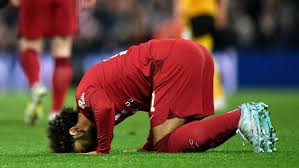
The English Premier League should reconsider its policy to pause matches at sunset during Ramadan. The policy deviates from the neutrality embedded in the Laws of the Game, written by the International Football Association Board (IFAB) and followed in competitions under FIFA. The principle that states that sport must not be used for political, religious, or personal expression exists to keep the game a neutral space, free from ideological or sectarian signalling.
If one faith’s observance warrants an in-game pause, what is the consistent policy for others? If every religious request required structured stoppages, a 90-minute match would struggle to remain 90 minutes.
Religious freedom is a private right, fully respected without requiring changes to the format of play. A football pitch is not a place of worship; it is a competitive arena governed by uniform laws designed to apply equally and without preference. Neutrality is not optional. It is foundational. click to continue reading https://t.co/K9jMWFJdkE
The English Premier League, Ramadan Pauses, and the Question of Football’s Neutrality
@BBCSport@TheSunFootball@premierleague@NBCSports@SkyNews@SkySportsPL@CBSSports@euronews@FOXSports@FOXSoccer@EPLworld@Reuters@Independent@DailyMail@DailyMirror@Telegraph@itvfootball@ManUtd@LFC@FabrizioRomano@FIFAcom@UEFAcom@LUFC@SSFootball@seanhannity
At a time when rising poverty and unemployment continue to weigh heavily on households across Nigeria, concerns are mounting in one of the nation’s most commercially significant regions. In Onitsha, widely regarded as the commercial hub of eastern Nigeria, many traders and small business owners say their means of livelihood are being jeopardized amid ongoing enforcement and demolition exercises under the administration of Charles Soludo. click to continue reading https://t.co/50ftgjD7Rh
Nigeria: Poverty Deepens, Governor Soludo Bulldozes Livelihoods
@BBCAfrica@ReutersAfrica@ARISEtv@OjyOkpe@guardian@GuardianNigeria@cnbcafrica@AIT_Online@CCSoludo@amnesty@hrw@vanguardngrnews@PeterObi
At a time when rising poverty and unemployment continue to weigh heavily on households across Nigeria, concerns are mounting in one of the nation’s most commercially significant regions. In Onitsha, widely regarded as the commercial hub of eastern Nigeria, many traders and small business owners say their means of livelihood are being jeopardized amid ongoing enforcement and demolition exercises under the administration of Charles Soludo. click to continue reading https://t.co/50ftgjD7Rh
Nigeria: Poverty Deepens, Governor Soludo Bulldozes Livelihoods
@BBCAfrica@ReutersAfrica@ARISEtv@OjyOkpe@guardian@GuardianNigeria@cnbcafrica@AIT_Online@CCSoludo@amnesty@hrw@vanguardngrnews@PeterObi
NIGERIA’S NATIONAL ASSEMBLY: FROM DEMOCRATIC REPRESENTATION TO ENGINEERING ELECTORAL FRAUD?
The recent actions of the National Assembly have ignited a firestorm of outrage across Nigeria, and rightly so. At a time when citizens are demanding stronger safeguards for their votes, lawmakers appear to be moving in the opposite direction. A legislature that should stand as the guardian of democratic integrity is now facing accusations of weakening it. When elected representatives begin altering the very rules meant to protect the ballot, Nigerians are justified in asking, who exactly is being represented?
The controversy surrounding the Electoral Act amendment is not a trivial misunderstanding. Reports that draft provisions were altered in ways that appeared to favor manual transmission over real time electronic transmission have deepened public distrust. In an era where digital systems drive banking, commerce, and governance, many progressive democracies are strengthening, not weakening, electoral technology. Countries such as Estonia have pioneered secure digital voting systems, while African nations like Ghana and Kenya have integrated biometric verification and electronic result transmission into their electoral processes. Against this global and continental movement toward transparency through technology, Nigeria’s retreat to manual collation sends a disturbing signal. It raises the unavoidable suspicion that opacity, not transparency, is being institutionalized.
Real time transmission of results is not a luxury, it is a democratic safeguard. Every gap between voting and final declaration is a window that can be exploited. Nigerians have not forgotten the notorious technological glitches that marred the last general election, glitches that weakened public confidence and sparked nationwide controversy. Instead of decisively closing those loopholes and reinforcing the system against future failure, lawmakers now appear to be working toward institutionalizing the very vulnerabilities that caused such distrust. Democracy does not survive on legality alone, it survives on trust, and trust once broken is not easily restored.
The constitutional mandate of the Independent National Electoral Commission is to conduct elections that are free, fair, and credible. Any legislative maneuver that constrains transparent result transmission places unnecessary strain on that mandate. If infrastructure is weak in some areas, the solution is investment and innovation, not the normalization of manual processes that are easier to manipulate. The Nigerian voter deserves a system that protects their will from polling unit to final tally without shadowy detours.
As political calculations quietly shift toward 2027, the optics of these legislative decisions grow even more troubling. The ruling All Progressives Congress must understand that electoral credibility is bigger than any single party or administration. Laws crafted today will govern tomorrow’s contests. If the framework appears tilted toward incumbency, the legitimacy of future outcomes, regardless of who wins, will remain permanently under question.
Nigeria stands at a defining moment. Around the world, democracies are strengthening digital transparency, not dismantling it. The National Assembly must decide whether it wishes to be remembered as a defender of democratic evolution or as an institution that stalled it at a critical hour. Nigerians are not asking for miracles, they are asking for credible elections. And credible elections demand one simple principle, transparency without compromise. The National Assembly must serve the people, uphold their rights, and not simply do the bidding of the ruling APC.
@NGRSenate@SenGodswill@officialABAT@realDonaldTrump@JDVance@marcorubio@CNN@BBCWorld@SkyNews@PoliceNG@HQNigerianArmy@AP@Reuters@GazetteNGR@NGRPresident@DailyPostNGR@SkyNews@FoxNews@OANN@OjyOkpe@channelstv@nytimes@washingtonpost@RSBNetwork@euronews@_FriedrichMerz@GiorgiaMeloni@10DowningStreet@IvankaTrump@ARISEtv@washingtonpost@DonaldJTrumpJr@UN@_AfricanUnion@EmmanuelMacron@netanyahu@Israel@PremiumTimesng@TimesofIsrael@Jerusalem_Post@vanguardngrnews@DailyMail@Reuters@AP@MELANIATRUMP@USATODAY@NTANewsNow@nytimes@rsbn
POLICE BRUTALITY AND LAWLESSNESS IN EDO STATE: END THE REIGN OF FEAR
Across Edo State, a dangerous pattern of police misconduct has taken root, one that has transformed law enforcement from a pillar of protection into a source of fear. Innocent civilians are increasingly subjected to harassment, intimidation, and violence at the hands of those sworn to uphold the law. Rather than ensuring public safety, elements within the Nigeria Police Force have fostered an atmosphere of terror, where citizens are treated as suspects first and human beings second. The time has come to confront this crisis with courage and clarity.
One of the most disturbing trends is the unlawful abduction of civilians under the guise of arrest. Individuals are seized without warrants, bundled into vehicles, and taken to undisclosed locations, leaving families in anguish with no information about their whereabouts. These are not lawful detentions, they are kidnappings carried out by those in uniform. Relatives wander from station to station seeking answers, often met with silence, denial, or demands for bribes before any information is disclosed. This practice not only violates constitutional protections but erodes public trust in the justice system and deepens the trauma experienced by already struggling communities.
Equally troubling are the incessant roadblocks that litter major and minor roads throughout the state. What should be legitimate security checkpoints have, in many cases, become toll gates of extortion. Commuters, commercial drivers, students, and traders are routinely stopped, delayed, and coerced into paying “settlement” fees to avoid fabricated charges or prolonged harassment. These illegal collections disrupt economic activity, inflate transportation costs, and humiliate hardworking citizens who simply wish to move freely within their own state. Instead of protecting highways from criminal activity, these roadblocks often criminalize ordinary existence.
Beyond unlawful detentions and roadside extortion, residents report excessive use of force, arbitrary raids on homes and businesses, profiling of young people based on appearance or possession of electronic devices, and the suppression of peaceful assembly. Victims recount beatings, threats, and the destruction or confiscation of personal property without due process. In some cases, officers allegedly demand ransom for bail in clear violation of the principle that bail is free.
There are also complaints of delayed response to genuine distress calls, selective enforcement influenced by wealth or political connections, and intimidation of journalists and activists who seek accountability. Such actions paint a grim picture of systemic abuse, not isolated incidents, they undermine legitimate crime fighting efforts and divert attention from addressing real security threats confronting the state.
The people of Edo State deserve policing rooted in accountability, transparency, and respect for human rights. Reform is not optional, it is urgent. Independent investigations into allegations of misconduct, protection for whistleblowers, strict penalties for erring officers, and community based oversight mechanisms must be implemented without delay. True security cannot be built on fear and exploitation, it must rest on justice, professionalism, and a genuine commitment to serve. Until meaningful reforms are enacted, the call to end police brutality and restore lawful policing in Edo State will only grow louder, and rightly so.
@PoliceNG@m_akpakomiza@officialABAT@NGRSenate@SenGodswill@ARISEtv@channelstv@AIT_Online@realDonaldTrump@JDVance@_AfricanUnion@UN@CNN@FoxNews@SkyNews@GazetteNGR@DailyMail@OjyOkpe@vanguardngrnews@OfficialAPCNg@OfficialPDPNig@ADCVanguard_ @bbcw