#Throwback
PERSPECTIVE | H Ren, Y Tang & D Zhang
The emerging role of protein l-lactylation in metabolic regulation and cell signalling
https://t.co/vGYVQxXpGL
"I watched my advisor publish 21 papers in 1 year. Meanwhile, I spent 8 months on a single study that might never see daylight. I felt like I was failing at academia."
A PhD friend told me yesterday ⤴️
Then she shared what changed her perspective completely.
Those 21 papers were strategic collaborations solving critical problems across multiple fields.
Her single study? That was preventing outbreaks in rural communities!
She realized she was comparing apples to oranges.
This and other conversations with my PhD friends taught me something important about research careers:
𝗧𝗵𝗲𝗿𝗲 𝗮𝗿𝗲 𝗺𝘂𝗹𝘁𝗶𝗽𝗹𝗲 𝗽𝗮𝘁𝗵𝘀 𝘁𝗼 𝗶𝗺𝗽𝗮𝗰𝘁:
→ The deep-dive specialist (months/years on one breakthrough)
→ The strategic collaborator (connecting dots across projects)
→ The methodology expert (enabling others' discoveries)
→ The translator (making research accessible and actionable)
Quality research isn't about doing less work.
It's about doing purposeful work
⤴️ whether that's deep solo research or strategic collaboration.
---------------------
𝗥𝗲𝗹𝗮𝘁𝗮𝗯𝗹𝗲?
🔄 Retweet (& like)
Follow @RaziaAliani to get more useful Research content in your feed.
Get FREE exclusive tips on using AI in research:
🔗 link in bio
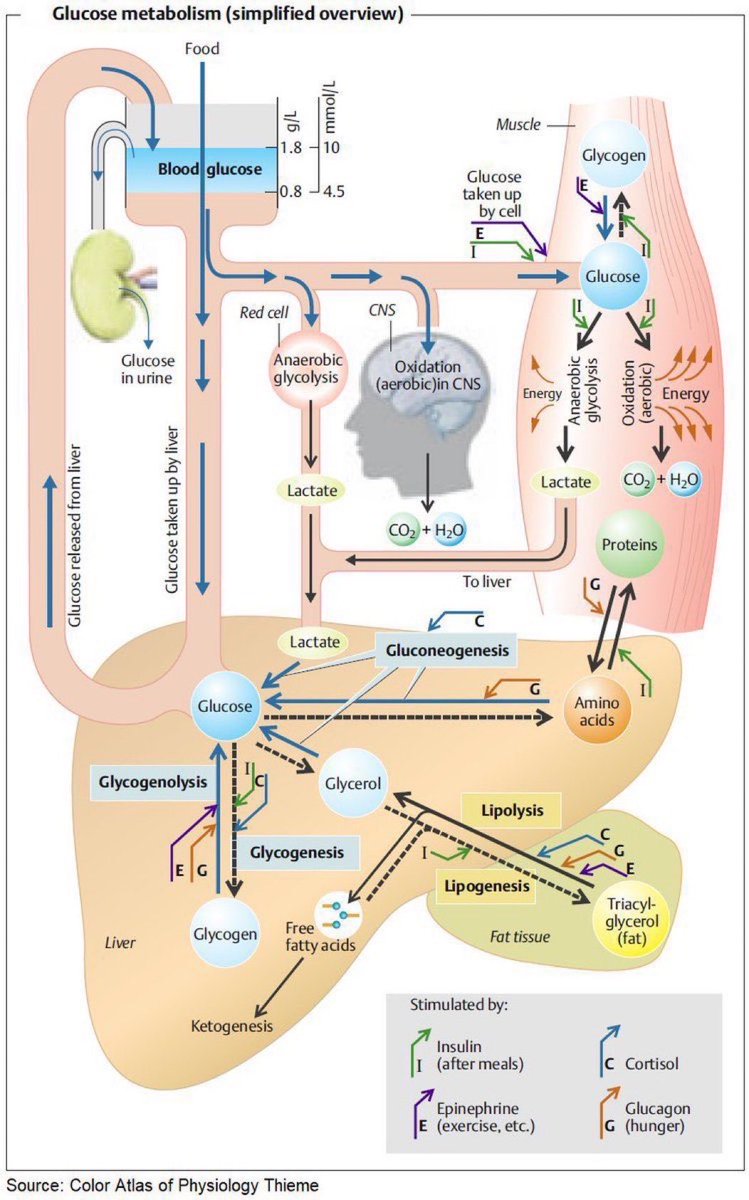
Understanding glucose. How your body manages energy.
Glucose metabolism is how your body turns food into energy, storing and releasing it as needed. Different organs and processes work together, influenced by hormones, to keep blood sugar steady and fuel your cells.
1️⃣ Blood Glucose Glucose from food enters the bloodstream, with levels kept between 0.8–10 mmol/L. The kidneys filter excess into urine if levels get too high.
🟢 Example: After a meal, blood glucose rises, prompting cells to take it up.
🟢 Example: Low levels trigger the liver to release stored glucose.
2️⃣ Liver The liver stores glucose as glycogen or makes new glucose (gluconeogenesis) from lactate, amino acids, or glycerol, releasing it when needed.
🟢 Example: During fasting, the liver breaks down glycogen (glycogenolysis) to maintain blood sugar.
🟢 Example: After exercise, it uses lactate to rebuild glucose.
3️⃣ Muscle Muscles take up glucose for energy or store it as glycogen, especially during exercise, and release lactate when oxygen is low. 🟢 Example: During a workout, muscles use glucose for quick energy via glycolysis.
🟢 Example: Resting muscles store glycogen for later use.
4️⃣ Central Nervous System (CNS) The brain relies on glucose for energy, using aerobic oxidation when oxygen is available, or switching to lactate if needed.
🟢 Example: A steady glucose supply keeps you alert and focused.
🟢 Example: In low oxygen, the brain uses lactate as a backup fuel.
5️⃣ Fat Tissue Fat cells store glucose as fat (lipogenesis) or break down fat (lipolysis) to release glycerol and fatty acids for energy during fasting.
🟢 Example: After a big meal, excess glucose turns into fat for long-term storage.
🟢 Example: During hunger, fat breakdown provides energy via ketogenesis.
Glucose metabolism involves the liver, muscles, brain, and fat tissue, balancing energy use and storage. Hormones like insulin (after meals) and glucagon (during hunger) control these processes, ensuring your body adapts to eating, exercise, or fasting.
Should the standard model of cellular #energy#metabolism be reconsidered? Possible coupling between the pentose phosphate pathway, glycolysis and extra-#mitochondrial oxidative phosphorylation
👇
https://t.co/8tbO74yjbA
We’ll be hosting the Bioinformatics Summer Workshop from August 11–15. The workshop is completely free and held 100% online. If you are interested, please go ahead and register: https://t.co/rRUEtXLLQZ
🚨Last weeks #immunometabolism discoveries @Bims_BiomedNews ⬇️⬇️⬇️
https://t.co/MG9yJGgO3J
Highlight:
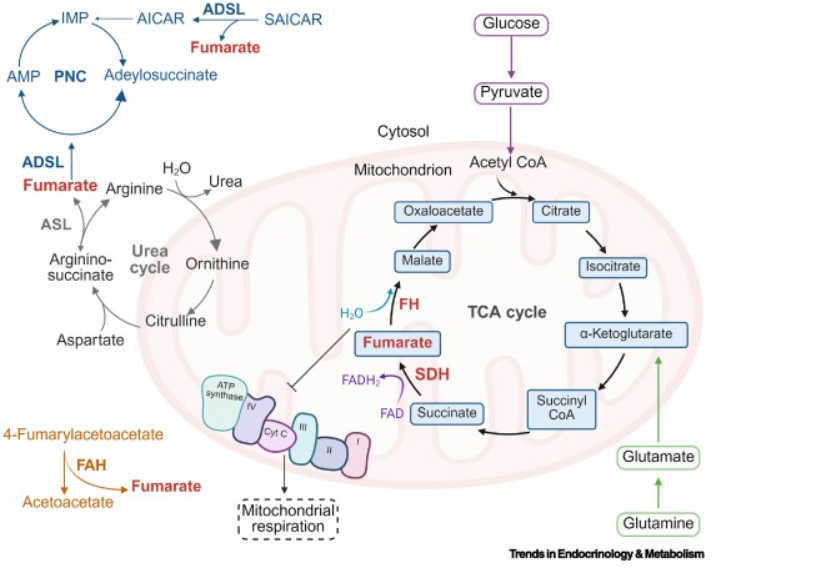
Metabolic remodelling produces fumarate via the aspartate-argininosuccinate shunt in macrophages as an antiviral defence
Mitochondrial respiratory complex III sustains IL-10 production in activated macrophages and promotes tumor-mediated immune evasion https://t.co/wFe63R9Oe4
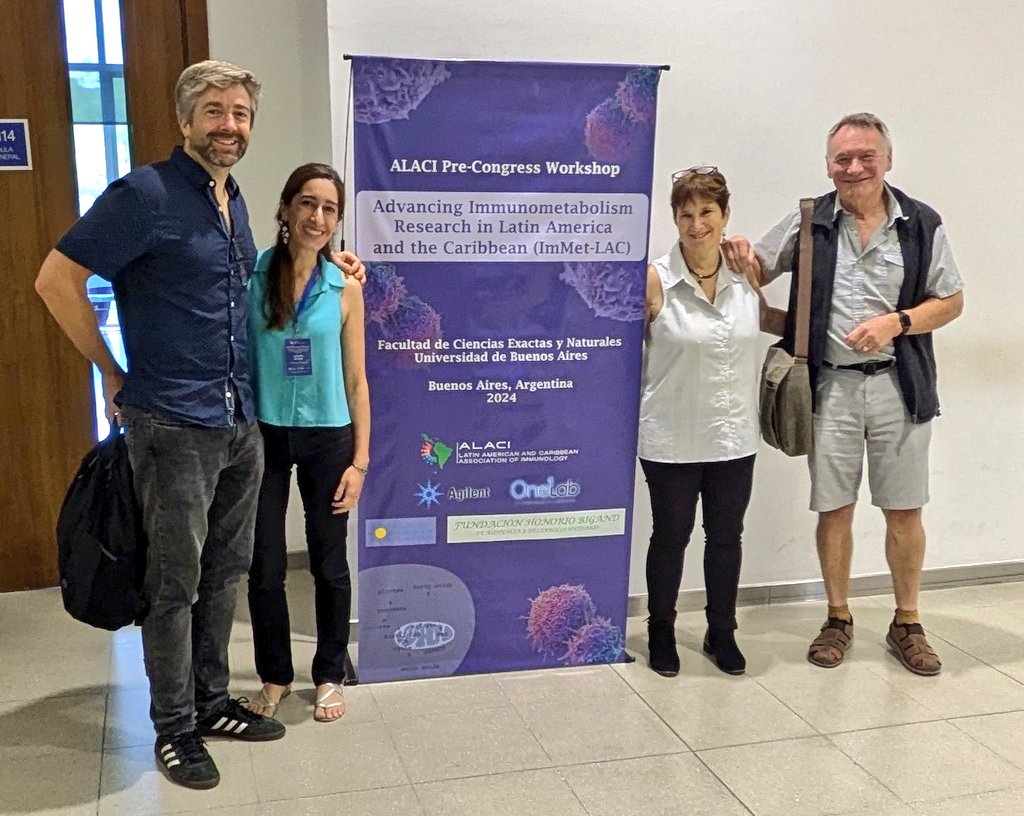
I am deeply grateful to have been part of this course alongside many fellow immunometabolism enthusiasts and to have gained further insights into SCENITH and its innovative applications.
So happy to have shared two courses in one day at my University in Argentina. Hearing the questions, the feedback and meeting so many loved colleagues and friends again.
Also Happy have met Naomi Taylor (@NIH)and David Russell (@Cornell )
🙏🙏
💥New paper from our group @MolecularCell! 🎃
One-woman show by the amazing Aish Acharya @acharyaish, revealing how active #mTORC1 sets itself free from #lysosomes!
Link (Open Access 🔓) 👇
https://t.co/QpFwynOJNx
Detailed 🧵 below ⏬
Ivanov lab paper ! Very happy to see our story on monocyte glucose metabolism online in @NatureComms today. Inhibition of Glut1 depletes the majority of blood monocytes, yet atherosclerotic plaques still develop normally🧐 @LP2M_Lab
https://t.co/COd6e7bYxf
📢 I am so incredibly happy and proud about this one!
🔟+ years in the making, 2,5 years since first submission, 1⃣ year since we posted it @biorxivpreprint, it finally found it’s home @NatureCellBio!
Open access 👇
https://t.co/IWJTxkvmIv
Detailed 🧵down below ⏬