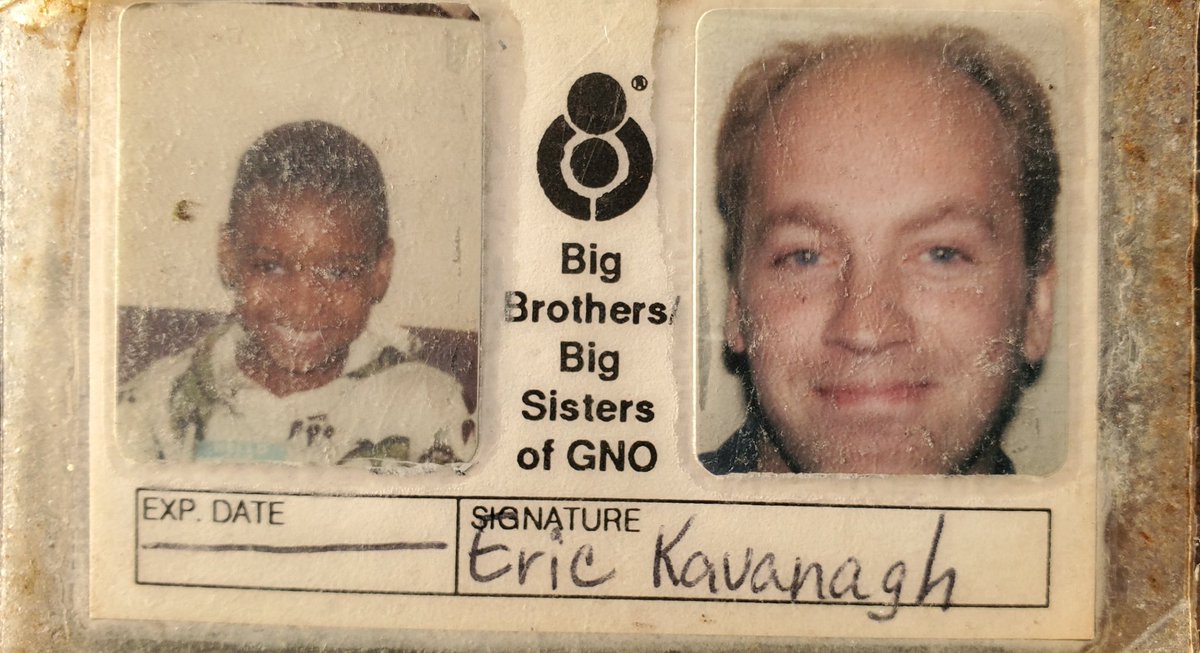
My Little Brother is gone. You left us too soon! You were such a beautiful boy who grew into a wonderful man!
I'll miss you always, my dear friend. I still see your smile and hear your laugh. You will live forever in my heart, and through your wonderful children.
CU in Heaven!
@discoposse Grazie Mille! You are correct. The AI-sloppification of the Interwebs continues apace. Can we stop it? Probably not. But this is why the spoken word will still prevail, in my opinion. And... in-person events again! We're planning some events now. Remind me where you live? Ciao!
Why is tech so doomed-pilled?!
First, we get wrapped around the axle on every single feature. Second, we overload social media with the most contrived, repetitive, and soulless AI-generated slop to back it up.
Imagine seeing this in other markets:
“The soap industry just got destroyed.
Ivory upgraded from 99.9% pure to 99.99%.
It’s not less ingredients. It’s not different packaging. It’s a paradigm shift in consumer cleansers.
-> better manufacturing
-> focus on purity
-> best benchmarks in the industry
And it’s open source.
<insert lazily generated AI image>”
It’s bizarre to think anyone would read this and either believe it, or actually deeply care about it.
Please, fucking oh please, stop doing this to our industry. We are making it worse.
Do good things.
Build good things.
Be good people.
Raise up good people.
Create opportunity.
And stop the slop.
GitHub just published guidance for reviewing agent-generated PRs.
The core instruction, in their words: keep a human approval gate for anything touching production. Treat automated review as a prerequisite, not a replacement.
The market is moving the other way.
@ManilVasantha Yep, that's about right. Good insight! You are exactly correct. But we'll still need a deterministic stack, so companies must be careful about going "all-in" with GenAI for business analysis.
AI is turning knowledge into a commodity.
The next moat isn’t technology.
It’s a workforce that learns faster than competitors can hire.
Build capability > Buy capability.
IKEA > META
Hello X 👋 — I’m Manil.
CCO by profession, AI infrastructure economist by passion.
I write about AI infrastructure, GPU economics, hyperscaler strategy, depreciation mismatches, and the silent incentives driving the $1T AI buildout.
Expect orthogonal takes, uncomfortable truths, and clear frameworks.
Let’s begin.
A Japanese immunologist spent 20 years proving that the chemicals trees release into the air walk into your bloodstream, hunt down your stress hormones, and arm your immune system in ways no therapist or pharmaceutical has ever matched, and most of the data has been sitting in Japanese medical journals for two decades waiting to be translated.
His name is Qing Li.
He is a clinical professor at Nippon Medical School in Tokyo and the president of the Japanese Society of Forest Medicine. The Japanese government has been funding his research since 2004, and the body of work he has produced is the reason forest bathing is now an officially prescribed clinical therapy in Japan and Korea.
The story actually starts in 1982, when the Japanese Ministry of Agriculture, Forestry and Fisheries coined the term shinrin-yoku to describe the practice of slow, mindful walking in a forest. They did it for a practical reason.
Japan was urbanizing fast, stress-related illness was climbing, and the country had thousands of square kilometers of forest sitting unused. The idea was to give people a reason to walk into the trees... They had no idea what was actually happening to the human body during those walks until Qing Li ran the first proper experiment in 2005.
He took twelve healthy adult men on a three-day, two-night trip to a forest park. They walked for a few hours each day. Nothing strenuous. No prescribed routes or breathing exercises. They simply walked slowly through the trees, breathing the air, looking at the forest.
Li drew blood and urine samples before the trip, on the second day, on the third day, on day seven after returning home, and again on day thirty.
The numbers that came back from the lab were not what anyone expected.
The activity of a specific type of immune cell called the natural killer cell, which is the cell your body uses to hunt down cancer cells and virus-infected cells before they can spread, had jumped by roughly 50 percent during the forest trip. The actual number of natural killer cells circulating in the bloodstream had increased significantly.
Three different anti-cancer proteins that those cells produce, called perforin, granzymes, and granulysin, had all risen sharply. And the effect did not disappear when the men went home. The immune boost was still measurable on day seven and was still partially present on day thirty.
Two hours a day in a forest had upgraded the immune system for a full month.
Li ran the same experiment with women a year later and found nearly identical results. Then he ran it with a control group who took a three-day trip through an urban area with the same amount of walking, the same hotel quality, and the same diet.
The urban group showed no measurable change in natural killer cell activity at all. The forest was doing the work, not the vacation.
The mechanism turned out to be a class of airborne molecules called phytoncides. Trees produce these compounds to defend themselves against insects, bacteria, and fungi. Pine, cedar, oak, and cypress trees release them in particularly large amounts, especially in warmer weather and after rainfall.
When you walk through a forest, you are inhaling those molecules into your lungs and absorbing them through your skin, and once inside your body they appear to directly stimulate the production and activity of the very immune cells Li was measuring in his lab.
Roughly 50 percent of the health benefit of a forest walk, according to Li's data, comes from the chemistry of the air itself. The other half comes from what the forest is doing to your nervous system.
This is where it stops being only about the immune system and starts being about stress.
A separate Japanese research team measured cortisol, the body's main stress hormone, in 84 participants across 35 different forest sites. They drew samples before and after a 30-minute walk in each forest and compared them to control walks in matched urban environments. The cortisol levels of the people who walked in the forest were lower than the cortisol levels of the people who walked in the city by a significant margin. Their heart rates were lower. Their blood pressure was lower.
The activity of their parasympathetic nervous system, which is the part responsible for rest and recovery, had gone up. The activity of their sympathetic nervous system, which is the part that drives fight or flight, had gone down.
Then a researcher at the University of Michigan named MaryCarol Hunter ran the cleanest version of this experiment ever done. She recruited participants from a city and told them to take a nature pill three times a week for eight weeks.
They were free to choose the time, the place, and the duration of the nature experience, as long as it was outside, in daylight, and free of phones, conversations, and aerobic exercise. They sent her saliva samples before and after each session so she could measure cortisol changes accurately and rule out the normal daily drop in stress hormones that happens to everyone.
The result was that participants experienced a 21.3 percent drop in cortisol per hour spent in nature, with the biggest payoff happening between minutes 20 and 30 of the walk.
After that, the cortisol kept dropping, but more slowly. The threshold dose for measurable stress relief was just 20 minutes outside in something that looked and felt like nature.
What none of this means is that nature is a substitute for therapy or for medication when someone genuinely needs them. Therapy treats different things than a walk does, and Li himself has been careful in interviews to call forest bathing a complementary intervention rather than a replacement for clinical care.
But what the research has settled is that the human body has a physiological response to being among trees that operates on the same biological systems modern medicine is trying to reach with drugs and clinical protocols, and that response is fast, measurable, and free.
The strangest part of Li's work is the implication he keeps repeating in interviews. The average person now spends more than 90 percent of their life indoors. Their cortisol stays elevated. Their natural killer cells stay sluggish.
Their parasympathetic nervous system rarely gets a chance to take over. The system that was tuned by millions of years of life under a canopy of trees is being asked to run permanently inside a box made of drywall and screens.
Your body has not forgotten what it is supposed to do in a forest. It is waiting for you to walk into one.
AI isn't coming for data teams — it's already here. The challenge? Making data understandable enough for it to work.
New InsideAnalysis episode: @JessicaTalisman & @Eric_Kavanagh on why semantic data graphs are the foundation for enterprise AI. Also featuring @d3fmacro.
🎥 https://t.co/F1q4QYYgGV
#AI #KnowledgeGraph #SemanticLayer
I made 13 separate requests for support, beginning on January 3. Every request was denied until 2:09 p.m. on January 6, when Pelosi’s Sergeant at Arms finally approved assistance. 2 mins later-the first Capitol window was broken. @SpeakerPelosi forced me out of my position the very next day.😡
Energy security is no longer only about having enough supply.
It is about resilience, diversification, affordability, and the ability to adapt as global demand accelerates.
Across the world, governments and industry leaders are navigating a more complex energy landscape shaped by geopolitical pressure, supply volatility, infrastructure constraints, and rising power needs.
The question is no longer simply how to deliver more energy, but how to deliver it in a way that supports stability, competitiveness, and future-ready growth.
That is why Gastech 2026 in Bangkok comes at such an important moment.
Asia is at the center of one of the world’s most consequential energy conversations. Demand is growing, infrastructure investment is expanding, and the need for secure, reliable, and lower-carbon energy systems is becoming more urgent.
LNG and natural gas remain critical to that equation, especially as countries look to balance energy security, industrial growth, and long-term transition goals.
But the conversation is also broadening.
Energy security now depends on diversified supply, stronger partnerships, smarter infrastructure, AI-enabled forecasting, grid modernization, storage, system efficiency, and coordinated investment across the full energy value chain.
This is not a temporary challenge for the industry. It is a new layer of complexity and opportunity.
From LNG and natural gas to electrification, AI, hydrogen, climate technologies, and resilient infrastructure, the next phase of energy security will require both physical capacity and intelligent coordination.
That is the conversation I’m looking forward to following as Gastech 2026 brings the global energy community to Bangkok.
🔗 Learn more: https://t.co/m1YDFBRUPp
@GastechEvent #Gastech2026 Partner #EnergySecurity #EnergyTransition #AIforEnergy
@eric_kavanagh@EricLDaugh Exactly. TMZ is chasing clicks while the city is literally in crisis. They want to nitpick where a guy sleeps after his home was burned down instead of talking about why the neighborhood burned in the first place. We aren't distracted.