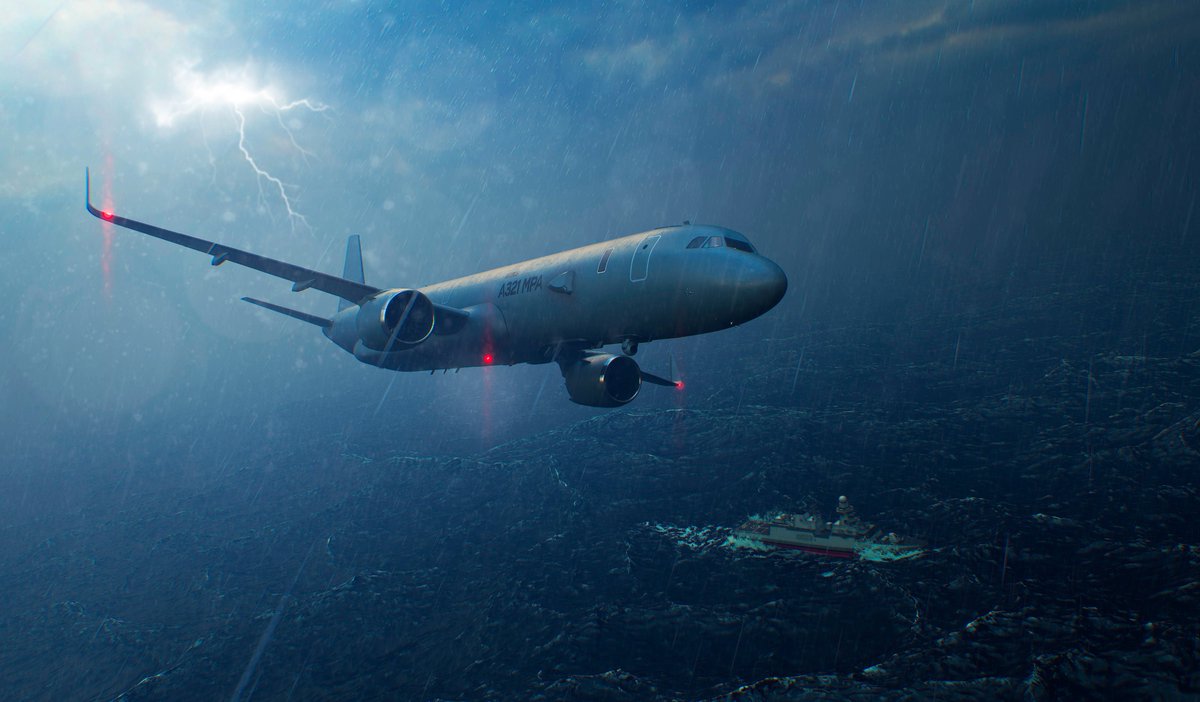
The biggest TAM in satellite business is comms... This is dead wrong. The largest spending on satellite infrastructure worldwide is on Remote sensing in all its forms, mostly military of course.
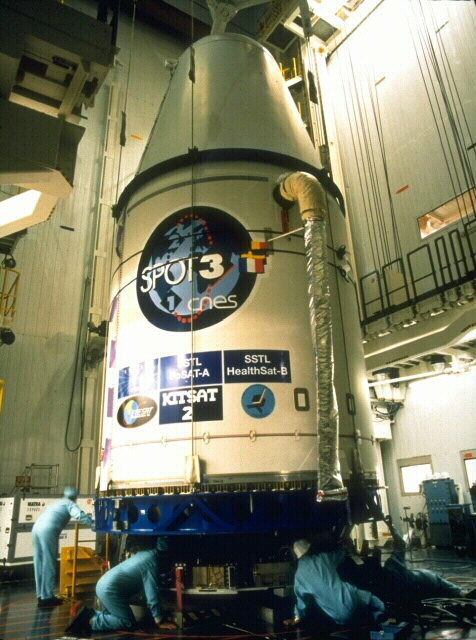
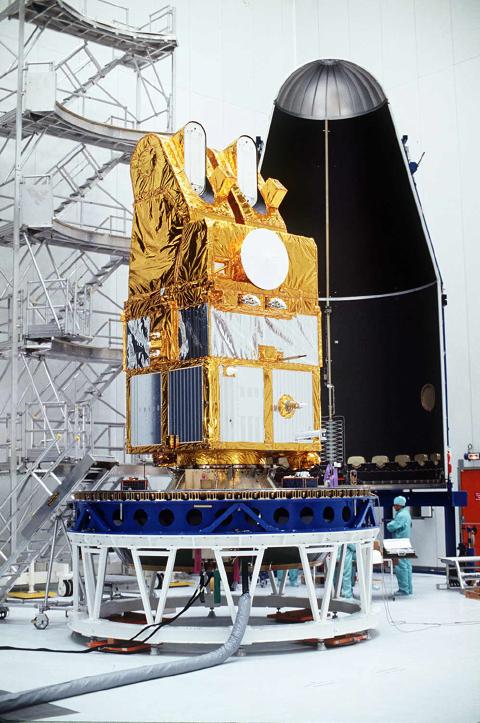
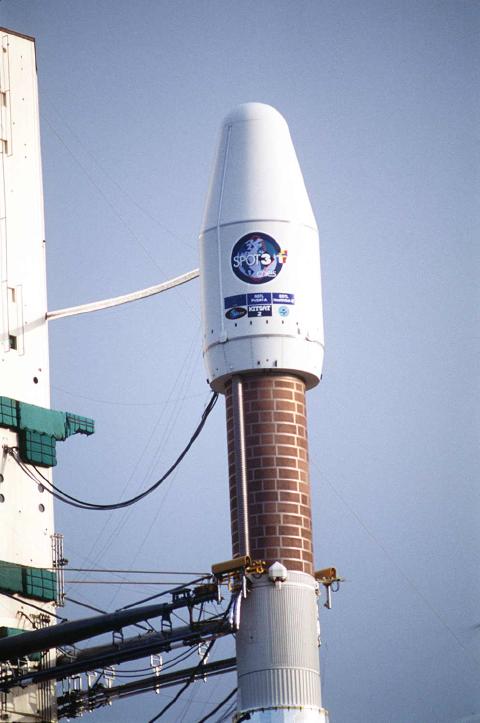
🚀 33 years ago, Ariane 4 launched SPOT-3.
On 26 September 1993, an Ariane 40 lifted off from Europe’s Spaceport, placing the Earth observation satellite SPOT-3 into Sun-synchronous orbit.
SPOT-3 was part of the SPOT Earth observation programme, providing high-resolution imagery for applications including agriculture, environmental monitoring, cartography and disaster management.
The SPOT satellites could also point their imaging instruments away from the vertical, allowing the same area to be observed from different angles and enabling stereoscopic imagery and 3D terrain modelling.
Flight 59 was one of the Ariane 4 missions that supported the development of Europe’s Earth observation capabilities throughout the 1990s.
#LaunchingAmbitions
Le 3 et 4 octobre, rendez-vous au Palais de la Découverte dans son nouvel écrin ! La réouverture approche, alors on va fêter la science là-bas.
J'y serai notamment dimanche 4 après-midi pour une table ronde et un podcast
The Galaxy That Shouldn’t Be This Clear 🌌🔭 JADES-GS-z13-1 was seen when the universe was only about 330 million years old. Yet NASA’s James Webb Space Telescope detected surprisingly strong hydrogen emission from this extremely early galaxy—light that should have been heavily blocked by the neutral hydrogen filling the young universe.
The Moon doesn’t generate a global magnetic field today, but some of its rocks remain magnetised. Explaining how they acquired that magnetisation has proved difficult: lunar samples give conflicting results, and both an ancient core dynamo and brief magnetic fields associated with impacts have been proposed. Research on the Dewar region, on the Moon’s far side, now supports the existence of a dynamo about 4.2 billion years ago.
A team of astronomers combined gravity measurements from NASA’s GRAIL mission with magnetic models based on Lunar Prospector and Kaguya observations. At Dewar, unusually strong magnetic and gravity signals overlap. Their joint analysis indicates a buried body roughly 60 kilometres wide, reaching about 9 kilometres below the surface. Its density, magnetisation and geological setting are consistent with an ancient accumulation of solidified magma.
Magnetic minerals can retain magnetisation acquired as a rock cools in an external field. Using estimates of the material’s magnetic properties, the researchers calculated that Dewar’s rocks required an ancient field exceeding 11 microtesla. Deposits from later impacts constrain the structure’s age to around 4.2 billion years. Together, these results support an internally generated field at that time, although they don’t establish how long the dynamo operated.
The analysis also helps explain the bright, curved markings known as lunar swirls. At Dewar, horizontal magnetisation and surface material enriched in iron oxide could account for the contrast: the local field deflects solar wind particles, reducing the alteration that darkens exposed soil. The composition of the surface therefore matters alongside the magnetic field.
The team favour a core dynamo over an impact origin for Dewar’s magnetisation. How the Moon’s small core sustained such a strong field remains unresolved. Measurements and samples from this region would help test the geological interpretation and the inferred field strength.
👉 https://t.co/f3kaVnJ0I5
Will an advanced version of submersible droids like this be deployed in the seas of Enceladus and Europa on future #astrobiology expeditions? Stay tuned.
Contact upcoming with Chile!
Students at Liceo Bicentenario Mary Graham in Valparaíso will talk with Jack Hathaway live via ham radio aboard the ISS.
Scheduled Mon. 28-Sept at 12:24 UTC | 8:24 AM ET | 9:24 AM CLST direct via CE2CQ.
Crew audio on 145.800 MHz FM.
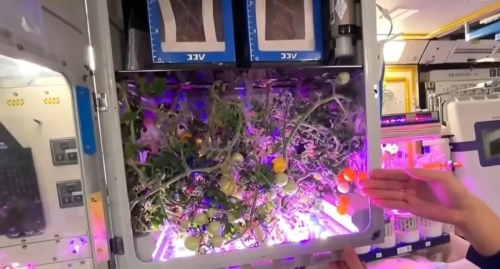
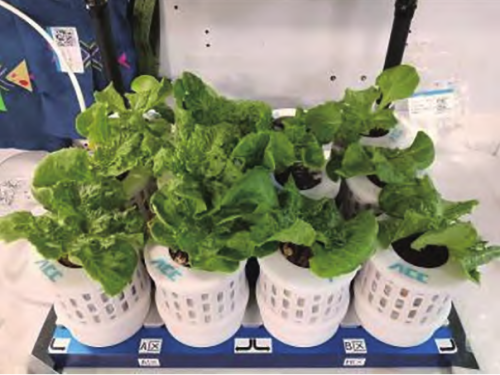
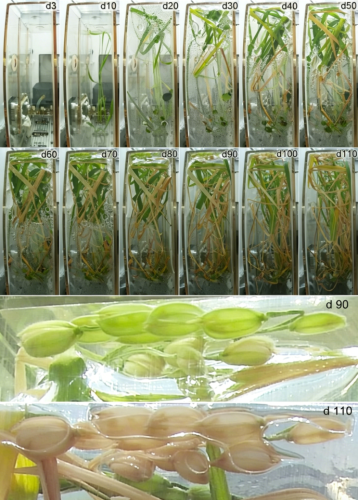
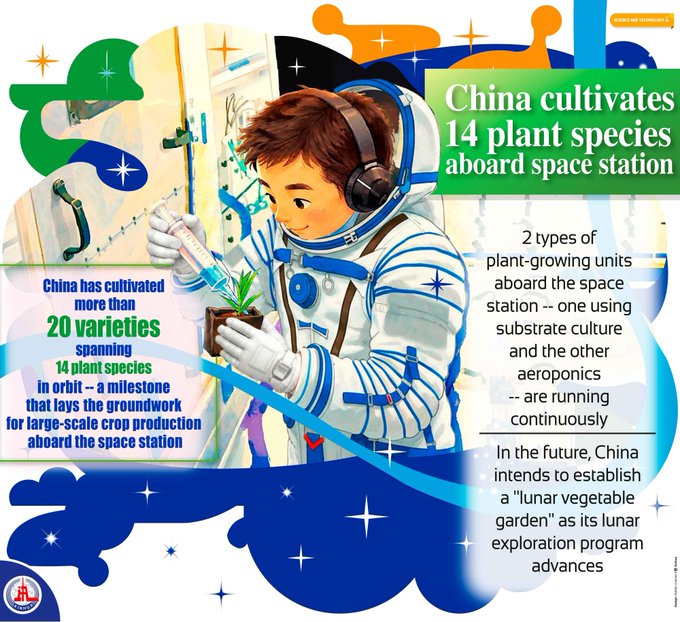
👨🏻🚀 La Chine annonce avoir cultivé plus de 20 variétés de 14 espèces végétales dans sa station spatiale depuis le début des vols habités de longue durée en 2021.
Des cultures sur substrat et en aéroponie de laitue, de carotte, de tournesol, de pomme de terre, de blé, ...
Stoke Space - La société vise désormais début 2027 pour le vol inaugural de sa Nova Pathinder depuis le SLC-14 en Floride, dont plusieurs vols sont prévus sur deux ans.
Le deuxième étage devrait déployer deux charges utiles provenant de Astroforge (une sorte d’engin spatial autonome) et de Celestis.
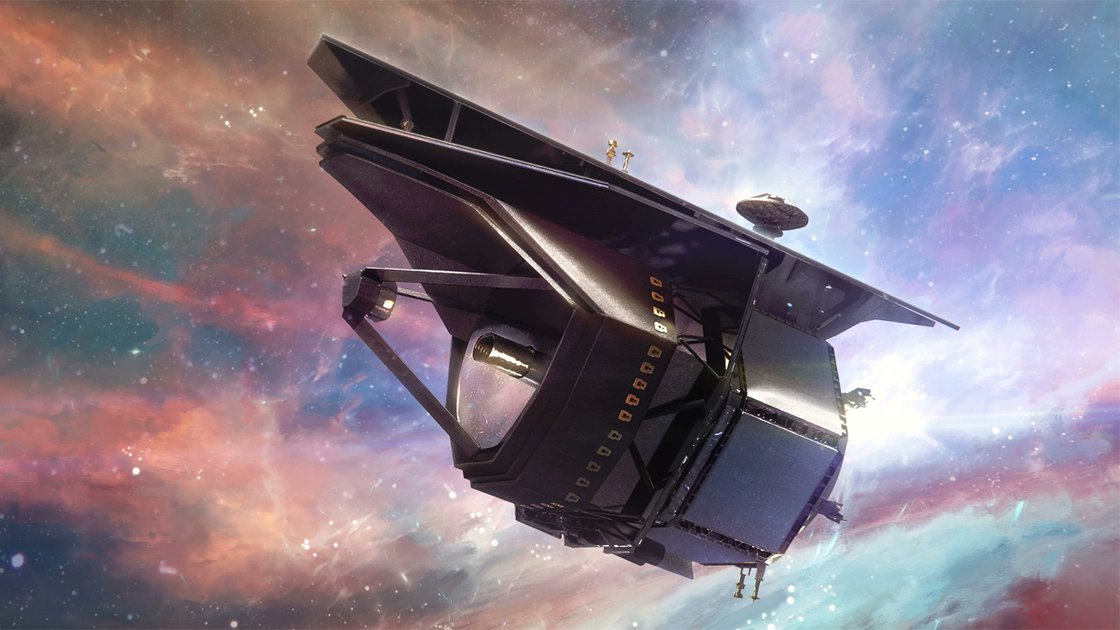
🔭 La #NASA a sélectionné PRIMA, futur télescope spatial qui explorera l’Univers dans l’infrarouge lointain.
🇫🇷 Le #CNES pilotera le développement de PRIMAger, un imageur qui étudiera notamment la poussière et les champs magnétiques des galaxies.
https://t.co/wSSn7Mm2FA
👽 L’espace s’expose autrement !
Du 25 au 27 septembre à Paris, le premier Salon de l’extra-terrestre réunit 22 artistes qui font dialoguer art contemporain et aventure spatiale. 🎨🚀
📍 Forma, Paris 3e
🎟️ Entrée libre et gratuite
👉 https://t.co/AYPE0mNydW @OdE_CNES
Today, the Sun crosses the celestial equator.
For us in the Northern Hemisphere, it means one thing :
the nights are finally getting longer !
Game on, stargazers!
What’s your big observing project this season?