System 1 produces the fast and instantaneous decisions that govern most of our lives.
System 2 is the type of thinking involved in focus, deliberation, reasoning or analysis. @lets_NEUROmkt#NMKTRCH#MKTINGNEURO#XperientialMkt
What are the two systems of reasoning model ?
System 1 is very unconscious, requires low energy, it’s working all the time.
System 2 demands a high level of cognition. It's effortful for the brain & deliberate and slow.
@lets_NEUROmkt#MKTINGNEURO#NMKTRCH#XperientialMkt
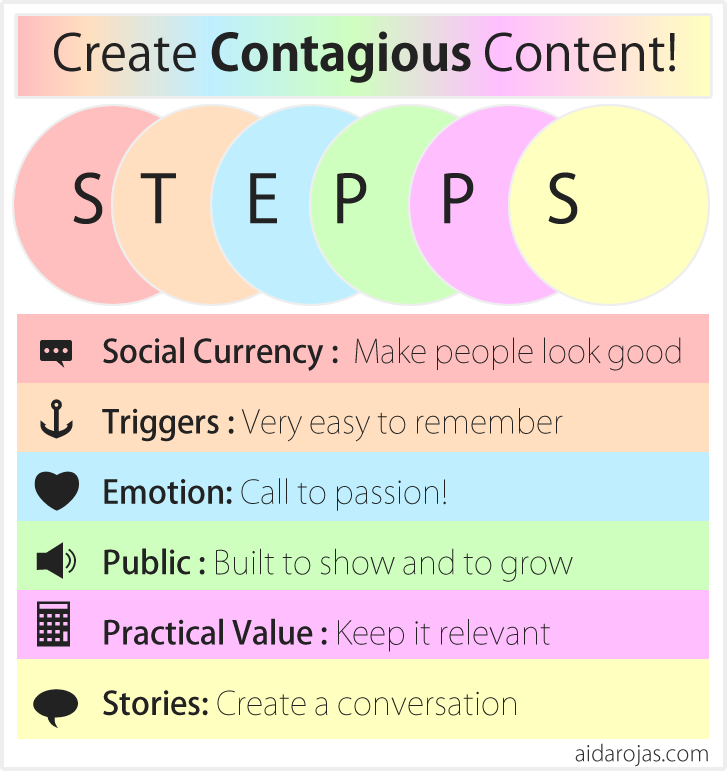
How to make your content viral? Use the STEPPS model which is based on 6 main factors: Social currency, Triggers, Emotion, Public, Practical Value and Stories.
#NMKTRCH#MKTINGNEURO#XperientialMkt@lets_neuroMKT
Viral marketing depends on a brand's ability to deliver the right content to the right place at the right time, and then let consumers do the heavy lifting for them. @lets_NEUROmkt#MKTINGNEURO#NMKTRCH#XperientialMkt
viral content is any content that gains popularity through social sharing. This can be anything from visual content, to video how-tos, to informational articles. @lets_NEUROmkt#MKTINGNEURO#NMKTRCH#XperientialMkt
What is STEPPS ?
- Social currency : things that make people look good
- Triggers : people need to be reminded by your product
- Emotions : Strong emotions -> we share
- Public : Social validation
- Practical value
- Stories
@lets_NEUROmkt#MKTINGNEURO#NMKTRCH#XperientialMkt
Value is determined by 4 elements :
- psychology
- sociology
- beliefs
- perception
Psychology and sociology = subjective aspects
Beliefs and perceptions = Variable aspects
@lets_NEUROmkt#NMKTRCH#MKTINGNEURO#XperientialMkt
User experience is the result of interactions between of an object and a person. 4 aspects : perception, thoughts, emotions and decisions.
Here, one decision taken with UX. What do you think?
@lets_NEUROmkt#NMKTRCH#MKTINGNEURO#XperientialMkt
Virality is something popularized by means of people in a social media context. It's something shocking that provides a strong message behind and generates emotions. We can associate it to a buzz.
#NMKTRCH#MKTINGNEURO#XperientialMkt@lets_NEUROmkt
Public = social validation
Red soles = Louboutin
Louboutin is an example of Berger’s Six ‘STEPPS’
The more something is known, the more likely it is to be imitated.
#NMKTRCH#MKTINGNEURO#XperientialMkt@lets_neuroMKT
These advertisements will make consumers want to buy more, we will talk about an anchor point. The consumer will have the impression that he is getting the deal of the year during his purchase.
#NMKTRCH#MKTINGNEURO#XperientialMkt@lets_NEUROmkt
This is an example of an offer that increases consumers' willingness to buy more than one product. Consumers tend to think it's better to buy one and get the other for free than to receive a big discount on just one product.
#NMKTRCH#MKTINGNEURO#XperientialMkt@lets_NEUROmkt
Bigger the price is bigger the value is. Value can be different from people to others. And price can influence consumer behavior, because it affects our perception and our consumption.
@lets_NEUROmkt#NMKTRCH#MKTINGNEURO#XperientialMkt
Context can play with our perception. We can se different interpretations. Perception is influenced or determined by the piece of information (to what is compared with or surrounded by).
#NMKTRCH#MKTINGNEURO#XperientialMkt@lets_NEUROmkt
The first information we receive has an influencial role on what We see therefore.
1: focus on the sky you’ll see a human face
2:start looking from the down left side you’ll see birds on a tree.
#NMKTRCH#MKTINGNEURO#XperientialMkt@lets_NEUROmkt
Sometimes, if the image that consumers have of the brand does not correspond to the value that the brand wishes to convey. It is therefore important to have a brand image aligned with the identity.
#NMKTRCH#MKTINGNEURO#XperientialMkt@lets_neuroMKT
Even if Brand Image and Brand Identity sound similar, the first holds the external stakeholders' perception while the second holds the internal stakeholders' self-perception
#NMKTRCH#MKTINGNEURO#XperientialMkt@lets_neuroMKT
Emotional decision making is easy for the brain, while logical analysis is energy-intensive. So, a fluent rounded price keeps the customer in “easy” mode, while a less fluent, more complex price may add difficulties. @lets_NEUROmkt#NMKTRCH#MKTINGEURO#XperientialMkt
Pricing is based on both objective and subjective things. Objective things are based on cost, competition and demand whereas the subjective things on the perceived value.
@lets_NEUROmkt#NMKTRCH#MKTINGEURO#XperientialMkt