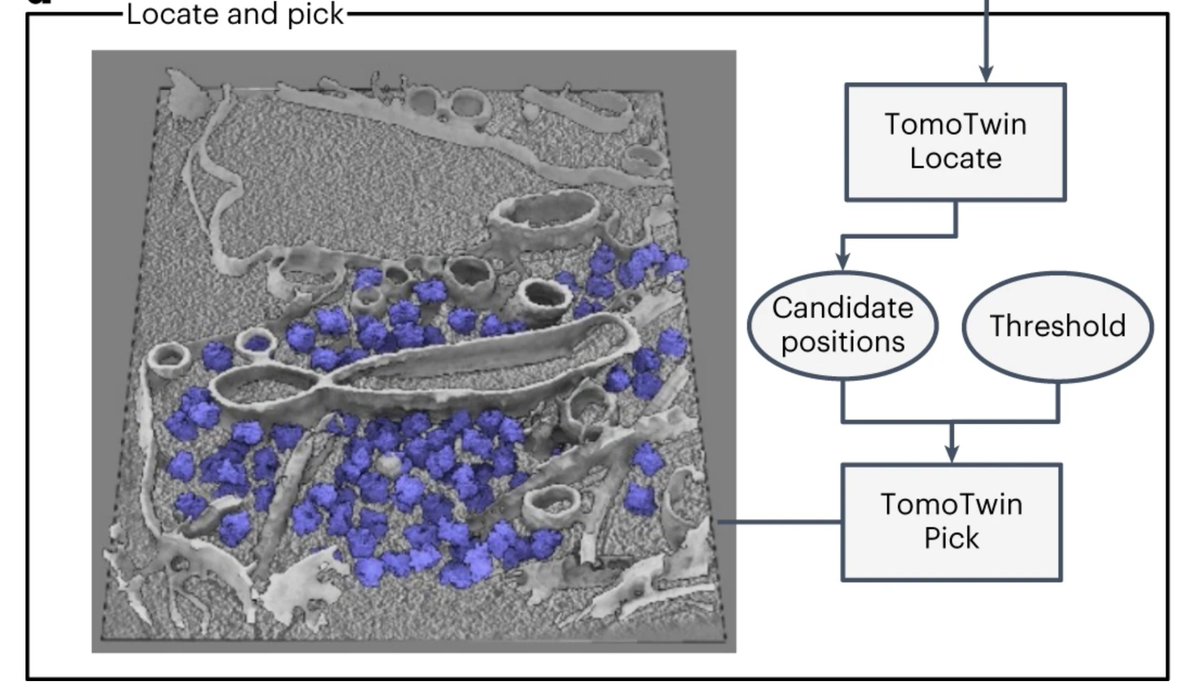
Delighted to share that the TomoTwin paper is officially out! We added a few key experiments to demonstrate the robustness of the general picking model and test how it stacks up against other methods, check them out below.
TomoTwin is a generalizable deep metric learning-based particle picking method for cryo-electron tomograms. The method obviates the need for annotating training data and retraining a picking model for each protein. @gavinRice20@pixelbaumarkt @intein
https://t.co/sYiXpyLylv
We are proud of @oleg_sitsel former @Intein lab postdoc
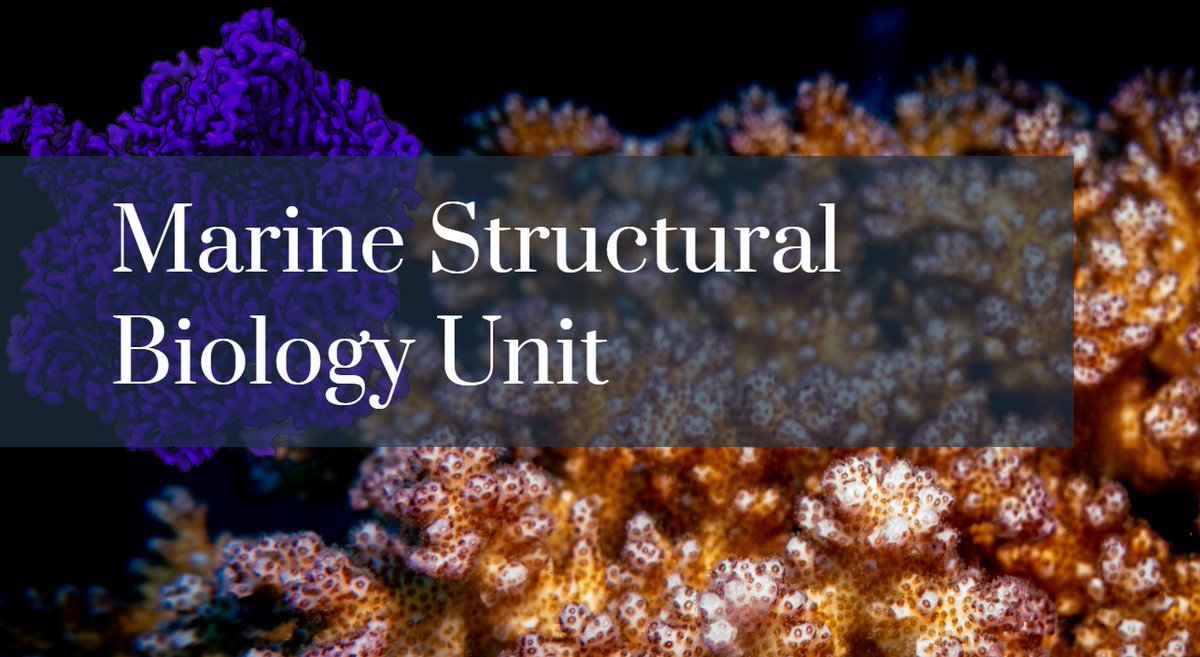
who is now Assistant Professor and head of the Marine Structural Biology Unit @OISTedu . We wish him much success and all the best on beautiful #okinawa#cryoEM
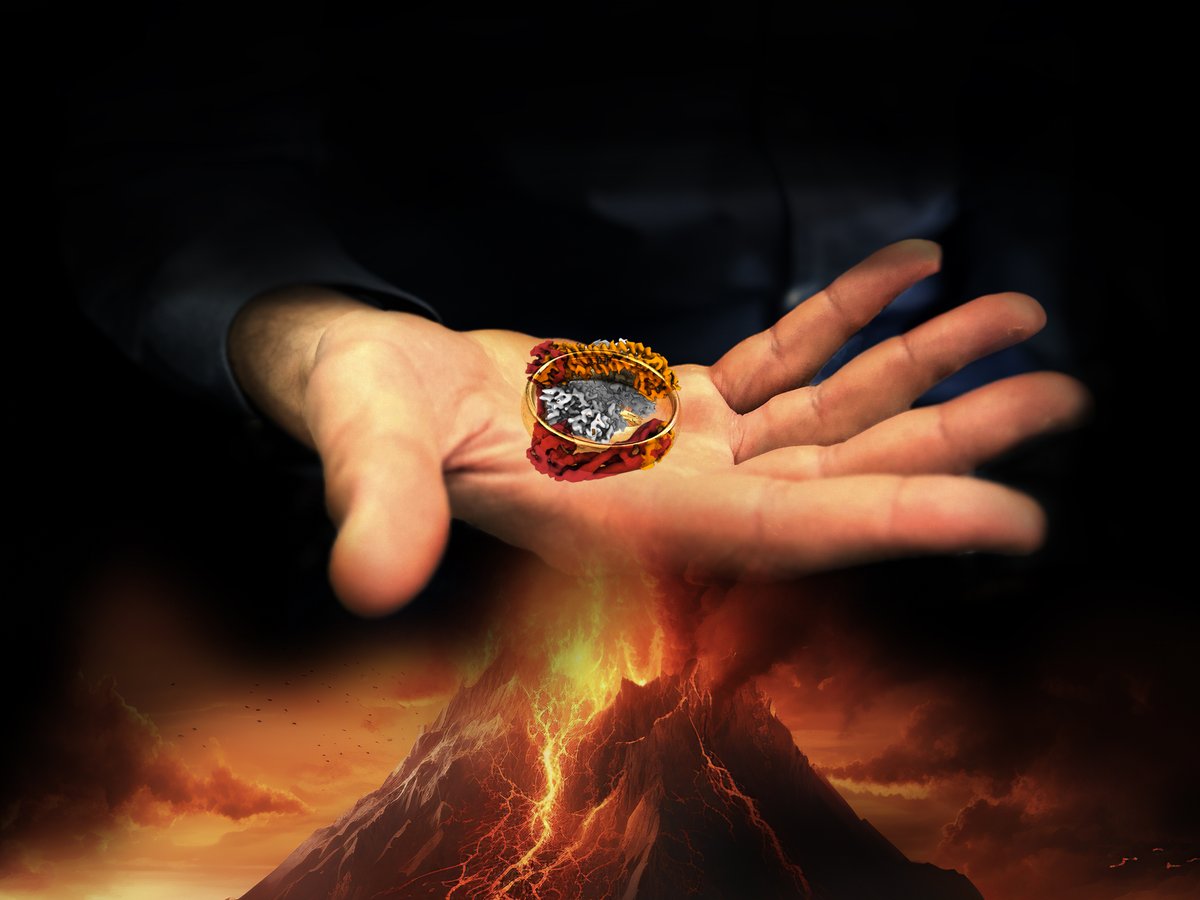
"One Ring to rule them all": Researchers from the groups of @peterbieling & @Intein @maxplanckpress unveil at the molecular level how ring-like formin proteins promote actin filament growth in cells.
➡️https://t.co/qBj3WPp7U1
Our latest work on #actin assembly is now online @ScienceMagazine!
We show how #formins bind and move with the growing barbed end of F-actin.
Awesome collab. between @Intein and Bieling labs @mpimoph, and big thanks to co-first author @maikaboiero
https://t.co/I6A17Jcz8a
The @TobiasRaisch group together with @Intein has solved the #cryoEM structure of the Slo1 potassium channel and suggest a novel activation mechanism of voltage-gated ion channels!
Congrats to Tobi on his first last author paper!
https://t.co/gKVH6JCY6V
🔬 Preprint alert! α-latrotoxin from the black widow spider 🕷️ revealed! Check out this intricate mechanism of how the toxin inserts into the membrane and converts to a cation channel! First #cryoEM work #cryoEM_SON@uni_muenster@Sfb1348.
https://t.co/shrUVADetP
I’m proud to present the first preprint of my lab @LeibnizFMP, reporting how Fusobacterium nucleatum binds to the human host via its adhesin Fap2: https://t.co/fWOqwYYhI2 A big thanks to @FelixSchoepf, @CFcryo , Gian Luca Marongiu, Klaudia Milaj, Judith Kikhney and Annette Moter.
On one hand, I think the TomoTwin video tutorial makes it much more accessible. But on the other hand as @pixelbaumarkt warned me, as soon as we update the UI or the workflow we need a new video tutorial… this quickly becomes a lot of work
# on technical accessibility
One interesting observation I think back to often:
- when I first published the micrograd repo, it got some traction on GitHub but then somewhat stagnated and it didn't seem that people cared much.
- then I made the video building it from scratch, and the repo immediately went through hockey stick growth and became a verty often cited reference for people learning backpropagation.
This was interesting because the micrograd code itself didn't change at all and it was up on GitHub for many months before, stagnating. The code made sense to me (because I wrote it), it was only ~200 lines of code, it was extensively commented in the .py files and in the Readme, so I thought surely it was clear and/or self-explanatory. I was very happy with myself about how minimal the code was for explaining backprop - it strips away a ton of complexity and just gets to the very heart of an autograd engine on one page of code. But others didn't seem to think so, so I just kind of brushed it off and moved on.
Except it turned out that what stood in its way was "just" a matter of accessibility. When I made the video that built it and walked through it, it suddenly almost 100X'd the overall interest and engagement with that exact same piece of code. Not only from beginners in the field who needed the full intro and explanation, but even from more technical/expert friends, who I think could have understood it if they looked at it long enough, but were deterred by a barrier to entry.
I think as technical people we have a strong bias to put up code or papers or the final thing and feel like things are mostly self-explanatory. It's there, and also it's commented, there is a Readme, so all is well, and if people don't engage then it's just because the thing is not good enough. But the reality is that there is still a large barrier to engage with your thing (even for other experts who might not feel like spending time/effort!), and you might be leaving somewhere 10-100X of the potential of that exact same piece of work on the table just because you haven't made it sufficiently accessible.
TLDR: Step 1 build the thing. Step 2 build the ramp. 📈
Some voice in your head will tell you that this is not necessary, but it is wrong.
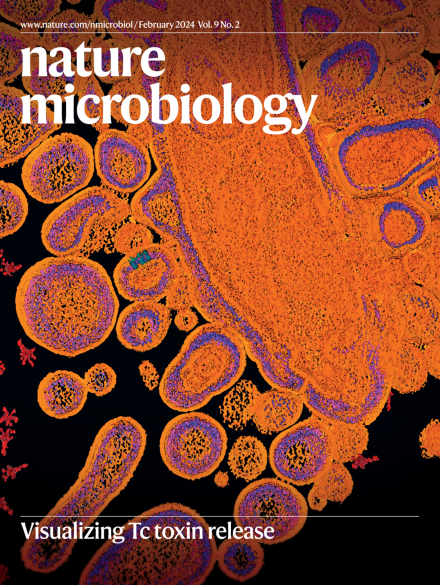
So proud that our Tc toxin release story with @Intein was featured on the cover of today's @NatureMicrobiol issue! 🎉
Check out this 💥explosive 💥tale here: https://t.co/kZS1vHro0p
Are you ready to meet the #toxin with the most AWESOME name? Say hello🤗 to The Makes Caterpillars Floppy 1 toxin! It took us nearly a decade of work🔬 to find out what it looks like, but it was really worth it. Look at this 330 kDa giant beauty full of secrets! Thread 1/8.
My lab has exciting openings for postdocs/staff scientists and a technician. Involves super-cool projects, a dynamic international environment, cutting-edge infrastructure, and a stunningly beautiful tropical island!
https://t.co/cpn2Quno7T
https://t.co/uXnNVGQ4Cu
Please repost!
It is my great pleasure to announce that I am joining @OISTedu as faculty!
My lab will focus on characterizing our oceans’ amazing inhabitants mainly by cryo-electron #tomography, with #corals representing our chief interest. Collaborators always welcome – please reach out to me!
Very excited to share our preprint on the multi-state kinetics of the syringe-like injection mechanism of Tc toxins. Great collaboration between the Raunser @Intein @mpimoph, Seidel @HHU_de, @enricabordignon@sciences_UNIGE and Dong @harvardmed labs.
https://t.co/lbaE6NVtGX
1/3
TomoTwin 0.7 is out and ready to use for #TeamTomo :-) This release adds new tools for advanced strategies that describe how to speed up the calculation of embeddings, potentially improve their umaps, and how to refine references/targets! 🧵
All changes: https://t.co/3CmXcUDQ3B
📢#TeamTomo We are hiring! @GatsogiannisLab@uni_muenster - 2 PostDoc Positions. Start Jan.2024, cutting-edge #tomo projects, top instruments (Krios G4, Aquilos2 iFLM), young and dynamic team, beautiful @muenster_de, come and join us! Contact me for more details and please RT 👇🏻!
@sonjawelsch@ImagingArtifact@MPIbp Kept happening to us as well. Shocked when I found out the spec for these is a 6 month lifetime. Why not vacuum lines made from metal braid?
Really interesting conversation and great to hear mentions of cryoET, @napari_imaging etc. in a more mainstream context. Hoping that TomoTwin will contribute towards this important goal.
New Huberman Lab podcast out now: CURING ALL HUMAN DISEASES & THE FUTURE OF HEALTH & TECHNOLOGIES•
• Using Cells As Microscopes
• AI: Large Language Models
• A New Way of Doing/Funding Science
• Goal Optimism
• Mixed Reality Will Soon Be Everywhere
https://t.co/5Kw9cH4P5M
Very excited that our manuscript is now online @NatureSMB!
https://t.co/jFMeLSr6bW
We show how actin filaments release inorganic phosphate (Pi) through a “molecular backdoor” and demonstrate that the backdoor is distorted in a disease-linked actin variant.
A thread (1/17)