So happy to share my PhD work published today @Nature ! We studied how tissue niches shape Treg function. So grateful to Fiona @powrie_lab, Emily @emilyethornton and a wonderful collaboration with Sarah @teichlab and Raquel @RBartolom. We did it! https://t.co/TvvFstH7Hp
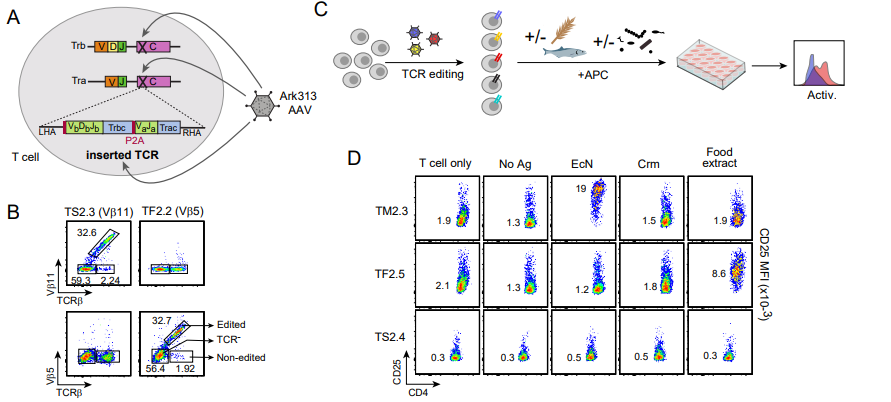
Thanks for a great writeup (and fun photo session) from @pitt_immunology on our latest work in @Nature describing how a meal can improve T cell metabolism and function!
Our new Nature study, lead by @yuexing identifies a brief early-life window when skin dendritic cells sense common allergens and trigger inflammation right in the skin without migrating to lymph nodes. We define this in-situ activation state as peripheral immune inducer (pii)DC, and show it emerges because of a still-maturing HPA axis and low systemic glucocorticoids. #Naiklab
👉Key takeaways:
1. Early-life immunity plays by different rules. During this window, innate responses to allergens in skin are heighted.
2. Hormones shape immunity in real time. Developmental neuroendocrine states profoundly tune how the immune system reacts, and can set the stage for inflammatory disease.
Thanks our incredible collaborators @niroanandalab@EmmaGuttman@kamalkhanna@Teresalu@Amandalund and others. Our funders @NIAIDNews @NIH@DermalCell@SinaiImmunol@MSHSDerm
https://t.co/Ipqicx4TDo
Thrilled to share latest work: Fine-tuning BACH2 dosage balances stemness and effector function to enhance antitumor T cell therapy - now online in Nature Immunology. @alberto_g_conti, Alex Evans, @teresavlinde, @IanParish_AU, @cdtdeg@CRUKCamCentre
https://t.co/l0kMvHJjc9
Inspired by yesterday’s Nobel Prize announcement? Then apply for a PhD with @teichlab@SCICambridge to study how peripheral immune tolerance is maintained using models including graft versus host disease. Clue: Tregs are a key player! More details here: https://t.co/XjwTvkQASg
Immunology takes center stage again at the #NobelPrize! Congratulations to Mary Brunkow, Fred Ramsdell & Shimon Sakaguchi for uncovering how regulatory T cells maintain immune tolerance—a discovery that transformed our understanding of autoimmunity and cancer immunotherapy
NEW: Research shows that tumours aren’t just shaped by genetics - their physical surroundings matter too.
When cancer cells feel 'squeezed' by nearby tissue, they can switch gears: instead of growing fast, they spread more easily and become harder to treat.
Read more ⬇️
Huge news! A £50M MRC CoRE will bring together Manchester & Oxford to study how environmental exposures cause chronic inflammatory disease.
It will be Directed by Prof Judi Allen (Manchester) & co-Directed by Prof Dame Fiona Powrie, Director of the KIR.
https://t.co/V4sWlMnMDZ
Endogenous CNS-derived regulatory self-peptides presented on MHCII molecules during homeostasis (drops in neuroinflammation) drives Treg expansion that reinforce immune privilege of CNS @Nature@jonykipnis@mitchkim_mw
https://t.co/RFAbjMv5y4
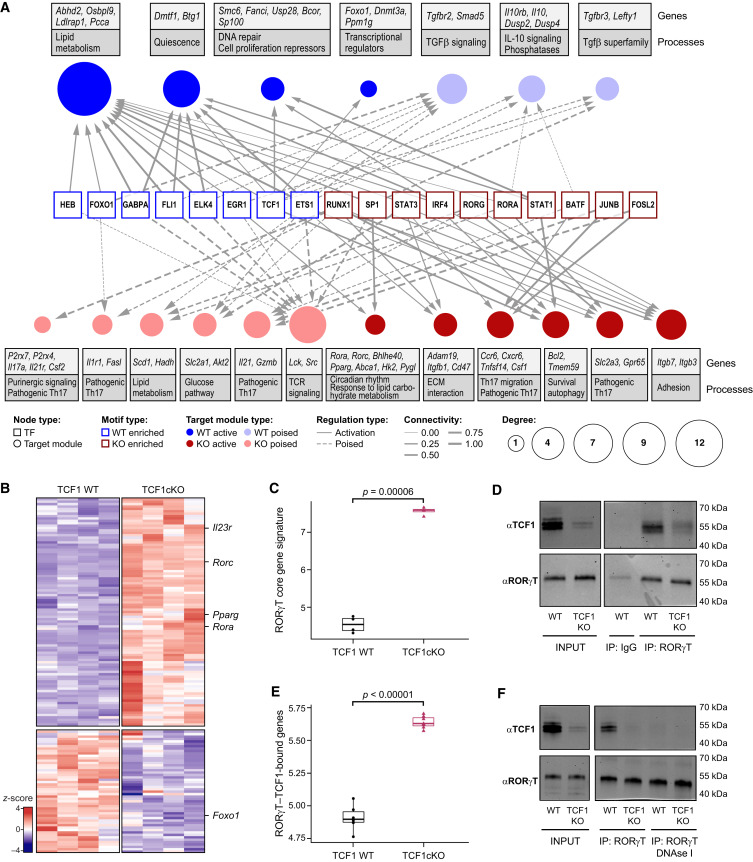
Transcription factor TCF1 binds to RORγt and orchestrates a regulatory network that determines homeostatic Th17 cell state @ImmunityCP@AnaAndersonlab@Dr_ImmunoMan_D
https://t.co/ThuKBveqiD
Please consider applying for a PhD with the Powrie lab - you won’t regret it! You will receive world- class training in immunology and there is something for all interests: basic and translational 👍
Sir Ravinder Maini FMedSci FRS and Professor Sir Marc Feldmann AC FMedSci FRS are jointly awarded the Royal Medal 2024 for inventing anti-TNF therapy to treat rheumatoid arthritis, bringing their therapeutic from bench to bedside in one of the biggest success stories in modern medicine, and laying the groundwork for biologics to improve the quality of life for millions of people. #RSMedals
https://t.co/tNdahmGZv9
Picture credit: The Lasker Foundation