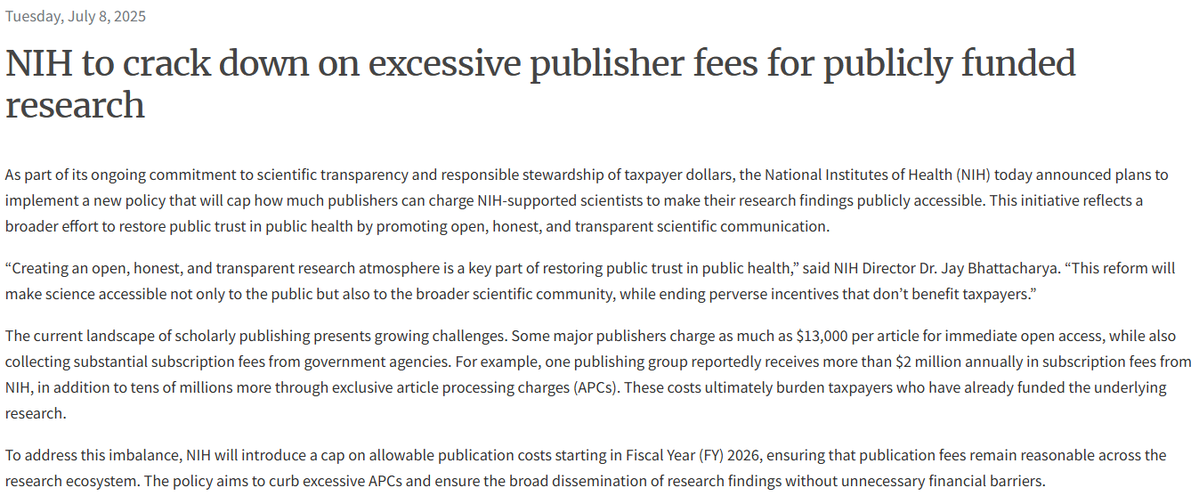
Today, @NIH announced a new policy to cap how much publishers can charge NIH-supported scientists to make their work publicly accessible. This reflects our broader effort to restore public trust in public health by creating an open, honest, and transparent research atmosphere.
Read more ➡️ https://t.co/IC56qDzF8C
The lab was awarded an Mars Shot award from the @SNM_MI to support our work on improving antibody-based radiopharmaceuticals! A big thank you to the SNMMI!
https://t.co/EokMg4Sny2
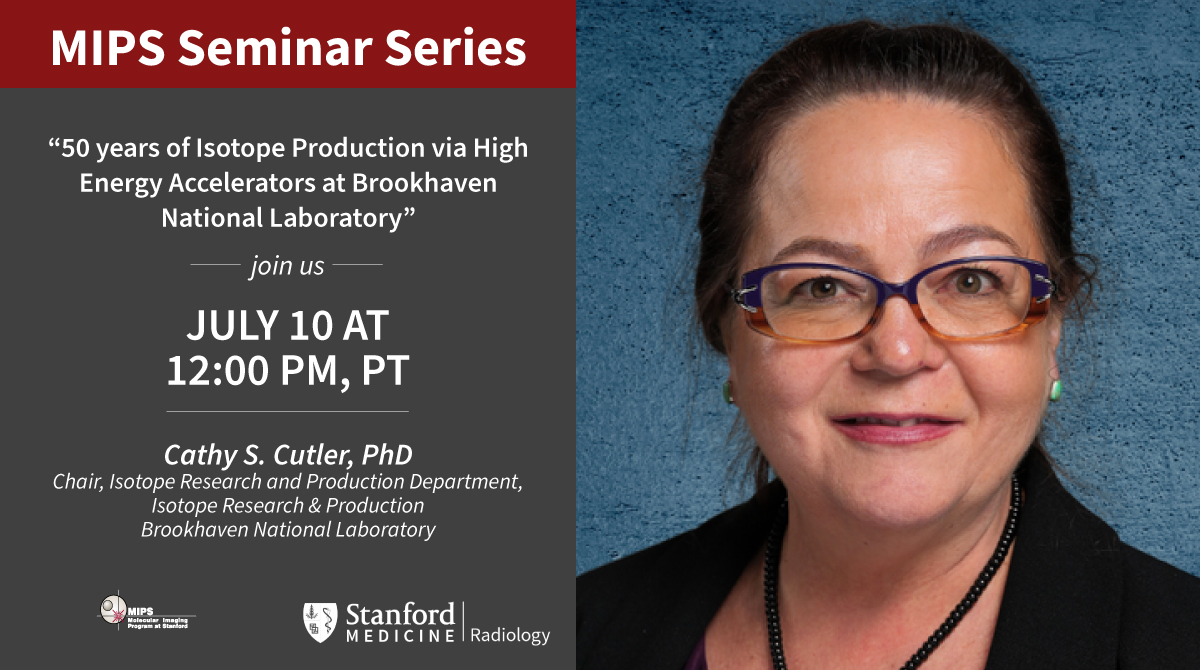
Join us July 10 for our next MIPS Seminar! Cathy S. Cutler, PhD, will discuss, "50 years of Isotope Production via High Energy Accelerators at Brookhaven National Laboratory." Register today! https://t.co/0fUnuMAhaq #MIPSEvents
Ivan @DrGallium , led the writing of this review on the molecular imaging of neuroendocrine tumors, now in press at Diagnostic and Interventional Imaging. If you are new to the topic, then this review is a great place to start.
https://t.co/GVY0DCVD4X
@afallenbrooks@vitaliyk@POTUS US (and international) sanctions against Russia still in place against exports, including commodity chemicals. They have intensified since 2022 when the conflict began, probably why Russia was not on the list.
New work from our lab on the use of [11C]CO to prepare benzamides titled "Production of 11C-Labeled Amides via "In Loop" 11C-Carbonylation" has been published in the Asian Journal of Organic Chemistry. The work was led by Tanpreet Kaur.
https://t.co/ovqjMU6f19
Dr. Viola gave very insightful @PennRadiology grand round talk about the role of radiopharmaceutical agents for cancer treatment and imaging. Also setting the foundations for "Radio" Theranostics.
@ViolaLaboratory @karmanoscancer
@afallenbrooks@vitaliyk@elonmusk@afallenbrooks NS2 opposed by multiple
countries including the UK and Ukraine. Merkel a huge promoter. Agree in part but Germany’s interests have shaped EU policy, in the face of opposition. Military underfunded, punitive after Brexit. OTOH, ECB has stabilized inflation.
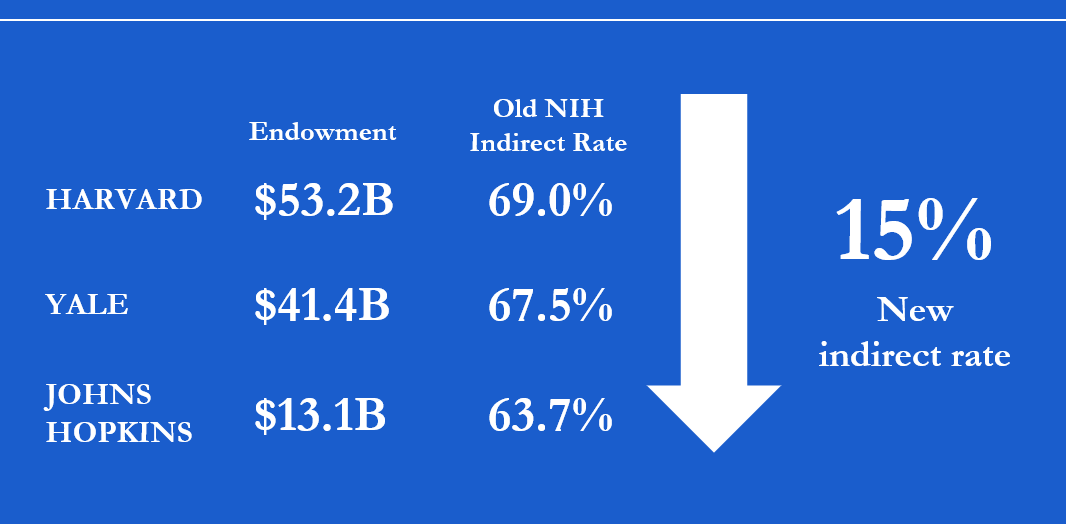
Last year, $9B of the $35B that the National Institutes of Health (NIH) granted for research was used for administrative overhead, what is known as “indirect costs.” Today, NIH lowered the maximum indirect cost rate research institutions can charge the government to 15%, above what many major foundations allow and much lower than the 60%+ that some institutions charge the government today. This change will save more than $4B a year effective immediately.
In an unprecedented move, research-grant reviews have been suspended indefinitely at the world’s largest public funder of biomedical research
https://t.co/rEmlD6lFgE
Concise Synthesis of (−)-Veratramine and (−)-20-iso-Veratramine via Aromative Diels–Alder Reaction | Journal of the American Chemical Society @DirkTrauner@Penn@TotalSynthesis@TotalSyntheses https://t.co/VmRTxl6JLU
Just a few days left before the SOCIETY OF RADIOPHARMACEUTICAL SCIENCES @SocRadiophSci election closes, so please consider this a last ask to please support me election bid and vote #PeterForPresident at the following link:
https://t.co/ubzBNW5Ks8
Official postdoc ad is up! Please share or apply if you are interested in joining our group here at the Yale PET center and working on cutting-edge imaging for diabetes and obesity!
https://t.co/eicJrXPXI6