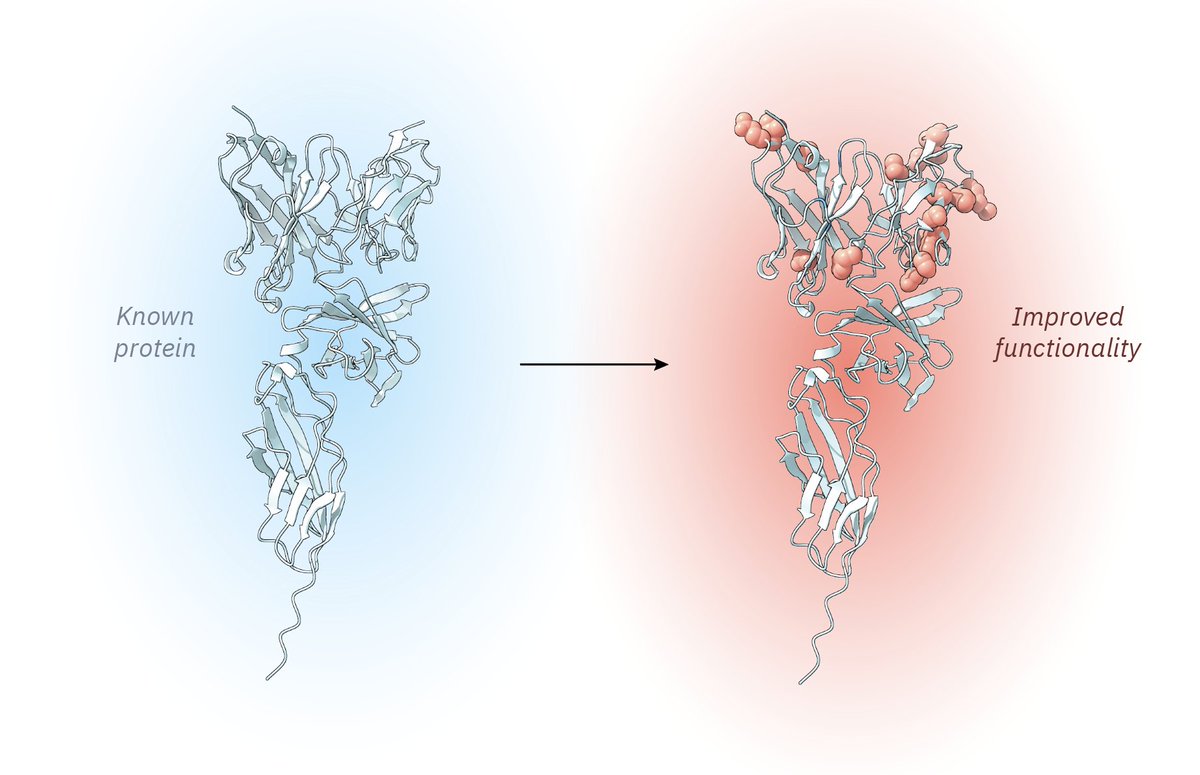
Biological engineering has long aimed to make biological systems designable, composable, and programmable across scales and modalities. However, existing biological AI models and tools are siloed and difficult to compose.
Today, we’re proud to share our preprint for Proto, a high-level programming language and open infrastructure layer generative biology.
*This thread is centered around the Proto Language. For the full paper thread, check out: https://t.co/bZexx0oKEg
we're working on a new photo search engine called Angles. it's focused on doing one thing well: finding photos + videos by visual similarity.
here is raw, unedited footage of me going through my 80,000 photo camera roll *in realtime* with text-to-image search, image-to-image search, "find similar" inside of a photo, and "live search" with the camera. all done with local models and completely private. auto-growing albums coming soon :-)
Angles has been exceptionally useful for my friends who do creative work. when words fail to describe what you are looking for, you can simply tap on any asset and instantly see everything else like it across your entire library.
we're in early beta - if you want access please send a DM to @patinasystems with your testflight email! i have spots available for another 50 people
The hardest part of protein engineering isn't just finding good mutations – it’s deciphering which ones combine synergistically.
Today in @ScienceMagazine, we present MULTI-evolve, a framework for rapid multi-mutant protein engineering, validated across three diverse proteins.
Excited to share our work digging into how Evo 2 represents species relatedness or phylogeny. Genetics provides a good quantitative measure of relatedness, so we could use it to probe the model and see if its internal geometry reflects it.
What makes LLMs like Grok-4 unique?
We use sparse autoencoders (SAEs) to tackle queries like these and apply them to four data analysis tasks: data diffing, correlations, targeted clustering, and retrieval. By analyzing model outputs, SAEs find novel insights on model behavior!
We're thrilled to be launching Tilde.
We're applying interpretability to unlock deep reasoning and control of models, enabling the next generation of human-AI interaction.
By understanding a model's inner mechanisms, we can enhance both its reliability and performance—going beyond what's possible with traditional techniques like fine-tuning alone.
Check out what Tilde can do.
@SlavaChalnev@MatthewWSiu@ArthurConmy Cool work! Curious if you tried directly clamping a set of SAE features instead (as opposed to a steering vector) / if you discarded this as an unpromising technique?
Meet Context Autopilot
It learns like you, thinks like you, and uses tools like you.
With SoTA context understanding, it's capable of most information work today.
Watch it beat a team of industry experts:
🔥 Paper Drop 🔥
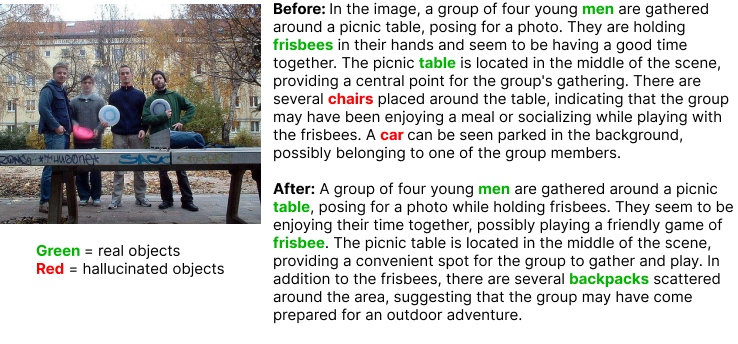
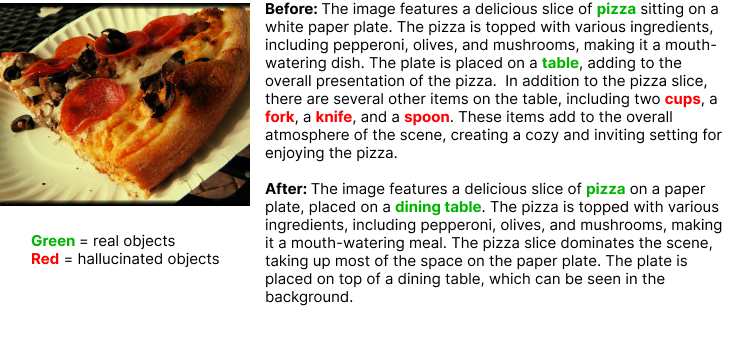
What can we understand by peering inside vision-language models (VLMs) like LLaVA?
We show that image representations inside VLMs can be directly interpreted and edited in the language space, and we apply our findings to mitigate hallucinations!
🚀Excited to announce: Open-source AlphaFold3 implementation! 🚀
I am thrilled to announce one of the models we have been building for the last 8-weeks at Ligo - an open-source implementation of DeepMind’s frontier model, AlphaFold3! Here’s what we have learned, a thread (1/11):
@thesephist@lbtucker123 I'm curious -- do you mean curating the dataset for the automated interp. pipeline, or the dataset to actually train the SAE? Either way, even the mechanisms of chunking text (by sentence, paragraph, token), can influence extracted features. Thoughts?
Meet Iris — a macOS app that makes it easy to multitask with AI.
Over the last year, I’ve been exploring how we can evolve the desktop OS. This is the first small step :)
You can download Iris now at https://t.co/KALWfNCfQ6