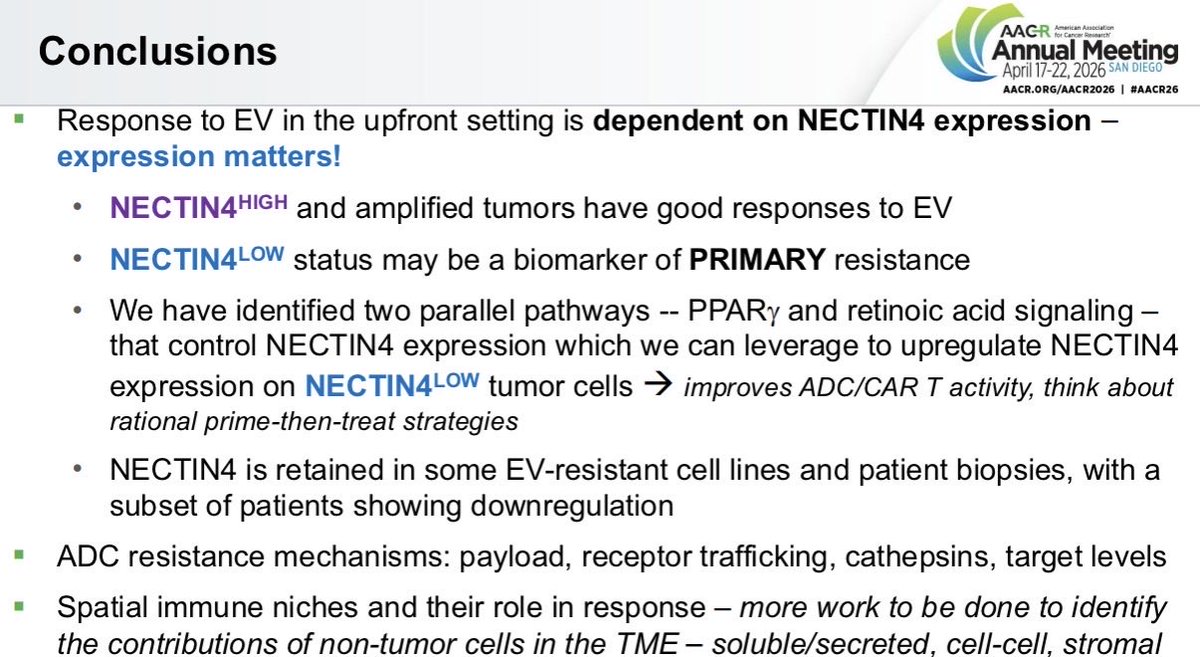
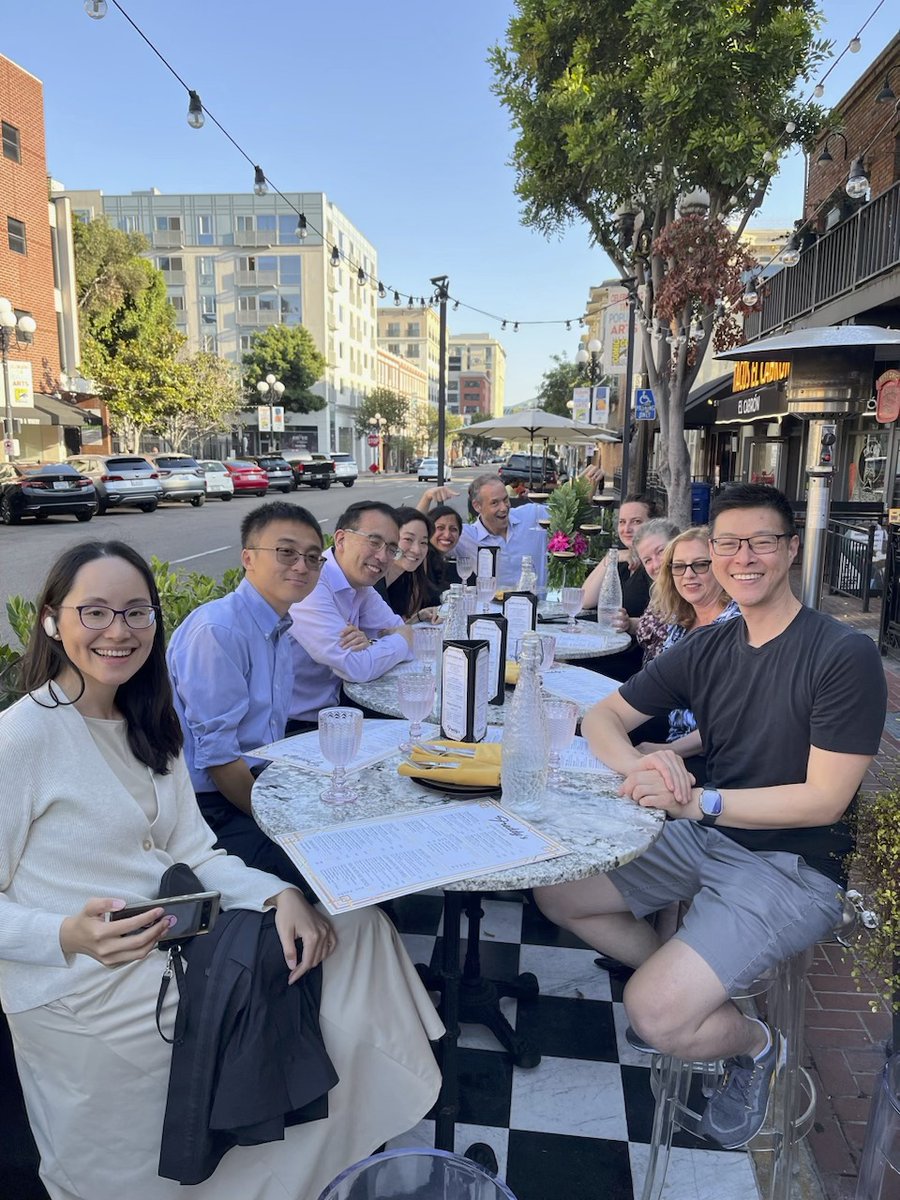
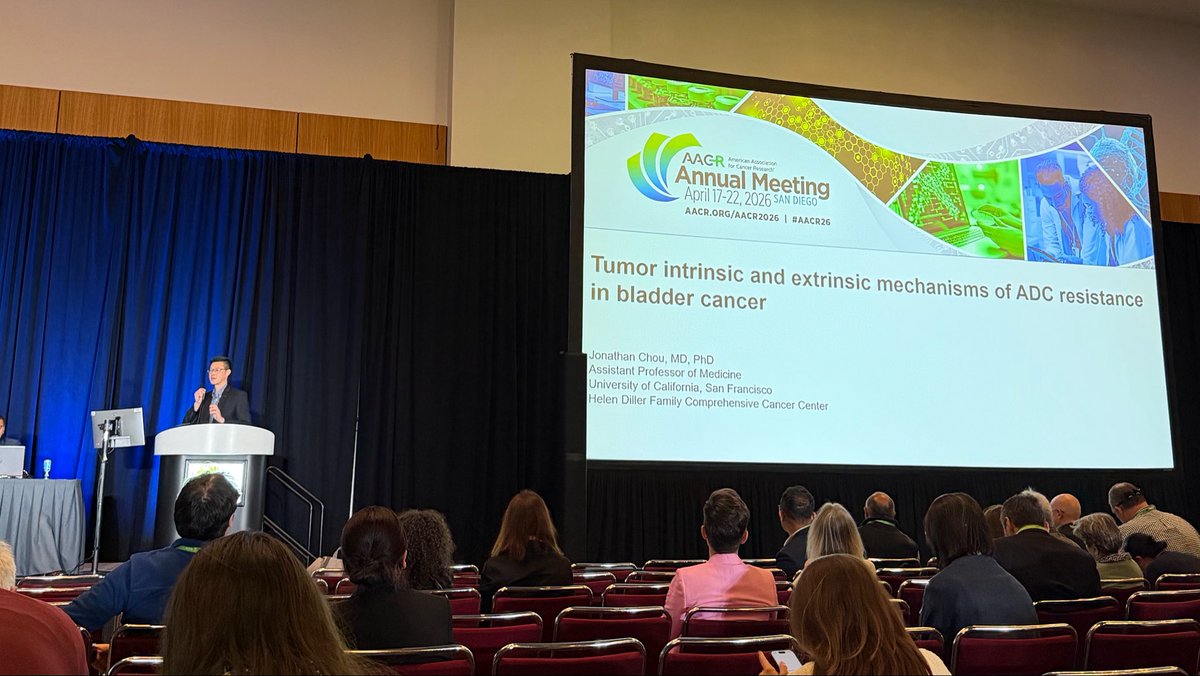
@jonchou05 delivers a tour de force presentation @AACR on resistance mechanisms to NECTIN4 therapy (enfortumab and CAR-T) in bladder cancer. @UCSFCancer#AACR26
The takeaways:
10/ APEX linked luminal programs to favorable outcomes and EMT signatures to poor outcomes. In enfortumab vedotin–treated bladder cancer, 58% of patients with high APEX-predicted NECTIN4 responded, compared to 0% with low NECTIN4.
Even after adjusting for tumor fraction, copy number, and clinical covariates, APEX-derived NECTIN4 remained independently associated with improved survival. Our preliminary data suggests that plasma-inferred NECTIN4 may outperform tissue NECTIN4 IHC in this task.
Research funded in part by BCAN with @jonchou05 in @NatureComms : Modulating the PPARγ pathway upregulates NECTIN4 and enhances chimeric antigen receptor (CAR) T cell therapy in bladder cancer. Click here to read the article: https://t.co/9HuEN2syB6
In @naturecomms: Bladder cancer variants share aggressive features including a CA125+ cell state and targetable TM4SF1 expression. Click here to read the article: https://t.co/w9QE006asN
📢Check out this Article NOW ONLINE! @NatureCancer
'#Transcription and #DNAreplication collisions lead to large tandem duplications and expose targetable #therapeutic vulnerabilities in #cancer'
✏️By Jonathan Chou, Lixing Yang and colleagues
📎https://t.co/MyQVvgPWsq
🔥 Hot off the press: Lixing Yang, PhD, and collaborators at @UCSF have published a ground breaking work in @NatureCancer, demonstrating how unrepaired collision of DNA replication and transcription can drive aggressive cancers. @UChicagoCCB@jonchou05
https://t.co/YLKqGCat5I
📕 New publication alert: Lixing Yang, PhD and his collaborators at @UCSF published an exciting work demonstrating new approaches to correct the errors generated by the collision of DNA replication and transcription. @jonchou05@NatureCancer@UChicagoCCB
https://t.co/Gg39yK3M5K
In prostate cancer, sensitivity to poly ADP-ribose polymerase inhibitors is dependent on the specific type and zygosity of the CDK12 mutation, reports Dr. Jonathan Chou's team at @UCSF.
https://t.co/qRdFVgfLZ9
Histologic variants in bladder cancer harbor aggressive molecular features including TM4SF1 expression and a CA125+ cell state https://t.co/wBicWEkw1q #biorxiv_cancer
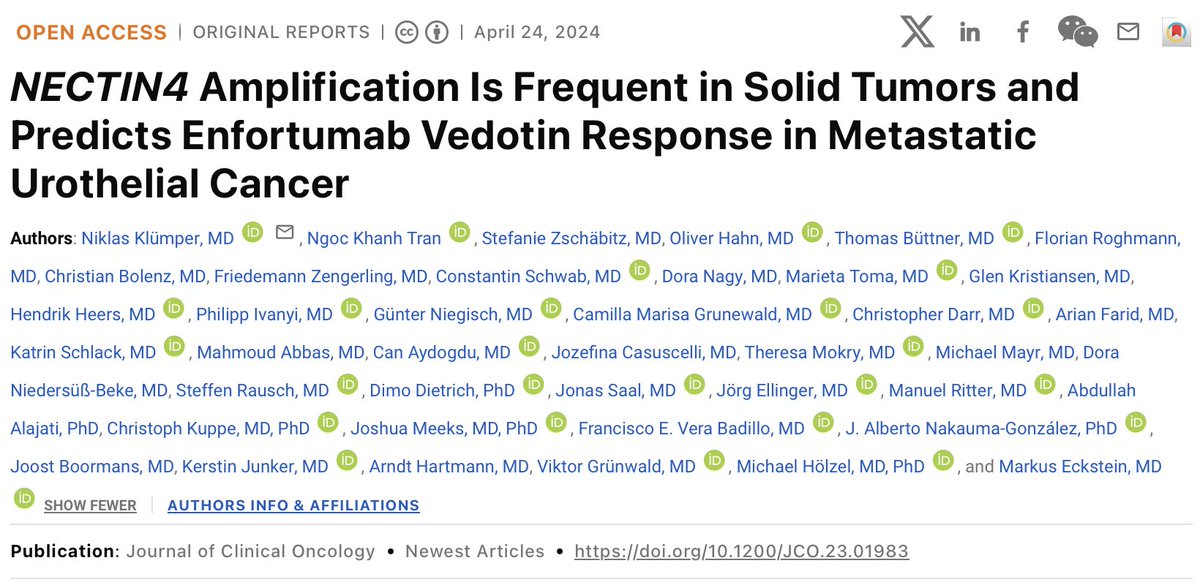
Great overview on UC pathology @Markuseckstein3 🔥 important to keep these pathways of UC carcinogenesis in mind for ADC targets as well, as NECTIN4 is overexpressed in luminal tumors as nicely demonstrated by @jonchou05 https://t.co/y9gkotHqZY in @CCR_AACR@urotoday@OncoAlert