Today we’re sharing how we built Thalamus: Cerebrium’s highly available distributed router for global AI workloads.
It helps power low-latency, resilient AI applications across fragmented compute for companies like
@tavus, @superwhisper, @useCamb_AI
Read more: https://t.co/QKX7iwNzTI
Most conversational AI understands words, not people.
Introducing Raven-1, our audio and video perception model that gives AI the ability to understand emotion, intent, and context the way humans do.
The interface of the future is human.
We’ve raised a $40M Series B from CRV, Scale, Sequoia, and YC to teach machines the art of being human, so that using a computer feels like talking to a friend or a coworker.
And today, I’m excited for y’all to meet the PALs: a new human-computing interface.
PALs are emotionally intelligent, multimodal, and capable of understanding and perceiving. They can see, hear, reason, and even look like us.
We’re releasing our 5 favorite PALs to start. Each PAL has its own distinct personality- from AI assistants to best friends.
PALs:
- Meet us where we are. Face-to-face over video call, on the phone, or even by text.
- Are always thinking. They’re proactive, reach out first, remind you about what you forgot, or might just check in on you.
- Understand us, finally. PALs can see us, understand our tone, emotion, and intent, and communicate in ways that feel more human.
- Evolve with you. PALs have advanced memory, remember your preferences and needs, and adapt themselves over time.
- Are capable. PALs can handle complex tasks — from responding to your emails to moving your schedule around to creating docs and doing research for you.
Science fiction promised us a new human-computer interface, beyond the GUIs of yesterday, a human-like interface that would feel second-nature to use. That future never came, until now.
Charlie’s story brings this idea to life.
We’re excited for you to meet Charlie and his PALs for free at https://t.co/Kv2ep94noE
Enjoy the film 👇
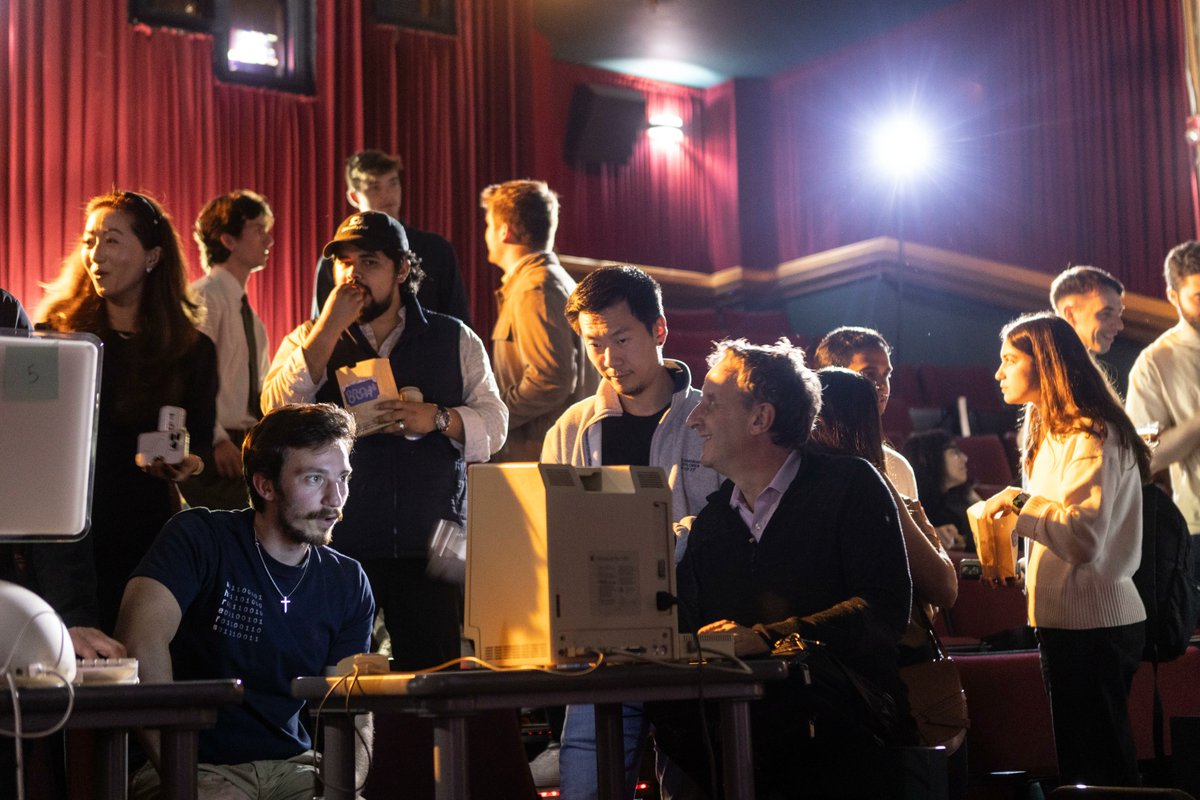
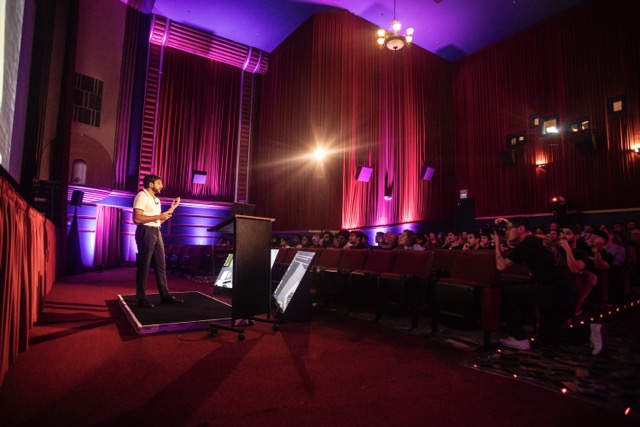
Last night we rolled out the red carpet for a special premiere and a first-ever look at the future of human computing.
We took over the Presidio theatre in SF, filled it with retro computers, and brought everything back to life for a full on immersive experience.
and that's a wrap! #vapicon ✅
turns out everyone faces similar challenges when building voice agents - scalability & low latency - both of which Cerebrium can solve!
reach out to us for up to $60 free credits before October 16th 👀
thank you san francisco and @Vapi_AI 🤍
Ever wished your voice assistant could actually do something useful—like send invoices or manage subscriptions?
We just published a tutorial on integrating @PayPal's Model Context Protocol (MCP) into a real-time voice agent.
https://t.co/7ct3BYK9cF
#mcp#voiceai#genai#llm
We’re excited to share that we’ve raised an $8.5M seed round to scale the high-performance, serverless infrastructure platform for AI.
Led by @GradientVC, with participation from @ycombinator Authentic Ventures, and an incredible group of angels and operators.
🧵👇
Big news: Rime has raised a $5.5M seed round! 💸💸
We're building the most expressive, lifelike AI voices for real-time conversations, voices that sound truly human.
Led by Unusual Ventures with support from Founders You Should Know, Cadenza, and incredible angels like Michael Akilian, Maran Nelson, Nick Arner, Molly Mielke, and more.
From powering phone orders at Domino’s to automating healthcare calls, Rime is already behind tens of millions of conversations each month.
We just launched Arcana, the most expressive spoken language model on the market, and we’re still just getting started!
🚀 Fast. Realistic. Built for scale.
🎙️ Have a quick chat with our voices.
🤝 Join our team.
🎯 Full announcement below.
Dollyglot (@DollyglotAI) is like Character AI but with real-time video avatars. Upload an image and voice to create your AI best friend. Chat with Harry Potter about Hogwarts or brainstorm with The Rock.
https://t.co/B768r1pyiH
Congrats on the launch, @thminassian and @PH_BJT!
It's been 24 hours since OpenAI unexpectedly shook the AI image world with 4o image generation.
Here are the 14 most mindblowing examples so far (100% AI-generated):
1. Studio ghibli style memes
This is Marco Rubio explaining how the USA promised to defend Ukraine forever if they got rid of their nuclear arsenal left after the Soviet Union fell.
This is why lil marco was sinking into the couch. He was hoping we wouldn’t find it…so don’t RT right now this very second.
I don't have too too much to add on top of this earlier post on V3 and I think it applies to R1 too (which is the more recent, thinking equivalent).
I will say that Deep Learning has a legendary ravenous appetite for compute, like no other algorithm that has ever been developed in AI. You may not always be utilizing it fully but I would never bet against compute as the upper bound for achievable intelligence in the long run. Not just for an individual final training run, but also for the entire innovation / experimentation engine that silently underlies all the algorithmic innovations.
Data has historically been seen as a separate category from compute, but even data is downstream of compute to a large extent - you can spend compute to create data. Tons of it. You've heard this called synthetic data generation, but less obviously, there is a very deep connection (equivalence even) between "synthetic data generation" and "reinforcement learning". In the trial-and-error learning process in RL, the "trial" is model generating (synthetic) data, which it then learns from based on the "error" (/reward). Conversely, when you generate synthetic data and then rank or filter it in any way, your filter is straight up equivalent to a 0-1 advantage function - congrats you're doing crappy RL.
Last thought. Not sure if this is obvious. There are two major types of learning, in both children and in deep learning. There is 1) imitation learning (watch and repeat, i.e. pretraining, supervised finetuning), and 2) trial-and-error learning (reinforcement learning). My favorite simple example is AlphaGo - 1) is learning by imitating expert players, 2) is reinforcement learning to win the game. Almost every single shocking result of deep learning, and the source of all *magic* is always 2. 2 is significantly significantly more powerful. 2 is what surprises you. 2 is when the paddle learns to hit the ball behind the blocks in Breakout. 2 is when AlphaGo beats even Lee Sedol. And 2 is the "aha moment" when the DeepSeek (or o1 etc.) discovers that it works well to re-evaluate your assumptions, backtrack, try something else, etc. It's the solving strategies you see this model use in its chain of thought. It's how it goes back and forth thinking to itself. These thoughts are *emergent* (!!!) and this is actually seriously incredible, impressive and new (as in publicly available and documented etc.). The model could never learn this with 1 (by imitation), because the cognition of the model and the cognition of the human labeler is different. The human would never know to correctly annotate these kinds of solving strategies and what they should even look like. They have to be discovered during reinforcement learning as empirically and statistically useful towards a final outcome.
(Last last thought/reference this time for real is that RL is powerful but RLHF is not. RLHF is not RL. I have a separate rant on that in an earlier tweet
https://t.co/RMIpFPVpuM)
Examples you can try now:
WebSocket streaming for real-time voice applications: https://t.co/kQyb0mxlci
Build a Gradio chat interface: https://t.co/8kteq0OAws