<인디 음악에 반응하는 춤은 죄가 아닙니다. 낡은 규제를 깨겠습니다>
부산의 라이브 클럽 ‘오방가르드’가 관객들이 춤을 추었다는 이유로 영업정지 처분을 받아 논란이 일고 있습니다.
춤은 음악에 대한 자연스러운 반응이자, 음악을 즐기는 인류의 보편적 방식입니다. 그런데 라이브 음악이 허용되어도 춤을 추는 행위가 아직도 금지인 곳이 있다니 참 많이 부끄럽습니다.
그동안 우리 법과 제도가 아직 이 수준에 머물고 있었던 데에는 수만 가지 이유가 있을 겁니다. 하지만 그렇다고 이대로 두고 볼 수만은 없습니다.
현행 법 규정을 고치든, 아예 새로운 ‘공연장’의 개념을 만들든, 하루빨리 답을 찾아 이런 비정상적 상황을 정상으로 돌려야 합니다.
‘오방가르드’는 부산 인디 음악계의 상징과 같은 곳입니다. 꿋꿋이, 그리고 묵묵히 인디 생태계를 지켜온 공연장들이 이렇게 상처를 받아서는 안 됩니다.
우리 청년 음악인들의 샘솟는 창작 열기가 관객들의 뜨거운 환호성과 몸짓으로 폭발할 수 있도록 풀뿌리 인디 환경부터 서둘러 챙기겠습니다.
#오방가르드 #인디음악 #라이브클럽 #공연문화 #인디생태계
@Hwiyoung_Chae 예, 장관님 감사합니다. 관객 입장에서 이 문제 해결을 위해 노력하고 준비 중입니다. * 록 페스티벌과 라이브 공연을 즐기는 관객 모임 (이하 '락장놀')도 지난 20일 국회 문화체육관광위원회 위원 16인에게 '공연법' 개정 정책 제안서를 제출했다. https://t.co/DlnEwgFcIf
<인디 음악에 반응하는 춤은 죄가 아닙니다. 낡은 규제를 깨겠습니다>
부산의 라이브 클럽 ‘오방가르드’가 관객들이 춤을 추었다는 이유로 영업정지 처분을 받아 논란이 일고 있습니다.
춤은 음악에 대한 자연스러운 반응이자, 음악을 즐기는 인류의 보편적 방식입니다. 그런데 라이브 음악이 허용되어도 춤을 추는 행위가 아직도 금지인 곳이 있다니 참 많이 부끄럽습니다.
그동안 우리 법과 제도가 아직 이 수준에 머물고 있었던 데에는 수만 가지 이유가 있을 겁니다. 하지만 그렇다고 이대로 두고 볼 수만은 없습니다.
현행 법 규정을 고치든, 아예 새로운 ‘공연장’의 개념을 만들든, 하루빨리 답을 찾아 이런 비정상적 상황을 정상으로 돌려야 합니다.
‘오방가르드’는 부산 인디 음악계의 상징과 같은 곳입니다. 꿋꿋이, 그리고 묵묵히 인디 생태계를 지켜온 공연장들이 이렇게 상처를 받아서는 안 됩니다.
우리 청년 음악인들의 샘솟는 창작 열기가 관객들의 뜨거운 환호성과 몸짓으로 폭발할 수 있도록 풀뿌리 인디 환경부터 서둘러 챙기겠습니다.
#오방가르드 #인디음악 #라이브클럽 #공연문화 #인디생태계
LLM Knowledge Bases
Something I'm finding very useful recently: using LLMs to build personal knowledge bases for various topics of research interest. In this way, a large fraction of my recent token throughput is going less into manipulating code, and more into manipulating knowledge (stored as markdown and images). The latest LLMs are quite good at it. So:
Data ingest:
I index source documents (articles, papers, repos, datasets, images, etc.) into a raw/ directory, then I use an LLM to incrementally "compile" a wiki, which is just a collection of .md files in a directory structure. The wiki includes summaries of all the data in raw/, backlinks, and then it categorizes data into concepts, writes articles for them, and links them all. To convert web articles into .md files I like to use the Obsidian Web Clipper extension, and then I also use a hotkey to download all the related images to local so that my LLM can easily reference them.
IDE:
I use Obsidian as the IDE "frontend" where I can view the raw data, the the compiled wiki, and the derived visualizations. Important to note that the LLM writes and maintains all of the data of the wiki, I rarely touch it directly. I've played with a few Obsidian plugins to render and view data in other ways (e.g. Marp for slides).
Q&A:
Where things get interesting is that once your wiki is big enough (e.g. mine on some recent research is ~100 articles and ~400K words), you can ask your LLM agent all kinds of complex questions against the wiki, and it will go off, research the answers, etc. I thought I had to reach for fancy RAG, but the LLM has been pretty good about auto-maintaining index files and brief summaries of all the documents and it reads all the important related data fairly easily at this ~small scale.
Output:
Instead of getting answers in text/terminal, I like to have it render markdown files for me, or slide shows (Marp format), or matplotlib images, all of which I then view again in Obsidian. You can imagine many other visual output formats depending on the query. Often, I end up "filing" the outputs back into the wiki to enhance it for further queries. So my own explorations and queries always "add up" in the knowledge base.
Linting:
I've run some LLM "health checks" over the wiki to e.g. find inconsistent data, impute missing data (with web searchers), find interesting connections for new article candidates, etc., to incrementally clean up the wiki and enhance its overall data integrity. The LLMs are quite good at suggesting further questions to ask and look into.
Extra tools:
I find myself developing additional tools to process the data, e.g. I vibe coded a small and naive search engine over the wiki, which I both use directly (in a web ui), but more often I want to hand it off to an LLM via CLI as a tool for larger queries.
Further explorations:
As the repo grows, the natural desire is to also think about synthetic data generation + finetuning to have your LLM "know" the data in its weights instead of just context windows.
TLDR: raw data from a given number of sources is collected, then compiled by an LLM into a .md wiki, then operated on by various CLIs by the LLM to do Q&A and to incrementally enhance the wiki, and all of it viewable in Obsidian. You rarely ever write or edit the wiki manually, it's the domain of the LLM. I think there is room here for an incredible new product instead of a hacky collection of scripts.
Farzapedia, personal wikipedia of Farza, good example following my Wiki LLM tweet.
I really like this approach to personalization in a number of ways, compared to "status quo" of an AI that allegedly gets better the more you use it or something:
1. Explicit. The memory artifact is explicit and navigable (the wiki), you can see exactly what the AI does and does not know and you can inspect and manage this artifact, even if you don't do the direct text writing (the LLM does). The knowledge of you is not implicit and unknown, it's explicit and viewable.
2. Yours. Your data is yours, on your local computer, it's not in some particular AI provider's system without the ability to extract it. You're in control of your information.
3. File over app. The memory here is a simple collection of files in universal formats (images, markdown). This means the data is interoperable: you can use a very large collection of tools/CLIs or whatever you want over this information because it's just files. The agents can apply the entire Unix toolkit over them. They can natively read and understand them. Any kind of data can be imported into files as input, and any kind of interface can be used to view them as the output. E.g. you can use Obsidian to view them or vibe code something of your own. Search "File over app" for an article on this philosophy.
4. BYOAI. You can use whatever AI you want to "plug into" this information - Claude, Codex, OpenCode, whatever. You can even think about taking an open source AI and finetuning it on your wiki - in principle, this AI could "know" you in its weights, not just attend over your data.
So this approach to personalization puts *you* in full control. The data is yours. In Universal formats. Explicit and inspectable. Use whatever AI you want over it, keep the AI companies on their toes! :)
Certainly this is not the simplest way to get an AI to know you - it does require you to manage file directories and so on, but agents also make it quite simple and they can help you a lot. I imagine a number of products might come out to make this all easier, but imo "agent proficiency" is a CORE SKILL of the 21st century. These are extremely powerful tools - they speak English and they do all the computer stuff for you. Try this opportunity to play with one.
What is a self-coup? South Korea president’s attempt ended in failure − a notable exception in a growing global trend https://t.co/e66yaUBS1p via @ConversationUS
https://t.co/oLjAnD9cDJ
"Many physicians love their specialty; dermatologists and orthopedists are among the top groups in our survey year after year. (...) About 8 in 10 PH/PM physicians said they'd choose specialty again."
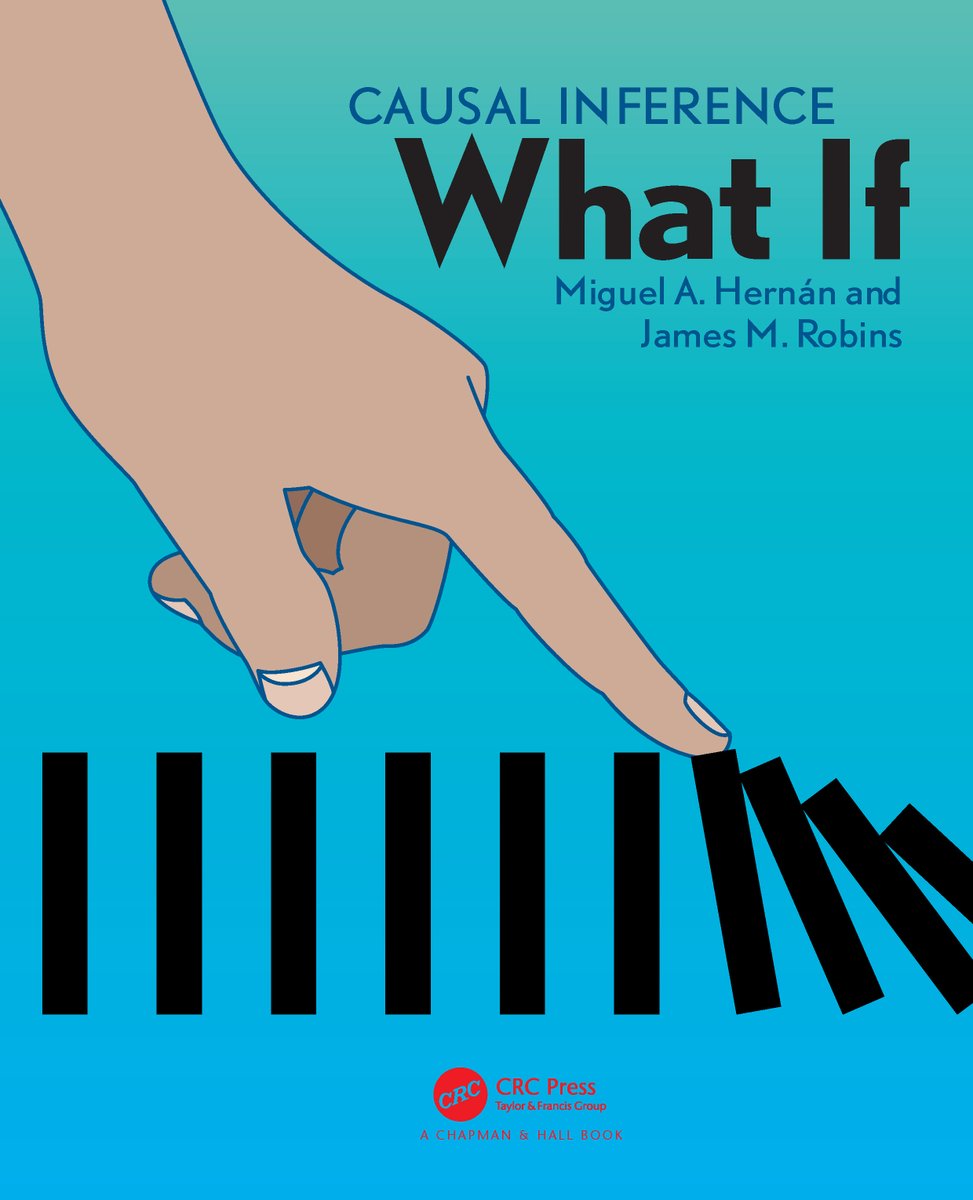
Upgrade your #causalinference arsenal.
A revision of our book "Causal Inference: What If" is now available👇
https://t.co/bRPFYaAhSb
Thanks to everyone who suggested improvements, reported typos, and proposed new citations and material.
Enjoy the #WhatIfBook.
Also, it's free.
Itaewon crowd crush: Horror as more than 150 die in Seoul
At least 150 young people died due to a stampede in South Korea last night. All the ERs in Seoul now are overcrowded due to the massive disasters.
We should try to strengthen the current crowd management protocol to reduce the number of innocent victims. Also, take care of all of you guys when there is a large crowd as individual-level prevention for the stampede.
The @CAUSALab Methods Series starts next week! Tues Sep 20 at 15.00 CEST/9:00am EST.
@MarcusMunafo will give a talk titled “Effects of smoking on behavior and mental health: a case study in the need for triangulation”
Register for Zoom link below: https://t.co/UOhSvJqsru
https://t.co/RKMAuByOZF #EJD among the signatories of a joint EMOs statement on violence/burnout against doctors and all healthcare professionals in a war context
World Health Organization (@WHO) member states have agreed that the future pandemic “treaty” currently being negotiated will be legally binding | Report by @kerrycullinan11
https://t.co/OJwaYYQe3w