Zu den Effekten der #Kapitalrente noch zwei eindrucksvolle Grafiken aus einem @SVR_Wirtschaft-Papier. Das ist von 2023, aber an der grunds. Richtung hat sich nichts geändert. #Rentenkommission
Die #Rentenkommission hat ihre Vorschläge finalisiert. Das Paket zur #Rente hat viele Stärken und einige Schwächen. Was bringt es? Ein erster Überblick mit Berechnungen zu den Effekten für Rentenniveau, Beitragssatz und Beschäftigung (ohne Anspruch auf Vollständigkeit). 🧵1/19
Das Thema der Armutsgefährdung ist ein hoch sensibles Thema. Als Grundlage muss das Einkommen möglichst exakt erfasst werden. Mit dem europäischen System, das Jahreseinkommem, in verschiedenen Bestandteilen zu erheben (Lohneinkommen, Kindergeld...) ist dies viel besser möglich...
What can we learn from the high-frequency response in bond and currency markets to the tariff announcement about the status of the US dollar as the global reserve currency?
Short paper.
https://t.co/qtkgKIBGnU
joint work with Arvind Krishnamurthy, Zhengyang Jiang (@ProfJiang ), Rob Richmond (@rrichmond ), and Chenzi Xu (@chenzix)
We conclude that the tariff announcements have led investors to question the role of the dollar as the reserve currency. This explains why the dollar has depreciated by 3.4% between April 4 and April 14 in spite of rising US rates. As a result, the willingness of foreign investors to pay extra for the safety of dollar safe assets has declined. Our measure of this willingness to pay is the 1-year US Treasury basis, measured against the German Bund, plotted in black in the Figure below. The basis (left vertical axis) is the yield on the synthetic Treasury constructed from the German bund minus the yield on the actual Treasury. The decline in the Treasury basis explains the depreciation of the dollar over the past few weeks, in spite of rising rates.
🧵 below.
Plot of 1-year Treasury basis against German Bund. Defined as German yield (hedged into USD) minus US Treasury yield (left vertical axis). Euro/USD exchange rate (right vertical axis).
Yes, I should be doing something else than tweet today. 😟But there are so many important things to say that I cannot resist.
Tentative advice to the European Union:
Take your time to respond. Let cool heads prevail.
If you think that Trump will not back down (likely in my opinion), best economic (not necessarily political) response: Do not retaliate. Ignore it. Not because the Trump administration shot the US in the foot that there is any reason to do the same to the EU.
If you think you can get Trump to change his mind, then go for choke points. Make life harder for the GAFA using the anti coercion instrument. They have the phone numbers of the White House, and, if they hurt, they will call and explain the facts of life to the boss. (But realize that this is not without costs to the EU consumer)
Kill two birds at once. Shift as much of defense spending from the US to Europe. Have a major reallocation plan. This will take years but is high priority. Spend the EU money you need to help.
Be constructive rather than only defensive. Form coalitions of the willing with the countries still willing to play by some rules, going beyond Europe to Asia, Latin America, and Africa. Do it for multinational corporate taxation, global warming, health, even tariff rules.
Have a major negotiation with China, in particular on automobiles (tariffs, but with attractive inward FDI/joint venture conditions)
Warum ich Eauto Prämie derzeit für eine schlechte Idee halte: über die Flottengrenzwerte sind die Firmen quasi gezwungen, einen Anteil von mindestens 25% Eautos auf die Straße zu bringen. Wie können diese Quoten nun aus Sicht der Hersteller erreicht werden: -> 1/
Im Allgemeinen ist es besorgniserregend, wie wenig über Prozeduren und Institutionen diskutiert wird, die die Wahrscheinlichkeit erhöhen können, das die „neuen“ Mittel nicht einfach verschwendet werden bzw. horrend ineffektiv eingesetzt werden.
Eine mögliche Lösung zum Sondervermögen: die investiven Ausgaben im Bundeshaushalt 2025 sollten rund 81 Mrd oder 1,9% des BIP betragen.
Wir könnten ins GG schreiben: Investitionen oberhalb von 2% des BIP können aus dem SV finanziert werden. Wer wäre damit nicht einverstanden?
@olk_julian Vor allem: warum will man dann die extrem gut funktionierende Westbalkanregelung stärker begrenzen? Ausweitung wie in der Wachstumsinitiative angelegt wäre deutlich sinnvoller. Das ist wirklich low hanging fruit im Bereich Arbeitsmigration.
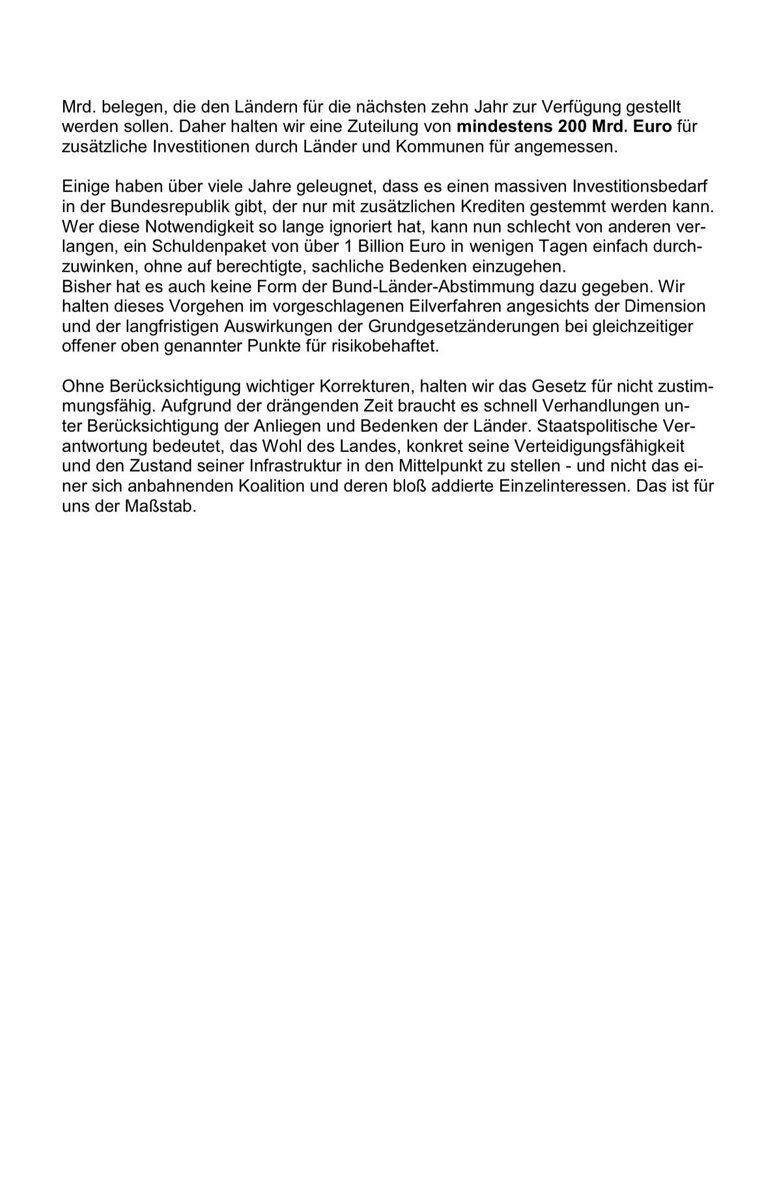
Staatspolitische Verantwortung bedeutet, das Wohl des Landes, aber nicht addierte Einzelinteressen einer neuen Koalition in den Mittelpunkt zu stellen. Das Schuldenpaket braucht
👉mehr Reformdruck
👉Begrenzung auf zusätzliche Investitionen
👉angemessene föderale Verteilung
Mehr👇
New paper "Sudden stop: Supply and demand shocks in the German natural gas market" with Jochen Güntner @jkulinz and Magnus Reif @bundesbank: https://t.co/arracfUHCJ.
Check out our counterfactual scenarios for a gas embargo against Russia and a colder winter of 2022/23!
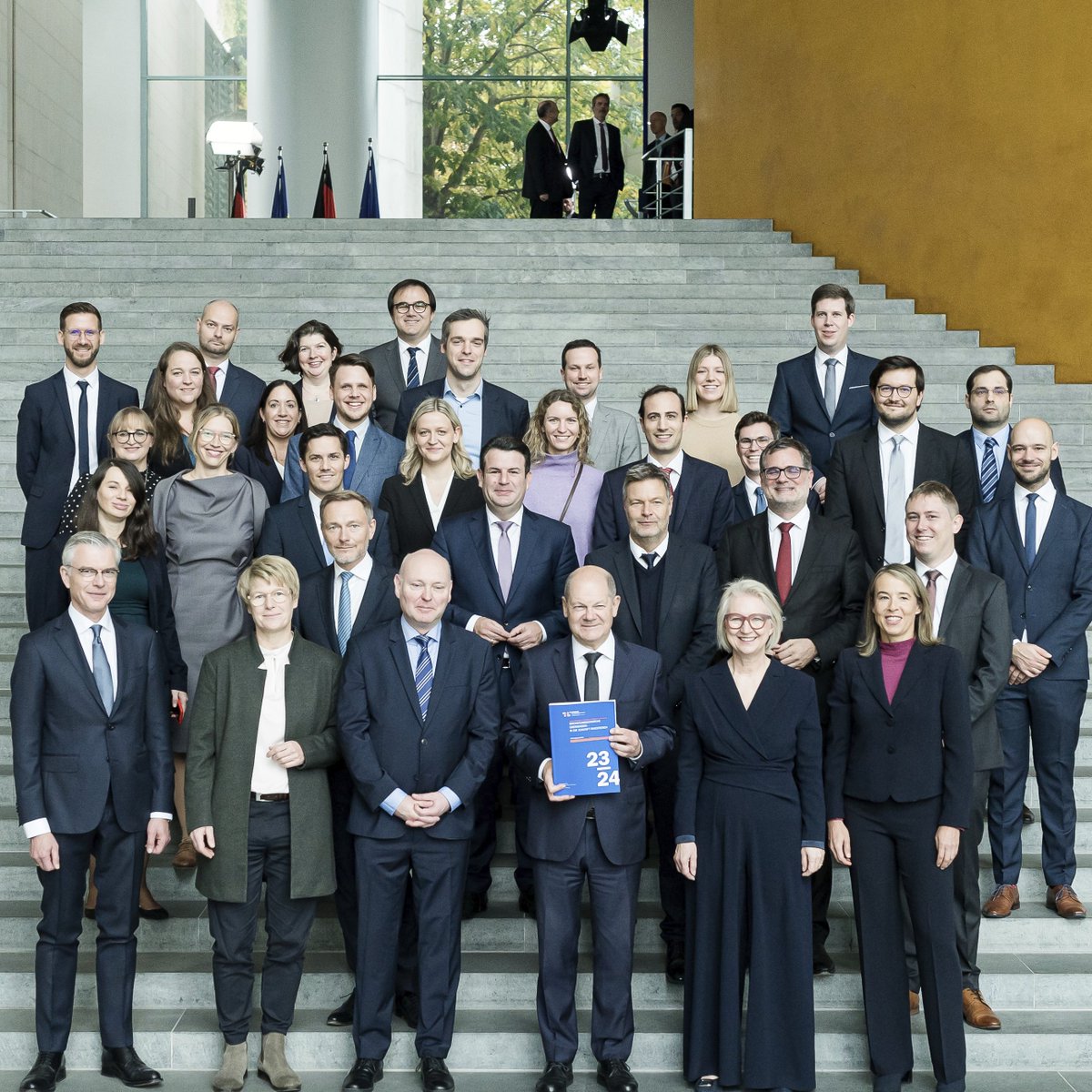
Das IW und der Stab des @SVR_Wirtschaft haben gestern, am 10. Juni, über die Zukunft der deutschen Wirtschaft diskutiert. Im Fokus standen unter anderem: #Investitionen, der Wohnungsmarkt, der Güterverkehr und die Bürokratie. Mehr Infos gibt es hier.⬇️https://t.co/IzODerZF83
Das Jahresgutachten 2023/24 des @SVR_Wirtschaft führt hierzu aus, dass - nach derzeitiger Projektion - der demografische Wandel zu einer Dämpfung des Potenzialwachstums führen wird (Kapitel I.6). [2/n] https://t.co/uafqJnRLq5
Am 15. Mai 2024 wird @SVR_Wirtschaft sein Frühjahrsgutachten 2024 veröffentlichen, das aus der Konjunkturprognose für die Jahre 2024 und 2025 und einem Kapitel zum Thema nachhaltiger Güterverkehr besteht. Dies ist der erste Schritt hin zu einem neuen Veröffentlichungsrhythmus.
Der @SVR_Wirtschaft sucht Studierende als Praktikantinnen und Praktikanten, die die Erstellung des Jahresgutachtens 2024/25 zwischen Mitte Mai 2024 und Anfang November 2024 unterstützen!
Die Bewerbungsfrist endet am 31. März 2024.
https://t.co/xhWqoeaKvP
Der @SVR_Wirtschaft sucht wieder Praktikanten. Eine klasse Möglichkeit, neben dem Studium den Blick zu schärfen für die gesamtwirtschaftliche Entwicklung und ihre Determinanten.
Wer? Studierende im fortgeschrittenen Bachelor- oder im Masterstudium. 🥳
https://t.co/5uDUxVLIUE






![simon_jaeger's tweet photo. Das Jahresgutachten 2023/24 des @SVR_Wirtschaft führt hierzu aus, dass - nach derzeitiger Projektion - der demografische Wandel zu einer Dämpfung des Potenzialwachstums führen wird (Kapitel I.6). [2/n] https://t.co/uafqJnRLq5 https://t.co/P1pZSgq1va](https://pbs.twimg.com/media/GPddX0RbkAAvDbb.jpg)