It’s live! The past few days @simeonbischl and I have had some intense coding sessions and we are happy to share the result: https://t.co/wut5p3pxg4 this website includes various tools to explore central bank communication. (1/
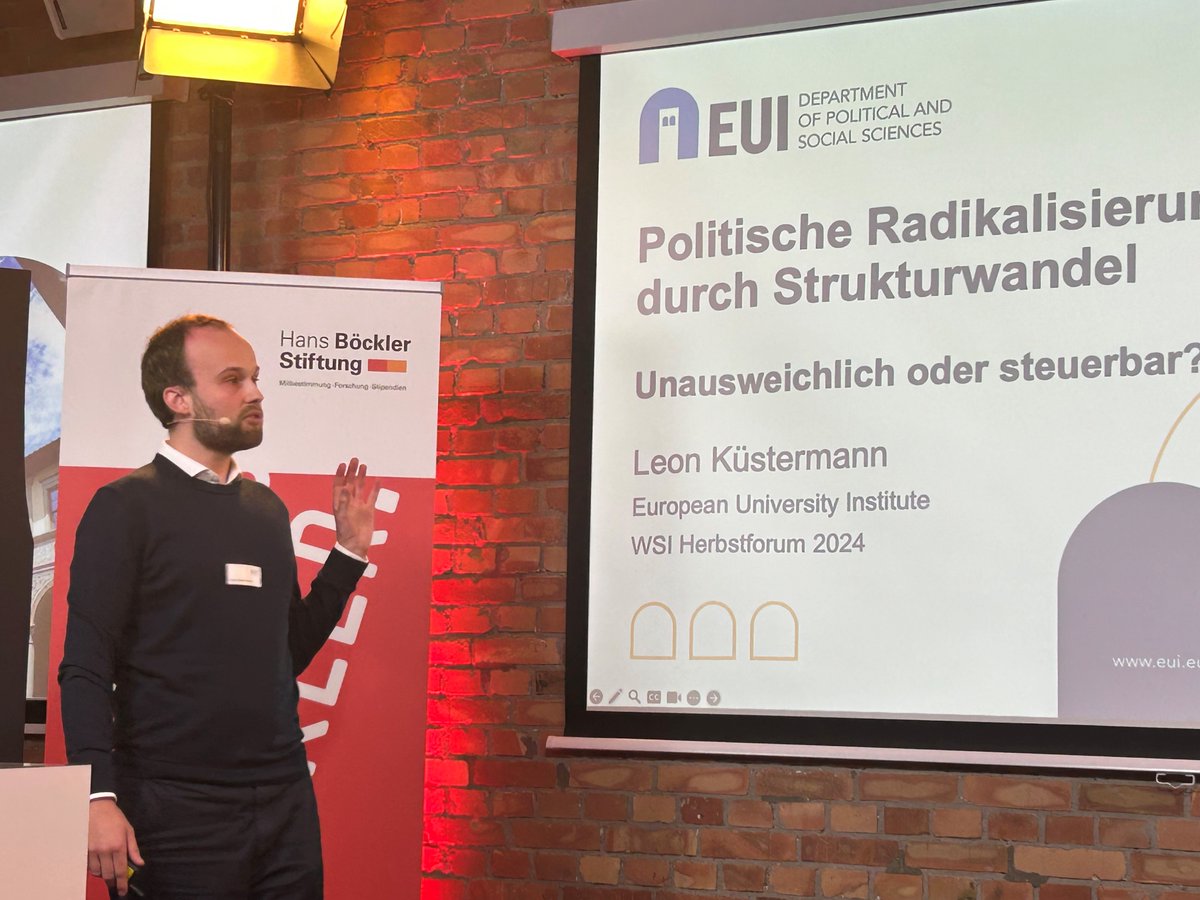
Beeinflussen Unternehmen die politischen Folgen des Strukturwandels, insbes. bzgl Unterstützung rechter Parteien? @LeonKuestermann#wsihf2024: ja, und zwar auf Dauer! Datenbasis: SOEP-CMI-ADIAB (Betriebs+Surveydaten, die kausale Analyse der Folgen von Umstrukturierungen erlauben)
Is it possible to separate the effects of economic shocks from cultural concerns in voting behavior?
🚨New paper at @cps_journal🚨Italo @PStanig & I address the methodological difficulties in making such distinctions and provides new evidence on the globalization backlash
1/5
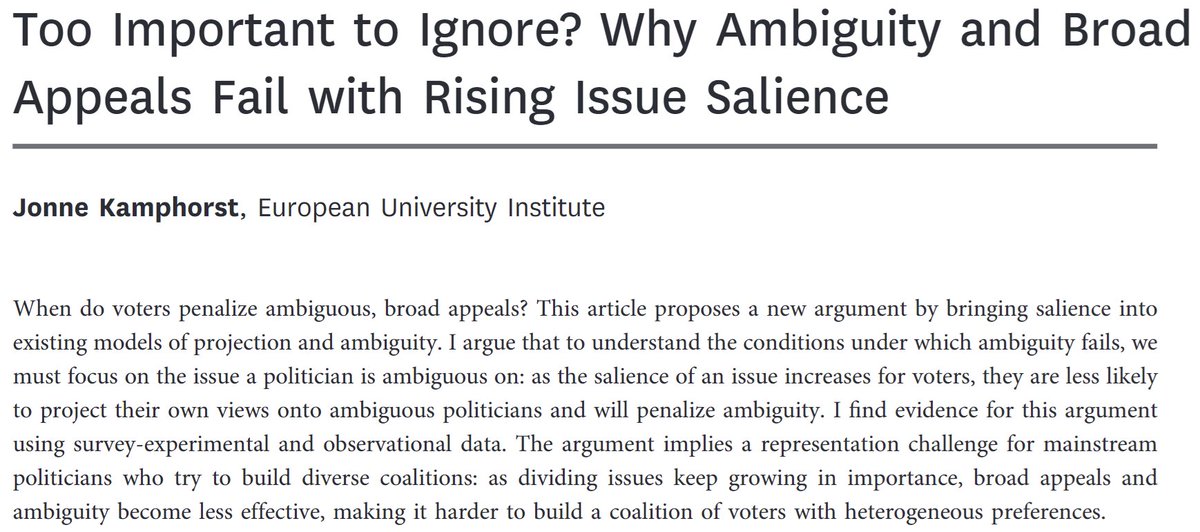
🚨When are voters critical of vague, ambiguous political parties and candidates?🚨
My new paper, just out in the @The_JOP, finds that as voters find issues more important, they penalize a lack of clarity.
Link: https://t.co/ZblVvgQWlN
🧵⬇️
Game changer? In den meisten Medien wurde sie verurteilt, nun verteidigt einer der weltweit führenden Arbeitsmarktforscher die Anschubprämie – und kritisiert die Debattekultur https://t.co/uTYFiWU9ks
New WP: “Monopsony Power and Poverty.” What happens to poverty & public finances when a Walmart Supercenter enters a local labor market? Poverty increases by 2 pp (16%) in 10 years after, driven by declining earnings. Income transfers up, taxes paid down. https://t.co/8jUBNPPCfa
🚨 New Working Paper 🆕
Discussions about new disruptive technologies often have a tone of inevitability. For example, it is popular to attempt to estimate the number of jobs which will be automated in the future, because technology is expected to advance at a certain rate. 1/
Our @The_JOP paper, now with page numbers!
Focusing on 🇫🇷we show that living in deprived neighborhoods depresses electoral registration. Yet, among the most discriminated ethnic minorities, living in proximity to coethnics boosts registration
https://t.co/vJORGWQmCe
Very happy to share my (very first!) paper with @mariusbusemeyer and @TobiasFTober published now at @RegGov_journal: "Digitalization and the green transition: Different challenges, same policy responses?"
🧵Here's a summary thread... 1/8
I have a new paper conditionally accepted at @The_JOP where Massimo Morelli and I show how important it is to have a skilled bureaucracy for politicians' ability to get things done! Check it out!
https://t.co/BVA19bcwqG
#QJE May 2024, #10, “Answering the Call of Automation: How the Labor Market Adjusted to Mechanizing Telephone Operation,” by Feigenbaum (@jamesfeigenbaum) and Gross (@daniel_p_gross): https://t.co/HnnJi2Z0Ey
🚨Publication alert🚨
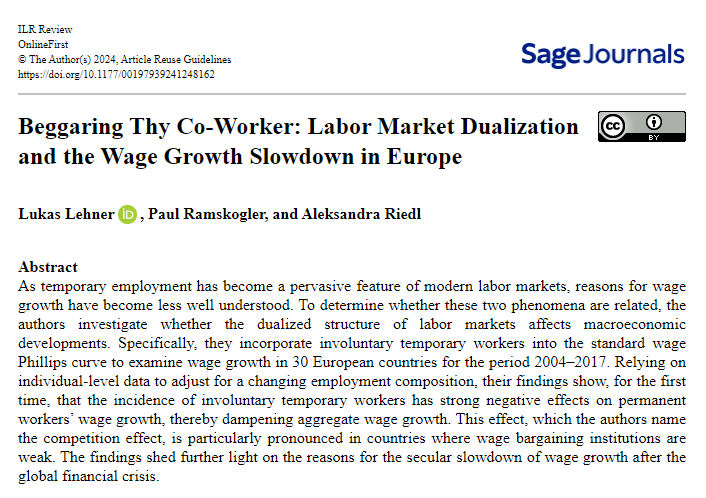
In our new @ILRReview paper, we investigate the reasons for Europe's slow wage growth during the past decades.
We find that involuntary temporary employment lowered aggregate wage growth by reducing permanent workers' wages.
https://t.co/iYynFUz5hp
It is great to see "The Decline in Rent Sharing" published in JOLE! Together with @s_machin_ and Brian Bell we show that the extent to which companies share their economic rents (e.g., profits) with workers has declined significantly since the 1980s.
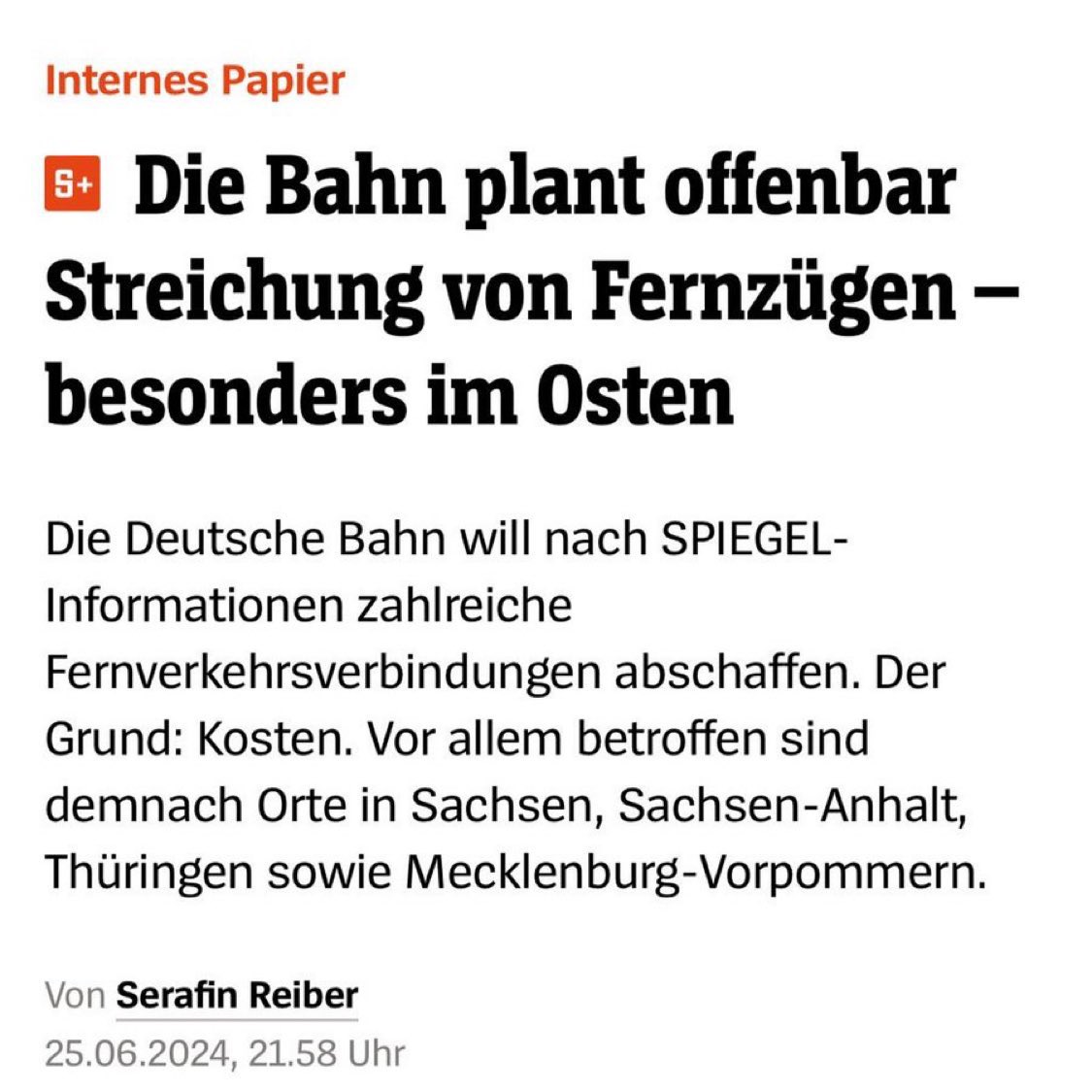
Die Nachricht von Ausdünnungen im @DB_Bahn Fahrplan in Ostdeutschland schlägt gerade (zurecht!) hohe Wellen.
Ein kleiner 🧵 was das mit der #Schuldenbremse zu tun hat (meine Lesart, nicht von der DB bestätigt) /1
#OpenAccess -
Unequal and Unsupportive: Exposure to Poor People Weakens Support for Redistribution among the Rich - https://t.co/l1AyeM9cur
- Matias Engdal Christensen (@AarhusUni_int), @thistedpeter & Kim Mannemar Sønderskov (@AarhusUni_int)
#FirstView