3 yrs ago the idea to create a clinical trial unit dedicated to #lungcancer in @HenryDunantGR was born. So grateful to see this team grow strong, full of energy! Couldn't have done this without you @marilykmd and Dimitris Tzanos! To many more to come!#LCSM@lcsmchat#oncoalert
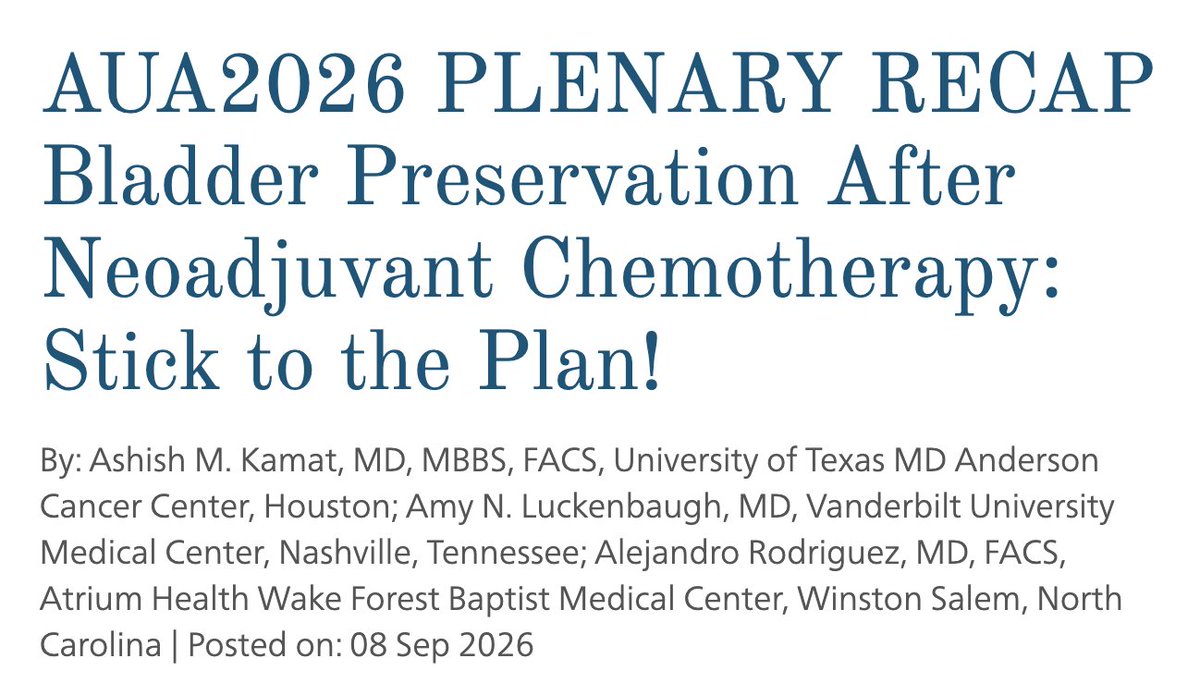
⚡️ pCR rates of 55–57% with perioperative EV + pembrolizumab in MIBC are real. But clinical complete response is not a reliable surrogate for pathologic clearance.
52% of patients with endoscopic cCR still harbor residual tumor at cystectomy. ctDNA misses up to 1 in 5 cases of residual disease.
Bladder preservation is achievable in selected patients — but rigorous prospective validation is still needed before deferring cystectomy.
https://t.co/xCJjBkQo4U
#BladderCancer
💉 Personalized mRNA cancer vaccines like intismeran autogene (V940/mRNA-4157) can work in genitourinary cancers?
Three ongoing studies are particularly interesting.
🔵 KIDNEY CANCER — INTerpath-004
This randomized, double-blind Phase II study is evaluating adjuvant:
V940 + pembrolizumab vs placebo + pembrolizumab following nephrectomy in patients with RCC at increased risk of recurrence.
The primary endpoint is disease-free survival, with distant metastasis-free survival and overall survival among the secondary endpoints.
If individualized neoantigen vaccination works in RCC, it could therefore tell us something very important about the biology of this platform: its potential may extend beyond simply selecting tumors with very high mutational burden.
🟠 MUSCLE-INVASIVE BLADDER CANCER — INTerpath-005
Here the development strategy is even more ambitious. INTerpath-005 is a Phase I/II program exploring V940 in two different settings.
One cohort evaluates a perioperative strategy combining:
V940 + pembrolizumab + enfortumab vedotin in cisplatin-ineligible patients undergoing radical cystectomy. Another randomized cohort evaluates adjuvant:
V940 + pembrolizumab vs placebo + pembrolizumab in patients with high-risk resected muscle-invasive urothelial carcinoma.
Could we combine three completely different therapeutic principles?
💥 EV → rapidly kills Nectin-4-expressing tumor cells
🔓 Pembrolizumab → releases PD-1-mediated immune inhibition
🎯 V940 → potentially generates an individualized T-cell response against that patient's unique tumor neoantigens
ADC + checkpoint inhibition + personalized vaccination.
Three mechanisms. One objective: eradicate micrometastatic residual disease before it can become clinically visible.
And there is another bladder cancer study that should not be overlooked.
🟡 NON-MUSCLE-INVASIVE BLADDER CANCER — INTerpath-011
This ongoing randomized Phase II study is evaluating: V940 + BCG vs BCG alone in treatment-naïve high-risk NMIBC.
I find this particularly intriguing. BCG has successfully exploited the immune system against bladder cancer for decades. Combining this established local immunotherapy with a systemic, individualized neoantigen-directed immune strategy represents a completely different way of thinking about treatment intensification in early bladder cancer.
Of course, none of these studies is guaranteed to reproduce what we have seen in melanoma.
For someone who has spent much of his career developing new treatments for kidney and bladder cancer, I find the possibility particularly exciting.
Precision oncology has traditionally meant finding the right drug for the right patient.
Personalized mRNA vaccines introduce an even more ambitious concept:
creating a different drug for each individual patient's cancer.
@OncoAlert@_SEOM@GuardConsortium@urotoday@GUOncologyNow@LACOG_group@GEPAC_
JUST IN and via @Merck + @moderna_tx: A landmark moment for cancer immunotherapy. 🎯
Phase 3 INTerpath-001 is positive: the individualized mRNA neoantigen therapy intismeran (V940/mRNA-4157) + pembrolizumab significantly improved both RFS/DMFS vs pembrolizumab alone after resection of high-risk melanoma.
For years, the idea of designing a treatment around the unique mutations of each patient’s tumor seemed aspirational. Now we have the first positive Phase 3 trial (N=1137) of an individualized neoantigen therapy—and of an mRNA-based cancer therapy.
Personalized cancer vaccines are moving from promise to reality.
Now we need to see the magnitude of benefit, durability, and ultimately OS. But today is an important day for the field—and hopefully for our patients. 👏
Congrats to #CathyWu @DanaFarber for her trailblazing research that is materializing in tangible outcomes! At @DanaFarber_GU we are closely working with Cathy + @DFCI_NeoVax team on several GU protocols, after our @Nature work with @BraunMDPhD et al (https://t.co/BdbKJqMKOw)
https://t.co/Akd0XQt3ml
EMA approval of perioperative EVP in cisplatin ineligible muscle invasive bladder cancer occurred today.
This is a big step towards curing more patients
Extension to cisplatin eligible patients soon - we hope (based on +ve OS in B15 study)
Bladder surgery sparing trials next (EV209 and 309)
https://t.co/6f0wedUEXZ
CaboNivo final results in non-clear cell RCC presented by Dr Darren Feldman: ORR 43% in Cohort 1 (papillary, unclassified, tRCC), with a striking 88% ORR in FH-deficient RCC. mPFS 11 mo, mOS 28 mo. No responses in chromophobe RCC. CaboNivo confirmed as a standard 1L option for these rare subtypes. #ASCO26 #RCC @OncoAlert@ASCO@OncBrothers
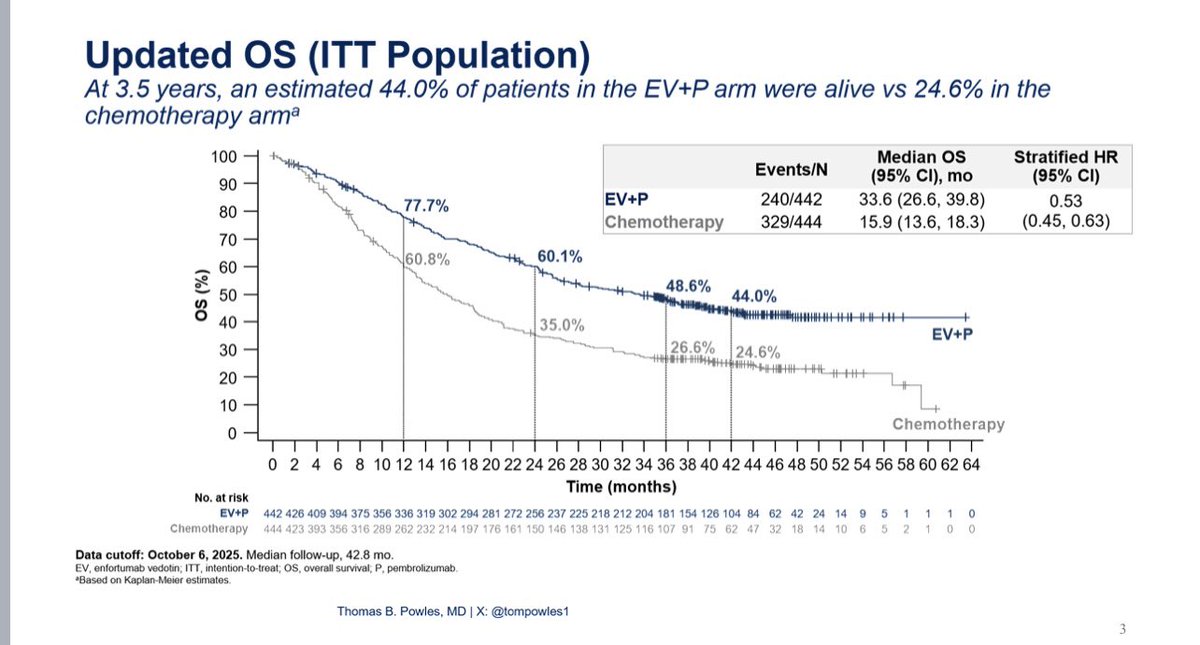
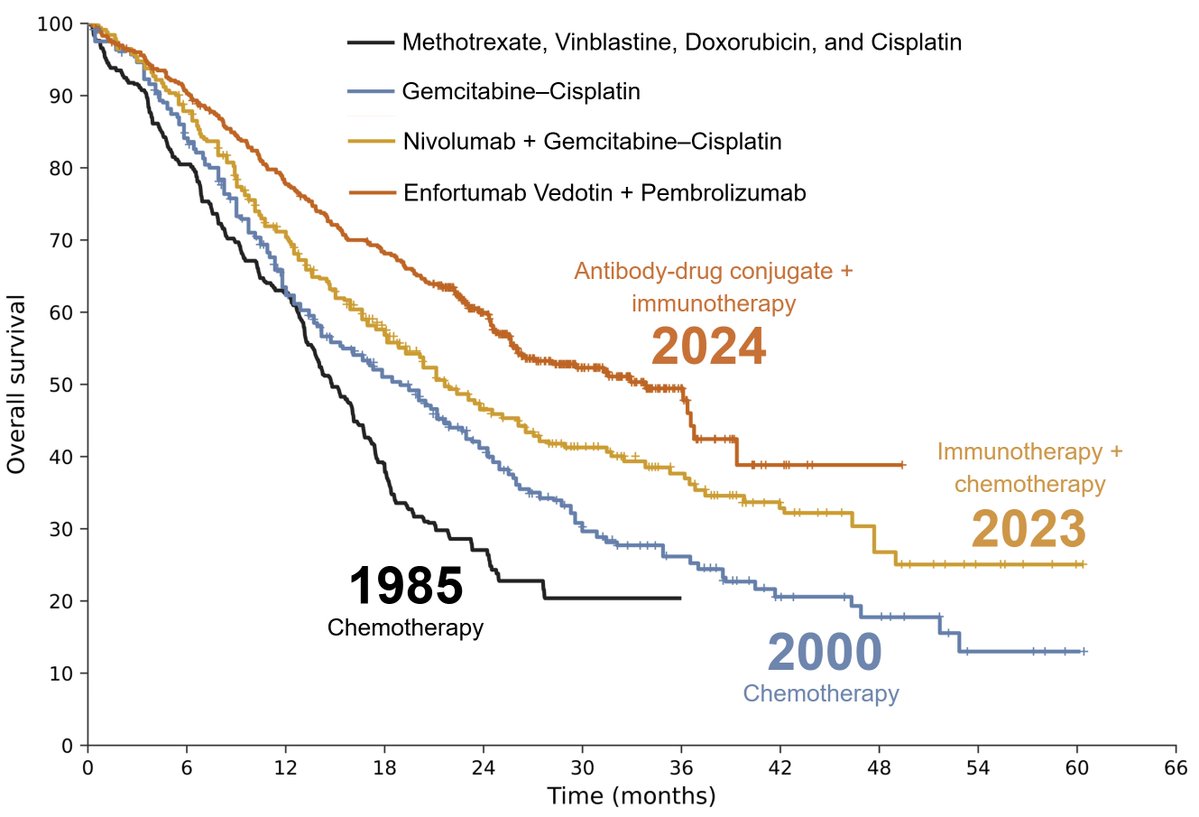
The 3.5yr OS from EV302 continues to show transformative benefit (HR 0.53 (0.45-0.63)) #ASCO26 for EV/pembro. The landmark OS for the CR population (30%) is ~90%. Median time to CR is 4.5 months (responses mature over time). Response rates of platinum chemo after EVP is 21% (OS 11 months). This should be considered a 2nd line standard. Median duration of EV was 7 months - longer in responders. Optimal duration of EV trials are needed. @OncoAlert
Durvalumab + BCG is FDA approved in high risk NMIBC , by hitting its DFS - HR 0.68 (plus a ~⬇️ cystectomy rate). OS & M1 data show these patients have low cancer mortality & IO has about a 10% chance of serious side effects. Therefore, this is not a treatment for all HR NMIBC IMO. It’s hard to know who to select. Inconsistency with other data for Sasanlimab + atezo means there is no subset that consistently benefits. It will be interesting to see whom urologists recommend for treatment. #ASCO26 https://t.co/12cmVfA6Rl
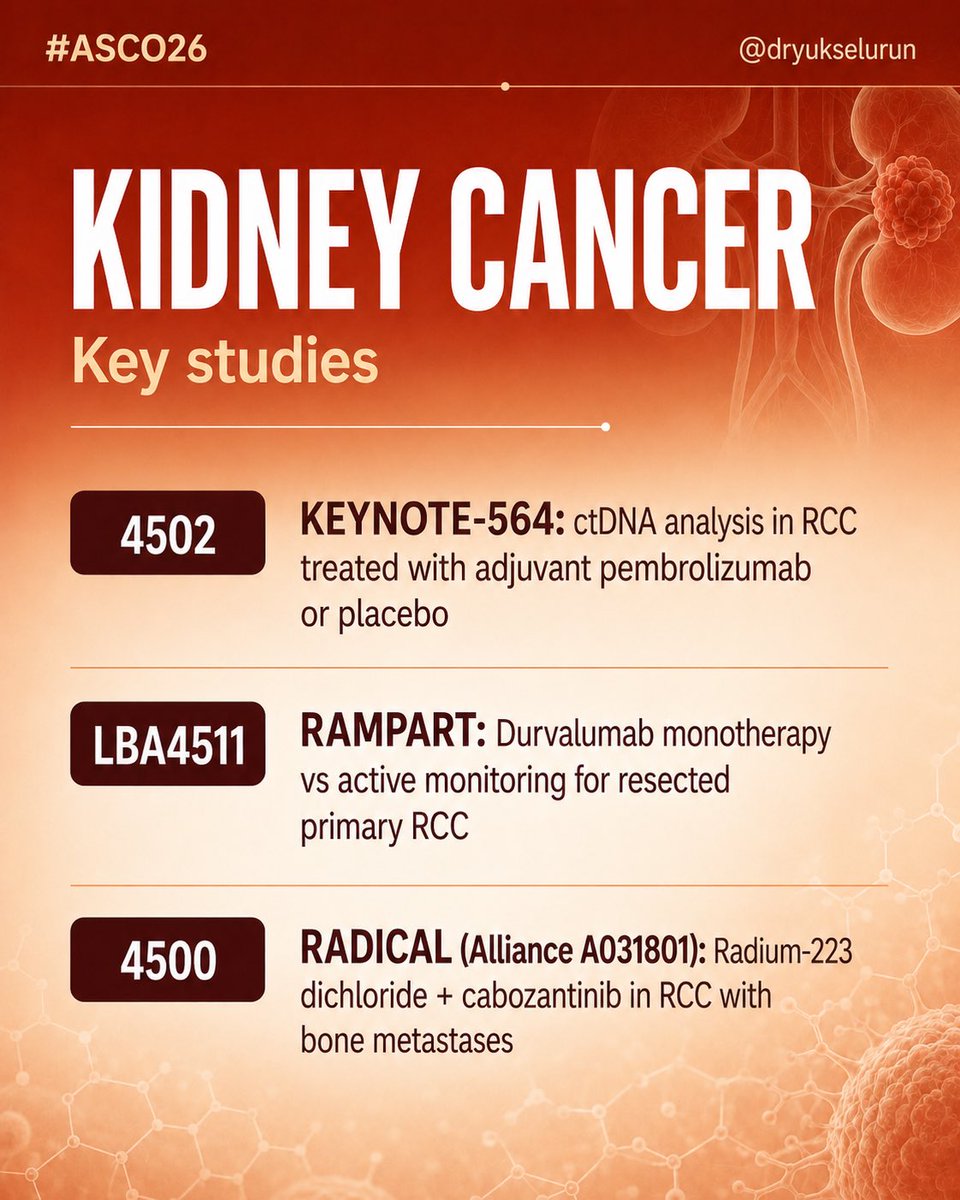
Renal cancer highlights #ASCO26 1) RAMPART - adjuvant durva/tremi vs durva vs surveillance. How much does CTLA4 help? 2) Is ctDNA useful post surgery in RCC (KN565 data)? 3) Does radium-223 help in bone mets patients? (a RII study) 4) Data on 2 VEGF+PD1 combination single arm studies in papillary RCC.
The FDA has granted priority review to perioperative pembrolizumab plus enfortumab vedotin for cisplatin-eligible MIBC, based on the phase 3 KEYNOTE-B15 trial, with a PDUFA date of August 17, 2026.
If approved, this strategy could extend perioperative EV + pembrolizumab across MIBC regardless of cisplatin eligibility.
#BladderCancer @OncoAlert
https://t.co/j5TE0Xvn5G
This is the 2nd negative triplet study in 1st line metastatic kidney cancer - COSMIC 313 (ipi/nivo +\- cabo) was the other. It means sequencing doublets rather than giving everything upfront will be the standard of care for some time to come. Personalised therapy remained elusive in kidney cancer. @OncoAlert@DrChoueiri@brian_rini
After all the comments on EV209 (A phase 2 study of EVPx9 without cystectomy in the cCRs in MIBC patients), we decided to make a @Uromigos podcast on it and invite some of the voices @LauraBukavinaMD@AmandaNizamMD@DrTylerStewart ⚡️🌪️👉https://t.co/ra6aQt6Pv8
We keep rediscovering the same truth—hormonal biology works. Estrogen returns in prostate cancer, this time via patches, with noninferior outcomes and potentially better tolerability. Not new—just better applied. Study in @NEJM by the #Stampede group/@MRCCTU
https://t.co/Pq17ahdPgu
This exploratory plot by @BethN01 suggests prior immune therapy in RCC may augment outcomes with subsequent VEGF TKIs (orange vs blue). There are a number of potentially confounding factors, but IO has long term effects (partly why rechallange failed) and could augment the activity of subsequent therapy #JSMO26. @DrChoueiri@montypal@OncoAlert@neerajaiims