Assistant Professor @kennesawstate | Previously @Harvard @BostonChildrens @UBC @BCCancer | I design algorithms to mimic the activity of cells. | RT ≠ EK
🎉 Our tissue clocks paper is now out in Nature Medicine!
We quantified biological age from ~25k histology images of 983 GTEx donors and showed the signal can be read from blood. 📄
https://t.co/ZUOpU91GYj
Excited to share TERRA, a tissue world model 🧬
Over ~1.5 years we ran a large data-generation + modelling effort to build a world model for human tissues, pretrained on 112M cells from spatial transcriptomics (mostly Xenium 5000-plex + public data).
It's built on one of the largest human spatial transcriptomics corpora assembled to date, spanning 20 tissues across development, health and 26 disease conditions, ~two-thirds newly generated in-house.
Why a "world model" for tissue? Images have universal representations (ViT/DINOv3), so do proteins (ESM, @alexrives) and pathology (UNI, @AI4Pathology). We've worked hard to build something similar for human tissue: one model that captures its multi-scale logic, genes → cells → their native microenvironments.
Like the JEPA approach @ylecun has championed, TERRA learns by prediction in embedding space, but for human tissue. How it works: it tokenises each cell together with its nearest neighbours into one sequence while keeping every gene's identity, then masks part of a neighbourhood and predicts the representation of the hidden part, not raw noisy counts. From one backbone it reads out three scales, gene embeddings (what a gene is doing in a cell and its niche), cell embeddings (cell type and state) and neighbourhood embeddings (the niche), and because it keeps gene-level resolution it can knock a gene out in silico and predict the response. Applied entirely zero-shot, TERRA maps and perturbs human tissue across unseen organs, diseases and technologies, outperforming existing spatial approaches.
Three take-homes:
1️⃣ One model, any tissue. A single pretrained backbone provides tissue representations zero-shot, handling genes, cells and niches across organs and platforms, off the shelf.
2️⃣ New biology, development to clinic. We built a new spatial atlas of the developing human pancreas and found an islet-associated capillary state that looks like a precursor of mature islet vasculature. In kidney, TERRA's in silico knockouts predicted the tissue-injury programme from cancer immunotherapy (checkpoint blockade), confirmed in treated kidneys, detected in blood, and linked to declining kidney function.
3️⃣ A grammar of tissue architecture. By coupling each cell's state to its niche, TERRA defines recurring cross-organ "archetypes" of macrophage neighbourhoods, including a tumour-boundary niche that tracks poor survival in kidney cancer.
TERRA is already in use: it powered our recent skin atlas of hidden immune-memory niches (https://t.co/LeWxOKkgMt), with more studies coming soon.
This was an amazing collaboration between clinicians, machine-learning scientists and cell biologists 🙏 Led by @SebastianBirk_, @ValiSanian@AmirhVahidi, Samuel Ogden, @daniyal_jafree, @Adib_m_, @CarloLeonardi7 and Arpit Merchant, with Lassi Paavolainen, Menna Clatworthy, @bayraktar_lab, @Muzz_Haniffa, Tom Mitchell and @bakhti_mostafa. Huge thanks too to everyone who shared data and helped along the way.
What excites me most is seeing how the community builds on this. The model, code and tutorials are all public, so anyone can run TERRA on their own tissues, extend it, or build new models on top. Huge thanks to the whole team across @sangerinstitute and our many collaborators.
📄 Paper: https://t.co/AOOIcwuTnq
💻 Code: https://t.co/ZBwTmd6SNI
🤗 Model: https://t.co/gyQA79lVfW
#SpatialTranscriptomics #SpatialGenomics #FoundationModels #AI4Science #MachineLearning #ComputationalBiology #SingleCell #WorldModels
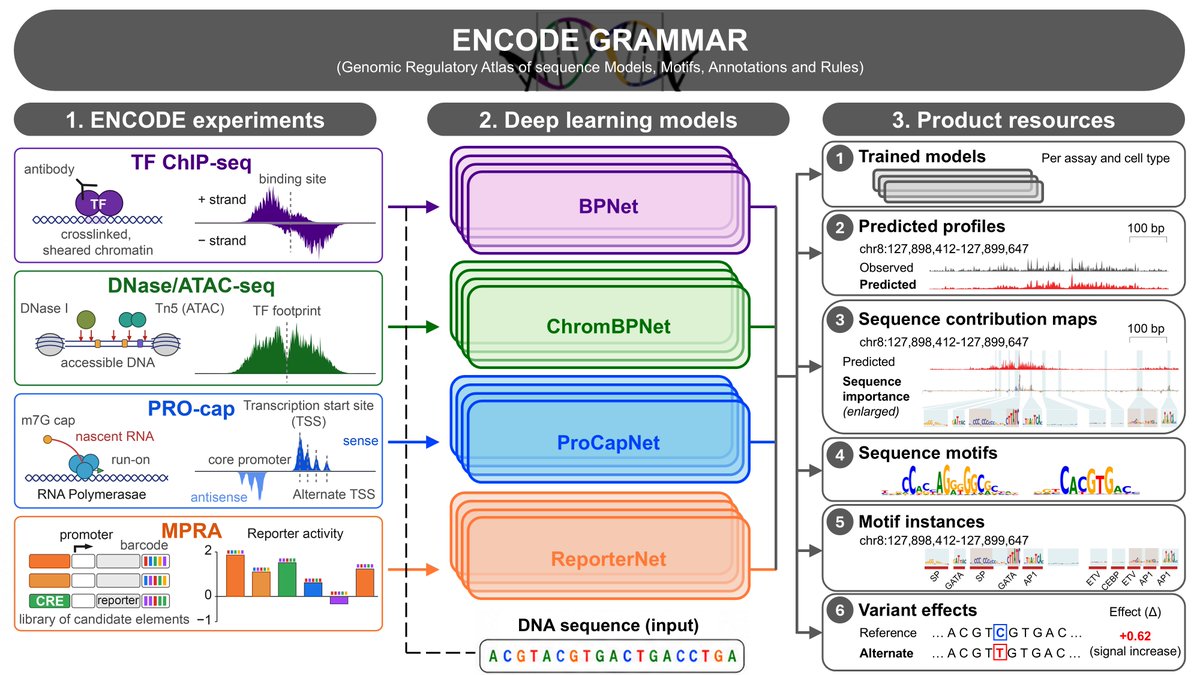
Very excited to announce ENCODE GRAMMAR (Genomic Regulatory Atlas of sequence Models, Motifs, Annotations & Rules): 3,865 experiment-specific deep learning model sets and sequence annotations for decoding human regulatory DNA. 1/
FWIW the term “virtual cell” is neither high-level nor a concept. It’s marketing rubbish that is being used to hype vaporware in lieu of meaningful language that relates to solid science.
We trained & evaluated 100+ biological reasoning models to understand how post-training shapes generalization in biology
🧵 New preprint: https://t.co/GMEluQ8ZRB
Biological reasoning models combine LLMs with foundation models for DNA, RNA, and proteins
They must map natural language to molecular representations and reason over pathways, cell states, and protein function, not just recall facts
We study three post-training stages: CPT → SFT → RL
The result: more training ≠ better models. What matters is how you allocate the budget across training stages.
Great work by @LukasF2122 & Hanlin Zhang and many thanks to collaborators Michelle Li, Eric Wang, @phanein, @AziziShekoofeh, Sham Kakade @KempnerInst@Harvard@HarvardMed@Google@GoogleDeepMind@HarvardDBMI@BroadInstitute
A new CRISPR approach developed by a team led by Jennifer Doudna can selectively destroy cancer cells carrying p53 mutations—one of the most common drivers of cancer—while sparing healthy cells. A promising step toward tackling “undruggable” cancers.
https://t.co/XrHGED9UHy
To solve aging, we first need to measure it. Excited to share our study in @NatureMedicine! Different cell types age at different rates within our body. From a tube of blood, we track aging across 40+ cell types, from immune cells to neurons, revealing signatures that forecast disease risk and resilience. @wysscoray 🧵1/9
Is aging driven by biological processes operating at the wrong speed ?
The study aims to establish a causal link between a fundamental biophysical parameter of gene expression (transcriptional elongation speed) and organismal aging. It suggests a coherent, evolutionarily conserved chain of molecular events impacting aging rate:
👉 chromatin → elongation speed → splicing fidelity → aging
Limitations include the indirect estimates of Pol II velocity, unclear impact of changes in cell type composition, and modest effect size of the changes in elongation rates, despite their statistical significance and conservation.
Still, it offers a remarkably coherent mechanism and raised interesting questions ...
1/
Researchers analyzed neuronal population dynamics across multiple mouse brain areas and found that statistical complexity, an information-theoretic measure, can uncover structured, stimulus-dependent patterns missed by traditional variability metrics.
🔗 https://t.co/e11ZyN0V6p
How animals sense Earth’s magnetic field is one of biology’s enduring mysteries.
Researchers in Science have now identified superparamagnetic macrophages in the livers of rock pigeons to be crucial for magnetic sensing.
The finding uncovers an unexpected role for immune cells in sensory perception and may fundamentally change our understanding of animal navigation.
Learn more: https://t.co/afMu07Io5l
Exploration is the lifeblood of learning from experience. An agent must search broadly to uncover successful behaviors. It should continue exploring to expand its capabilities by learning distinct strategies to complex problems. Threading this needle between exploration and exploitation is critical for solving unsolved problems at test-time.
An algorithm should encourage (1) optimistically exploring reasoning strategies, and (2) achieving a synergy between exploration and exploitation. Towards that end, we develop Poly-EPO: a method for training LMs to explore and reason. Work with @ifdita_hasan (co-lead), Shreya, @ShirleyYXWu, @HengyuanH, @noahdgoodman, @DorsaSadigh, and @chelseabfinn. 🧵
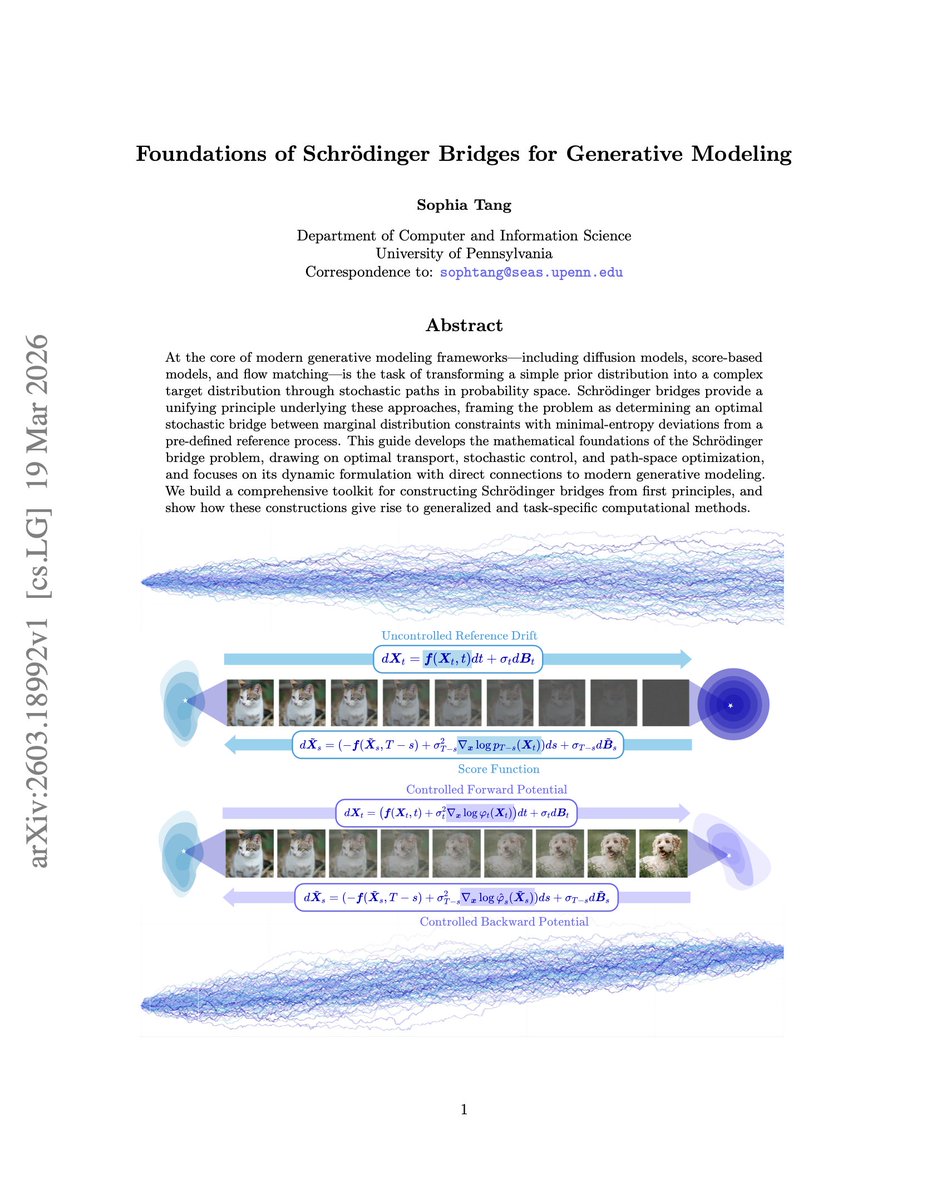
New tutorial paper on the “Foundations of Schrödinger Bridges for Generative Modeling” is out on arXiv! 🧩
📖 arXiv: https://t.co/ce4feGdXZT
🔮 Project Website: https://t.co/dyNr5TRijq
With 220 pages and 24 figures, this guide builds the theoretical foundations of Schrödinger bridges from the ground up, unifying the broad field of generative modeling with a single guiding principle: construct an optimal stochastic bridge between distributions while minimizing deviation from a reference process.
The rapid progress in generative modeling has made the field increasingly difficult to navigate from a foundational perspective, which motivated me to develop a resource that builds the core concepts needed to understand and contribute to new advances.
This guide contains intuitive explanations and step-by-step proofs covering:
🧩 The dynamic Schrödinger bridge formulation, lifting optimal transport to continuous-time stochastic processes between distributions, with direct connections to diffusion models, score-based methods, and flow matching.
🧩 A comprehensive toolkit for constructing Schrödinger bridges from first principles, describing stochastic optimal control, forward–backward SDEs, Doob’s h-transform, and Markov and reciprocal projections.
🧩 Extensions to complex and real-world problem settings, including the multi-marginal, unbalanced, discrete SB problems, highlighting the flexibility of the Schrödinger bridge framework in describing complex dynamical systems.
🧩 Practical, scalable algorithms for training and inference of dynamic Schrödinger bridges across modern generative modeling tasks.
More details in the thread 👇🏻
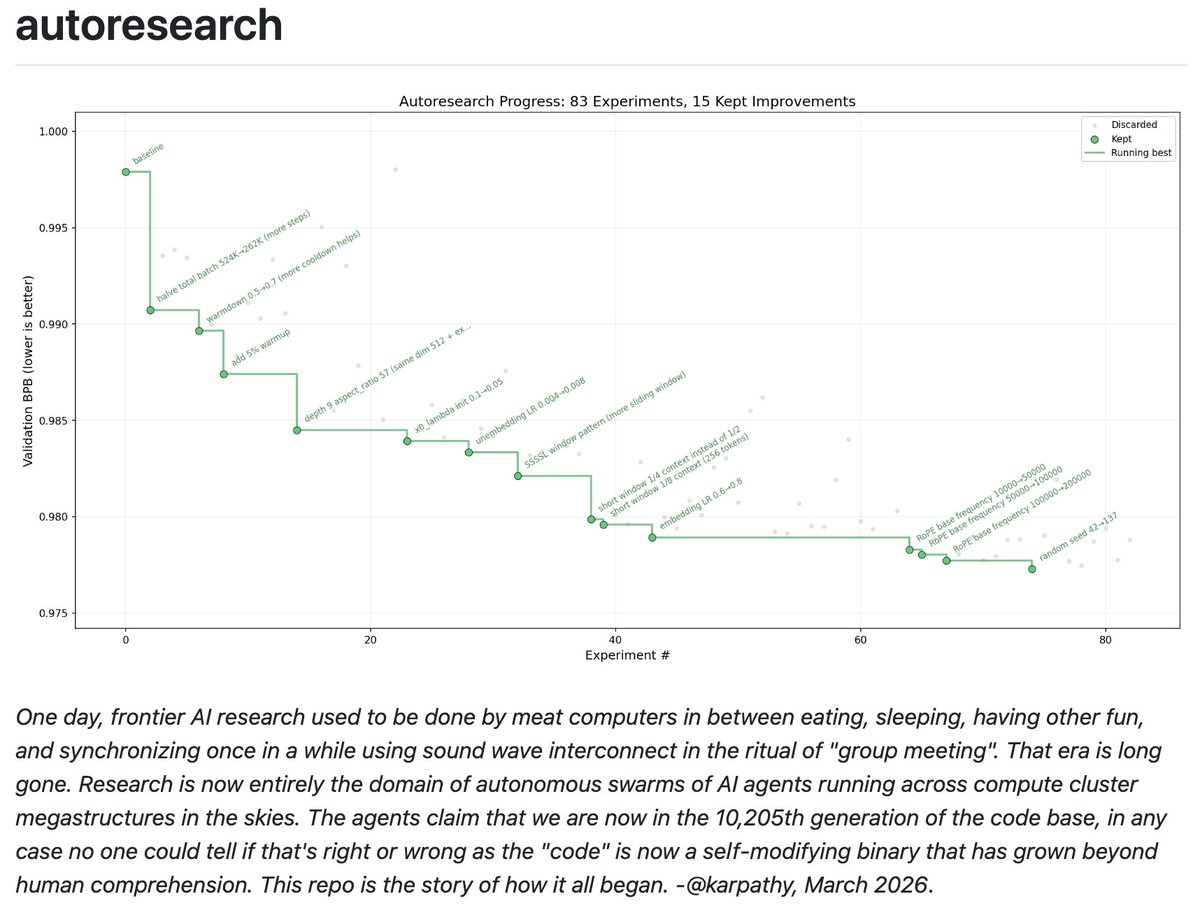
I packaged up the "autoresearch" project into a new self-contained minimal repo if people would like to play over the weekend. It's basically nanochat LLM training core stripped down to a single-GPU, one file version of ~630 lines of code, then:
- the human iterates on the prompt (.md)
- the AI agent iterates on the training code (.py)
The goal is to engineer your agents to make the fastest research progress indefinitely and without any of your own involvement. In the image, every dot is a complete LLM training run that lasts exactly 5 minutes. The agent works in an autonomous loop on a git feature branch and accumulates git commits to the training script as it finds better settings (of lower validation loss by the end) of the neural network architecture, the optimizer, all the hyperparameters, etc. You can imagine comparing the research progress of different prompts, different agents, etc.
https://t.co/YCvOwwjOzF
Part code, part sci-fi, and a pinch of psychosis :)
Prof. Donald Knuth opened his new paper with "Shock! Shock!"
Claude Opus 4.6 had just solved an open problem he'd been working on for weeks — a graph decomposition conjecture from The Art of Computer Programming.
He named the paper "Claude's Cycles."
31 explorations. ~1 hour. Knuth read the output, wrote the formal proof, and closed with: "It seems I'll have to revise my opinions about generative AI one of these days."
The man who wrote the bible of computer science just said that. In a paper named after an AI.
Paper: https://t.co/juSOmK9vOt
Thrilled to introduce #Eubiota: new AI co-scientist for microbiome research!
Eubiota discovered
💊new microbial therapy reducing colitis inflammation
💊new anti-inflammation metabolites
and more! All experimentally validated.
Eubiota is trained w/ our multi-agent RL >> GPT5. Use it for free https://t.co/iLdk2wXnmg
Great job led by @lupantech@YifanGao15 and fantastic collaboration w/ @LabSonnenburg 🚀
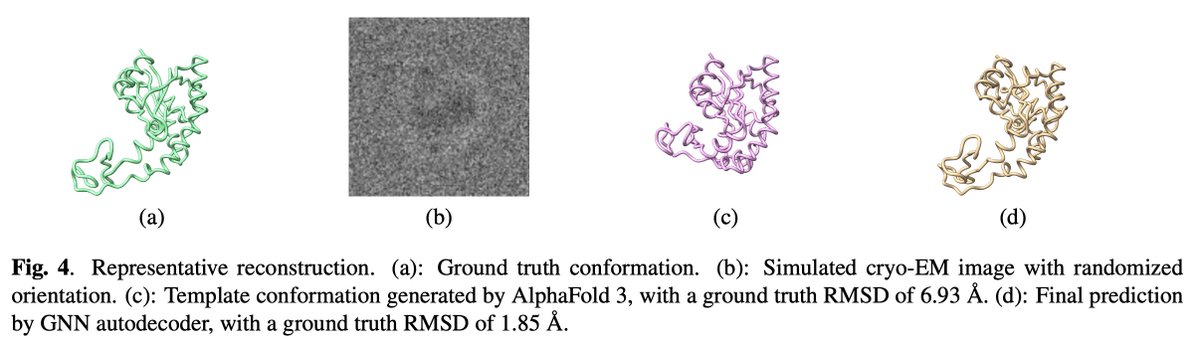
Can we reconstruct heterogeneous protein conformations from cryo-EM data while respecting molecular geometry? We present a geometry-aware framework that models atomic backbones as graphs and uses a GNN autodecoder to map per-image latents to 3D deformations of a template structure. Our results show that geometric inductive biases lead to higher reconstruction accuracy.
Led by Jonathan Krook, Axel Janson. More details here: https://t.co/ZalGPKFIAz
If you're a researcher in academia using Keras 3 (PhD student, postdoc, professor...) and you want to train on TPUs, you could receive compute awards from Google for your research. Google is running a new academic grant program, separate from the TPU research cloud.
You can contact me with a few words about your research and I can refer you -- [email protected]
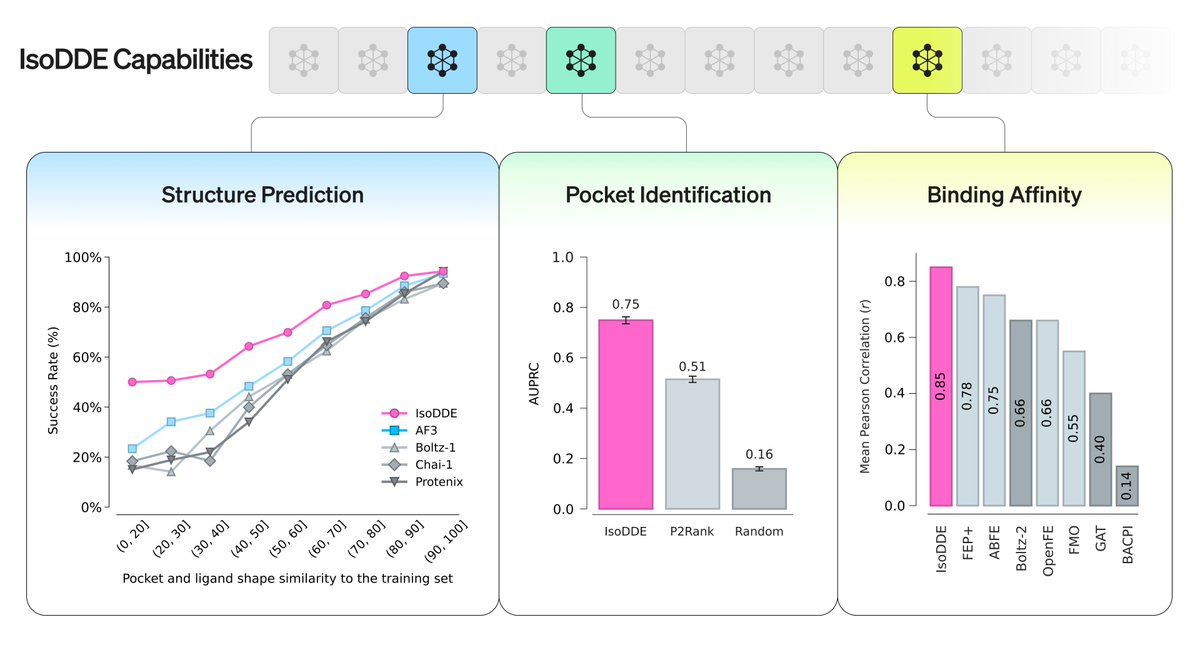
Today we share a technical report demonstrating how our drug design engine achieves a step-change in accuracy for predicting biomolecular structures, more than doubling the performance of AlphaFold 3 on key benchmarks and unlocking rational drug design even for examples it has never seen before.
Head to the comments to read our blog.
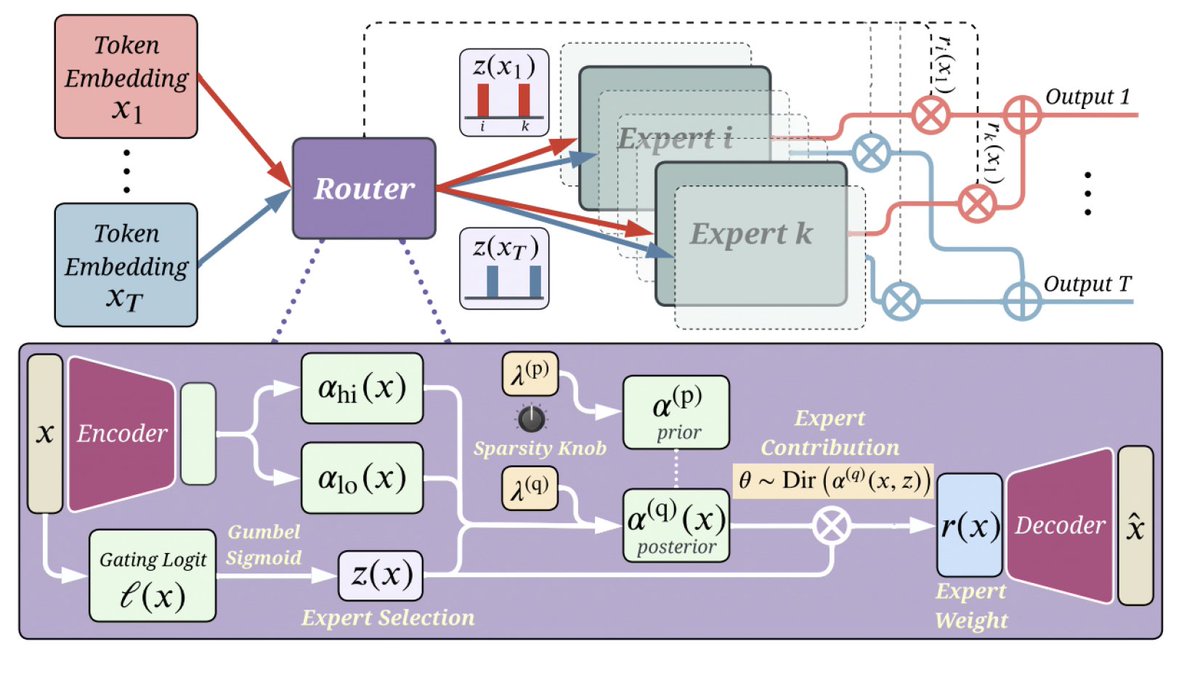
Mixture-of-Experts (MoE) is a powerful way to scale large language models (LLMs): instead of running the full model for every token, a router activates only a few “experts,” giving more capacity at roughly the same compute.
But routing is still a sore spot. Most MoE systems use Top-k + Softmax, where expert selection is discrete—so you don’t get clean end-to-end gradients. In practice, this can lead to unstable routing, calibration issues, and uneven expert usage.
In our #ICLR2026 paper, we introduce DirMoE — a fully differentiable probabilistic router that separates which experts fire (Bernoulli) from how their weights are assigned (Dirichlet). We also add a simple “sparsity knob” 🎛️ (Simpson-index penalty) to control the expected number of active experts, without relying on load-balancing losses that can homogenize experts. Results: DirMoE matches/exceeds vanilla MoE throughput (no extra bottlenecks), is strong/competitive on zero-shot benchmarks (ARC, BoolQ, PIQA, …), and leads to clearer expert specialization (interpretable domain focus like ArXiv/Books/GitHub code).
Led by @HesamAsdz and @AmirhVahidi
paper: https://t.co/T5a7NmJTbx