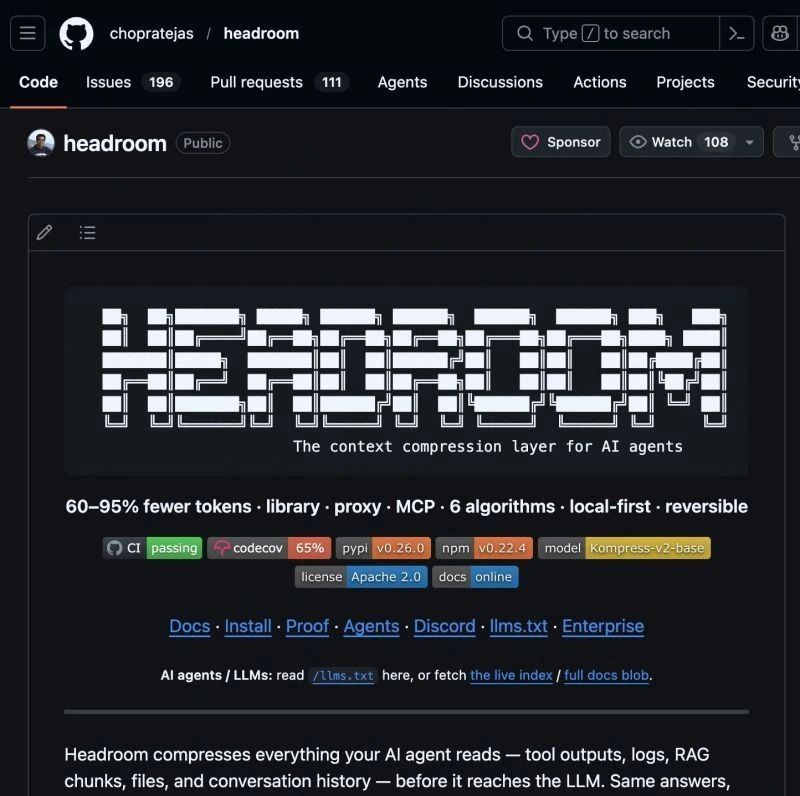
🚨 A Netflix engineer just open-sourced the fix for the most expensive problem in AI: wasted tokens
It's called Headroom, and it might be the smartest fix to high token usage
Your agent reads a 10,000-token log file to find one error.
You paid for all 10,000 tokens.
The answer needed 1,200.
Headroom sits between your agent and the LLM and compresses everything before the model sees it.
JSON, code, logs, RAG chunks, each gets its own specialized compressor.
And it's reversible: the originals stay on your machine, so nothing is lost.
The results speak for themselves:
→ Up to 95% fewer tokens
→ Same accuracy on benchmarks
→ Zero changes to your code
Setup takes one minute:
1. pip install "headroom-ai[all]"
2. headroom wrap claude
Done.
Works with Claude Code, Cursor, Codex, and anything OpenAI-compatible.
Everything runs locally, fully open source.
The cheapest token is the one you never send.
🔗 Github repo: https://t.co/6TQM4o18hx
So, are you compressing your context, or just paying the bill?
it feels good to use CyberKimi with claude code now for exploit and vulnerability research without hitting any @AnthropicAI safety guardrails.
go get CyberKimi here https://t.co/oiNpWcQW4I
if you find a zero day using our AI I hope you give us credit,
Tired of AI UIs that all look the same? This is a filter for coding agents, not another style guide.
- 38 rules that block generic layouts, copy, and comments
- Works with Claude Code, Cursor, Codex, and more
- Install with one command: npx antislop-ai
- You still bring the taste in DESIGN .md
link; https://t.co/nAjGr8svNt
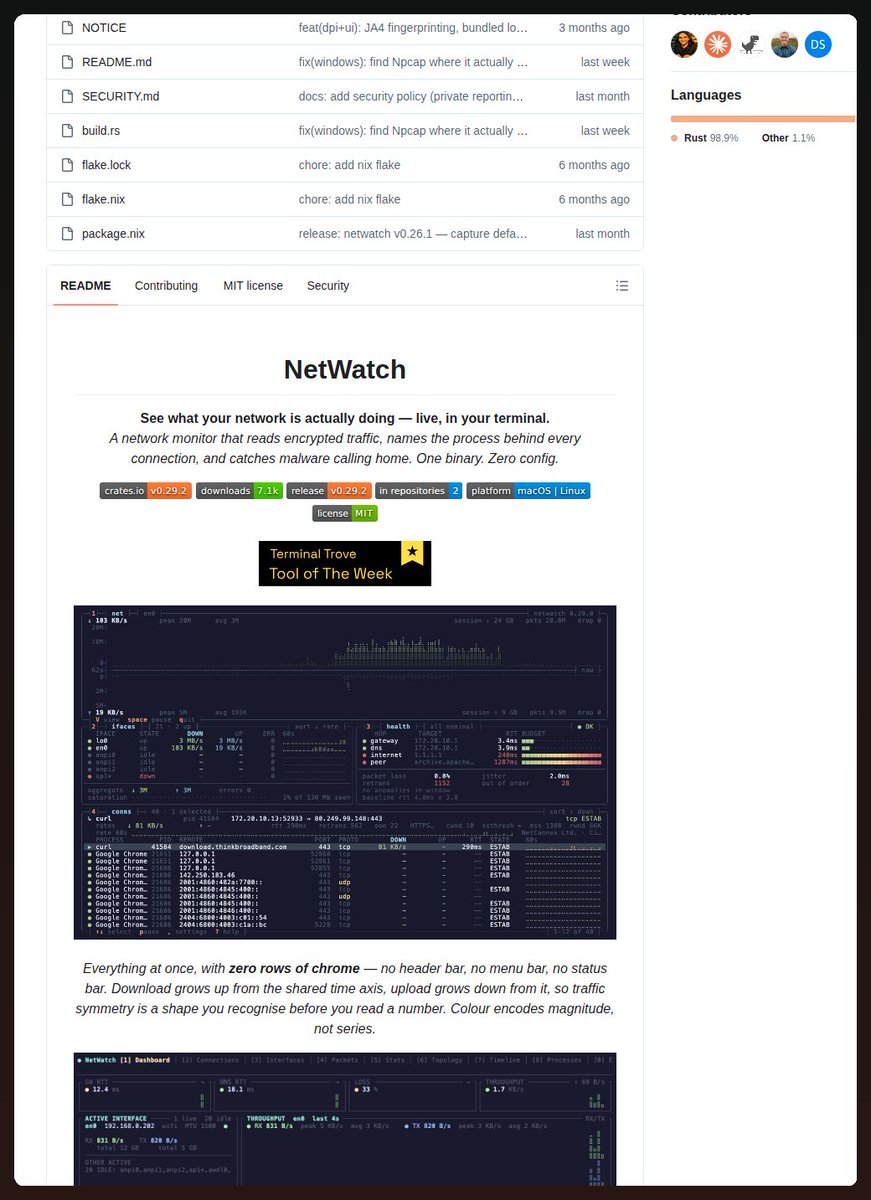
NetWatch is a lightweight, zero-config alternative to Wireshark for network triage that reads encrypted traffic to name processes and detect malware beacons.
https://t.co/1uD5MFsopq
Materials for Malware Development: Evading EDR from Loaders to the Kernel presented at DEF CON 34 and BSidesLV 2026. Covers EDR Architecture, EDR evasion, C2 customization, and kernel-level techniques.
https://t.co/QmfjIpy1I1
#infosec#cybersecurity#redteam#pentest
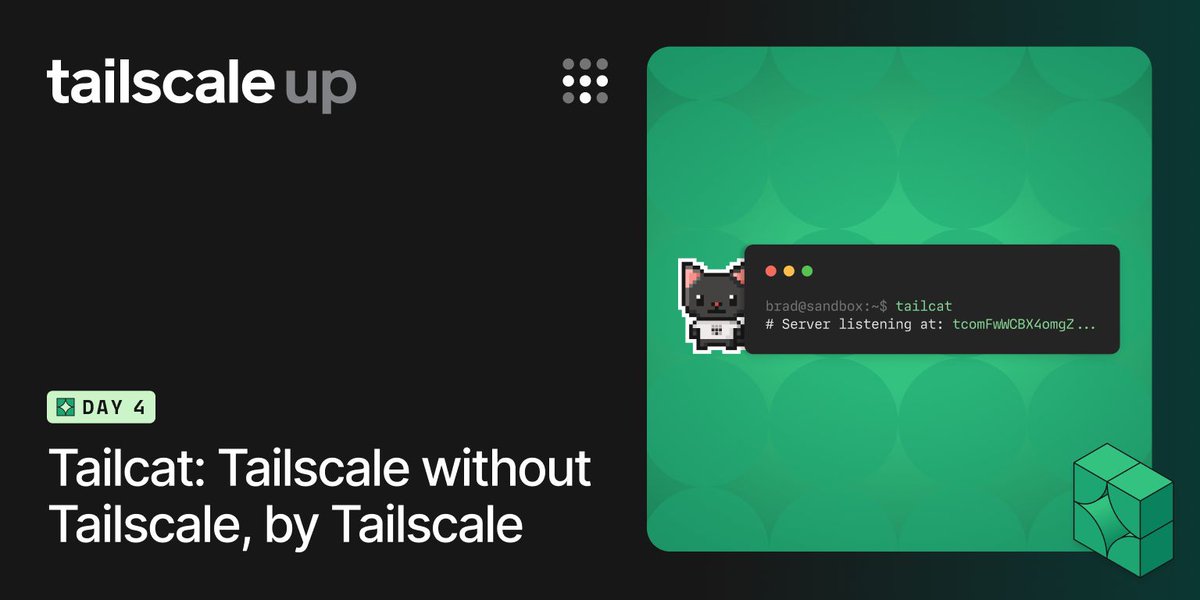
Tailscale without Tailscale, by Tailscale. Meet tailcat.
tailcat is an open-source Go package and CLI that lets you use Tailscale’s data plane without the control plane. No accounts, logins, admins, or IPs to manage.
Learn more → https://t.co/wcYZFxJbew
I'm absolutely speechless.
This man has received the ultra mega fuck off elite 9000 turbo goop. This goop retails for like, $10,000,000 depending on how the goop works. Low end types of this goop retail for about $1,000,000.
God damn that's some good goop
Chat, I've decided I'm going to continue working on vx-underground for the remainder of my life.
I'm in my 30s. I'm 7.5 years deep. I work on my shitty website literally every single day, with the exception being major life events.
After 7.5 years of malware nonstop, I am still not bored of it. I love it every single day. Every single day is fun and new to me.
I also will not charge for my website ever. It will remain free for forever.
Basically, it's 1am, I'm in my undies eating chocolate chip cookies, and I just decided I'll keep doing what I'm doing until I am physically unable to do so anymore.
Okay, that's all I wanted to say
DeepSeek just killed the coding-agent industry.
deepseek-harness: Open-source. Free. Claude Code's top plan costs $200/month.
What it does:
→ Everything is a plugin - model adapters, tools, session logs, even the agent loop itself, all swappable from config
→ Built on Cordis, DeepSeek's own plugin runtime
→ One command to run: npx @deepseek-ai/dsh web - spins up a local Web UI
→ Ships with real architecture docs + an AGENTS.md written for agents to read the codebase themselves
→ TypeScript, MIT, developer preview - breaking changes expected, DeepSeek says so themselves
What it replaces:
→ Anthropic's Claude Code
→ Closed, single-vendor coding-agent environments generally
A frontier lab just gave away, for free, the exact layer companies charge a subscription for.
→ https://t.co/b4EzZ8NwT5
> be me
> get dm
> its my friend @Intel80x86
> author of @HyperDbg
> wtf i love him
> open message
> "smelly i got goop"
> wtf i love goop
> "i found malware campaign"
> wtf i love malware campaigns
> "The Threat Actor(s) have created a website which is specifically tailored to malware analysts, or reverse engineers, who utilize hypervisor-based frameworks. Their malware campaign appears to have begun about 8 days ago. I became aware of the issue when their "product" compared themselves to HyperDbg. Their website is clearly vibe coded, however parts appear to be in Mandarin"
> wtf theyre targeting people who like goop
> sends url to website
> vt01[.]com
> look inside
> lol ai slop
> go to download page
> vt01[.]com/en/download
> immediately flagged as malware by firefox
> allow download plz
> split nanosecond touches the disk
> windows: OMFG MALWARE!!!
> ??? this malware STINKS
> sha256: 5934d1a64afd62e7d1badb81e8613e01efe9cf9c7d6748271c6d0761e3b11eb7
> look inside
> delphi, weird PE sections
> throw into triage
> YARA rules IMMEDIATELY identify the malware family
> XRed
> wtf is XRed?
> cant remember any family named XRed
> December, 2025: XRed impersonates Indian Ministry of Finance and Income Tax Department
> December, 2025: XRed targets US and UK companies that do business in India
> March, 2025: XRed targets manufacturing companies in the United Kingdom
> May, 2025: Threat Actors compromise ProColored, their driver update was compromised to push XRed
> July, 2025: Threat Actors compromise video game mouse company, push malware to video game players who use EndGame Gear for gaming
this is strange goop
Another WTF moment.
A developer just open-sourced a coding agent harness that boots 245x faster than Claude Code. It's called jcode. You launch it and the first frame renders in 14 milliseconds. Claude Code takes 3,436. One active session uses 27.8 MB of RAM. Claude Code uses 386.6. Run ten sessions in parallel and jcode holds at 117 MB while OpenCode swells to 3.2 GB.
Each agent has a semantic memory graph instead of a scratchpad. Every turn gets embedded as a vector. The graph is queried on every turn for related memories, and a sideagent verifies the hits before injecting them into context. Consolidation runs in the background to check for stale or conflicting facts. No manual /remember calls. No token burn on lookup tools.
The provider list is 30+ deep. Claude, ChatGPT, Gemini, GitHub Copilot, Azure, OpenRouter, DeepSeek, Groq, Mistral, Perplexity, Fireworks, Ollama, LM Studio, and any OpenAI-compatible endpoint you point it at. Ran out of tokens on your first ChatGPT Pro sub? /account swaps to the second.
Then there's Swarm. Spawn two agents in the same repo and the server manages them. When agent A edits a file agent B has been reading, agent B gets pinged and can check the diff. Agents can DM each other, broadcast to the room, or spawn their own worker teams for parallel tasks. Groups, channels, and completion statuses are handled automatically.
The UI has live side panels that render mermaid diagrams inline. To make it fast, the author wrote a Rust mermaid renderer 1800x faster than the JavaScript one, then wrote a custom terminal called Handterm because no existing terminal could do smooth partial-line scrolling.
Self-dev mode is where it gets wild. Tell your agent to enter self-dev and it starts editing jcode's own source code, rebuilds the binary, reloads it live, and keeps working across your existing sessions. You can also resume broken sessions from Claude Code, Codex, OpenCode, or pi directly inside jcode. Anthropic's cache goes cold at the 5-minute mark and you're staring down a big cache miss on your next turn? The UI warns you before you spend the tokens.
Written in Rust. MIT licensed. Runs on macOS, Windows, Linux, and Termux. Sitting at 11.2k stars with a native iOS app coming.
https://t.co/OonuUaLXAr
> wake up
> take a shit
> get out of bed
> remember colleagues hardcore malware thingie
> download
> look inside
> confused.mp4
> regular .exe, but has .exe inside of it
> bonk with stick
> .exe inside of it is the same .exe
> .exe has itself inside of itself
> only small difference
> cant tell difference
> confusion_intensifies.mp5
> has anti-vm code
> cant get to work in emulation
> written using delphi
> delphi tform GUI thingy
> weird af de-compilation
> 16,000 functions present
> most do basic stuff, like add or subtract
> staticly links a bunch of random libraries
> LOLWTF WHO WROTE THIS
> bonk with really big stick
> eventually find some good goop
> new .exe randomly appears in-memory
> ???
> grab from memory
> c++ .exe, staticly linked
> 500 functions
> heavily obfuscated
> has anti-code tampering in place
> ???
> this in-memory .exe references 1st .exe goop
> ask colleague about goop
> "We discovered this Threat Actor likely created their own custom .exe encryptor and decryptor"
I've been bonking this malware with a stick for over an hour, I think, maybe two hours. I've been able to grab an in-memory mapped PE file which the original .exe loads into memory. However, I am unable to determine precisely where this PE file is mapped exactly because it's a Delphi TForm application, its statically linked, and is intentionally obfuscated.
This secondary .exe loaded into memory has tamper protection, patching it to force itself to give me more malware won't be easy. This binary also has anti-VM features as well, I think from calculating disk space. However, I can't tell right now either, but this is what it appears like based on the API it imports.
1. Delphi TForm application
2. Does stuff, lots of junk
3. Maps secondary PE into memory (somehow)
4. Secondary PE does recon to assess the machine
5. ???
Somewhere in the midst of this, this binary is going to make an external call, somewhere, somehow, but it's proven to be difficult due to how obfuscated this code is, coupled with the custom PE cryptor, decoy data present, ... and everything else.
Initially I was under the impression one of the obvious .EXEs I saw was the actual secondary payload, but it's not (I think?), it appears to be a decoy (I think).
I don't know who wrote this, but this is probably one of the most sophisticated malware payloads I've seen in recent time.
It has successfully evaded my VM, RecordedFuture Triage, VirusTotal VM, and AnyRun
I still don't know what this malware is trying to do.
A senior Google engineer just dropped a 424-page doc called Agentic Design Patterns.
Every chapter is code-backed and covers the frontier of AI systems:
→ Prompt chaining, routing, memory
→ MCP and multi-agent coordination
→ Guardrails, reasoning, planning
This isn't a blog post. It's a curriculum. And it's free.
Read it this weekend.
That said, I wrote an article on how to build a multi-model AI team in 2026, which was already read by 4 million people.
It's a complete guide to agents, models, workflows, and playbook to run your business on autopilot.
The article is quoted below.
SAM ALTMAN HAS LOST IT.
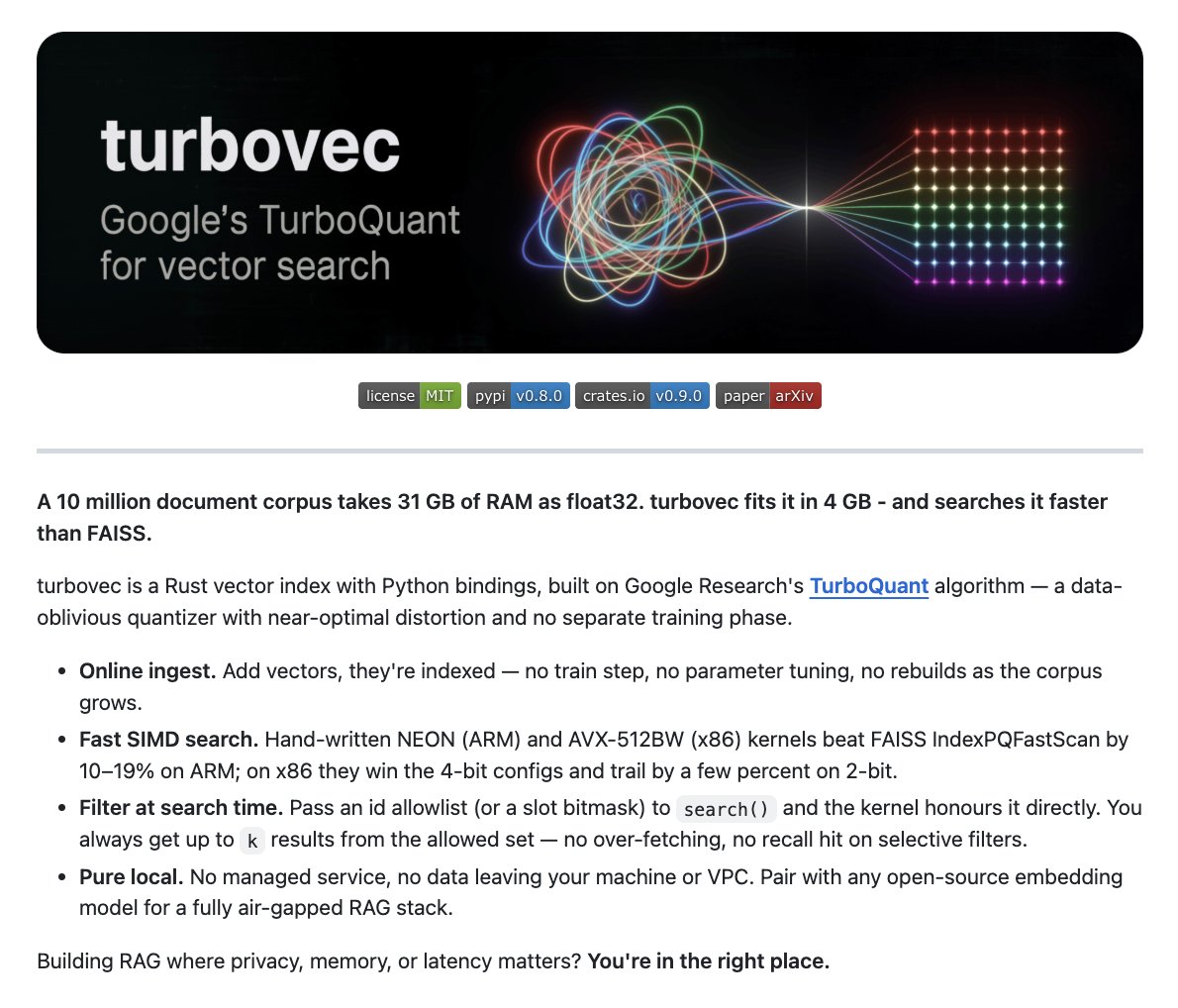
Google just shrunk 31GB of AI memory down to 4GB.
They open-sourced a vector index that fits 10 million documents in 4GB of RAM and searches them faster than FAISS.
→ 16x compression per vector
→ 10-19% faster than FAISS
→ Zero training. Zero rebuilds.
No GPU cluster. No cloud bill. No compromise.
Runs 100% locally.
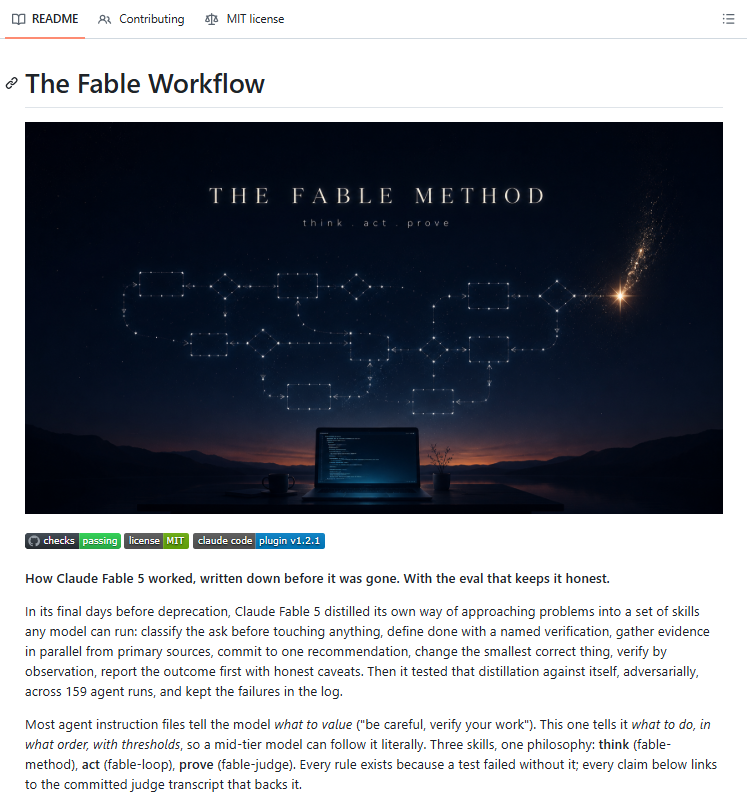
Someone distilled Fable's problem-solving approach into a plugin any model can run. 159 agent runs later, Sonnet + the plugin matched Fable 10/10 on a research task.
The plugin has three parts. fable-method gives any model a structured problem-solving loop with hard failure thresholds. fable-loop runs entire tasks with adversarial verification agents checking the work. fable-judge treats every "done, all tests pass" claim as unverified and re-runs everything independently.
The results are specific. Haiku went from 0/4 to 4/4 on catching a wrong test before "fixing" correct code. Sonnet + the method matched Fable itself on a five-part research task, scoring 10/10. The judge took Haiku from 3/5 to 5/5 on catching planted frauds in a fake completion report.
The part that earned my trust is what it won't do. On ordinary tasks with capable models, it adds nothing. They measured that, documented it, and the README says so. The value concentrates at traps like wrong tests, false completion claims, and weak models running unattended. It supplies discipline, not knowledge.
The iteration tells you a lot about the quality. v1 of the method failed its own test at 0/4. v2 failed at 1/4. v3 finally passed at 4/4. The repo includes every failed version with raw judge transcripts. The flowcharts weren't built from Fable describing how it thinks either. They recorded actual tool calls from bare Fable agents and corrected the method wherever Fable's self-description disagreed with its real behavior. Observation beat self-reporting 3 times.
If you're running Claude Code with cheaper models or want to harden your agent workflows, this is worth 10 minutes of your time.
To install in Claude Code, run /plugin marketplace add Sahir619/fable-method then /plugin install fable@fable-method
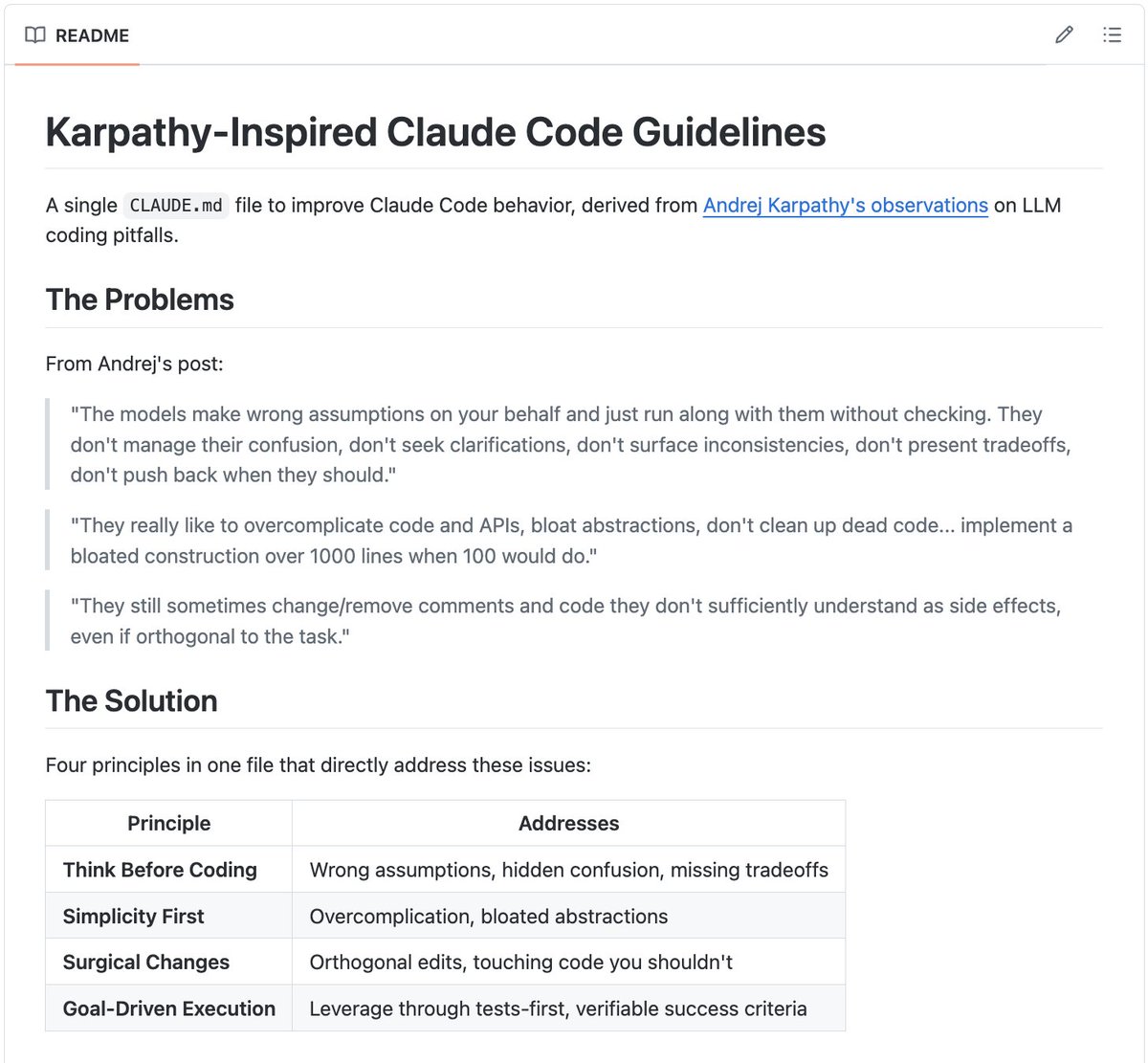
A single 𝗖𝗟𝗔𝗨𝗗𝗘.𝗺𝗱 file just hit 192k GitHub stars.
(derived from Karpathy's coding rules)
Andrej Karpathy observed that LLMs make the same predictable mistakes when writing code: over-engineering, ignoring existing patterns, and adding dependencies you never asked for.
If you've used AI coding assistants, you've hit all of these.
But here's the thing:
If the mistakes are predictable, you can prevent them with the right instructions.
That's exactly what this 𝗖𝗟𝗔𝗨𝗗𝗘.𝗺𝗱 does. You drop one markdown file into your repo, and it gives Claude Code a structured set of behavioral guidelines for your entire project.
This is a big deal.
- Built entirely around prompt engineering for AI coding assistants
- No framework, no complex tooling, just one .md file that shapes behavior
Developers are moving past "use AI to write code" and into "engineer the AI's behavior so the code is actually good."
The Claude Code ecosystem is growing fast, and the best tools in it aren't always software. Sometimes they're just well-crafted instructions.
100% open-source.
Link to the GitHub repo: https://t.co/pq6g88tNE3
That said, I wrote an article on the anatomy of the .claude folder, which was read by 11 million people.
It's a complete guide to 𝗖𝗟𝗔𝗨𝗗𝗘.𝗺𝗱, hooks, skills, agents, and permissions, and how to set them up properly.
The article is quoted below.